
Akintunde Oyedokun
Research Analyst
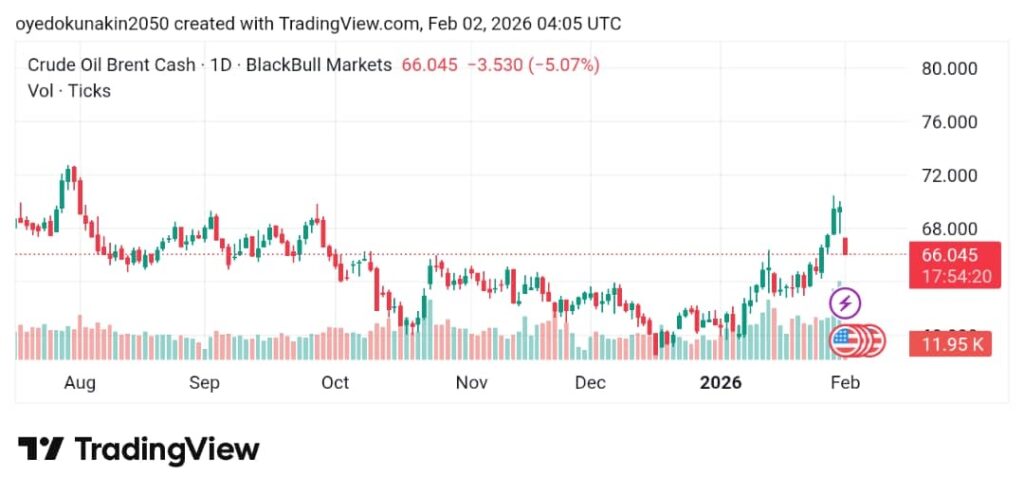
Oil prices edged lower on Friday but remained near six-month highs, supported by lingering U.S.–Iran tensions. Brent crude closed at $70.69 per barrel, while U.S. West Texas Intermediate settled at $65.21.
The market paused as talk of dialogue between Washington and Tehran eased immediate supply concerns, while a stronger dollar and rising output encouraged mild profit-taking after recent gains.
China’s Factory Activity Slips in January
China’s manufacturing sector fell into contraction in January as weak domestic demand persisted, with the PMI dropping to 49.3 from 50.1. New orders and services activity also declined.
Although China met last year’s growth target, slowing consumption has raised concerns. Authorities have rolled out subsidies and hinted at further easing, but doubts remain over their impact.
U.S. Producer Prices Surge in December, Signaling Persistent Inflation Pressure
U.S. producer prices climbed 0.5% in December, led by higher service costs, while goods prices were unchanged. Annual PPI stayed at 3.0%, supporting the Fed’s decision to keep rates at 3.50%-3.75%. The increase was partly due to tariffs, expected to peak mid-year, amid congressional talks to prevent a government shutdown. The data suggest inflation could remain steady in the coming months.
Mozambique Boosts Graphite Industry with New Processing Plant
Mozambique has opened a 200,000-metric-ton-per-year graphite processing plant at a Chinese-owned mine, marking a shift toward value-added mineral production. President Daniel Chapo said the project positions the country as a processor and exporter, not just a raw material supplier. The $200 million investment by DH Mining will expand jobs and strengthen Mozambique’s role in the global battery minerals supply chain, alongside other graphite projects in the country.
Nigeria’s Gas Flaring Still High in 2025
Nigeria flared over 203 billion standard cubic feet of gas in 2025, despite gas utilisation staying above 92 per cent. Total production rose to about 2.71 trillion scf, but infrastructure gaps, especially around Associated Gas, continued to drive flaring. The trend underscores ongoing environmental and economic costs despite progress in gas use.
The data highlights the need for faster investment in gas processing and evacuation infrastructure.