
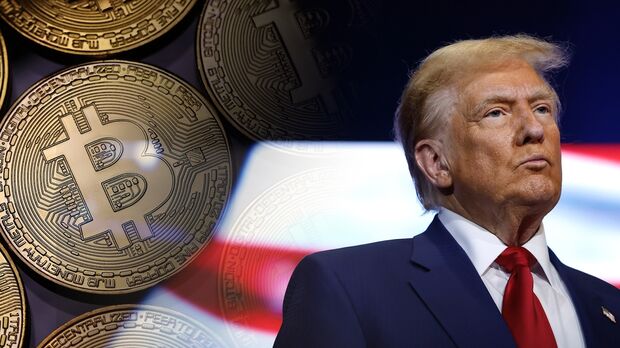
The latest confrontation between President Donald Trump and the US Federal Reserve is pushing investors toward assets insulated from political influence, with Bitcoin “a beneficiary”.
This is the analysis from the CEO of one of the world’s largest independent financial advisory organizations as Fed Chair Jerome Powell confirms he faces a federal criminal investigation linked to his congressional testimony and the $2.5 billion renovation of the central bank’s headquarters.
It follows years of increasing public pressure from President Trump for faster and deeper interest-rate cuts.
Nigel Green of deVere Group says: “Markets recognize a deeper issue here than a policy disagreement.
“Pressure on the central bank of the world’s largest economy carries global consequences.
“Confidence in monetary governance in the United States anchors financial stability far beyond its borders.
“When that confidence weakens, capital moves quickly toward assets designed to exist beyond political reach.”
He continues: “Legal scrutiny of the chair of the most influential central bank on earth, set against sustained political demands on interest rates, sends a signal investors do not ignore.
“Bitcoin, typically, responds positively to precisely this kind of signal.”
The Federal Reserve’s role reaches far beyond US borders. Its decisions shape global interest-rate cycles, capital flows, currency stability and risk pricing across continents, influencing trading desks, treasury teams, and policymakers across emerging markets.
“Monetary credibility in the US sets the tone for financial credibility everywhere,” notes the deVere CEO.
“Financial systems operate on trust in institutions. The Fed anchors that trust for the dollar, for global bond markets, for equity valuations and for cross-border investment flows.
“When legal pressure appears alongside political frustration over interest rates, investors reassess the durability of that anchor.”
This reassessment has already translated into market moves.
“Equity futures have softened on concern around policy uncertainty. Gold has climbed to record territory as investors seek insulation from political risk.
“The US dollar has weakened against major peers as traders recalibrate faith in the institution behind it. Bitcoin has risen alongside these shifts.”
He adds: “Repositioning lifts assets built on independence from political control. Bitcoin fits that description better than any financial instrument in circulation. Its fixed supply, rule-based issuance and decentralised governance give it qualities that fiat currencies cannot replicate. Presidents cannot adjust its supply. Legislatures cannot rewrite its protocol. Central banks cannot influence its monetary settings.”
During periods of institutional strain, these features move from abstract theory to practical advantage. The current confrontation places the Fed’s autonomy at the centre of market psychology.
“Investors understand why autonomy matters. Monetary credibility keeps inflation expectations contained, stabilises bond yields and anchors currency confidence. When credibility comes under strain, defensive behavior takes over.”
Gold has traditionally filled that defensive role. Bitcoin now shares that space.
Institutional adoption has accelerated that transition. Spot Bitcoin ETFs, regulated custody solutions and deeper derivatives markets allow pension funds, asset managers and family offices to move rapidly when monetary risk rises.
“In past decades, political pressure on central banks drove flows almost exclusively into gold and defensive currencies,” he says.
“Today, Bitcoin absorbs part of that same demand.”
The clash between President Trump and the Fed reinforces a broader trend shaping global markets.
Nigel Green notes: “Fiscal pressures are rising, public debt continues to expand, political incentives increasingly favor looser monetary conditions, and central banks face louder demands to support growth at any cost.
“Each episode highlighting tension between elected leaders and monetary authorities strengthens the case for assets governed by code rather than discretion. Bitcoin embodies that principle.”
Markets, he says, trade on direction rather than verdicts.
“Investors don’t wait for courtroom outcomes or formal policy shifts. Perception of direction drives pricing.
“Direction now points toward deeper politicisation of monetary debate in the United States. Bitcoin prices that future quickly.”
The dollar’s global role adds further weight to the moment. Reserve-currency status rests on institutional trust, especially trust in the independence of the central bank of the world’s largest economy.
“When headlines suggest pressure on that independence, hedging begins,” comments the CEO. “Some capital flows into gold, some into defensive currencies, and a growing share moves into Bitcoin.”
Emerging markets are watching closely.
“Any erosion of confidence in US monetary governance increases volatility in currencies across Latin America, Africa and Southeast Asia,” he explains.
“Investors in those regions often prefer assets beyond sovereign influence during periods of systemic uncertainty. Bitcoin fits that preference.”
He concludes: “Financial history shows a consistent pattern. When political power edges closer to monetary control, investors seek distance from that power. In the modern era, many choose Bitcoin.
“Currently rising prices reflect more than momentum.”