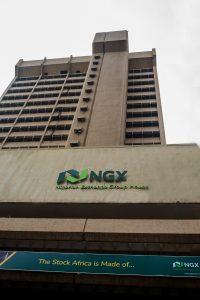


Trading for last week closed Thursday with the NGXASI closing almost unchanged, even as it slipped slightly by 0.002% to 201,698.89 points, while market capitalisation remained at ₦129.81 trillion. Despite the marginal dip, sentiment was positive with more gainers than losers (34 vs 24), led by UNILEVER, while JOHNHOLT recorded the highest losses. Trading activity weakened compared to the previous session, though ZENITHBANK and NSLTECH dominated value and volume traded, respectively.
Overall, the market operated for four trading sessions due to the Easter holidays declared for April 3 and April 6, 2026. A total of 2.856 billion shares worth ₦113.597 billion were exchanged in 215,287 deals, lower than the previous week’s 3.950 billion shares valued at ₦201.312 billion across 359,642 deals.
The Financial Services sector dominated activity, accounting for 1.811 billion shares worth ₦61.901 billion, representing 63.41% of total volume and 54.49% of value. It was followed by the Services and ICT sectors. Wema Bank, Access Holdings, and Secure Electronic Technology were the most actively traded stocks, jointly accounting for 25.72% of total volume and 12.44% of total value.
The market closed on Monday March 30, 2026 on a bearish note as heavy selling pressure pulled the All-Share Index down by 0.21% to 200,484.43 points. Market capitalisation also dropped by ₦275.15 billion to ₦128.69 trillion, while year-to-date return moderated to 28.84%. Market breadth was weak, with 34 losers against 27 gainers. AUSTINLAZ topped the gainers’ chart, while NSLTECH led the decliners. TRANSEXPR, TIP, NAHCO, and EUNISELL reached new 52-week highs. ACCESSCORP and FIRSTHOLDCO led trading in volume and value, respectively.
There was a rebound on Tuesday as the index rose by 0.40% to 201,287.78 points, supported by renewed buying interest in stocks such as MTNN and PZ. This lifted market capitalisation by ₦515.68 billion to ₦129.21 trillion and improved YTD return to 29.35%. However, overall sentiment remained mixed with more losers than gainers, despite improved trading activity driven by WEMABANK (volume) and MTNN (value).
Midweek trading extended the positive momentum, with the All-Share Index gaining 0.21% to 201,703.55 points and market capitalisation rising to ₦129.81 trillion, pushing YTD return to 29.62%. Market breadth remained weak, though trading activity slowed, with WEMABANK and GTCO leading in volume and value, respectively.
Top Gainers:
Multiverse Mining and Exploration Plc opened at ₦16.70 and closed at ₦20.15, gaining 20.66%.
UPDC Real Estate Investment Trust rose from ₦7.10 to ₦8.20, up 15.49%.
International Energy Insurance Plc increased from ₦2.95 to ₦3.32, gaining 12.54%.
Austin Laz & Company Plc moved from ₦4.01 to ₦4.43, up 10.47%.
Unilever Nigeria Plc climbed from ₦94.00 to ₦103.40, gaining 10.00%.
Top Losers for the week:
Secure Electronic Technology Plc declined from ₦1.30 to ₦1.02, down 21.54%.
John Holt Plc fell from ₦18.95 to ₦15.45, losing 18.47%.
May & Baker Nigeria Plc dropped from ₦41.95 to ₦35.00, down 16.57%.
Aluminium Extrusion Industries Plc declined from ₦12.60 to ₦10.55, losing 16.27%.
Legend Internet Plc fell from ₦7.50 to ₦6.30, down 16.00%.
Week-to-date, the All-Share Index has gained 0.39%, NGX 30 is up by 0.54%, the Banking Index has increased by 0.71%, the Pension Index increased by 1.05%, the Insurance Index declined by 4.25%, the Consumer Goods Index decreased by 1.74%. However, the Oil and Gas Index recorded a positive return of 0.02%.
Year-to-date, the All-Share Index has gained 29.62%, NGX 30 is up by 29.08%, the Banking Index has increased by 26.86%, the Pension Index index increased by 36.48%, the Insurance Index inclined by 4.34%, the Consumer Goods Index increase by 7.52%. However, the Oil and Gas Index recorded a positive return of 63.97%. In terms of market breadth, 29 stocks advanced, while 57 declined.
Technical Analysis
The NGX All-Share Index (ASI) maintained a generally bullish structure despite intermittent profit-taking during the week. After opening on a weak note, the index found support around the 200,000 psychological level, rebounding to close the week marginally higher at 201,698.89 points. This suggests that the market continues to respect key support zones, even in the face of short-term selling pressure.
Momentum indicators remain mildly positive, as the index stayed above recent short-term consolidation levels. However, the mixed market breadth—characterized by alternating sessions of more losers than gainers—signals that bullish momentum is not yet broad-based. Gains were largely driven by selective buying in large-cap and mid-cap names, particularly in the banking and industrial space.
From a volume perspective, trading activity declined week-on-week, indicating reduced participation compared to the prior week. This lower turnover, combined with inconsistent breadth, reflects cautious sentiment among investors. Resistance is observed near recent highs around the 202,000–202,500 range, where profit-taking has begun to emerge, while support remains anchored around 200,000, followed by deeper support near 198,000.
Sector performance was mixed. The Financial Services sector continued to dominate activity and provided underlying support to the index, while weakness in Consumer Goods, Industrial Goods, and Insurance indices weighed on overall performance. This divergence highlights a stock-picking environment rather than a broad market rally.
Outlook
In the near term, the market is expected to remain range-bound with a mild bullish bias, as investors continue to react to corporate earnings releases, dividend announcements, and macroeconomic signals. The ability of the index to hold above the 200,000 mark will be critical in sustaining positive sentiment.
A decisive breakout above the 202,500 resistance level could open the door for further upside, potentially attracting renewed buying interest across sectors. Conversely, a breakdown below the 200,000 support zone may trigger short-term corrections, with possible retests of lower support levels around 198,000.
Overall, the outlook remains cautiously optimistic. However, sustained upside will likely depend on stronger market breadth, increased trading volume, and continued participation from institutional investors, particularly in the financial and blue-chip segments.
Trending in the Economy: Nigeria’s National Assembly has approved a ₦68.30 trillion budget for 2026 following President Bola Tinubu’s request to increase the initial proposal. The adjustment is intended to fund outstanding capital projects and support ongoing economic reforms, alongside approval for a $6 billion borrowing plan. The budget now awaits presidential assent and will guide government spending for the year.
Meanwhile, Nigeria’s economy continued its expansion in March 2026, with the composite PMI at 53.2, marking 16 straight months of growth, according to the Central Bank of Nigeria. Growth, however, slowed slightly from the previous month.
Out of 36 subsectors, 31 recorded expansion, with industry leading at 54.0, followed by agriculture at 52.8 and services at 52.0. Despite the continued positive trend, inflationary pressures, exchange rate instability, and high borrowing costs remain key factors weighing on the pace of economic activity.
Global Market and Oil: U.S. stocks ended Thursday slightly mixed after trimming earlier losses, as improving diplomatic signals from the Middle East helped steady markets that had been rattled earlier by President Donald Trump’s tougher stance on Iran ahead of the long holiday weekend. Sentiment strengthened in the afternoon after Iran’s foreign ministry said it was working with Oman on a protocol to manage traffic through the Strait of Hormuz, while reports that several countries were exploring ways to resolve the crisis helped ease concerns about potential disruptions to global oil flows.
The major indexes had opened lower amid a spike in oil prices following heightened geopolitical tensions. Front-month crude oil surged sharply during the session, with U.S. crude rising about 11% to around $111 per barrel, while Brent crude climbed roughly 7% to near $108 per barrel. Despite the near-term spike, longer-dated contracts suggested the market expects the disruption to be temporary, with futures pricing crude closer to about $82 per barrel by October. As noted by market participants, this divergence reflects uncertainty in the short term but expectations of normalization later in the year.
By the close of trading at 4:06 p.m., the Dow Jones Industrial Average slipped 0.13% to 46,504.67 points, while the S&P 500 edged up 0.11% to 6,582.69 points and the Nasdaq Composite gained 0.18% to 21,879.18 points. Volatility also eased, with the CBOE VIX index, a widely watched measure of market fear, falling to 23.87 points.
Despite the mixed daily performance, Wall Street recorded its strongest weekly advance in four months, with all three major indexes posting their first week of gains in six. For the week, the S&P 500 climbed 3.36%, the Nasdaq rose 4.44%, and the Dow advanced 2.96%. The Russell 2000 small-cap index also gained 3.19%, reflecting broad-based strength across market segments.
Sector performance during the session showed a clear preference for defensive positioning. Utilities rose 0.6%, benefiting from their stable earnings profiles and dividend appeal, while real estate stocks advanced 1.5%, supported by their typically steady rental income streams and attractiveness during periods of uncertainty. In contrast, consumer discretionary stocks declined 1.5%, making them the worst-performing sector of the day. The weakness was partly driven by a 5.4% drop in Tesla (TSLA.O) following its first-quarter delivery results.
Earlier in the session, equities had fallen sharply in response to rising geopolitical tensions, marking a reversal from prior remarks suggesting a potential de-escalation in U.S.–Iran relations. However, the market recovered as investors reassessed the situation and weighed the likelihood of sustained disruption against signs of diplomatic engagement.
Beyond geopolitical developments, concerns in the private credit space resurfaced after Blue Owl (OWL.N) limited investor withdrawals from two of its retail-focused funds. The move placed the firm among the most actively traded stocks in the final session of the week and reignited discussions around liquidity conditions in alternative asset markets.
Trading volumes on U.S. exchanges reached 16.75 billion shares, slightly below the 20-day average of 17.82 billion shares, indicating relatively moderate participation despite the volatility.
Looking ahead, investor attention is expected to shift toward key economic indicators, particularly Friday’s nonfarm payrolls report, which comes after a decline in weekly jobless claims in the prior week. However, U.S. markets will remain closed throughout the extended holiday weekend, limiting immediate reaction to the data.
Corporate developments also remained in focus, with reports indicating that SpaceX has confidentially filed for a U.S. initial public offering and may be targeting a valuation of about $1.75 trillion. In addition, shares of Globalstar (GSAT.O) jumped following reports that Amazon is in discussions to acquire the low-earth-orbit satellite communications company, adding another layer of interest to the broader technology and space sectors.