
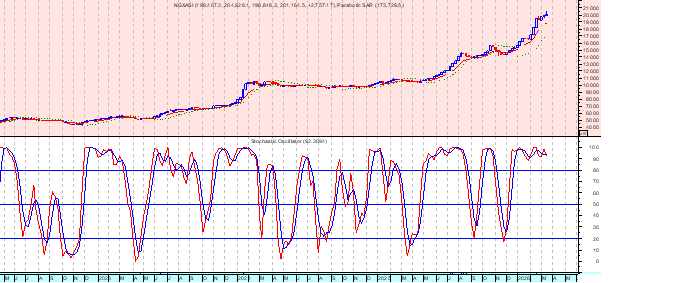
The short trading week of three sessions on the Nigerian Exchange (NGX)closed higher on a mixed trend of two days up and one session down to extend the bull transition for a third consecutive week on strong buying interests among high cap stocks and blue-chip companies. This is coming ahead of more full-year audited accounts hitting the market after the holidays next week. Companies are expected to file their 2025 financial year results in the new week ahead of the March 31 statutory deadline. Below is the daily index action for the just concluded trading week:
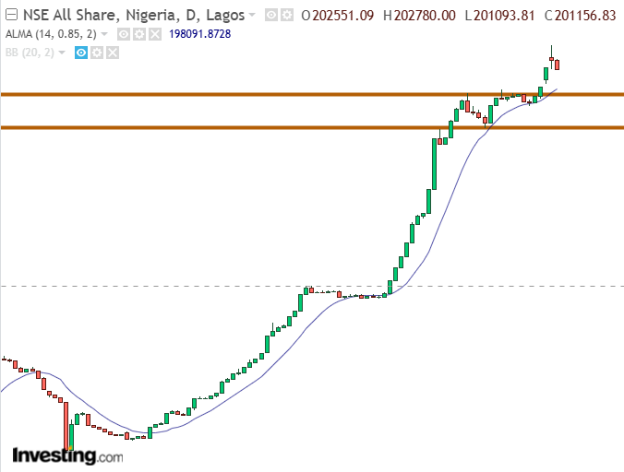
NGXASI Daily Index Action
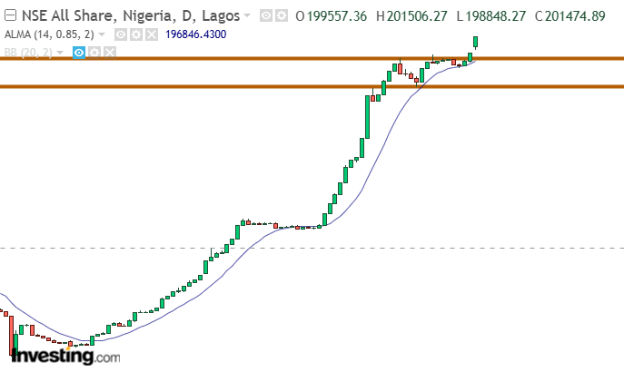
Trading for the period opened on a strong note on Monday, March 16, 2026, as the NGX All-Share Index (NGXASI) crossed the 200,000-point mark. The rally was supported by easing inflation and selective buying in stocks like BUACEMENT, PREMPAINTS, and ZENITHBANK. The market opened at 198,407.30 points and closed at 201,474.89 points, up 1.55%, with market capitalization at ₦129.33 trillion, while year-to-date (YTD) returns stood at 29.47%. Market breadth was positive with 38 gainers against 30 losers, with BUACEMENT leading the gainers, while VFDGROUP topped the losers’ side, as BUACEMENT, PREMPAINTS, and ZENITHBANK traded above their 52-week highs. Transaction volumes rose 60% to 948.21 million shares worth ₦49.17 billion, led by SOVRENINS in volume and ZENITHBANK in value.
The bullish trend continued on Tuesday driven by gains in BUACEMENT, PREMPAINTS, ZENITHBANK, NAHCO, and WEMABANK. The NGXASI rose 0.54% to 202,559.41 points with market capitalization at ₦130.03 trillion and 30.17% YTD returns. Market breadth remained positive with 39 gainers versus 34 losers, while PRESCO topped the losers. Trading activity surged 85% to 1.75 billion shares worth ₦88.10 billion, with FCMB seeing the highest volume and ZENITHBANK leading in value.
Ahead of the Eid-el-Fitr break however, the market dipped at midweek as investors sold their stakes in REDSTAREX, ARADEL, PRESCO, and GTCO, thereby forcing the NGXASI to take a 0.69% cut at 201,156.85 points. Market capitalization dropped to ₦129.13 trillion, and YTD returns backpedaled to 29.27%. Market breadth also turned negative, with NSLTECH leading gainers and REDSTAREX leading losers, while GUINNESS and JOHNHOLT remained above their 52-week highs. Trading volumes, nonetheless, jumped 246% as traders crossed 6.06 billion shares worth ₦130.06 billion, led by ETRANZACT in volume and DANGCEM in value.
The market was active for three trading days this week, after Thursday, March 19, and Friday, March 20, were public holidays to end the Islamic holy month of Ramadan. Total turnover for the week reached 8.76 billion shares valued at ₦267.25 billion across 193,473 deals, compared with 3.32 billion shares worth ₦164.85 billion traded in 318,907 deals in the previous week. The ICT sector dominated activities with 5.33 billion shares worth ₦46.83 billion in 21,573 deals, accounting for 61% of volume and 17.5% of value, followed by Financial Services with 2.77 billion shares valued at ₦95.89 billion in 75,103 deals. The Consumer Goods sector recorded 174.48 million shares worth ₦20.81 billion in 20,693 deals.
Top traded stocks by volume were E-Tranzact International, FCMB Group, and Wema Bank, which together accounted for 6.08 billion shares worth ₦40.66 billion in 5,570 deals, representing 69.4% of total volume and 15.2% of total value.
At the end of the week the benchmark index NGXASI and market capitalization rose 1.39% to 201,156.86 points and ₦129.13 trillion respectively. Most indices closed green, except the NGX Insurance (-0.42%), NGX AFR Div Yield (-2.34%), NGX Consumer Goods (-0.10%), NGX Oil & Gas (-4.78%), NGX Lotus II (-2.76%), and NGX Commodity (-4.91%), while the NGX Sovereign Bond index remained flat.
Week-to-date, the NGX-30 rose 1.41%, behind the Banking Index which increased by 4.31%, while the Pension Index gained a marginal 0.30%, just as the Insurance Index declined by 0.42% and the Consumer Goods Index by 0.10%.
The Oil and Gas Index recorded a negative return of 4.78%, at a time the All-Share Index has gained 29.27% year-to-date, slightly better than the NGX 30 at 28.53%, while the Banking Index is up 29.16% YTD. Also, while the Pension Index is up by an even stronger 35.93%, the Insurance Index could only muster a 6.60% rise, behind the Consumer Goods Index’s 10.42% jump. However, all of these were outperformed by the Oil and Gas Index with its positive return of 60.83%.
In terms of market breadth, 48 stocks advanced, while 43 declined.
John Holt Plc Weekly Chart
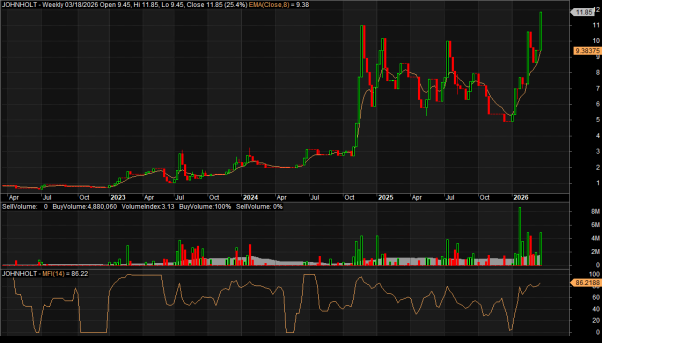
John Holt Plc led the gainers chart for the week, after its share price rose from ₦9.45 to ₦11.85 each, a 25.40% notched. BUA Cement followed, climbing from ₦270.00 to ₦326.70, gaining 21.00%. Premier Paints advanced from ₦19.40 to ₦23.40, up 20.62%, while Zenith Bank increased from ₦95.95 to ₦110.00, gaining 14.64%. Learn Africa also appreciated from ₦8.25 to ₦9.35, up 13.33%.
Zichis Agro Allied Plc Weekly Chart
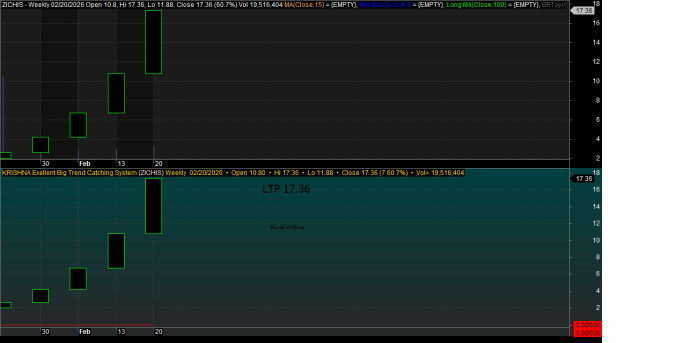
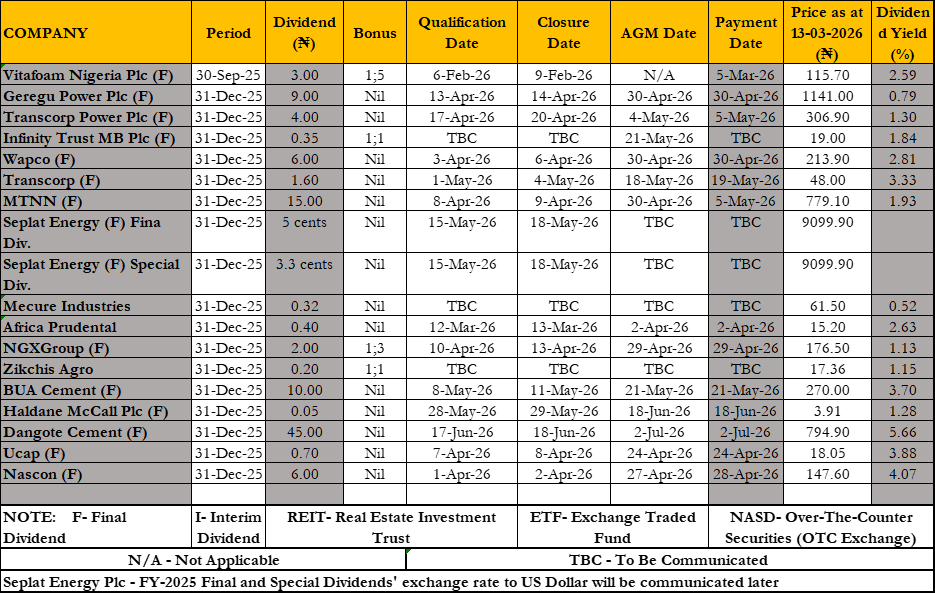
On the decliners’ side, Zichis Agro Allied recorded the steepest decline after weeks of upsurge immediately after its shares were listed on the NGX. The company’s share price tumbled by half its opening level from ₦17.36 to ₦8.58 per share. The 50.58% price slump was mainly due to adjustment for the 20 kobo dividend and bonus share of one-for-one approved by the directors, a situation that would enhance market liquidity. Presco Plc’s share price fell from ₦2,083.90 to ₦1,701.10, losing 18.37%, while DAAR Communications declined from ₦2.14 to ₦1.85, down 13.55%. Eterna Plc also slipped from ₦42.30 to ₦36.90, shedding 12.77%, and Red Star Express dropped from ₦28.55 to ₦25.70, down 9.98%.
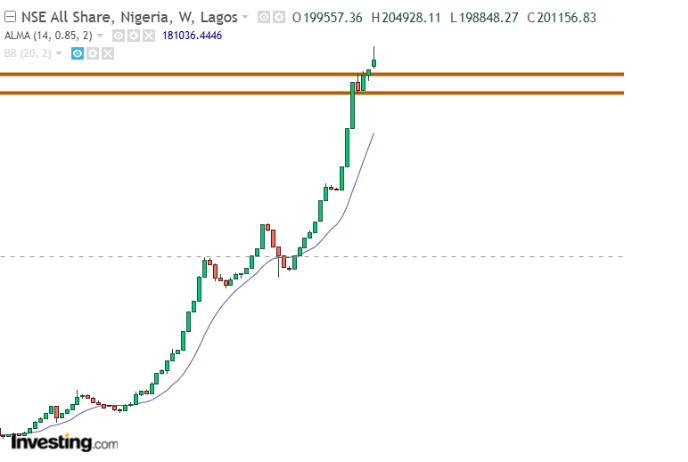
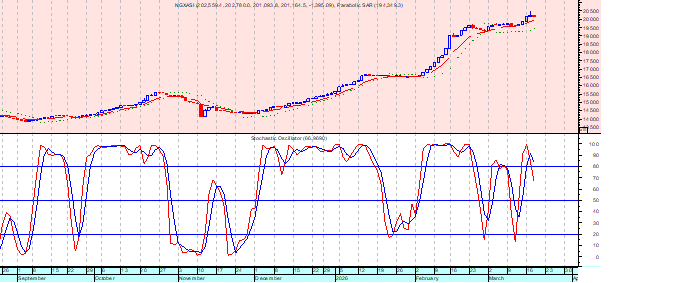
NGXASI Weekly Chart
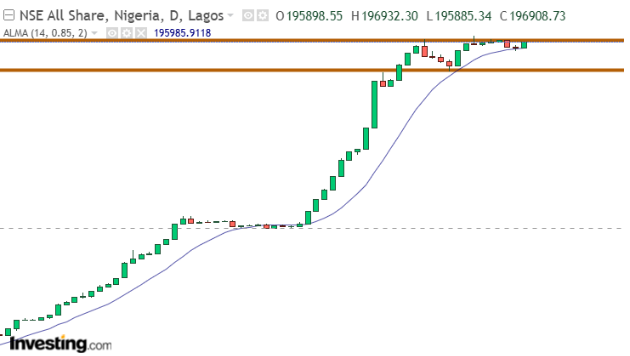
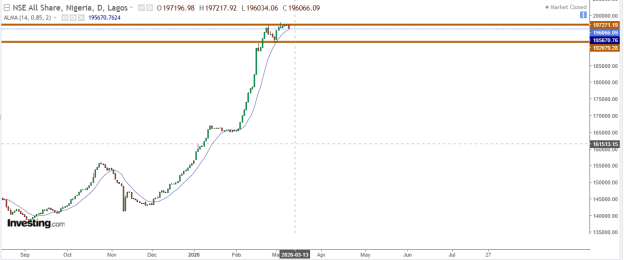
The NGX All-Share Index (NGXASI) maintained a bullish stance during the short week, opening at 198,407.30 points on Monday and closing at 201,156.86 points by week’s end, representing a net gain of 1.39 percent. The market exhibited a strong short-term uptrend, characterized by higher highs and higher lows, with the 200,000-point level acting as a psychological breakout that spurred renewed buying interest. Early-week gains were supported by strong participation in blue-chip counters such as BUACEMENT, PREMPAINTS, and ZENITHBANK, while trading volumes surged significantly, confirming the validity of the price movements.
Market support was observed around the 198,000–199,000-point range, which absorbed mid-week profit-taking without triggering a deeper selloff. Resistance in the near term is expected around 203,000–205,000 points, corresponding to recent intraday highs. Despite the temporary mid-week retracement, the market retained its upward momentum, as several high-performing stocks remained above their 52-week highs, signaling sustained buying pressure. Market breadth was positive for the first two trading sessions, reflecting broad participation, and only turned negative as investors booked profits in select counters, indicating normal consolidation within a bullish trend.
Volume trends further reinforced the technical strength of the market, with heightened activity in high-liquidity stocks such as ZENITHBANK, ETRANZACT, and FCMB, confirming that institutional and retail participants were actively driving the rally. Momentum indicators in key sectors, particularly cement, paints, and banking, suggest that the market’s upward trajectory is likely to continue, although commodity-linked and oil and gas stocks may remain prone to intermittent corrections.
Market Outlook
Looking ahead, the NGXASI is expected to maintain its bullish bias in the short-term with the 200,000-point level serving as a key floor for continued gains. The index could test resistance around 203,000–205,000 points, while any dip toward the 198,000–199,000 support zone may present potential buying opportunities for trend-following investors. Overall, the market’s technical posture indicates measured upward momentum with periodic consolidation, favoring selective accumulation in fundamentally and technically strong counters.
Trending in the Economy: In February 2026, the Federation Account Allocation Committee (FAAC) distributed ₦1.894 trillion to Nigeria’s federal, state, and local governments. Of this, ₦1.274 trillion came from statutory revenue and ₦619.119 billion from VAT. The Federal Government received ₦675.088 billion, states got ₦651.525 billion, local governments ₦456.467 billion, and oil-producing states earned ₦110.949 billion as their 13% derivation share. While statutory and VAT revenues declined from January, receipts from oil and gas royalties, excise duties, import duties, and the Common External Tariff recorded modest gains.
Meanwhile, Nigeria’s headline inflation edged down slightly to 15.06% in February from 15.10% in January, marking the 11th straight monthly slowdown, according to the National Bureau of Statistics (NBS). Food inflation—the largest contributor—rose to 12.12% from 8.89% in January, with the NBS now using a 12-month reference period. The Central Bank of Nigeria attributes the easing inflation to previous monetary tightening, exchange rate stability, and improved food supply.
Global Market and Oil: Global equities extended their losses for a third straight session on Friday, heading toward another weekly decline as rising tensions in the Middle East pushed oil prices higher and revived inflation concerns.
Fresh geopolitical risks escalated after Iran reportedly struck an oil facility in Kuwait, while Israel targeted a senior figure linked to Iran’s Revolutionary Guards. Meanwhile, the U.S. is said to be preparing additional troop deployments to the region, with discussions also ongoing about possible actions around Iran’s key oil export hub.
On Wall Street, stocks opened lower, with losses across major indices. The Dow Jones fell 0.59%, the S&P 500 dropped 0.91%, and the Nasdaq declined 1.24%, although energy stocks outperformed on the back of rising crude prices.
Bond yields climbed as investors adjusted expectations, with central banks signaling that interest rates may remain elevated or even rise further if inflation persists. The U.S. 10-year yield rose to around 4.37%, marking a third consecutive weekly increase, while the 2-year yield also surged as markets began pricing in potential rate hikes.
Globally, equities remained under pressure. A broad index of world stocks is down nearly 7% over the past three weeks, while Europe’s STOXX 600 also slipped and is set for another weekly loss. Policymakers in Europe and the UK are increasingly leaning toward tighter monetary policy as the conflict threatens to sustain price pressures.
In commodities, oil prices moved higher, with Brent trading above $109 per barrel and U.S. crude nearing $97. Natural gas prices also spiked sharply, particularly in Europe, following disruptions to key infrastructure in the Middle East.
The U.S. dollar strengthened against major currencies but is still on track for a weekly decline. Against the yen, it approached levels that previously triggered intervention by Japanese authorities.
Overall, markets remain cautious as investors weigh the risk that prolonged conflict could tighten energy supply, fuel inflation, and keep interest rates higher for longer.