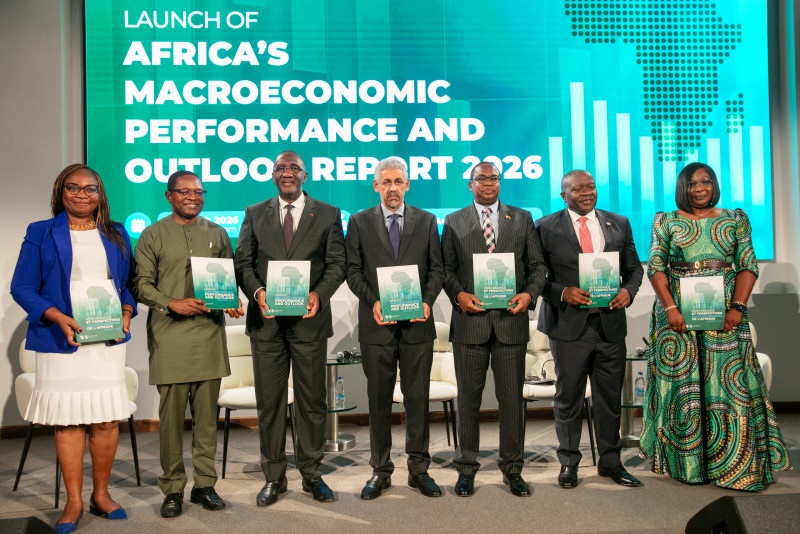

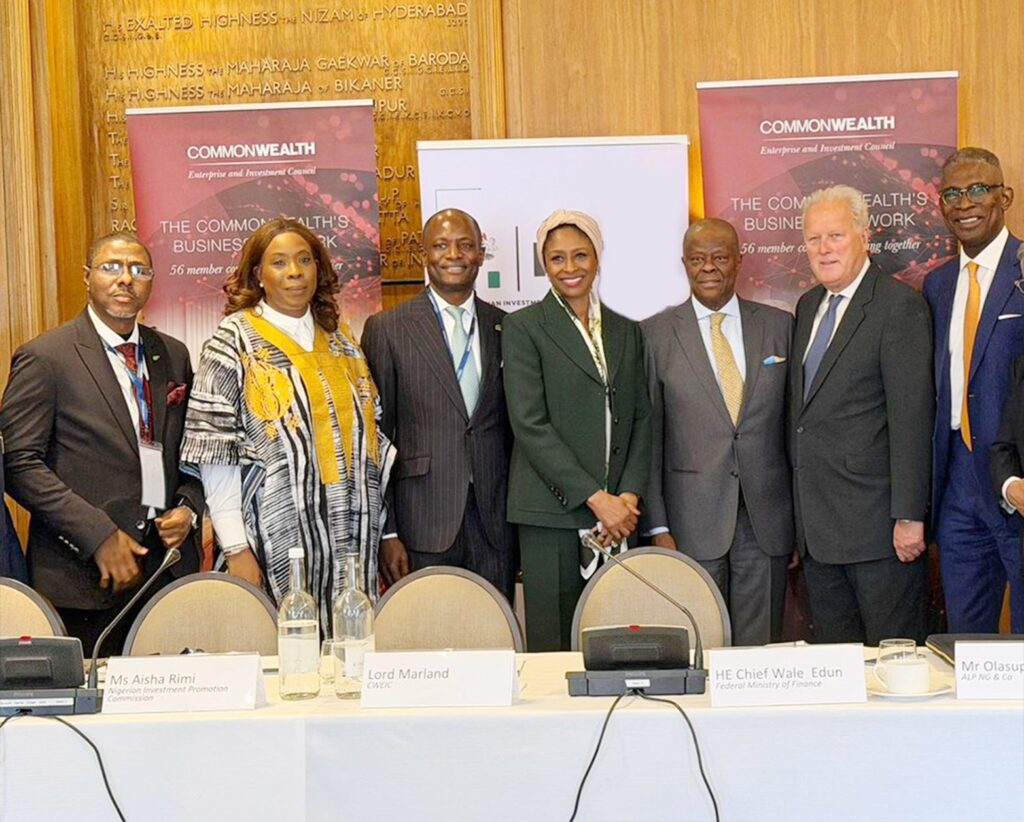
Caption: From left, Chief Executive Officer, Central Securities Clearing System PLC (CSCS), Shehu Shantali; Lagos State Commissioner for Commerce, Cooperatives, Trade and Investment, Mrs. Folashade Bada Ambrose; GMD/CEO of Nigerian Exchange Group, Mr. Temi Popoola; Executive Secretary and Chief Executive Officer of the Nigerian Investment Promotion Commission (NIPC), Ms. Aisha Rimi; Minister of Finance and Coordinating Minister of the Economy of Nigeria, Wale Edun; Chairman of the Commonwealth Enterprise and Investment Council, Lord Marland; and Country Chair – Nigeria, Commonwealth Enterprise and Investment Council, Olasupo Shasore SAN at the Nigerian-United Kingdom Investment Roundtable by NIPC in London on Monday.
The Group Managing Director/Chief Executive Officer of Nigerian Exchange Group Plc, Temi Popoola, on Monday in London said Nigeria’s ongoing economic reforms are already strengthening domestic capital formation and positioning the country for deeper global investment partnerships.
Speaking at the Nigeria–United Kingdom Investment Roundtable organised by the Nigerian Investment Promotion Commission in partnership with the Commonwealth Enterprise and Investment Council in London, Popoola drew comparisons with countries like Indonesia, Brazil and India, as economies that implemented structural reforms.
These countries, he noted, often witnessed strong domestic capital mobilisation and strengthened corporate balance sheets, adding that Nigeria is currently experiencing a similar trend as local investors and corporates increasingly respond to policy reforms.
According to Popoola, “the real test of reforms is what local capital does and how domestic corporates respond.
In Nigeria today, local capital is playing a very strong role. Markets were up more than 50% last year, issuers are raising new capital, retail investors are returning to the market, and corporate balance sheets and governance standards are improving,” he stressed.
He also highlighted the strong capital market relationship between Nigeria and the United Kingdom, adding that the collaboration between the Nigerian Exchange Group and the London Stock Exchange has helped facilitate cross-border capital raising for corporates in both jurisdictions.
Looking ahead, Popoola said Nigeria’s capital market is positioning itself to support larger ticket transactions and broader wealth creation opportunities. “We see a future where capital markets go beyond facilitating capital raising to supporting business expansion and wealth creation for Nigerians,” he said, adding that continued market modernisation and digital transformation are strengthening the country’s financial ecosystem.
Also speaking at the roundtable, Nigeria’s Minister of Finance and Coordinating Minister of the Economy, Wale Edun, highlighted the Federal Government’s reform agenda aimed at restoring macroeconomic stability, strengthening fiscal sustainability and attracting long-term investment into the country.
Meanwhile, the Governor of Lagos State, Babajide Sanwo-Olu, emphasized the role of Nigeria’s financial and commercial capital as a leading economic hub in Africa, noting that the state government is collaborating with TheCityUK to further develop Lagos as a global financial and investment centre.
He, therefore, used the opportunity to invite participants to the upcoming Lagos Investment Forum scheduled for June.
Welcoming participants earlier, Chief Executive Officer of the Nigerian Investment Promotion Commission, Aisha Rimi, said the roundtable was aimed at strengthening investment partnerships between Nigeria and the United Kingdom.
She was joined by Lord Marland of the Commonwealth Enterprise and Investment Council, who underscored the importance of collaboration between governments, investors and private sector institutions in unlocking new investment opportunities across the Commonwealth.
The Nigeria–United Kingdom Investment Roundtable brought together policymakers, investors and business leaders to explore opportunities for deeper investment collaboration between both countries as Nigeria continues to implement wide-ranging economic reforms.