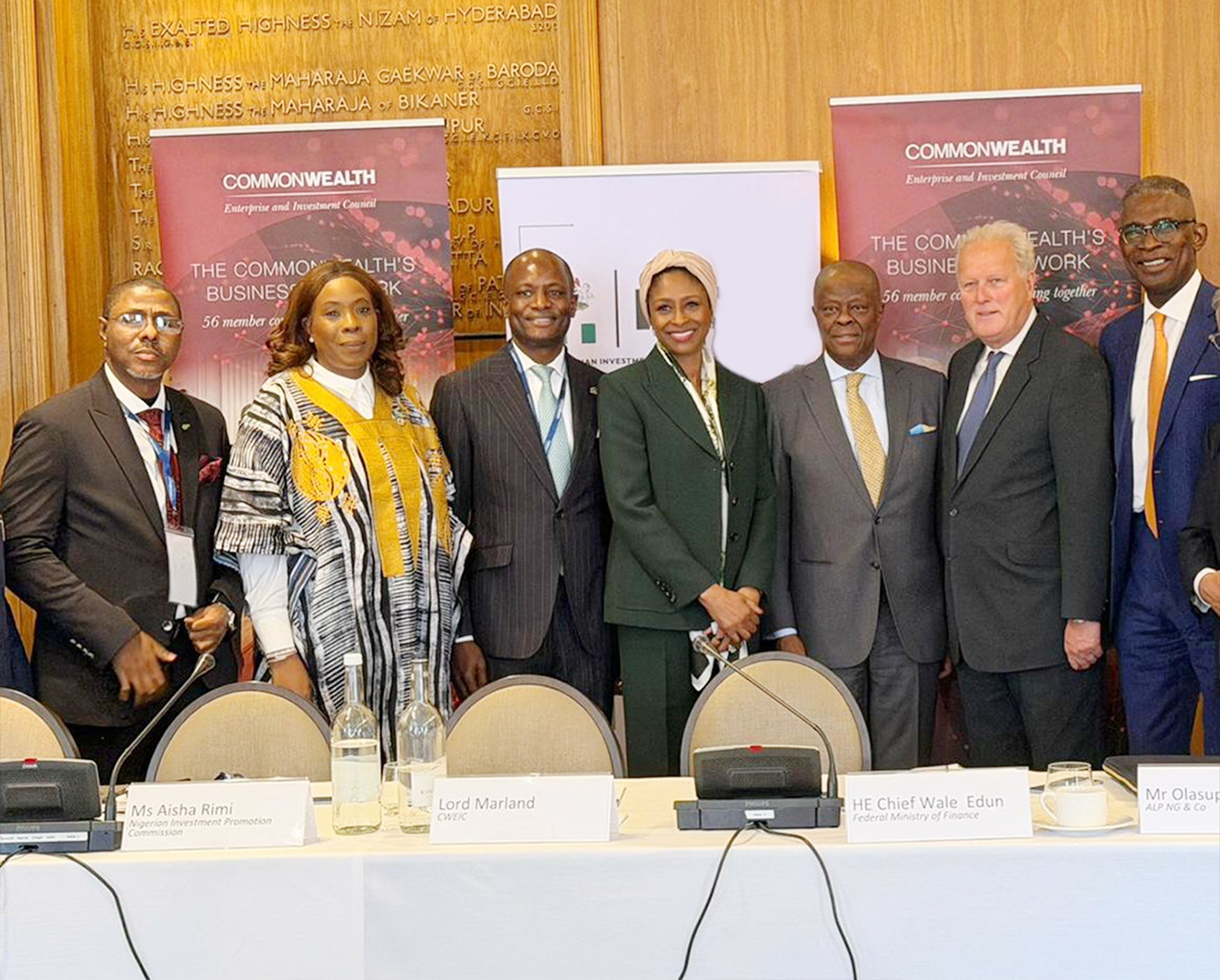


Caption: Director–General, Nigeria’s Securities and Exchange Commission (SEC), Dr Emomotimi Agama (left), welcoming the Managing Director/Chief Executive Officer of the Federal Mortgage Bank of Nigeria (FMBN), Shehu Usman Osidi to a meeting in his Abuja office, Friday, November 14, 2025.
In what is being hailed as a potential game-changer and as part of a new initiative to tackle the country’s massive housing deficit and deepen financial inclusion, Nigeria’s Securities and Exchange Commission (SEC), on Friday anounced a strategic partnership with the Federal Mortgage Bank of Nigeria (FMBN) that will birth a robust Non-Interest Mortgage (NIM) ecosystem.
The partnership seeks to create and regulate viable, Sharia-compliant financing structures that will enable millions of Nigerians, particularly those excluded from conventional interest-based loans, to access affordable homeownership, bridging the over 28 milion units husing deficit.
The plan, the commission noted in a statement announcing the deal, directly addresses the twin challenges of affordability, a key barrier to homeownership, as well as, religious compliance of mortgage products for a significant segment of the population.
Director-General of the SEC, Dr. Emomotimi Agama while emphasizing the Commission’s role in ensuring the integrity and stability of the proposed financial instruments, stated that the SEC would provide the necessary regulatory guidance and framework to facilitate the issuance of Sukuk (imic bonds) and other non-interest capital market products to fund these mortgages.
According to Agama, “our collaboration with FMBN is pivotal to unlocking long-term financing for the housing sector.
“By creating a clear regulatory pathway for non-interest mortgage-backed securities, we can attract ethical investors, both domestic and international, to channel funds into this critical area. This will create a virtuous cycle of funding, construction, and ownership,” he added.
Also speaking, the Managing Director/Chief Executive Officer of FMBN, Shehu Osidi, said the collaboration marks a critical step in fulfilling the bank’s mandate to provide affordable housing for all Nigerians.
“For a long time, a substantial number of our citizens have been unable to participate in the National Housing Fund (NHF) scheme due to the interest-based nature of conventional mortgages. This partnership with SEC is a strategic response to that gap. We are committed to developing non-interest mortgage products that are not only ethical and inclusive but also financially sustainable,” Osidi said.
Also commenting, housing and finance expert, Ebilate McYoroki , welcomed the development describing it as “long overdue,” just as he described it as a masterstroke in financial inclusion.
“It taps into a vast pool of potential homeowners and investors who have previously been on the sidelines. If implemented transparently, it could significantly accelerate the pace of housing delivery in the country,” he added.
Besides reducing the housing deficit, the successful implementation of the framework is expected also stimulate the construction industry, create jobs, and foster greater financial inclusion, ultimately contributing to national economic growth.
Providing an insight into how the Non-Interest Mortgage Model Works, the SEC explained that unlike conventional mortgages that charge interest, non-interest financing is based on principles of risk-sharing, asset-backing, and equitable returns.
The models under consideration include include: Musharakah (Diminishing Partnership), where the financing bank and its customer jointly purchase a property, with the customer gradually buying out the bank through periodic payments. He then eventually become the sole owner.
There is also the Ijara (Lease-to-Own), wherein the bank buys the property and leases it to the customer for a fixed period, with a portion of the rental payments going towards the eventual ownership transfer; while Murabaha (Cost-Plus Sale) in which the bank acquires the property and sells it to the customer at a pre-agreed markup, payable in installments.