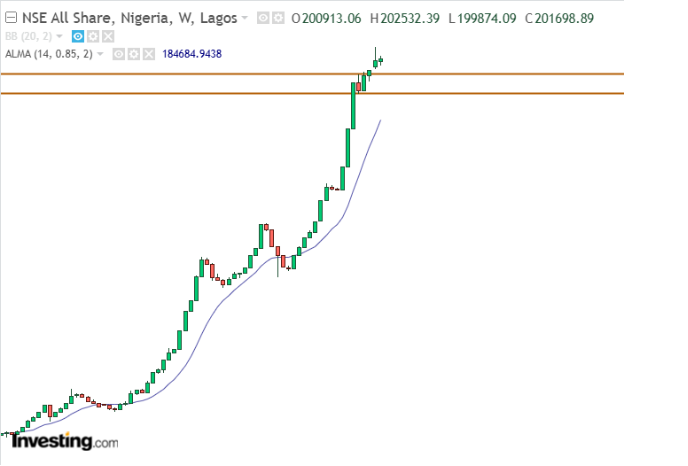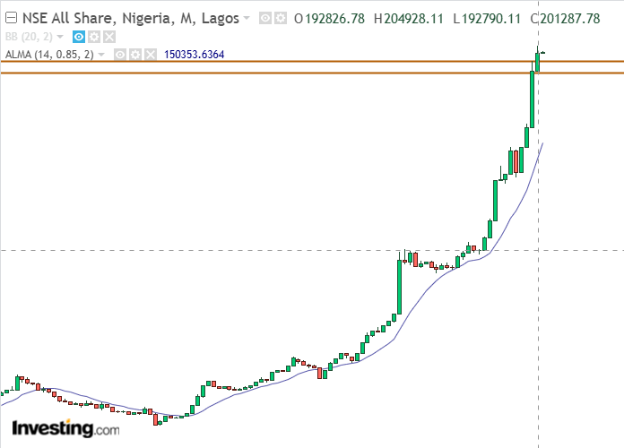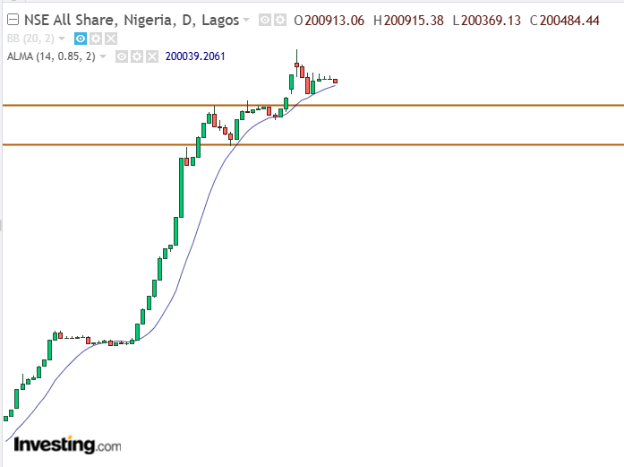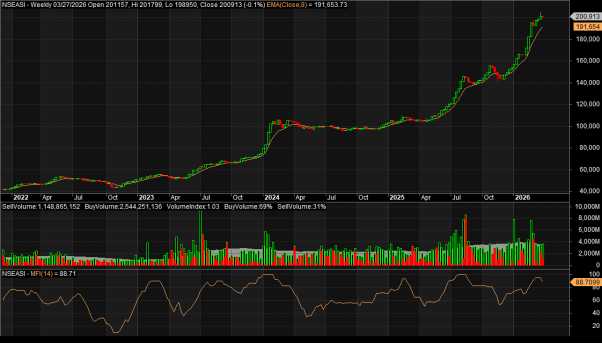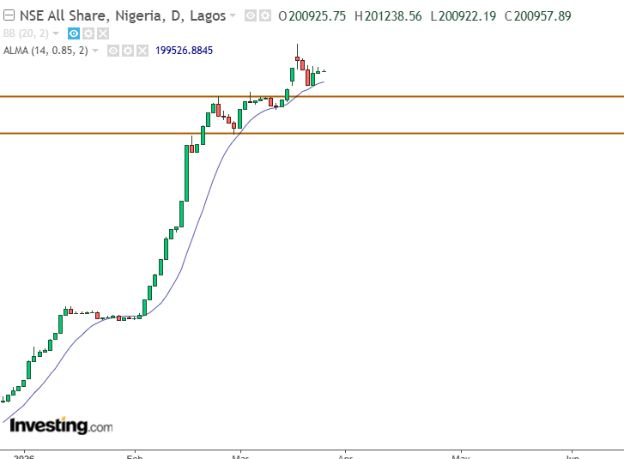

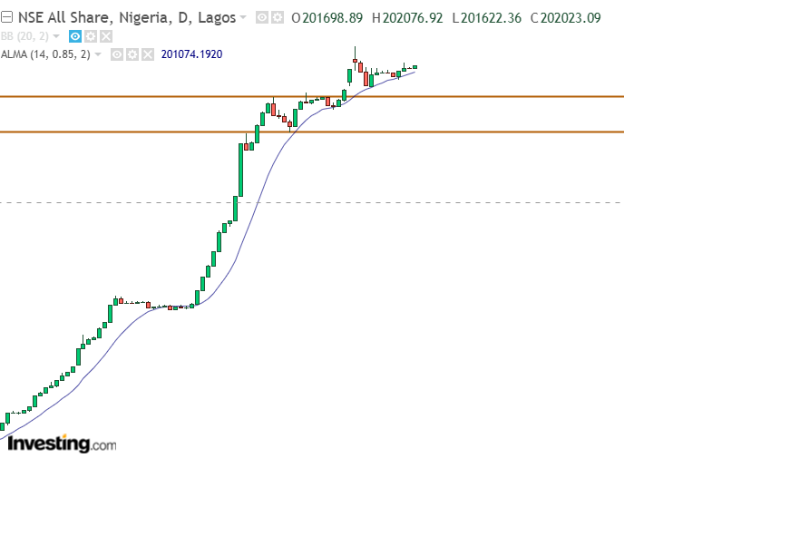
The Nigerian bourse remained bullish following its sectoral performance, closing above its moving average at 202,023.09 bps. Tuesday’s performance stayed positive due to earnings and dividend releases. This sentiment helps investors rebalance their portfolios and take profits where necessary.
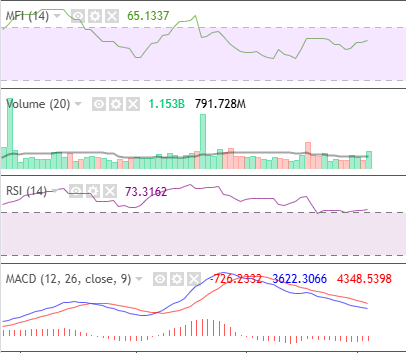
The indicators confirmed a strong bullish sentiment. Though MACD remained bearish, its signal strength has been weakening daily. The market is expected to maintain its strength and resilience, given its sustainable liquidity and momentum.
Sectoral Index Performance
NGXBNK: Banking Sector Index
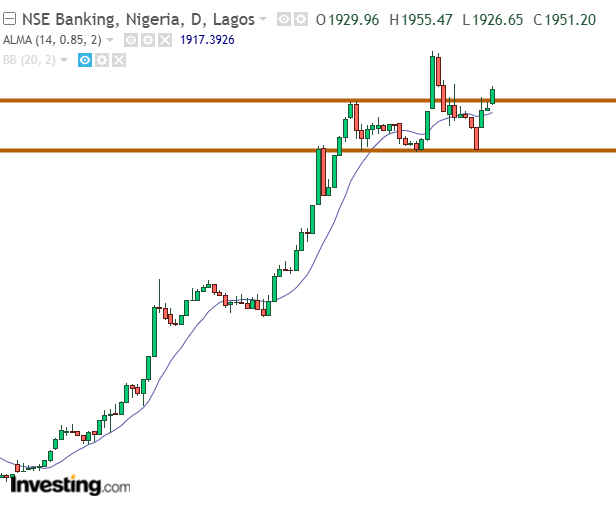
Following consistent earnings and dividend reports from big players in this sector, the NGXBNK surged, breaking its resistance zone at 1934.24 bps to close at 1951.20 bps. Thus, the index has completed its first–stage recovery to commence its markup phase.
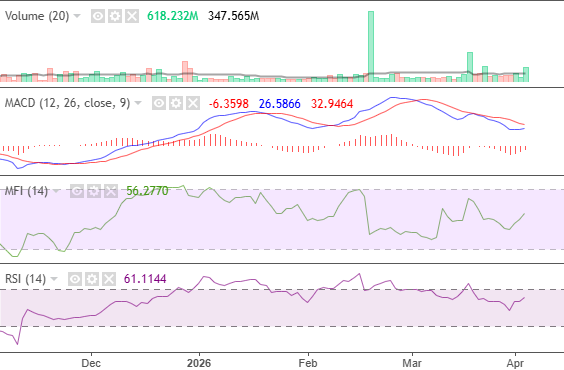
The indicators’ recovery is strong. Bullish volume crossed its moving average, indicating strong investor sentiment. Liquidity and momentum returned strongly to the index, as MFI reads 56.28 and RSI reads 61.11. MACD also shows signs of recovery, as its bearish momentum weakens. This index will fully recover when it crosses its resistance zone at 2008.74 bps.
NGXCSMG: Consumer Goods Sector Index
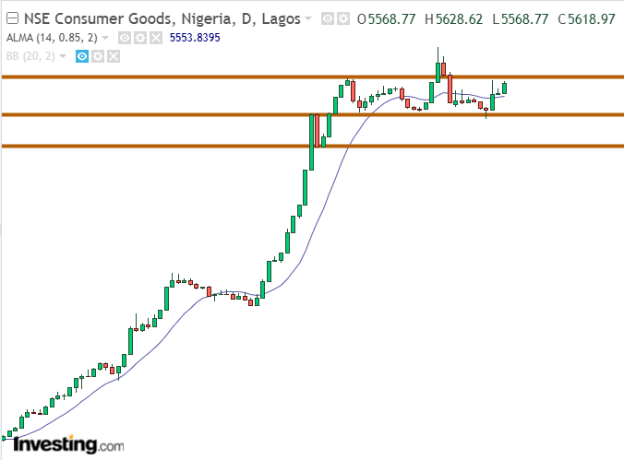
The consumer goods index closed bullish within its resistance zone. With this strong bull sentiment, the index has the potential to break its resistance level at 5651.68 bps. Currently, the NGXCSMG is trading above its moving average, closing at 5618.97 bps.
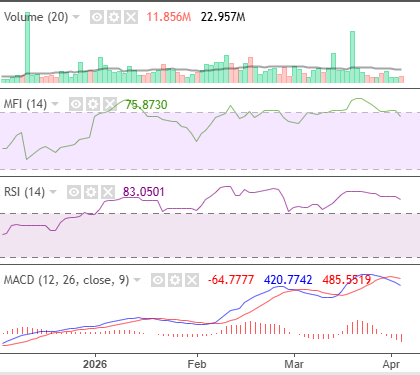
Given RSI and MFI, momentum and liquidity have returned to the market. This indication aligns with the current bullish sentiment among investors. MACD’s bearish momentum decreased as it gradually transitions into a bullish signal.
Generally, market players will observe how the index reacts close to its resistance zone. The index’s next performance will also determine the positioning outlook for investors
NGXIND: Industrial Sector Index
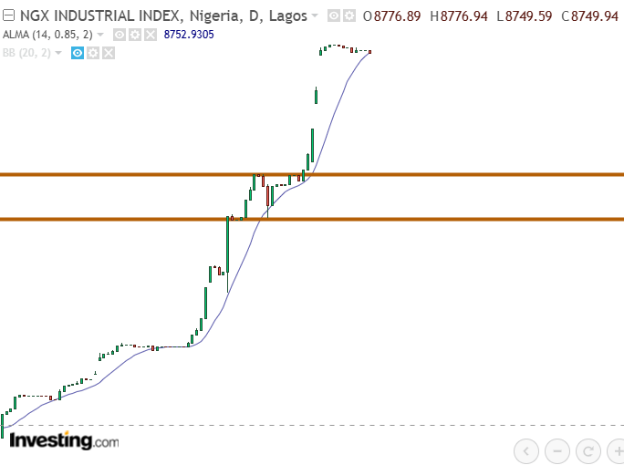
The industrial sector is in its profit-taking distribution phase. After a sturdy markup phase, the index closed slightly below its moving average, confirming its current phase. The NGXIND closed at 8749.94 bps.
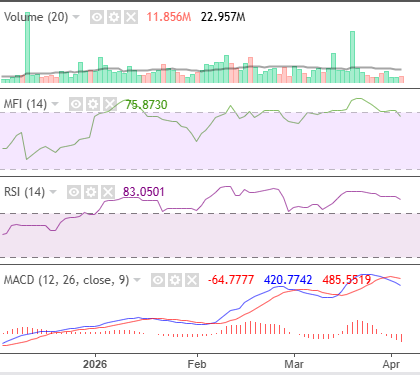
Other indicators tried to conform to the index’s distribution phase. Although liquidity and momentum remained high, MFI and RSI tilted downward, reflecting today’s index sentiment.
The bearish volume remained low because the index still attracts high liquidity and momentum. Finally, MACD’s bearish signal gained strength. Thus, market players will wait for another opportunity to buy into value.
NGXOGSE: Oil and Gas Sector Index
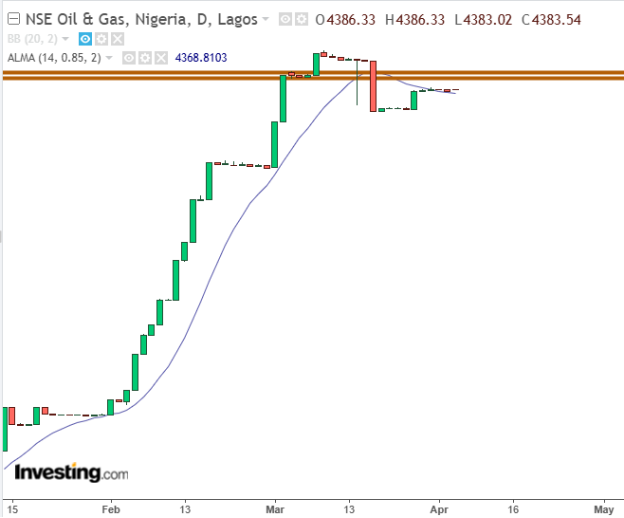
The oil sector continued trading within its resistance zone above the moving average. The index closed indecisively at 4383.54 bps. Despite the uncertainty from this index, it remained above, which signals strength and resilience.
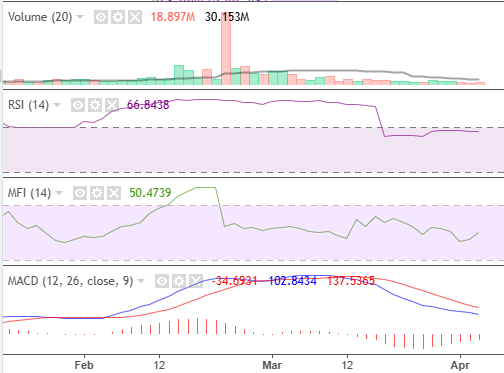
Given the indicator readings, the market was slowly recovering. MACD’s bearish signal remained flat, while liquidity returned to the market. RSI maintained its momentum, indicating the market’s sturdiness. With this performance, investors will continue to look for a stronger markup signal to inform position placement.
NGXINS: Insurance Sector Index
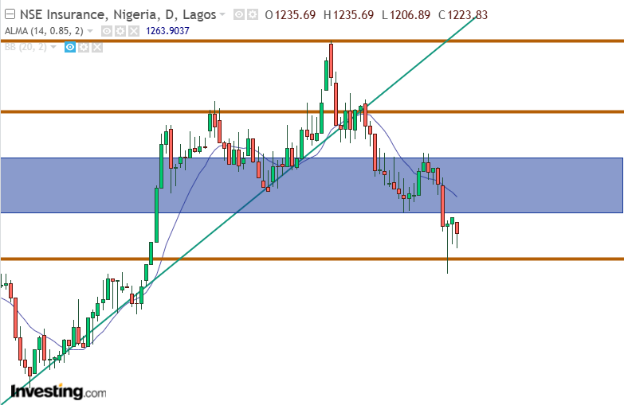
The insurance sector continued its bearish sentiment until the bulls took over from 1206.89 bps. The index traded below its moving average, closing at 1223.83 bps. Currently, the NGXINS’s strength is weak.
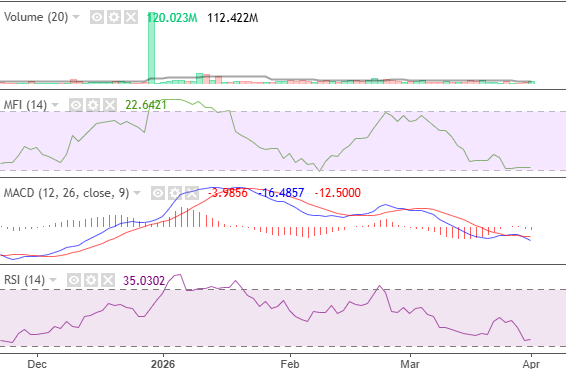
The overall signal from these indicators remained mixed. While the market showed potential for a bull rally, liquidity, volume, and momentum remained low. MFI tried to communicate a potential bull surge after it closed flat; however, MACD’s bearish signal gained momentum. Thus, investors will continue to investigate the index’s current support strength.
Final Thoughts
The result released in the bank sector is reflected in its index. As more results emerge, the banking index is expected to maintain its bullish surge. The consumer sector’s performance wasn’t convincing enough for investors to consider ad it closed at its resistance level. Finally, the industrial sector offers a potential for a prolonged bearish sentiment amidst profit-taking.