
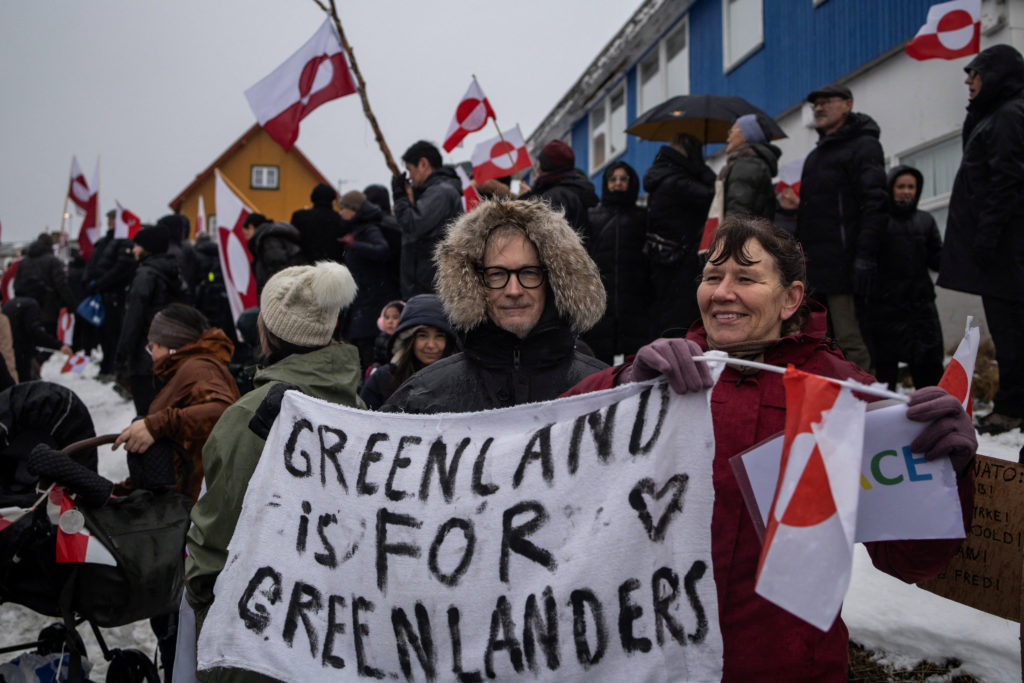
People attend a protest against U.S. President Donald Trump's demand that the Arctic island be ceded to the U.S., calling for it to be allowed to determine its own future, in front of the U.S. consulate in Nuuk, Greenland, January 17, 2026. REUTERS/Marko Djurica TPX IMAGES OF THE DAY
Nigel Green, Chief Executive of global financial advisory giant – deVere Group, on Tuesday warned that the decision by Europe to use capital markets as retaliatory tool against U.S President Donald Trump over his plans to annex Greenland would trigger financial disruption far exceeding the impact of tariffs.
The warning comes as the European Union is reportedly weighing deployment of its Anti-Coercion Instrument while preparing up to €93 billion (about $107.71 billion) in retaliatory tariffs against the US.
The measures would follow Trump’s warning that tariffs could rise to 25% unless Europe agreed to a deal involving Greenland.
Trump’s appearance at the World Economic Forum in Davos on Wednesday, Green believes, is likely to place the dispute at the centre of a summit normally designed to project stability. Instead, trade, geopolitics, and financial leverage is expected to dominate discussions.
Overnight, Trump posted on Truth Social an AI-generated image of himself alongside Vice President JD Vance and Secretary of State Marco Rubio in the Oval Office, with Greenland, Canada, and Venezuela shown beneath the Stars and Stripes.
Should “the Europeans detonate the Anti-Coercion Instrument, this would no longer be a trade dispute,” Green stressed.
“Capital markets themselves would be weaponized to become a tool of geopolitical pressure.
“Tariffs would hit exporters. Capital pressure would hit confidence, currencies, bonds, and equities all at once.”
Europe would hold substantial theoretical leverage. European countries would collectively own around $8 trillion of US bonds and equities, making them America’s largest external financiers.
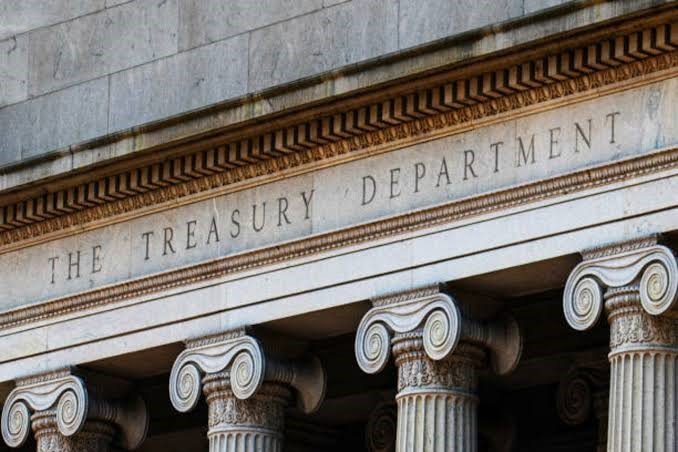
NATO allies alone would hold close to $3 trillion in US Treasuries.
“This exposure would give Europe influence that tariffs could never match,” notes the deVere chief executive.
“The US relies on foreign capital to fund its deficits. This reliance would be the pressure point.”
However, he warns that leverage would come with severe limitations, adding that “capital markets do not obey political instruction. They reprice, and once that process starts it would not stay contained.”
Europe would also face a structural problem. There would likely be no credible alternative destination for capital on the scale required to materially reduce US exposure. Asian markets would lack sufficient depth. Global portfolios could be expected to remain anchored to US assets because of liquidity, legal certainty, and scale.
“Europe wouldn’t be choosing between the US and a clean substitute,” says Green.
He continues: “A move against US capital markets would push up US yields and would pressure the dollar.
“It would also tighten global liquidity and rebound into European banks, pension funds, and corporates that rely on dollar funding.”
The Anti-Coercion Instrument itself would amplify uncertainty. It’s never been used. Its procedural timelines would risk prolonging instability rather than delivering resolution.
“This would stretch political risk over weeks or months,” Green says.
“Markets dislike nothing more than unresolved pressure,” he further explained.
Trump’s current posturing would suggest little appetite for retreat, even as his Davos attendance is likely to coincide with an increasingly forceful public stance rather than compromise.
deVere concludes that while the risks of deploying capital-based measures would be significant for Europe, the more important signal lies in the fact that such options would now be openly discussed.
“The Anti-Coercion Instrument would not be on the table lightly. It carries costs for Europe as well as the US.
“The fact that it is being publicly reported would indicate that policymakers see the threat as serious and escalating.
“The moment capital measures are discussed, markets could begin to price the possibility,” Green explains.
“This alone would tighten conditions and raise uncertainty.”
The Greenland dispute would therefore mark a shift in how far Europe might be prepared to go.
The deVere CEO concludes: “This would be Europe signalling that conventional trade retaliation may no longer be sufficient. The risks of escalation would be real, but so would the message that the red lines have moved.”
“The most important development right now is not what Europe does immediately, but what it’s now prepared to consider.”