
Market Update For March 11, 2026
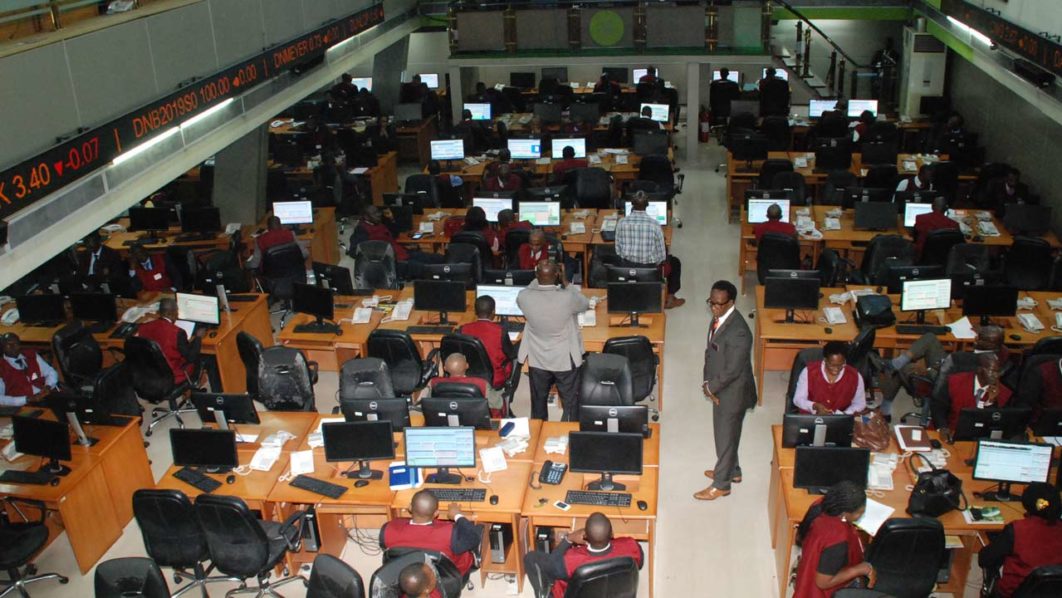
Trading on the Nigerian Exchange (NGX) ended on a cautious note on Wednesday as investors continued to take profits in several stocks that had recorded significant gains in recent weeks. The market maintained a weak tone throughout the session, reflecting a gradual shift from aggressive buying to selective positioning as participants reassess valuations and lock in returns.
The midweek session was largely characterized by mixed sentiment across sectors. While some counters attracted renewed interest from investors seeking opportunities in fundamentally sound companies, the overall market direction remained subdued due to selling pressure in several mid- and large-cap stocks. This trend highlights a typical market behaviour following a prolonged rally, where investors temporarily step back to consolidate gains before initiating fresh buying cycles.
Investor positioning during the session suggested a cautious but not entirely negative outlook. Bargain hunters were active in selected stocks with strong earnings prospects, while short-term traders continued to trim positions in counters that had recently reached elevated price levels. The interplay between these opposing forces contributed to the modest pullback recorded by the market.
Sectoral performance also reflected this cautious environment. Weakness in some consumer goods and industrial stocks weighed on sentiment, while pockets of resilience were observed in certain financial and service-related equities. This pattern of selective activity suggests that investors are gradually shifting toward stocks with stronger fundamentals, liquidity, and dividend expectations as they position for the next phase of market movement.
Market participation slowed during the trading session, as evidenced by the decline in transaction volumes and values compared with the previous day. This moderation in activity indicates that some investors may be adopting a wait-and-see approach while monitoring developments both in the domestic economy and in global financial markets.
Total volume traded during the session declined by 10.12% to 671.27 million shares, with a turnover value of N26.13 billion recorded in 58,792 deals. The reduced trading activity reflects a slight pause in the aggressive momentum that had driven the market in previous sessions, although liquidity remained relatively healthy.
Among actively traded stocks, WEMABANK led the market in both volume and value traded, exchanging 106.36 million shares valued at N2.75 billion. The stock accounted for 15.84% of the day’s total traded volume and 10.54% of overall transaction value, reinforcing its position as one of the most actively traded banking stocks in the market.
Other notable contributors to market activity included ACCESSCORP and MBENEFIT, which recorded significant volume trades as investors maintained interest in banking and low-priced equities. On the value chart, ARADEL and DANGCEM featured prominently alongside WEMABANK, reflecting sustained institutional participation in some heavyweight stocks.
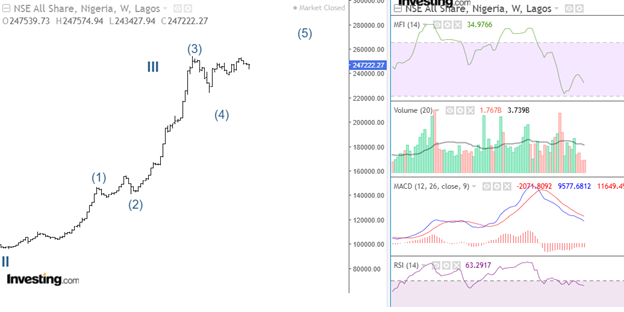
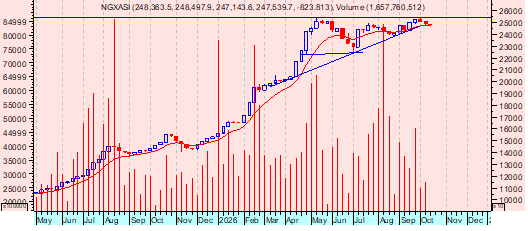
From a technical standpoint, the market appears to be entering a consolidation phase following its strong rally earlier in the year. The benchmark index is currently hovering around the 195,000–196,000 points range, which is emerging as an important near-term support level. The ongoing pullback reflects profit-taking rather than a significant shift in the broader market trend.
Momentum indicators suggest that buying pressure has slightly weakened in the short term, although the index continues to trade above key moving averages that support the longer-term bullish structure. If the market holds above current support levels, bargain hunting could gradually return and trigger a renewed upward movement. However, persistent selling in heavyweight stocks may keep the market trading sideways in the near term.
Global macroeconomic developments also influenced investor sentiment during the session, particularly movements in the international oil market. Oil prices rebounded on Wednesday after sharp losses in the previous session, as traders questioned whether planned strategic oil releases could sufficiently offset supply risks linked to escalating geopolitical tensions in the Middle East.
Benchmark Brent crude rose by $3.31, or 3.8%, to $91.11 per barrel, while U.S. West Texas Intermediate (WTI) gained $3.13, or 3.8%, to $86.58 per barrel. The rebound followed a dramatic decline earlier in the week, underscoring the heightened volatility currently present in global energy markets.
The recovery in oil prices comes amid reports that the International Energy Agency (IEA) is considering a record release of approximately 400 million barrels of oil from global strategic reserves in an effort to stabilise markets. Such a release would represent the largest coordinated intervention in the agency’s history and significantly exceed the 182 million barrels released in 2022 following Russia’s invasion of Ukraine.
Despite the scale of the proposed intervention, market analysts remain uncertain about its potential impact if geopolitical tensions continue to threaten supply flows. The ongoing U.S.–Israeli conflict with Iran has heightened concerns over possible disruptions in the Strait of Hormuz, a critical maritime route through which a substantial portion of the world’s oil supply is transported.
Any prolonged disruption in this strategic corridor could tighten global oil supply and sustain upward pressure on crude prices. For Nigeria, stronger oil prices could support government revenue and improve foreign exchange inflows, factors that often play an important role in shaping investor sentiment within the domestic equity market.
Looking ahead, market participants are expected to maintain a cautious but opportunistic stance. Investors are likely to focus on fundamentally strong stocks with attractive valuations and dividend prospects while monitoring macroeconomic indicators and global developments that may influence liquidity and risk appetite.
At the close of trading, the NGX All-Share Index (ASI) declined by 0.09% to 195,898.53 points, compared with 196,066.11 points recorded in the previous session. Market capitalisation fell by N107.58 billion to N125.75 trillion, while the market’s year-to-date return moderated to 25.89%. Market breadth closed negative with 40 decliners against 29 gainers. NGXGROUP led the gainers’ chart, while PRESCO recorded the steepest loss. Major decliners included PRESCO (-10.00%), UACN (-9.97%), SCOA (-9.86%), ETERNA (-7.84%), NB (-1.39%), UBA (-0.75%), DANGCEM (-0.61%), OANDO (-0.59%), TRANSCORP (-0.51%), and ZENITHBANK (-0.16%), while NGXGROUP, PREMPAINTS, and BUACEMENT traded above their respective 52-week highs.