

Caption: Dr. Umaru Kwairanga, chairman of Nigerian Exchange Group Plc (third left), being welcome to the Hong Kong Exchange for a meeting on Wednesday
Market Update For August 12, 2026
The Nigerian equities market extended its decline on Wednesday, August 12, 2026, as renewed profit-taking and selling pressure in major stocks weighed on investor sentiment. The bearish performance came after the previous session’s decline, with investors appearing increasingly cautious following the strong gains recorded across the NGX in recent months.
The pressure was concentrated in several heavyweight counters, particularly BUAFOODS and UNILEVER, both of which lost almost the maximum 10%. The declines in these large-cap stocks had a significant impact on the benchmark index, outweighing gains recorded in several other counters.
Other notable decliners included ACCESSCORP, UACN, HBMNG, FIDELITYBK, UBA, ZENITHBANK and GTCO. The combined losses in these major stocks reinforced the cautious tone and pushed the market lower.
However, Wednesday’s session was not characterised by broad-based selling. Several stocks attracted strong buying interest, with INTENEGINS, ETI, TRANSEXPR and CWG posting gains of more than 9%. This suggests that investors continued to rotate funds into selected counters even as they reduced exposure to some major gainers.
The performance of major stocks was central to Wednesday’s decline. BUAFOODS recorded the maximum daily loss of 10%, falling to ₦760.60, while UNILEVER dropped 9.97% to ₦131.40.
The declines were significant because of the market value and influence of these stocks. As a result, the benchmark index recorded a sharper decline than the relatively balanced market breadth might suggest.
Selling pressure also extended into selected banking stocks. ACCESSCORP declined 3.01%, UACN fell 2.86%, FIDELITYBK lost 2.27%, while UBA dropped 2.15%. ZENITHBANK and GTCO also closed lower.
The weakness in financial stocks remains important for the broader market because the sector accounts for a significant portion of NGX liquidity and trading activity. Continued pressure on major banking counters could therefore remain a drag on the market in the short term.
Despite the bearish close, buying interest remained strong in several counters. INTENEGINS led the gainers with a 10% increase, while ETI gained 9.93%, TRANSEXPR rose 9.77% and CWG advanced 9.74%.
The strong performance of these stocks indicates that investors have not completely withdrawn from equities. Instead, the market appears to be entering a more selective phase, with investors directing funds toward counters they consider relatively attractive.
This type of rotation is common during periods of market consolidation. As investors lock in gains from stocks that have rallied strongly, they may redirect capital toward companies with better valuations, improving earnings prospects or specific market catalysts.
Trading activity remained heavily concentrated in a few counters. FTGINSURE dominated volume with 852.27 million shares traded, making it the most actively traded stock on the exchange.
UNIVINSURE and CHAMS also featured among the most actively traded stocks by volume, highlighting continued interest in highly liquid counters.
On the value side, FIRSTHOLDCO led the market with approximately ₦3.90 billion worth of shares traded. FTGINSURE and SEPLAT also featured among the leading contributors to traded value.
The concentration of activity suggests that investors remained cautious about taking broad positions across the market. Instead, liquidity continued to flow into specific stocks where investors identified short-term opportunities.
One of the more notable features of Wednesday’s session was the relatively balanced market breadth. The NGX recorded 31 gainers against 32 losers, while 84 stocks remained unchanged.
This suggests that the market’s decline was driven mainly by sharp losses in selected heavyweight stocks rather than widespread selling across the exchange.
The presence of 31 advancing stocks indicates that buying interest remained active, while the 32 decliners showed only a marginal advantage for sellers.
The large number of unchanged stocks, however, points to investor caution, with many market participants potentially waiting for clearer signals before taking fresh positions.
AVACAP also remained under pressure, falling below its previous 52-week low from ₦8.25 to ₦8.10, highlighting weakness in some individual counters despite buying interest elsewhere.
Technical Analysis
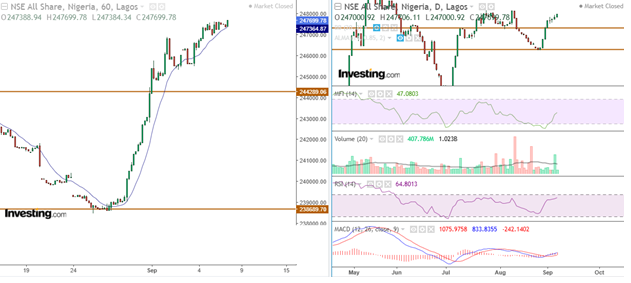
From a technical perspective, the NGX All-Share Index remains under short-term pressure following its 1.12% decline. The consecutive losses suggest that bearish momentum has strengthened after the market failed to sustain its recent upward trajectory.
The fall below the 245,000 psychological level is significant. The level now represents an immediate resistance zone that the index would need to reclaim before a stronger recovery can develop.
The 243,000–244,000 region has emerged as an important support area. If the ASI holds above this zone and buying interest returns, the current decline could remain a temporary correction following the market’s strong rally.
A recovery above 245,000, particularly if supported by stronger volume and improved market breadth, would provide an early positive signal and could encourage bargain hunting.
Conversely, a decisive break below the 243,000–244,000 support area would increase downside risks and could trigger additional profit-taking.
For now, the technical structure points to a market undergoing consolidation with a short-term bearish bias. Investors will be watching price action, trading volume and market breadth closely for confirmation of the next direction.
Oil Market
The global oil market also remained volatile on Wednesday, creating an important external consideration for Nigerian investors.
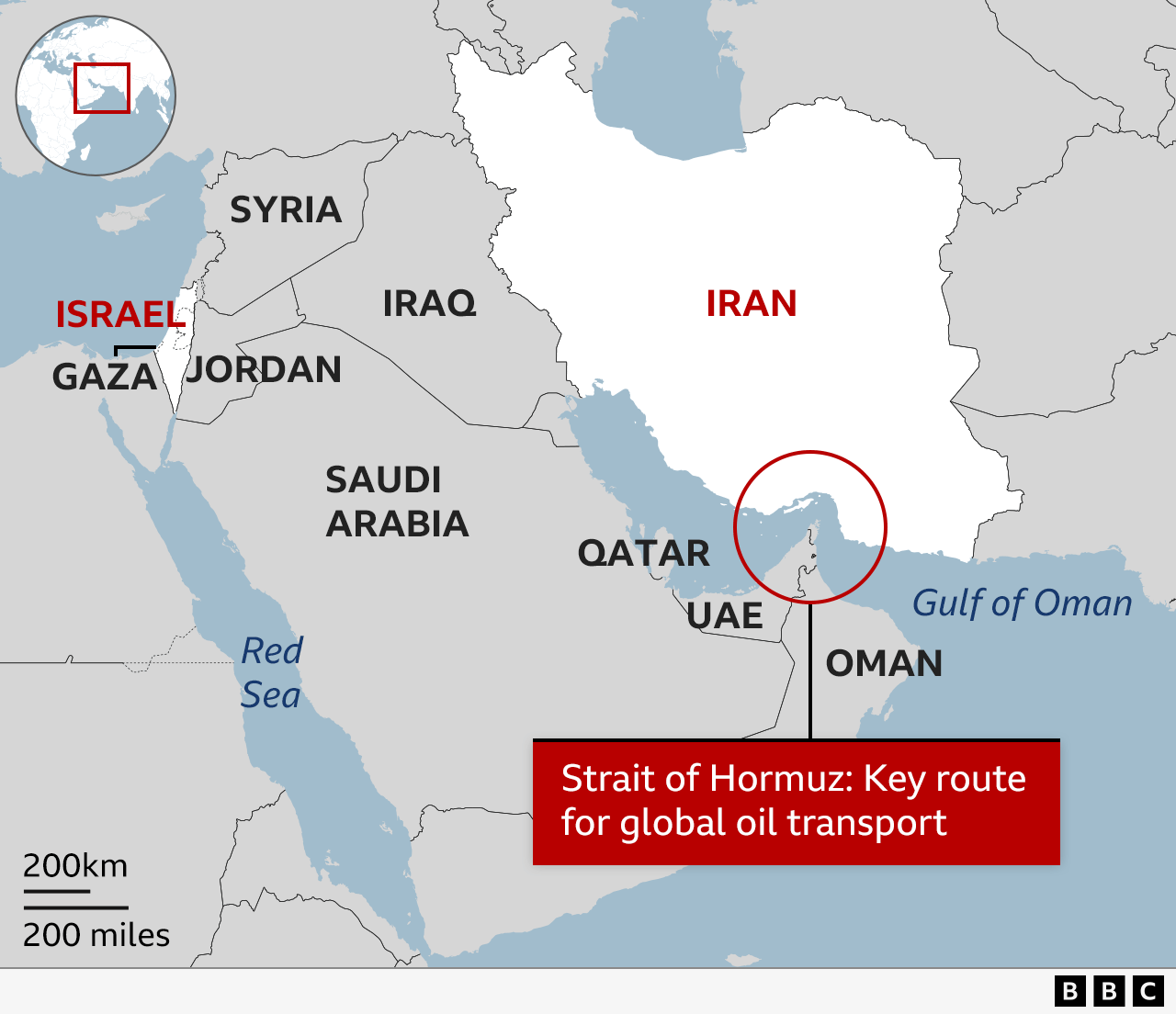
Brent crude traded around the $88–$89 per barrel range, while U.S. West Texas Intermediate remained around $83 per barrel as investors weighed weaker global demand expectations against geopolitical risks and disruptions to crude transportation in the Middle East.
The Organisation of Petroleum Exporting Countries lowered its forecast for global oil demand growth in 2026 to 580,000 barrels per day. The International Energy Agency adopted a more bearish view, projecting a 1.6 million-barrel-per-day contraction in global demand this year.
However, the weaker demand outlook is being offset by supply concerns. The IEA expects global oil supply to decline by about 4.3 million barrels per day in 2026, while continued disruptions around key Middle Eastern shipping routes are keeping supply concerns elevated.
U.S. crude inventories also increased sharply, adding downward pressure to prices and raising concerns about weaker demand. However, geopolitical tensions and disruptions around the Strait of Hormuz continue to provide support to crude prices.
The conflicting demand and supply signals have therefore kept the oil market volatile.
For Nigeria, developments in crude prices remain particularly important because oil continues to influence government revenue, foreign exchange inflows and broader economic conditions. Sustained high crude prices could support Nigeria’s external position and fiscal revenues, while a prolonged decline could increase pressure on government finances and foreign exchange liquidity.
Outlook
The near-term outlook for the NGX remains cautious as investors continue to lock in profits following the market’s strong performance earlier in the year.
The decline in major consumer and banking stocks suggests that profit-taking could remain a key feature of trading in the coming sessions. Investors may continue to reduce exposure to stocks that have recorded significant gains while searching for opportunities in fundamentally strong companies trading at more attractive levels.
Nevertheless, the balanced market breadth provides some support for the broader outlook. The near-even split between gainers and losers indicates that the market has not yet entered a broad-based sell-off.
The performance of large-cap stocks will remain critical. A return of institutional buying into major banking, consumer and industrial counters could help stabilise the benchmark and create room for a technical rebound.
Oil prices will also remain an important external variable. The combination of geopolitical supply risks, weaker demand expectations and changing crude inventories means that volatility is likely to persist in the energy market. For Nigeria, developments in crude prices could influence investor expectations around fiscal revenues, foreign exchange liquidity and macroeconomic stability.
In the immediate term, the NGX’s ability to defend the 243,000–244,000 support zone will be critical. Holding this level could encourage bargain hunting and create the foundation for a recovery. A break below it, however, would increase the probability of further downside.
Investors are therefore likely to maintain a selective approach, focusing on companies with strong earnings, sustainable cash flows, attractive valuations and solid dividend prospects rather than taking broad market positions.
Overall, Wednesday’s decline appears to represent a period of consolidation and profit-taking rather than a clear reversal of the market’s longer-term trend. However, continued weakness in heavyweight stocks could deepen the correction if buyers fail to return.
ASI, Capitalisation, Values, Performance, Market Breadth, Market Movers, Top Gainers and Losers: The NGX All-Share Index declined by 2,766.39 points, or 1.12%, to close at 243,957.18, while market capitalisation fell by ₦1.77 trillion to ₦157.49 trillion. Total market activity stood at 1.40 billion shares valued at ₦18.77 billion across 36,404 deals. Market breadth was relatively balanced at 31 gainers, 32 losers and 84 unchanged, indicating that the decline was driven more by losses in selected heavyweight stocks than broad-based selling. FTGINSURE led traded volume with 852.27 million shares, while FIRSTHOLDCO recorded the highest traded value at approximately ₦3.90 billion. Major market movers included BUAFOODS, UNILEVER, JOHNHOLT, AVACAP, ACCESSCORP, UACN, FIDELITYBK and UBA on the downside, while INTENEGINS, ETI, TRANSEXPR, CWG and CORNERST recorded strong gains. Top gainers: INTENEGINS (+10.00%) to ₦4.40, ETI (+9.93%) to ₦71.40, TRANSEXPR (+9.77%) to ₦2.36, CWG (+9.74%) to ₦21.40 and CORNERST (+6.80%) to ₦5.50. Top losers: BUAFOODS (-10.00%) to ₦760.60, UNILEVER (-9.97%) to ₦131.40, JOHNHOLT (-9.90%) to ₦9.10, AVACAP (-9.50%) to ₦8.10 and AUSTINLAZ (-8.80%) to ₦2.90 each.