

Smoke billows after an Israeli strike on Beirut's southern suburbs, following an escalation between Hezbollah and Israel amid the U.S.-Israeli conflict with Iran, Lebanon, March 2, 2026. REUTERS/Mohamed Azakir TPX IMAGES OF THE DAY
Akintunde Oyedokun
Research Analyst
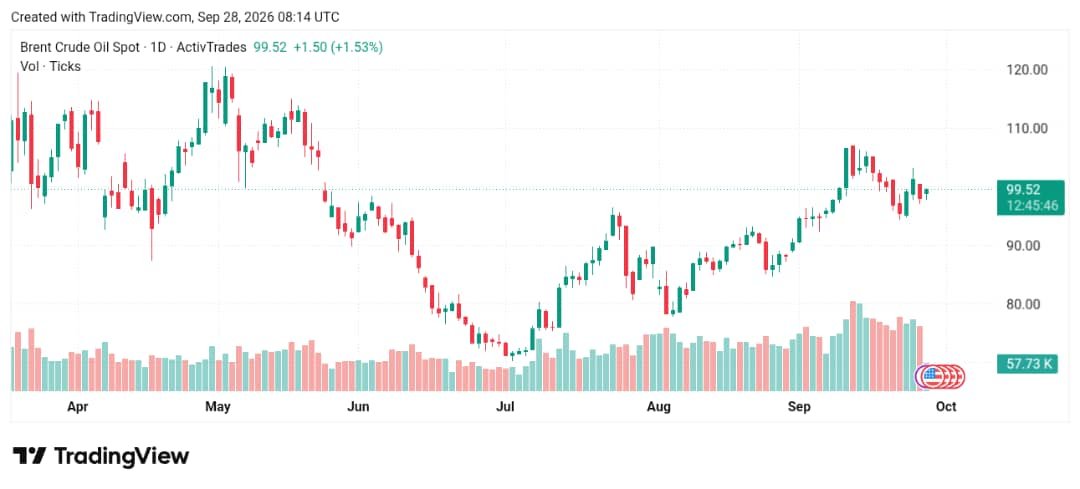
Oil prices gained over 3% on Thursday as uncertainty around the Middle East ceasefire raised fresh supply concerns.
Brent traded at $98.16, while WTI stood at $99.15, recovering from the previous session’s drop below $100.
Limited movement through the Strait of Hormuz and lingering geopolitical risks continue to support prices. Shippers remain cautious as uncertainty persists.
Germany’s Industrial Output Slips as Export Gains Fail to Lift Outlook
Germany’s industrial production dipped 0.3% in February, missing expectations of a 0.7% rise and pointing to a weak first quarter.
While factory orders saw a modest 0.9% increase, economists remain cautious about a recovery.
Exports rose 3.6%, led by strong European demand, but imports climbed 4.7%, narrowing the trade surplus to €19.8 billion. Exports to the U.S. fell 7.5% amid tariff pressures.
Mexico Inflation Spike Deepens Divide at Central Bank
Mexico’s central bank is divided after inflation rose to 4.59% in March, a 17-month high.
Minutes from its last meeting show a narrow 3–2 vote to cut rates to 6.75%, with some members supporting economic growth while others warned rising prices and global risks could worsen inflation.
Core inflation eased slightly, but uncertainty remains, and a pause in further rate cuts is likely at the next meeting.
South Africa’s Manufacturing Sector Slips Further as Output Declines in February
South Africa’s manufacturing sector remained under pressure in February, with output contracting by 2.8% year-on-year, deepening from a marginal 0.1% decline recorded in January, according to data released by the national statistics agency on Thursday.
On a month-on-month basis, factory production also weakened, falling by 2.2% in February, reversing the revised 1.9% growth posted in the previous month. The figures point to a fragile industrial sector still grappling with inconsistent demand and operational challenges.
Manufacturing Sector Drives N881bn Tax Revenue in 2025
Nigeria’s manufacturing sector contributed N881.29 billion in Company Income Tax in 2025, up from N663.46 billion in 2024.
However, collections weakened late in the year, with total CIT across sectors dropping sharply in Q4. Despite this, full-year CIT reached N9.22 trillion.
The sector remains key to the non-oil economy but continues to face cost and demand pressures.