
Akintunde Oyedokun
Research Analyst
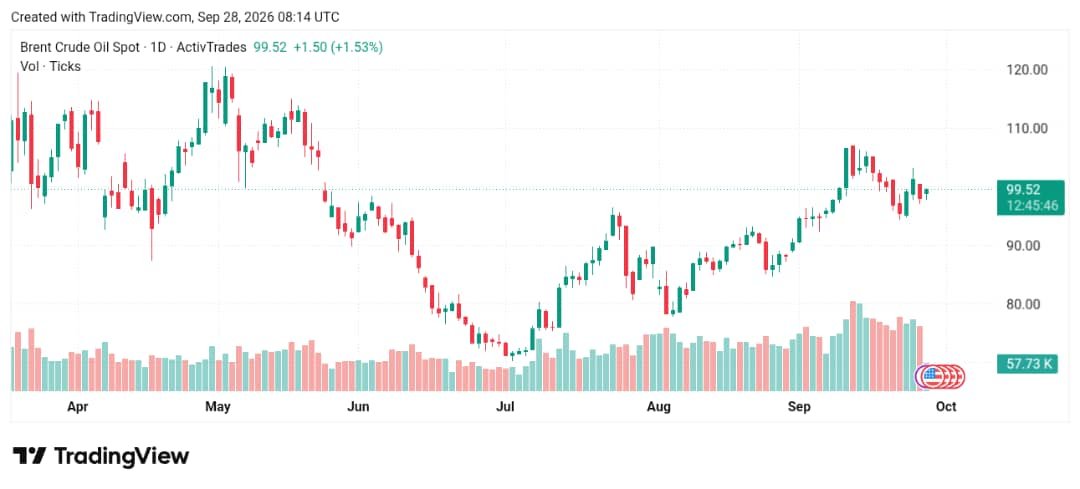
Oil prices rose about 2% on Monday as Iran-US tensions raised concerns over crude supplies.
Brent climbed 2.2% to $106.60 a barrel, while WTI gained 1.8% to $94.11, supported by risks around the Strait of Hormuz and tighter fuel supplies.
Markets are also watching expected diplomatic talks for signs of easing tensions and restoring oil flows.
Brazil Debt Exposure to Selic Rate Rises to 52.7%
Brazil’s debt linked to the Selic rate rose to 52.7% in August from 51.1% in July, increasing the government’s exposure to high borrowing costs.
Federal debt edged up 0.04% to 9.293 trillion reais, while interest costs reached 88.4 billion reais. The Selic rate remains at 13.75%, one of the world’s highest real interest rates.
UK Shop Price Inflation Slows
UK shop price inflation eased to 1.4% in September from 1.5% in August, the British Retail Consortium said.
Food inflation fell to 2.5%, while non-food inflation dropped to 0.8% as retailers increased discounts. The BRC urged the government to help offset rising business costs.
Zambia Targets 7% Growth by 2029
Zambia is targeting average economic growth of 7% over the next three years, supported by progress on debt restructuring.
The Finance Ministry projects growth of 6% in 2027, 7.5% in 2028 and 7.1% in 2029. The government plans to boost investment, exports and jobs through mining, energy and agriculture while seeking a new IMF programme.
States, FCT Domestic Debt Rises to N4.59tn
Domestic debt owed by Nigeria’s 36 states and the FCT rose by N67.57 billion to N4.59 trillion in Q2 2026, DMO data showed.
Delta recorded the largest increase, rising by N155.45 billion to N369.30 billion, while Lagos remained the biggest debtor at N1.20 trillion despite a slight decline.
Lagos, Delta, the FCT and Rivers accounted for nearly half of the total subnational domestic debt.