
Nigeria’s All-Share Weekly Performance For 8th, May 2026
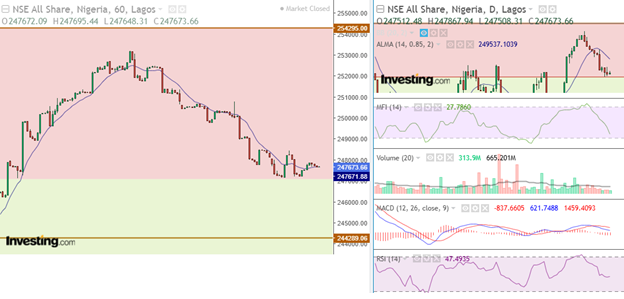
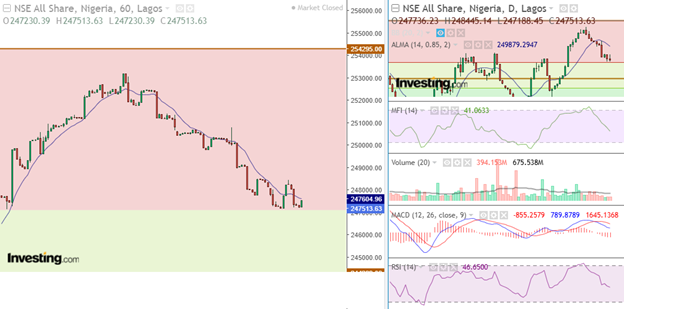
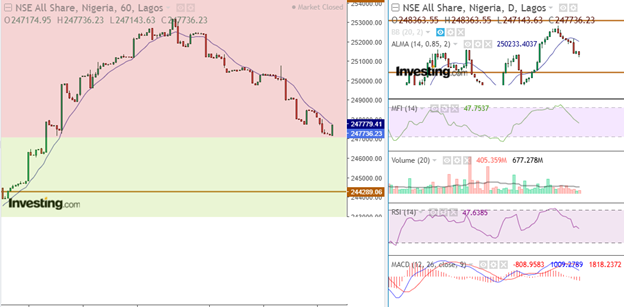
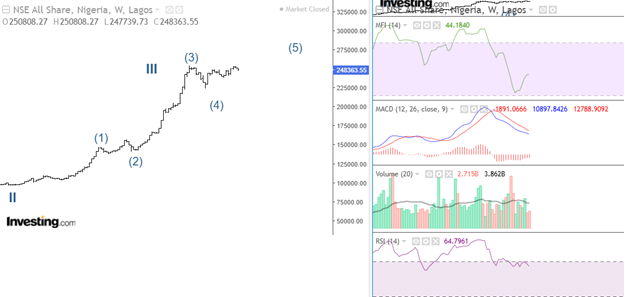
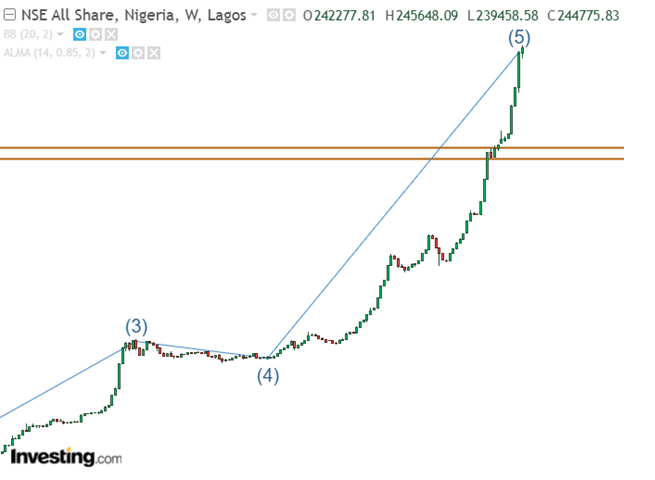
The NGXASI gained 1.03%, closing at 244,775.83 bps above its moving average. Following the Elliot wave theory, Nigeria’s All-Share index is in its 5th wave which is usually followed by a pullback that should correct the market.
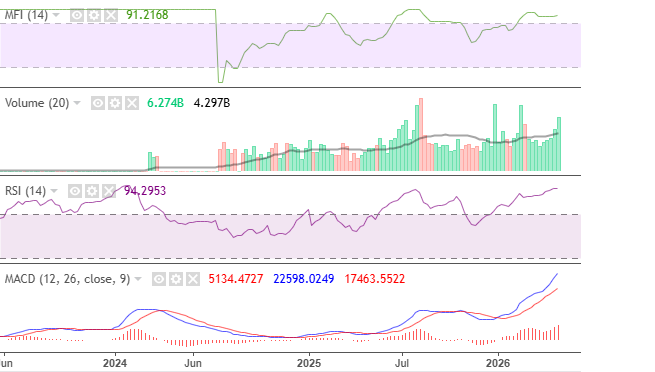
The market sustained its strength and resilience on the weekly chart. However, it displayed signs of a pullback in the intraday market. The index volume, liquidity and momentum remains solid, indicating a sturdy market. How did other sectors react to Elliot’s wave theory?
Sectoral Index Performance
NGXBNK: Banking Sector Index
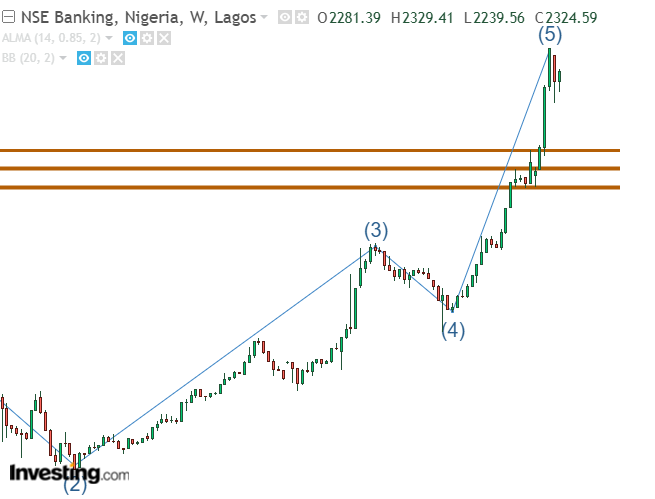
Applying Elliott’s wave theory, the banking sector transitioned from its 5th wave, and is expected to pull back for market correction. Bullish trends during these corrective markets are usually influenced by short-term traders. On the weekly chart, the NGXBNK gained 1.88%, closing at 2,324.59 above its moving average. This performance is due to the distribution phase in the intraday market
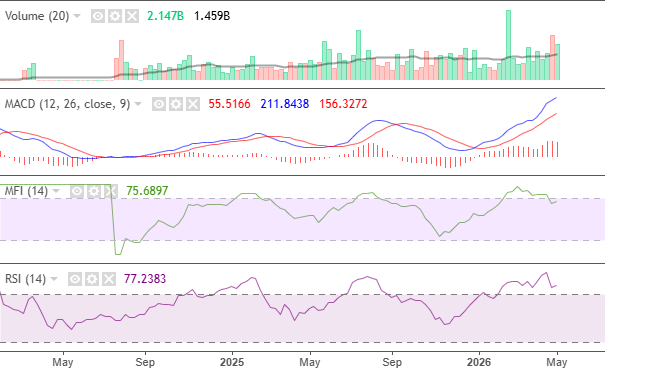
On the weekly chart, the market attempted to recover. The bullish volume closed strongly above its moving average, while the market momentum and liquidity regained strength. However, MACD maintained its bullish signal, but its momentum indicated divergence, which aligns with Elliot wave 5’s theory.
NGXCSMG: Consumer Goods Sector Index
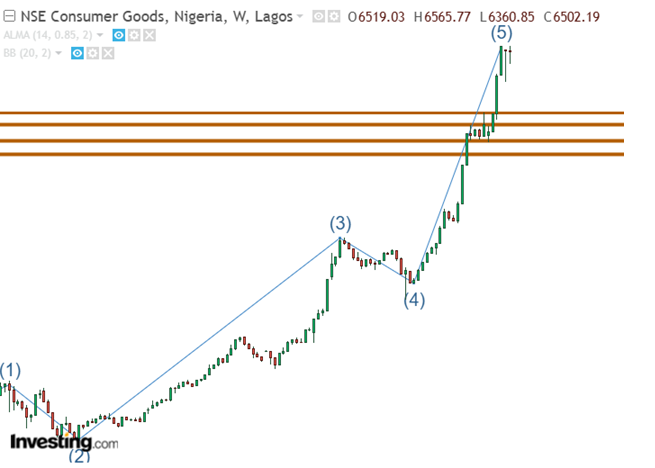
According to the Elliot wave theory, the consumer goods index is in its 5th wave. Thus, investors should expect the market to correct. On the weekly chart, the index shed 2.14%, closing at 6,502.19 above its moving average. This performance occurred because the index was in its consolidation phase in the intraday market.
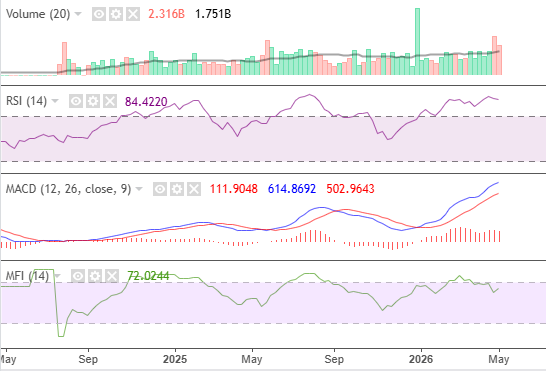
By volume, the sentiment for the NGXCSMG was strongly bearish. MFI indicated that the market liquidity increased amid bearish sentiment. This performance was due to bargain hunting in the sector. RSI’s momentum gradually declined, but remained solid in its overbought region. MACD has stayed bullish since the market is above its moving average. However, MACD’s bullish momentum indicated divergence, which aligns with Elliot’s 5th wave theory.
NGXIND: Industrial Sector Index
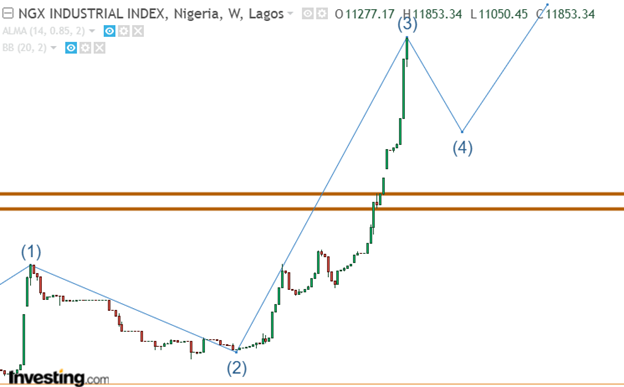
On the weekly chart, the industrial sector is in its 3rd wave, following the Elliot wave theory. The 3rd wave is usually the longest and strongest. However, the index is expected to pull back to commence its corrective phase. The index gained 5.11%, closing at 11,853.34 despite experiencing a strong pullback in the intraday market
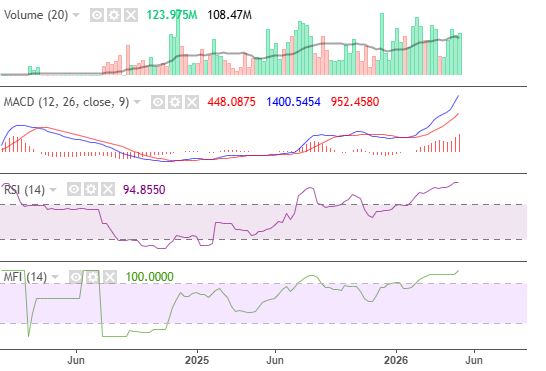
The market maintained its strong bullish sentiment on the weekly chart. The index volume, momentum, and liquidity are at an equilibrium. This performance validates the sustained investors’ appetite for companies in this sector.
NGXOGSE: Oil and Gas Sector Index
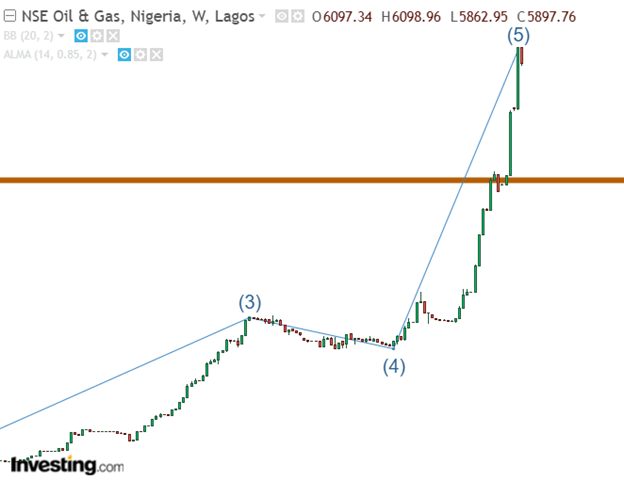
Following the Elliot wave theory, the oil sector index is in its 5th wave. The wave usually comes with low volume to prepare investors for a potential pullback. The index declined by 3.27%, closing at 5,897.76 above its moving average.
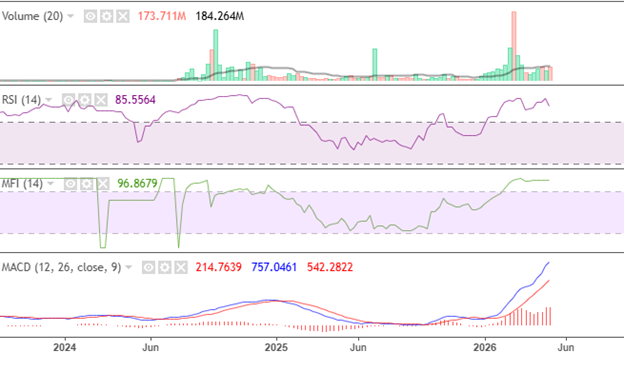
The bearish volume was low due to brief profit-taking in the sector. MACD’s bullish momentum and RSI declined, indicating divergence. However, the market liquidity remained resilient and solid. Thus, the sectors still have potential to rally upward amid global tensions.
NGXINS: Insurance Sector Index
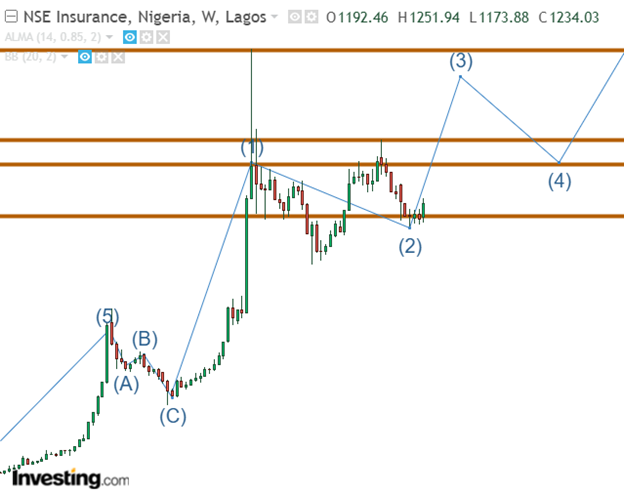
By Elliot’s wave theory, the insurance sector index should commence its 3rd wave. The 3rd wave is usually the longest and strongest. In the intraday market, the index displayed signs of recovery, trading above its moving average. The index gained 4.01% closing at 1,234.03 below its moving average.
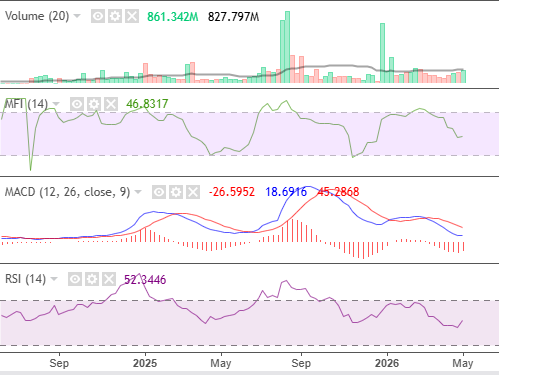
The insurance sector benefited from bargain hunting this week, which is why its bullish volume was strong. Following this sentiment, other indicators commenced their recovery phase. MACD’s bearish momentum declined, signalling a potential end to a trend. RSI and MFI regained their strength as the market recovered.
Final Thought
The Elliot wave offers a holistic market perspective to help investors make qualitative judgments. The insurance sector shows great potential as the market consolidates. Other sectors could remain in their corrective phase as profit-taking continues in the market.