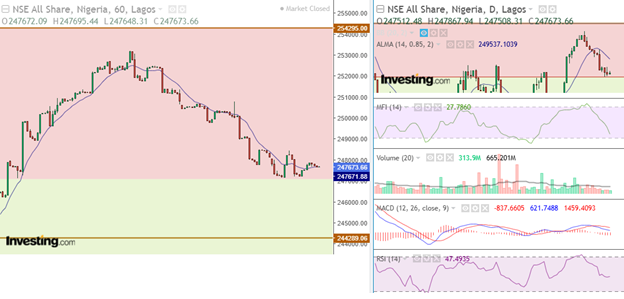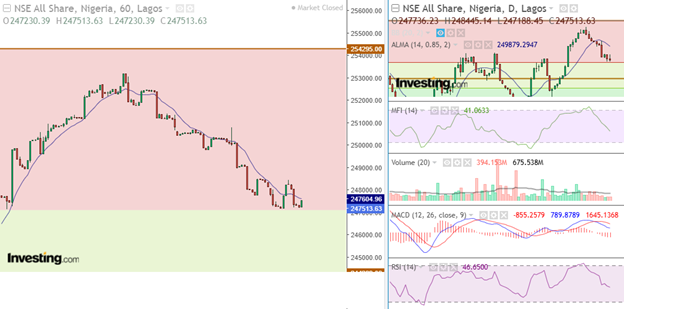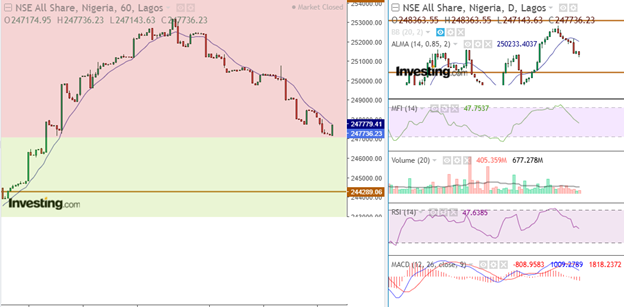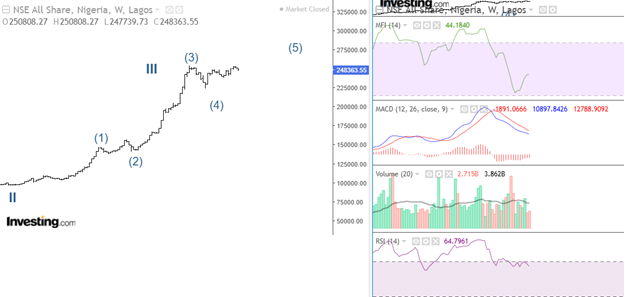

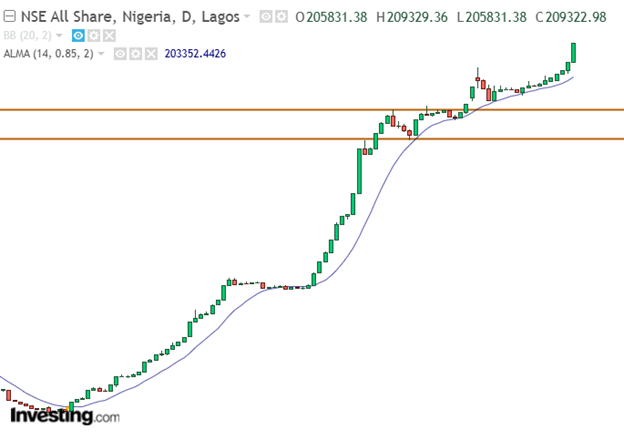
Following the performance of sectoral indices, the All Shares index gained 1.66 basis points at the midweek. This positive change in basis points reached a new all-time high. The NGX All-Share Index scaled from 205,831.38bps to 209,329.36bps with a difference of 3,409.05 bps, closing above its moving average at 209,322.98 bps.
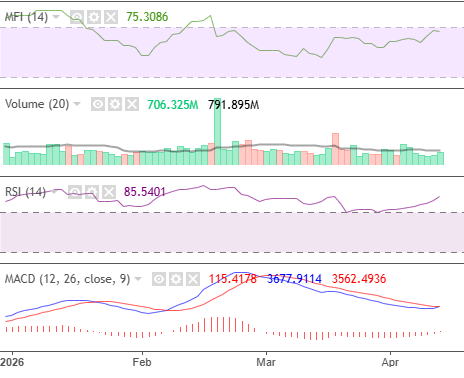
The MACD transitioned into a bullish signal, indicating a robust and sustained market recovery. The bullish volume was moderate, as more investors participated in the market than on the previous day. Which sectoral index impacted NGXASI’s strength?
Sectoral Index Performance
NGXBNK: Banking Sector Index
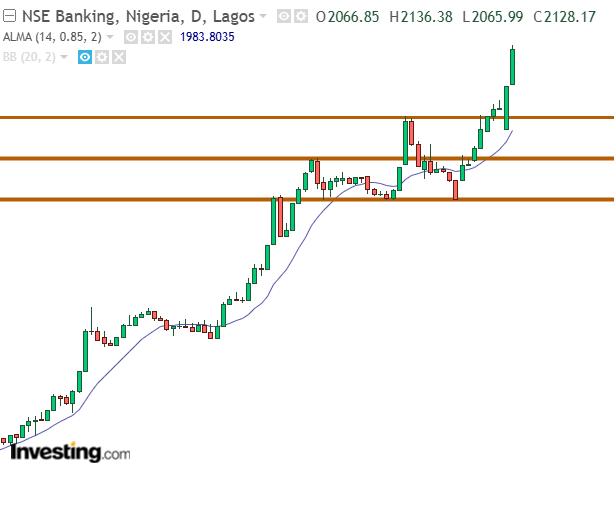
The NGXBNK experienced a strong bull surge, which strengthened its markup phase. The index traded above its moving average, closing at a new all–time high of 2128.17 bps. This action reflects the market’s sturdiness and strengthens its markup phase.
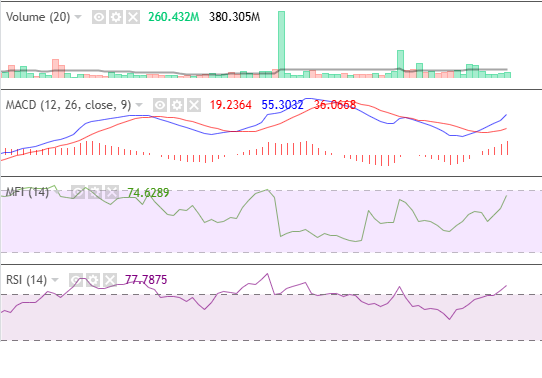
Wednesday’s bullish volume aligned with the MFI reading of 74.62. Investors purchased 260.432 million shares, exceeding yesterday’s bull sentiment of 210.486 million. This predominant sentiment validated the upward movements of RSI and MFI. It also solidified MACD’s bullish signal.
NGXCGMG: Consumer Goods Sector Index
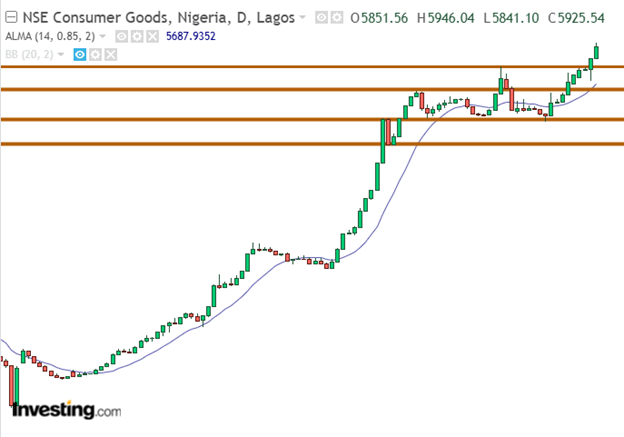
The consumer goods sector gained 1.26 basis points. On the chart, the index moved from 5841.10 bps to 5946.04 bps and resisted briefly to close at 5925.54 bps (+73.98). This action strengthened the index’s markup phase, despite the brief profit-taking.
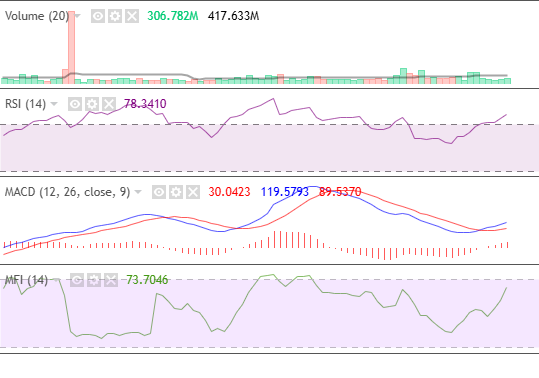
The NGXCSMG indicates a strong buy signal. Though bullish volume was low, more market players participated. A total of 306.782 million shares were bought, exceeding yesterday’s volume of 250.923 million. Following this sentiment, MFI and RSI remained upward, while MACD’s bullish signal solidified.
NGXIND: Industrial Sector Index
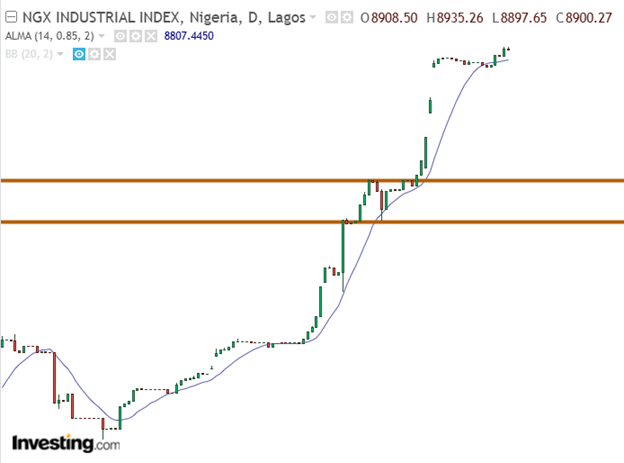
The NGXIND closed with a basis points change of -0.09%. The index traded between 8897.65 bps and 8935.26 bps and met strong resistance. Thus, the index closed at 8900.27 bps (-8.23) following this resistance. However, the index remained above its moving average, indicating a relatively strong market.
At a -0.09% change in basis points, the bearish volume was strong. This indicated that massive profit-taking prevailed in the index. Regardless, investors used the opportunity to buy into value to sustain the market strength.
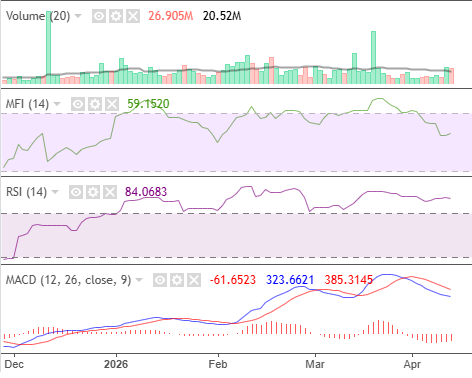
Despite profit–taking, MFI increased from 57.33 to 59.15, reflecting investors’ continuous interest in the index. MACD’s bearish signal weakened, following RSI’s sustained momentum.
NGXOGSE: Oil and Gas Sector Index
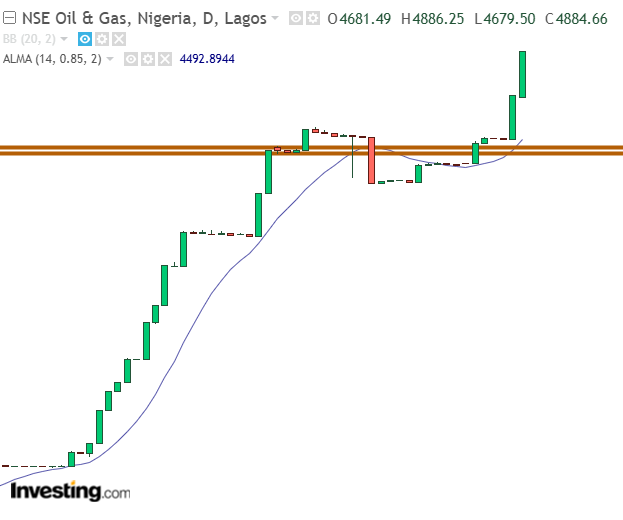
The oil sector index closed with strong bullish momentum, gaining 4.23 basis points. The index scaled from 4679.5 bps to 4886.25 bps with little resistance. Thus, market sentiment was about 98% buy, as the index closed at 4884.66 bps (+198.39).
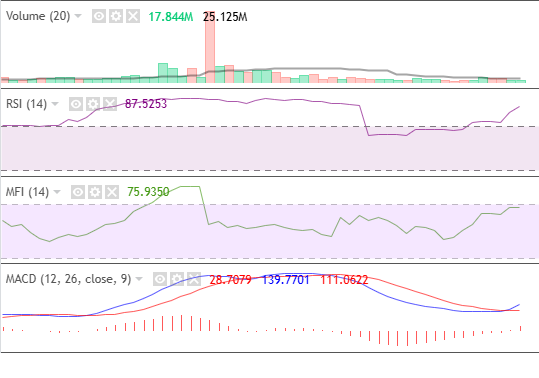
Though the index closed with a massive bull candlestick, it wasn’t enough to trigger a strong bullish volume. Regardless, MFI and RSI remained solid, indicating sustainable liquidity and momentum. Also, MACD’s bullish signal scaled up, indicating a gradual market recovery
NGXINS: Insurance Sector Index
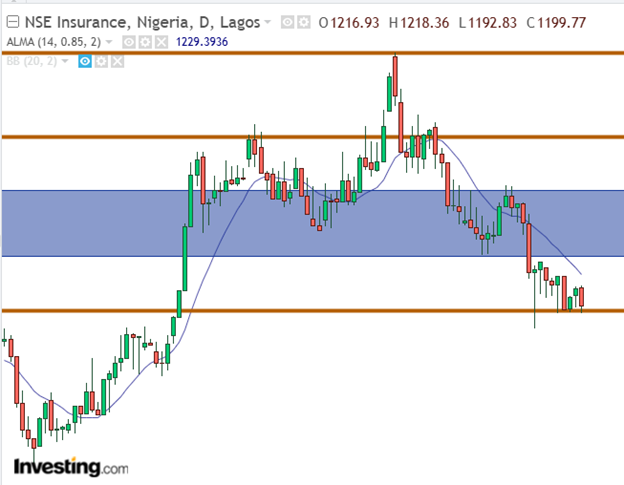
The insurance sector closed with a negative change in basis points of -1.33%. The index decreased from 1218.36 bps to 1192.83 bps, a 16.21 difference. At 1192.83 bps, the NGXINS experienced a brief support, closing at 1199.77 bps below its moving average.
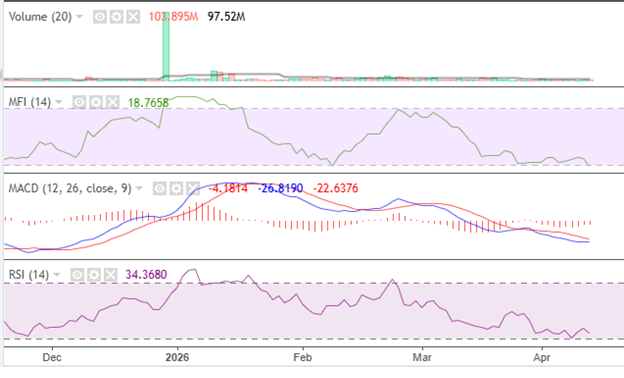
The bearish volume closed strongly with other indicators, such as MFI and RSI, losing momentum and liquidity strength. On the other hand, MACD’s bearish volume weakened, reflecting the strength of the index support level at 1195.58.
Final Thought
The period offers investors an opportunity to invest in banking and consumer goods stocks, given their index performance. The industrial sector is still in its distribution phase, though it’s above its moving average. Thus, investors can take advantage of this performance by buying into value.
Though the oil sector looked good on the chart, investors should consider its volume performance. Also, the insurance sector still has potential, given its performance at its support level