

Quarter Under Preview: 9-Months
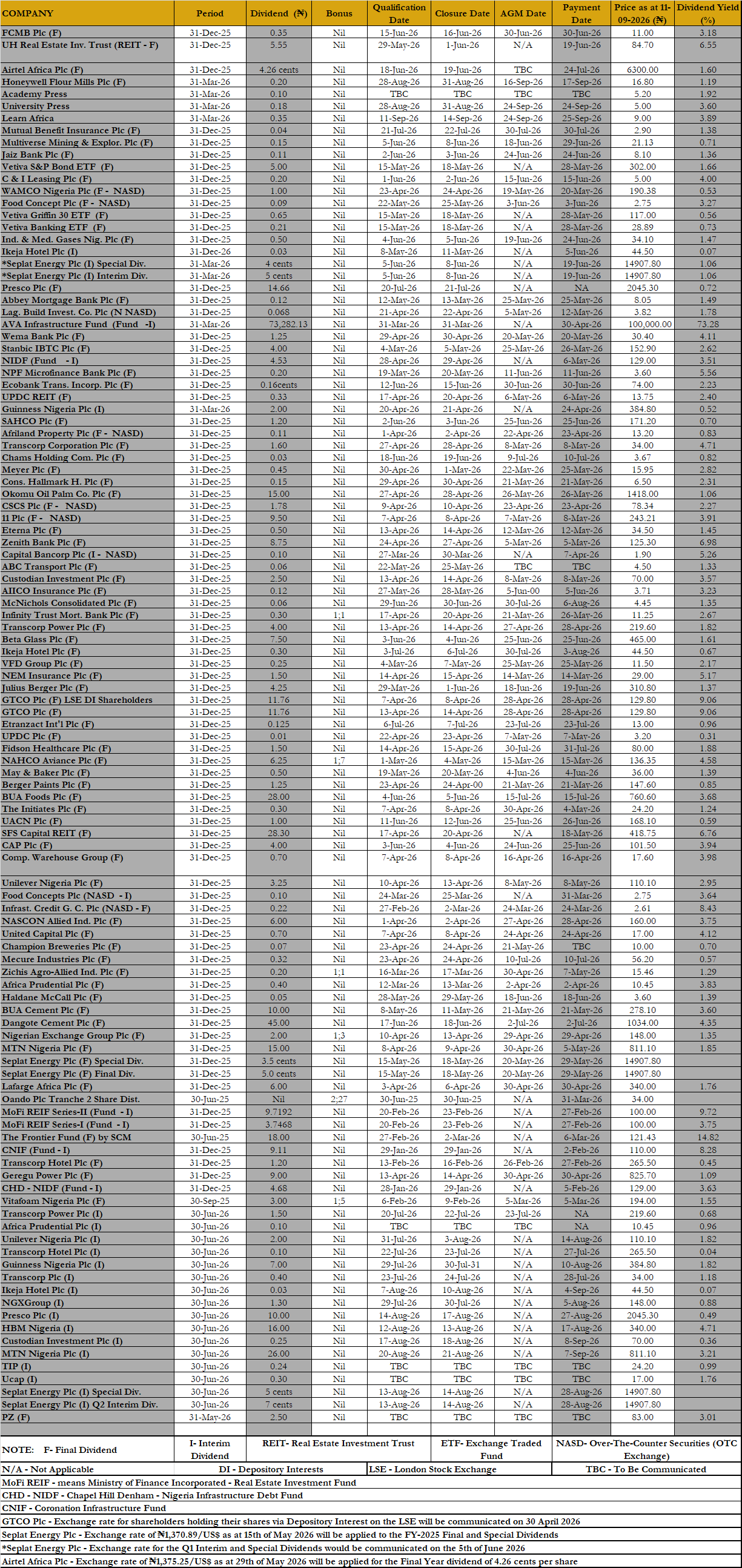
Current Share Price: N34.65
Price At Released: N37.25
Latest Final Dividend: N
Latest Interim Dividend:
Estimated Beta Value: 0.24x
Estimated Intrinsic Value: N112.01
Analyst: Jeariogbe Tunde Segun
The Company
Ecobank Transnational Incorporated Plc, a pan-African financial conglomerate, together with its subsidiaries provide retail, corporate, consumer and investment banking services across Nigeria and over 30 other African countries.
The company serves multinationals and regional companies, as well as government agencies, financial institutions, international organizations, SMEs, schools, churches and individuals.
ETI, also known as Ecobank Group, was incorporated in 1985 with headquarters in Lome, the capital of Togo. Its shares are traded on multiple exchanges where they are listed such as: Nigerian Exchange, Ghana Stock Exchange, and La Bourse Régionale des Valeurs Mobilières (BRVM)- West Africa’s regional exchange.
| ECOBANK TRANSNATIONAL INC | |
| Bourse | Nigerian Stock Exchange |
| Code Name | ETI |
| Sector | FINANCIAL SERVICES |
| Market Classification | Main Board |
| Nature of Business | Provision of Banking and Financial Services through its subsidiaries and affiliates |
| Date of Incorporation | Oct-03-1985 |
| Date Listed | Sep-11-2006 |
| End of Accounting Year | 31st December |
| Website | www.ecobank.com |
| Registrar | GTL Registrars Limited |
| Auditor | DELOITTE |
| Share Price@Relsd (N) | 37.25 |
| Earnings per Share | 38.28 |
| Intrinsic Value(N) | 112.01 |
| Share Outstanding | 18,349,551,215 |
| Market Capitalisation | 683,520,782,759 |
The Released Numbers
At the end of the first nine months of 2025, the Ecobank Group reported a total Gross Earnings of N3.548 trillion, up from the N2.931 trillion reported at the corresponding period of 2024. Of this, Interest Income stood at N2.330 trillion versus N1.929 in the similar quarter of last year. Interest Expenses reported was N770.421 billion against N725.244 billion last year.
Thus, Net Interest Income is estimated at N1.559 trillion versus N1.203 trillion. Operating Expenses grew by 11.93% to stand at N1.209 trillion above the N1.080 trillion in the corresponding period. Profit before Tax stood at N1.014 trillion, higher than the N712.369 billion of 2024 by 42.45%. Tax Expenses is N302.880 billion, versus N216.610 billion, while the Total Profit for the Period is now N702.399 billion versus N491.879 billion of 2024 third quarter business session. See the table below for details:
| ECOBANK TRANSNATIONAL INC | |||
| Statement of Comprehensive Income | |||
| 2025 | 2024 | %CHG | |
| GROSS EARNINGS | 3,548,369,126,000 | 2,931,536,671,000 | 21.04 |
| INTEREST INCOME | 2,330,222,689,000 | 1,929,145,199,000 | 20.79 |
| INTEREST EXPENSES | 770,421,105,000 | 725,244,706,000 | 6.23 |
| NET INTEREST INCOME | 1,559,801,584,000 | 1,203,900,493,000 | 29.56 |
| OPEX | 1,209,809,691,000 | 1,080,851,581,000 | 11.93 |
| DEPRECIATION | 90,008,734,000 | 82,445,226,000 | 9.17 |
| PBT | 1,014,798,751,000 | 712,369,274,000 | 42.45 |
| TAX | 302,880,156,000 | 216,610,282,000 | 39.83 |
| PAT | 702,399,495,000 | 491,879,319,000 | 42.80 |
| TOTAL COMP INCOME | 1,066,696,739,000 | 1,170,202,019,000 | 8.85 |
| Statement of Financial Position | |||
| Total Assets | 47,974,895,666,000 | 44,456,194,958,000 | 7.91 |
| Total Liabilities | 44,289,428,654,000 | 41,749,118,171,000 | 6.08 |
| Net Assets | 3,685,467,012,000 | 2,707,076,787,000 | 36.14 |
| Property Plan & Equipment | 919,087,306,000 | 884,716,054,000 | 3.89 |
| Retained Earnings | 2,168,445,593,000 | 1,292,522,227,000 | 67.77 |
| Total Deposits | 38,801,778,848,000 | 34,957,660,297,000 | 11.00 |
| Total Loans and Advances | 21,195,192,722,000 | 19,771,935,753,000 | 7.20 |
| STAGE3 ECL | 956,588,151,000 | 1,130,620,983,000 | 15.39 |
At the end of the period under review, Total Assets was valued at N47.974 trillion against N44.456 trillion in 2024. Total Liabilities stood at N44.289 trillion versus N41.749 trillion. Net Asset for the 9-months stood at N3.685 trillion against N2.707 trillion. Retained Earnings estimates is N2.168 trillion, while Total Deposit received through the session is valued to worth N38.801 trillion, higher than the N34.957 trillion in the similar quarter of last year.
Meanwhile, the amount granted as loan through the period is N21.195 trillion, versus N19.771 trillion. See the table above for details:
Financial Strength
- Debt Ratio: ETI remains highly leveraged. This is normal for a large cross-border African bank. But the decline from 93.91% to 92.32% is a positive shift, and means:
- A slightly lower portion of total assets is funded by liabilities
- Marginal improvement in balance sheet stability
- Reduced pressure from interest-bearing obligations
However, 92% is still extremely high, showing the bank continues to operate with a thin capital buffer, making compliance with regulatory capital ratios very important.
- Equity Ratio: This is the direct opposite of the debt ratio, and confirms the improvement, as:
- ETI now finances 7.68% of its assets with equity, up from 6.09%
- Although still low, the increase suggests improved capitalization, possibly from retained earnings or FX adjustments.
- A higher equity ratio strengthens resilience against shocks, especially in multi-country operations.
- Nevertheless, 7% equity for a pan-African group is fragile, because large regional banks usually aim for 10-12%.
- Beta Value: Note that a beta value of 0.24x means:
- The stock is less volatile than the market
- Market downturns affect ETI shares less severely
- Investors see it as defensive, probably because of diversified income across 30 countries wherein it operates.
However, low beta also means limited upside during bull markets. It could reflect weak trading liquidity on the NGX. Overall, this is favorable for risk-averse investors.
- Non-Performing Loan Ratio (NPL): This is one of the strongest results, as Non-Performing Loans dropped from 5.72% to 4.51%, demonstrating the impact of a better credit quality, improved recoveries, or stronger loan monitoring. ETI’s NPL is now below many African peers, which often average 6-10%. In a challenging multi-currency environment, this is a big achievement.
Final Verdict on Financial Strength: ETI shows clear improvement in financial strength. However, the absolute debt level remains high, and capitalization is still thin compared to global standards. This is a moderate financial strength which is improving but still stretched.
| Financial Strength/Solvency Ratio | |||
| TICKERS | 2025 | 2024 | %CHG |
| Debt Ratio | 92.32% | 93.91% | 1.70 |
| Total Debt to Equity Ratio (MRQ) | 12.02 | 15.42 | 22.08 |
| Equity Ratio | 7.68% | 6.09% | 26.16 |
| Beta Value | 0.24 | ||
| Non–Performing Loan Ratio | 4.51% | 5.72% | 21.07 |
Profitability Ratios
- EBITDA Margin: ETI continues to demonstrate strong operating efficiency. For example:
- The increase shows better control of operating expenses
- A 52-53% EBITDA margin is excellent for a pan-African bank with multi-country cost pressures
- This also reflects the success of Ecobank’s digital and regional consideration strategy
- Pre-Tax Margin: In our opinion, this is one of the standout numbers:
- Margin expanded by over 4%
- Shows improved cost discipline, better loan recovery, and stronger revenue mix
- Also indicates lower impairment charges relative to gross earnings
- This reflects a healthier and more profitable core banking business
- Interest Expenses to Gross Earnings Ratio: From this ratio, we can deduce the followings:
- ETI is spending less of its income on interest costs
- It indicates stronger deposit mobilization (cheaper funding sources)
- Also suggests improved ALM (Asset-liability management) and funding mix discipline
- We also noticed that, Lower interest costs directly boost net interest margin and profitability
- Return on Average Equity (ROAE): A ROE of 19% is very strong for a regional banking group. In our opinion, it confirms the followings;
- ETI is creating high value for shareholders
- The improvement signals better capital efficiency
- Well above many Nigerian banks’ current ROAE levels (often 12-15%)
- We reiterate that this is a strong financial performance
- Return on Average Assets (ROAA): ROAA is rising from 1.11% to 1.46% is very positive; please understand that, ROAA above 1% is considered healthy in banking business. It shows efficient use of the bank’s total asset base across over 30 countries. It also indicates that ETI is making more money from each US Dollar/Naira of assets. This pairs well with the earlier improvement in asset quality (NPC ratio)
Final Verdict on Profitability Ratio: ETI’s profitability is strong and improving across all indicators, this suggests a banking group that is has become more efficient, profitable, and now better positioned than in previous periods.
| PROFITABILITY RATIOS | |||
| TICKERS | 2025 | 2024 | %CHG |
| EBITDA MARGIN | 52.85% | 51.85% | 1.92 |
| PRE-TAX MARGIN | 28.60% | 24.30% | 17.69 |
| EFFECTIVE TAX RATE | 29.85% | 30.41% | 1.84 |
| IE TO GE | 21.71% | 24.74% | 12.24 |
| ROAE | 19.06% | 18.17% | 4.89 |
| ROAA | 1.46% | 1.11% | 32.33 |
Efficiency Ratios
- Operating Expenses (OPEX) to Gross Earnings: This is a major improvement in cost control. ETI is now spending less of its income on operating expenses. The drop from 36.87% to 34.09% indicates tighter cost discipline. This is very impressive for a bank operating across many African markets with different regulatory and inflation environment. Thus, it confirms the earlier strong profitability margins, cost efficiency is driving profit growth.
- Gross Earnings to Total Assets: This ratio shows how effectively the company uses its assets base to generate income. The rise from 6.59% to 7.40% shows ETI is earning more revenue per unit of assets. This improvement aligns with;
- Better loan book performance
- Improved NPL levels
- Higher fee-based and digital banking revenue, and
Stronger transaction volumes across markets. In our opinion, this is a very healthy sign of efficient balance sheet utilization.
- Loan to Deposit Ratio: A drop from 56.56% to 54.62% shows that ETI is lending slightly less relative to deposits. This is positive and it means;
- Lower risk exposure. The bank is more conservative in loan creation
- Gives room for liquidity buffers across its many markets
- Implies that the bank may be prioritizing quality loans over aggressive expansion.
Potential concerns include:
- A too-low LDR may limit revenue growth from interest income
- But ETI’s profitability ratios do not show any negative impact yet.
Ideal LDR for banks is usually between 60-80%. ETI’s current 54.60% means that it still has room to grow lending safely.
Final Verdict on Efficiency: ETI shows solid and improving efficiency. The numbers indicate a bank that is more discipline, more productive, and strategically cautious. This is good, considering the multi-country uncertainties.
| EFFICIENCY RATIOS | |||
| TICKERS | 2025 | 2024 | |
| OPEX TO GE | 34.09% | 36.87% | 7.53 |
| GE TO TA | 7.40% | 6.59% | 12.16 |
| LDR | 54.62% | 56.56% | 3.42 |
Investment Ratios
- Earnings per Share (EPS): From the estimated ratios, EPS grew significantly; 42.80% increase in earnings per share. This shows a strong quarter-on-quarter profitability improvement, and confirms the earlier analysis. ETI’s cost-control plus asset productivity, and lower NPL are translating directly into higher earnings. This is a very bullish signal for investors.
- Total Comprehensive Income per share: Despite EPS rising, comprehensive income per share fell. Factors that may be responsible for this are:
- FX translation losses from some ECOWAS markets
- Fair value adjustment on investment securities
- Possible losses from operations in weaker currencies.
This tells us that core profitability is strong, but the group is still exposed to multi-currency volatility.
- PE Ratio: This is one of the lowest PE ratios in the African banking sector. A PE of 0.32x means;
- Investors are paying N0.32 for every N1 of earnings
- The stock is very cheaply priced
It is therefore, either:
- The market is undervaluing ETI heavily, or
- Investors are pricing in FX risks and liquidity concerns on the NGX.
Either way, relative to earnings performance, ETI is massively discount-priced.
- Earnings Yield: This is inverse of the PE-Ratio, and a 102% earnings yield is abnormally high, indicating deep undervaluation. Even though it declined slightly, it still means;
- ETI earns more than its entire market value every year
- This stock is cheap relative to its earnings power.
- Book Value per Share: BVPS jumped significantly, over 36% growth in book value per share shows strong capital accumulation. Indicates retained profits, revaluation gains, or balance sheet strengthening.
Final Verdict on Investment Ratios: ETI is massively undervalued. The only soft point is the decline in total comprehensive income per share due to Fx movements. A normal challenge for a multi country bank.
| ECOBANK TRANSNATIONAL INC | |||
| Investment/Valuation Ratios | |||
| Tickers | 2025 | 2024 | %Chg |
| EPS | 38.28 | 26.81 | 42.80 |
| TCIP/SHARE | 58.13 | 63.77 | 8.85 |
| P/E-Ratio | 0.32 | 0.30 | 7.79 |
| Earnings Yield | 102.76% | 110.77% | 7.23 |
| BV/Share | 200.85 | 147.53 | 36.14 |
| PBV | 0.19 | 0.16 | 13.06 |
General Verdict: ETI is showing strong improvement across financial strength, profitability, and efficiency, with rising earnings and a healthier balance sheet. Despite this solid performance, the stock remains massively undervalued, trading far below its true earnings and book value. We therefore conclude that, ETI is fundamentally strong and deeply undervalued bank with improving momentum.