
As Abia Gov Unveils State’s Investment Agenda
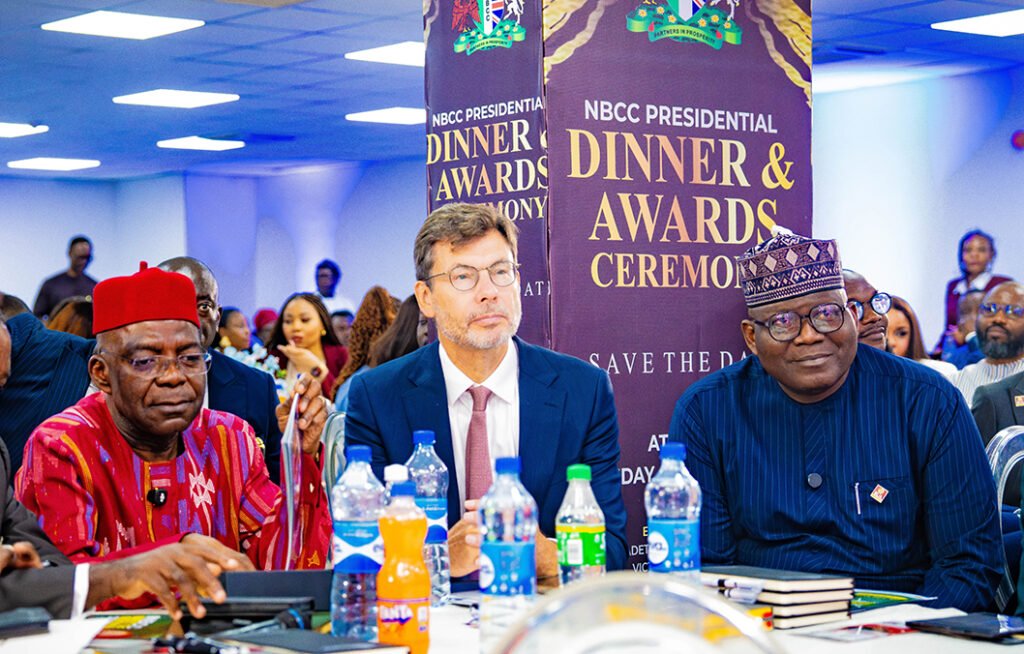
Caption: From left, Dr. Alex C. Otti, Executive Governor of Abia State; Jonny Baxter, British Deputy High Commissioner; and Engr. Ayodele Abioye, Managing Director, BUA Foods Plc, at the Nigerian-British Chamber of Commerce Meet the Governor Series 2026 in Lagos last week.
BUA Group, On Thursday in Lagos sought deeper partnership between Nigeria’s subnational governments and the private sector to unlock investment, boost industrialisation and sustainable economic opportunities nationwide.
The group’s Founder and Executive Chairman, Abdul Samad Rabiu, who spoke at the 2026 Nigerian-British Chamber of Commerce (NBCC) Meet the Governor Series themed “Repositioning Abia for Enterprise, Industrialisation and Sustainable Economic Growth,” where BUA was lead sponsor, noted that Nigeria’s economic transformation would increasingly depend on the capacity of its various states to become competitive investment destinations.
Represented by the Managing Director of BUA Foods Plc, Engr. Ayodele Abioye, Rabiu stressed: “subnational governments are critical to Nigeria’s economic transformation. They are important drivers of infrastructure development, industrial growth, investment attraction and job creation
Abioye noted that “for investors, however, ambition must be matched by the right environment. Transparency, policy consistency, regulatory certainty, security and infrastructure all matter when businesses are making long-term investment decisions.”
This principle, he continued, has informed BUA Group’s approach to investment and expansion across Nigeria.
“At BUA Group, we firmly believe that sustainable economic development is driven by enterprise, innovation and strategic private-sector participation. This conviction continues to guide our investments and collaborations across Nigeria,” Abioye stressed.
At the event where the Governor of Abia State, Dr. Alex Chioma Otti, presented his administration’s economic transformation and investment agenda, the conversation, centred on a question increasingly important to Nigeria’s economic future: how states can create the infrastructure, institutions and policy environment required to attract productive private capital.
Governor Otti, who declared that “Abia is open for business,” used the forum to set out his state’s proposition to investors, identifying opportunities across agribusiness and agro-processing, trade and markets, the creative and digital economy, manufacturing and industrialisation, SME development, inclusive finance, and diaspora investment and innovation.
He said his administration was deliberately directing public resources towards creating conditions for private enterprise to thrive, which informed his government’s decision to channel 80% of Abia State’s ₦1.016 trillion 2026 budget to capital expenditure.
For him, infrastructure remains central to that strategy, stressing: “Enterprise needs infrastructure. Roads move goods, light creates safety, and movement creates commerce. Abia is building the physical platform for investments.”
He also highlighted investment opportunities in livestock and dairy, cashew and cocoa, rubber processing, garment manufacturing, ceramics, leather and tannery operations, healthcare, tourism, power, transport and logistics, alongside planned industrial and commercial developments.
Abioye commended the Governor’s emphasis on enterprise, infrastructure and institutional reform, noting that the conversation in Abia reflected a wider imperative for states across Nigeria.
For BUA, he said, productive collaboration between government and business must ultimately translate into investments that expand local production, strengthen value chains, create employment and deepen economic activity.
He reaffirmed BUA’s willingness to continue engaging governments and credible institutions committed to building sustainable environments for enterprise and long-term investment.
Also speaking at the event, President and Chairman of the Council of the Nigerian-British Chamber of Commerce, Prince Abimbola Olashore, said Abia’s entrepreneurial culture, particularly its longstanding strength in trade, manufacturing and indigenous enterprise, provided a strong base for further economic expansion.
He stressed that businesses require predictable policies, responsive institutions, infrastructure, security and access to markets, while describing government and the private sector as complementary partners in the creation of sustainable economic value.
The event was also attended by the British Deputy High Commissioner, Jonny Baxter; Professor of Economics at Lagos Business School, Prof. Bongo Adi; senior policymakers, investors and business leaders.