
- PFAs Pool 50% Total Financing
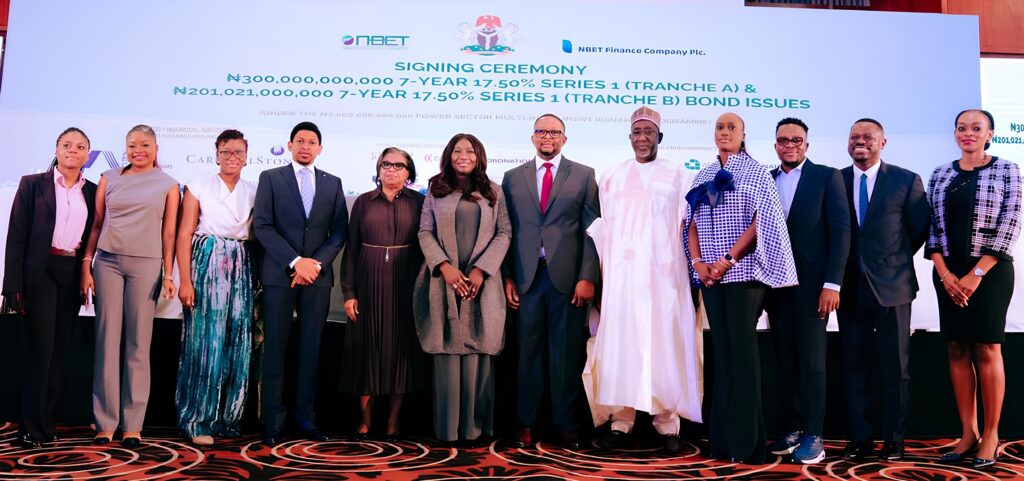
Leading infrastructure solutions provider on the continent, the Africa Finance Corporation (AFC) says it provided comprehensive financial advisory services as co-financial adviser in the landmark tranche of ₦501bn bonds tranche of its inaugural ₦4 trillion Power Presidential Power Sector Financial Reforms Programme (PPSFRP).
Proceeds of the issuance will be used to settle verified, overdue receivables owed to Power Generation Companies (GenCos) for electricity supplied between February 2015 and March 2025, extinguishing legacy claims and injecting liquidity into the electricity industry.
The transaction, according to a statement by the AFC, received strong support from the pension fund investment community with about 50% of the total financing secured from Pension Fund Administrators, successfully mobilizing domestic capital for critical electricity infrastructure in Nigeria.
AFC said it was involved in the programme’s design negotiation strategy framework of the bond which marked a critical milestone in the implementation of Sector Bond Programme, designed to resolve over a decade of legacy debt obligations within the Nigerian electricity supply industry.
The programme was overseen by the country’s Presidential Power Sector Debt Reduction Committee (PPSDRC) and the Office of the Special Adviser to the President on Energy provided technical leadership, while implementation was through NBET Finance Company Plc, a special purpose vehicle of the Nigerian Bulk Electricity Trading Plc (NBET).
This transformational initiative by the Nigerian government, AFC stressed, is designed to restore financial stability, enhance liquidity and strengthen the balance sheet of Nigerian GenCos through the clearance of outstanding arrears.
By addressing these legacy obligations, the initiative is expected to boost domestic and international investor confidence and attract fresh capital across the entire electricity sector value chain.
AFC provided comprehensive financial advisory services to the Federal Government of Nigeria on this landmark transaction, including the design of the Programme’s negotiation strategy framework, support in negotiating and executing Settlement Agreements with GenCos, and in the structuring of the bond issuance. Working in partnership with CardinalStone Partners as co-Financial Advisers, this transaction reflects AFC’s deep and local market expertise in delivering complex, high-impact policy advice and financial solutions that catalyse sector-wide reforms.
Commenting on the deal, Olu Verheijen, Special Advisor to Nigeria’s President Bola Tinubu on Energy said “the Programme represents a decisive reset of Nigeria’s electricity market, combining debt resolution with broader financial and structural reforms. AFC brought strong sector expertise, deep local market knowledge, and a clear understanding of the market’s commercial complexities, playing a critical role in delivering a credible outcome that supports liquidity restoration, investor confidence and long-term sustainability.”
Banji Fehintola, AFC’s Executive board member and Head, Financial Services added that “the successful issuance of the inaugural tranche under the Power Sector Bond Programme underscores AFC’s commitment to supporting transformative reforms in Nigeria’s power sector. By resolving long-standing liquidity challenges and restoring confidence among investors and operators, this transaction lays the foundation for sustainable growth and improved electricity supply across the country.”
When completed, the Programme is expected to impact approximately 5,398MW of electricity generation capacity by Nigerian GenCos, effectively finalizing settlement of payments for 290,644.84GWhr of electricity billed since February 2015 and providing a strong foundation for new investments into capacity enhancement and expansion by companies serving 12 million active registered customers across the country.
The Programme forms a fundamental aspect of the energy sector reforms by the Nigerian government, alongside significant ongoing investments in consumer metering and transmission infrastructure, and a transition to bilateral electricity trading between wholesale counterparties based on market-reflective pricing. Together, these reforms are aimed at ensuring the evolution of a viable and sustainable electricity market in Nigeria to support long-term industrial growth and development.