
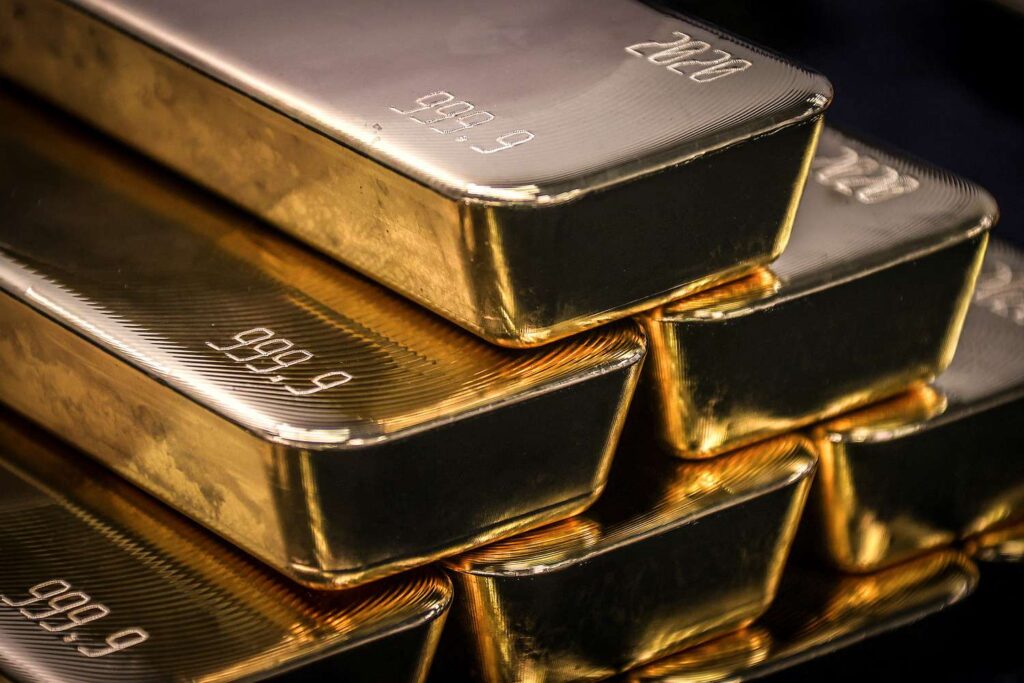
Gold has taken a huge hit since the outbreak of the Iran war, but any clear signs of de-escalation are likely to trigger a sharp rebound, potentially driving prices to new record highs, says Nigel Green, CEO of one of the world’s largest independent financial advisory organisations.
Green is speaking out as gold slides through one of its sharpest short-term sell-offs in years, dropping to around $4,600 an ounce and retreating more than 10% from its recent highs above $5,500.
He says: “Prices have come off sharply from recent highs as energy markets push inflation expectations higher and delay the path to rate cuts. Gold, a non-yielding asset, is reacting to that shift in the short term.”
But Nigel Green also points to what he describes as relentless sovereign demand underpinning the next move higher.
Central banks have bought more than 1,000 tonnes of gold annually for three consecutive years, including roughly 1,045 tonnes in 2025, marking the strongest sustained accumulation since the 1960s.
“Central banks, including the People’s Bank of China and the National Bank of Poland, have been buying at a pace we have not seen in decades. This is long-term strategic allocation on a global scale.”
Reporting shows more than 20 central banks increased their gold holdings over the past year, reinforcing a broad and coordinated shift in reserve strategy.
Emerging economies in particular are building gold positions to reduce reliance on the dollar and strengthen financial resilience,” says the deVere CEO.
“De-dollarization is happening gradually through reserve diversification. Gold is central to that process because it carries no counterparty risk and no political conditions.”
Survey data shows that around three-quarters of central banks expect gold to account for a larger share of reserves over the next five years, underlining how entrenched this trend has become.
Nigel Green says: “The dollar remains dominant, but its share is edging lower, while gold’s share is rising. This rebalancing is one of the defining trends in global finance.”
He argues that this dynamic is creating a strong structural floor beneath the market, even as geopolitical pressures weigh on prices in the near term.
He says: “Before the Iran war, central banks were accumulating and holding. This, we expect, will resume as soon as there are legitimate signs of de-escalation. This will, again, remove supply from the market and strengthen long-term support.”
Institutional and private demand is also building. Analysts expect combined central bank and investor demand to average around 585 tonnes per quarter through 2026, reinforcing the underlying strength of the market.
Nigel Green says: “There is a significant backlog of demand across sovereign and institutional buyers.
“As soon as macro pressure eases, that demand will reassert itself quickly.”
He adds: “Gold has already surged to record levels above $5,000 in recent months. The rally has been driven by fundamentals, not speculation, and those fundamentals remain intact.”
He warns against misreading the current pullback.
He says: “Short-term weakness linked to geopolitical tension and inflation expectations doesn’t change the trajectory. It reflects positioning, not direction.”
He continues: “As tensions linked to Iran begin to ease and markets stabilise, capital will rotate back into gold rapidly. The scale of central bank buying means the upside move could be sharp.”
Gold’s performance since the Iran war broke out closely mirrors what we saw in 2022 following Russia’s invasion of Ukraine. That conflict triggered a major energy shock that fed through global markets and pushed inflation higher.
“Bullion then entered a prolonged period of decline, falling for seven consecutive months through to October, the longest losing streak on record. The same macro forces are now back in play.”
Nigel Green concludes: “Fresh all-time highs are well within reach in the near term. The structural drivers are stronger than at any point in decades.
“Many emerging countries are rebuilding reserves with gold at the centre. As reliance on the dollar gradually declines and geopolitical uncertainty remains elevated, gold’s role only becomes more important.
“Once the immediate geopolitical pressures in the Middle East fade, the next move higher is likely to be bullish, fast and decisive for gold prices.”