
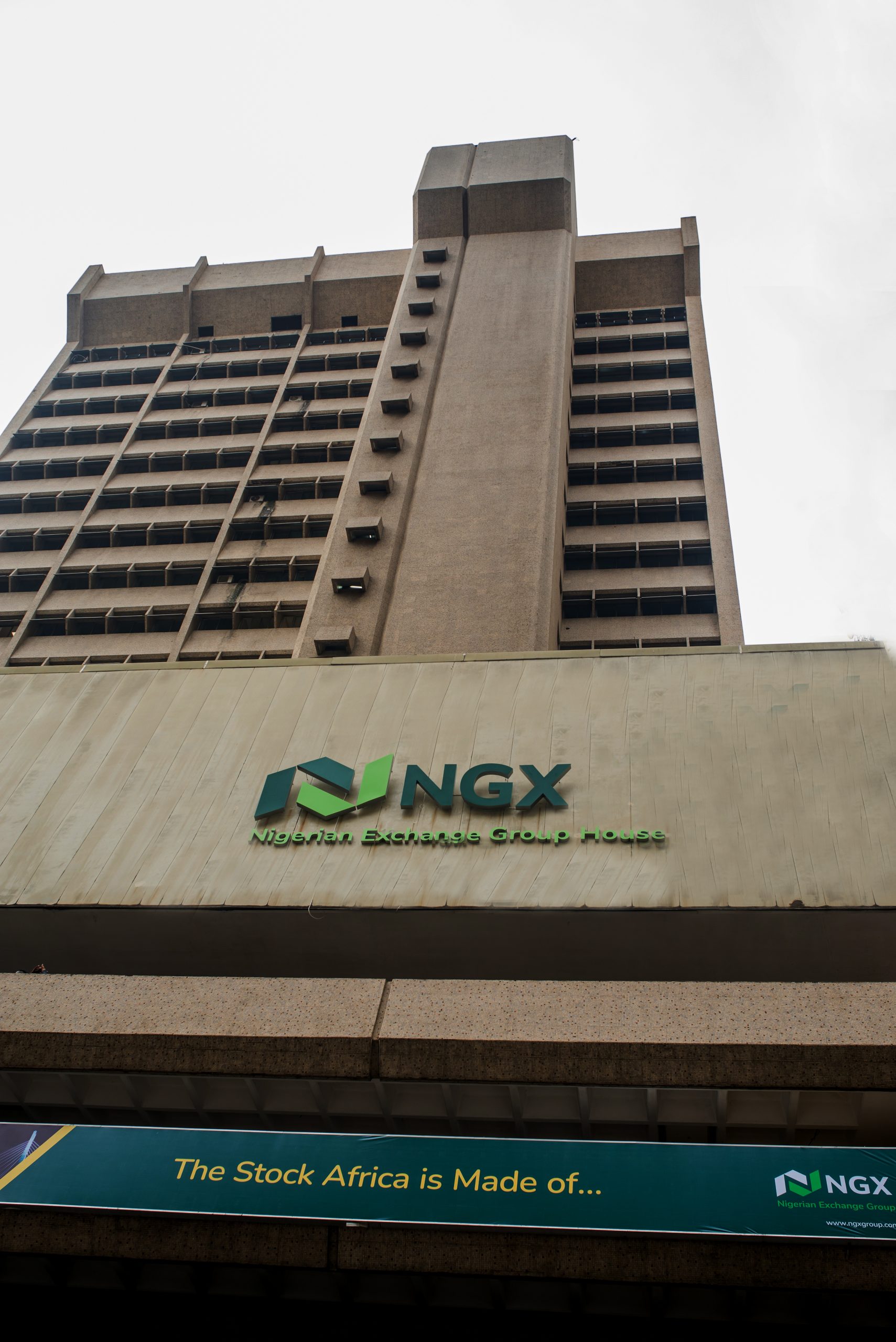
March 2026 will be remembered as a month in which two major markets moved strongly upward, but for entirely different reasons. On one side, the Nigerian equities market extended its rally on the back of improving macroeconomic conditions, sustained liquidity, and growing investor confidence. On the other, the global oil market experienced an explosive surge, driven not only by fundamentals but also by escalating geopolitical tensions and fears of supply disruptions. The result was a month of strong gains, heightened volatility, and important technical signals that now shape the outlook for both markets going forward.
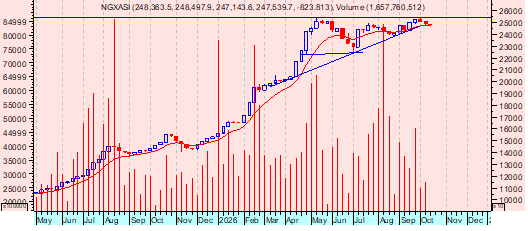
The Nigerian stock market began the month at 192,826.78 points, carrying forward bullish momentum from earlier in the year. From the outset, price action reflected steady accumulation, as investors positioned themselves in fundamentally strong stocks despite a slight moderation in trading activity. By the end of the first week, the NGX All-Share Index had risen to 196,968.15 points, delivering a 2.15% gain, while market capitalisation increased to ₦126.44 trillion. Total transactions during the week stood at 3.695 billion shares valued at ₦177.69 billion, down from ₦196.71 billion recorded in the previous week. This divergence between rising prices and softer volumes pointed to selective buying, often associated with institutional accumulation rather than broad retail participation.
As the second week progressed, the market entered a more volatile phase. The index fluctuated between gains and losses as investors reacted to short-term signals and engaged in profit-taking. Despite these swings, the market maintained its upward bias, closing the week at 198,407.30 points, representing a 0.73% increase, while market capitalisation rose further to ₦127.36 trillion. Trading activity declined slightly to ₦164.85 billion, reinforcing the view that the market was consolidating rather than reversing. From a technical standpoint, this period formed a base just below a major resistance level, with price action tightening within a range and setting the stage for a more decisive move.
That move came in the third week, which proved to be the most significant period of the month. The NGX All-Share Index broke convincingly above the 200,000-point psychological barrier, reaching a high of 202,559.41 points before settling at 201,156.86 points. Market capitalisation climbed to ₦129.13 trillion, while trading activity surged dramatically. A total of 8.76 billion shares valued at ₦267.25 billion were exchanged during the week, compared to ₦164.85 billion in the previous week. Within that surge, a single trading session recorded transactions worth ₦130.06 billion, highlighting a sharp increase in participation and confirming strong demand at higher price levels.
This breakout was technically significant. The combination of rising prices and expanding volume indicated that the move was supported by genuine demand rather than speculative momentum. It marked a transition from accumulation to a clear bullish continuation phase, with the former resistance level around 200,000 points transforming into a new support zone. Momentum indicators during this period suggested that the market was entering an overbought condition, which typically precedes a period of consolidation or mild correction.
The final week of March reflected exactly that. The market slowed, and profit-taking emerged across several previously strong stocks. The NGX All-Share Index declined marginally by 0.12%, closing at 200,913.06 points, while market capitalisation eased slightly to ₦128.97 trillion. Trading activity fell to 3.95 billion shares worth ₦201.31 billion, a notable decline from the previous week’s elevated levels. Despite this pullback, the index held firmly above the 200,000 level, confirming that the broader uptrend remained intact. Year-to-date returns remained robust at 29.11%, underscoring the strength of the market’s performance.
Underlying this performance was a supportive macroeconomic environment. Nigeria’s economy expanded by 4.07% year-on-year in Q4 2025, with the oil sector growing by 6.79% and the non-oil sector by 3.99%. Foreign exchange reserves improved significantly, with net reserves rising to $34.8 billion from $23.11 billion a year earlier, while gross reserves reached $45.71 billion. Inflation also showed a consistent downward trend, easing to 15.06% in February 2026 and marking the eleventh consecutive month of moderation. These developments contributed to improved investor sentiment and supported valuation expansion across the market.
However, structural challenges continue to cast a shadow over the broader economic outlook. Power generation remained critically low at 1,212MW, far below the estimated demand of 20,000MW, highlighting persistent inefficiencies in the energy sector. These constraints serve as a reminder that while financial markets may respond quickly to macro improvements, underlying economic bottlenecks remain a key risk factor.
From a technical perspective, the Nigerian stock market now sits in a continuation phase. The successful breakout above 200,000 points has established a new support level, and as long as the index holds above this zone, the bullish structure remains intact. In the near term, the market is likely to consolidate within a range as it digests recent gains. However, sustained liquidity inflows and continued macro stability could support a gradual move toward higher levels, with the next upside target lying beyond the recent highs.
Year-to-date, the All-Share Index has gained 29.11%, NGX 30 is up by 28.39%, the Banking Index has increased by 25.97%, the Pension Index index increased by 35.06%, the Insurance !Index inclined by 8.96%, the Consumer Goods Index increase by 9.42%. However, the Oil and Gas Index recorded a positive return of 63.93%. In terms of market breadth, 47 stocks advanced, while 45 declined.
While the Nigerian equities market advanced in a relatively structured manner, the global oil market experienced a far more dramatic and volatile trajectory. March began with a sharp spike in oil prices as geopolitical tensions in the Middle East triggered fears of a major supply disruption. U.S. crude surged 12.21% in a single session, rising by $9.89 to settle at $90.90 per barrel, while Brent crude gained 8.52% to close at $92.69 per barrel. On a weekly basis, Brent rose approximately 24%, while West Texas Intermediate advanced nearly 30%, marking one of the strongest rallies in recent years.
The second week saw the rally intensify as Brent crude broke above the $100 per barrel level, closing at $103.14, while WTI settled at $98.71 per barrel. This level had previously acted as a major resistance point, making the breakout technically significant. However, price action during this period became increasingly volatile, with sharp intraday swings driven by conflicting reports and evolving geopolitical developments. Particular attention was focused on the Strait of Hormuz, a critical transit route responsible for approximately 20% of global oil supply, as tensions in the region escalated.
The third week extended the upward trend, with Brent trading above $109 per barrel and U.S. crude approaching $97 per barrel. Natural gas prices also surged, particularly in Europe, reflecting broader concerns about energy supply. Price movements during this phase became steeper, indicating strong momentum but also increasing the likelihood of instability. The market was clearly reacting to risk, with geopolitical developments driving sentiment and overshadowing traditional supply demand dynamics.
By the final week of the month, oil prices reached their peak levels, with Brent climbing to $112.57 per barrel and WTI rising to $99.64 per barrel. Despite these highs, both benchmarks recorded slight weekly declines of around 1%, suggesting the beginning of a consolidation phase. Brent later traded around $110.86, while WTI hovered near $97.01 per barrel, indicating that the market was stabilising after an extended rally.
From late February to the end of March, Brent crude surged by more than 50%, while WTI gained approximately 45%, highlighting the scale and speed of the move. From a technical standpoint, the oil market now appears overextended, with prices reflecting a significant risk premium tied to geopolitical uncertainty. While the broader trend remains upward, the steepness of the rally increases the likelihood of corrections, particularly if tensions ease or supply concerns diminish.
Looking ahead, the outlook for oil remains highly sensitive to geopolitical developments. Continued escalation could sustain elevated prices or drive further gains, while any signs of de-escalation could trigger a sharp pullback. Volatility is therefore expected to remain high, with price movements likely to be driven more by headlines than by underlying fundamentals in the near term.
In summary, March 2026 highlighted a clear divergence in market behaviour. The Nigerian stock market advanced within a structured, technically supported uptrend driven by improving macroeconomic conditions and sustained investor confidence. In contrast, the global oil market surged in a volatile, sentiment-driven rally shaped by geopolitical tensions and supply fears. Both markets delivered strong gains, but while one reflected a strengthening economic narrative, the other underscored the impact of global uncertainty on commodity prices.