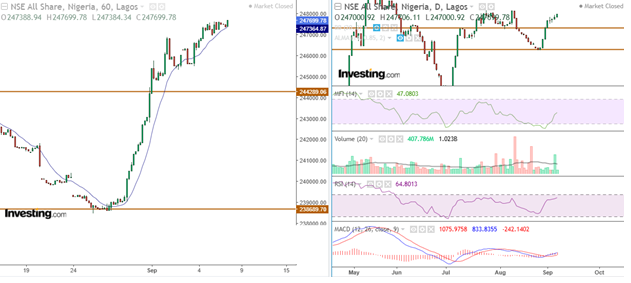

Trading on the Nigerian Exchange recorded a mixed trend of three green and two days of red, closing lower thereby halting seven weeks of bull-run amid profit booking and portfolio rebalancing in the face as inflation continued ticking up. Despite this, the Central Bank of Nigeria left its benchmark Monetary Policy Rate (MPR) unchanged at 26.5% at the end of its meeting last week. Selective buying interest in some stocks and sectors supported the market while profit taking weighed on the index also during the same period as reflected on the daily index’s action below to remain at the distribution phase of the NGX.
Overall, weekly activity slowed significantly compared to the prior week, with total turnover falling to 3.875bn shares worth ₦161.757bn in 334,745 deals, down from 7.772bn shares valued at ₦374.040bn in 402,945 deals previously. The Financial Services sector dominated trading with 2.41bn shares worth ₦69.71bn, accounting for 62.19% of volume and 43.10% of value. Services and Oil & Gas followed with 409.31m shares (₦5.41bn) and 294.86m shares (₦31.50bn) respectively.
Top traded stocks in volume were Sterling Financial Holdings, Fidelity Bank, and Access Holdings, jointly accounting for 1.092bn shares worth ₦19.53bn.
The NGX All-Share Index closed the week lower by 0.25% at 249,712.37 points, while market capitalisation dipped 0.23% to ₦160.08trn. Sector performance was mixed: Banking (+1.11%), Insurance (+0.24%), Pension (+0.19%), Oil & Gas (+0.07%), Growth (+1.57%), AFR Bank Value (+1.47%), MERI Growth (+0.33%), Premium (+0.33%), and Commodity (+0.02%) closed higher, while the Sovereign Bond index ended flat.
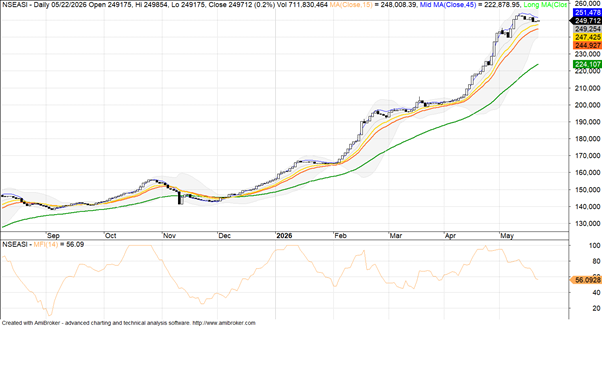
NGXASI Daily Action
The week’s trading started on a weak note on Monday, extending the previous session profit-taking and mixed sentiment. The NGX All-Share Index slipped 0.05% to 250,204.83 points, with market capitalisation shedding ₦80.81bn and year-to-date return easing to 60.79%. Losses in AFRIPRUD, TIP, CAVERTON, UBA, GTCO, and ACCESSCORP weighed on performance, although the market stayed balanced with 39 gainers and 39 losers. OANDO and UPL led advancers, while ZICHIS topped decliners. Volume fell 26.16% to 800.46m shares worth ₦37.05bn across 87,096 deals, with UBA most traded by volume and ARADEL leading value.
On Tuesday, the market rebounded as renewed buying interest in large-cap stocks lifted sentiments. The ASI rose 0.57% to 251,635.42 points, adding ₦916.89bn in market value and pushing YTD return to 61.71%. BUACEMENT, UBA, OANDO, STANBIC, and ZENITHBANK supported gains, though breadth remained weak with 33 losers against 27 gainers. FTNCOCOA led gainers while UNILEVER declined most. Activity slowed, with volume down 12.06% to 703.95m shares valued at ₦32.15bn, as ACCESSCORP dominated volume and ZENITHBANK led value.
At midweek, selling pressure resurfaced, dragging the market sharply lower. The ASI dropped 1.02% to 249,062.37 points, wiping out ₦1.62trn in market capitalisation and pulling YTD return down to 60.05%. Heavyweights like BUACEMENT, CAP, OANDO, GTCO, and ACCESSCORP led losses, although market breadth stayed positive with 41 gainers against 25 losers. ZICHIS topped gainers, while BUACEMENT led decliners. Volume fell 14.74% to 600.22m shares worth ₦32.72bn, with ACCESSCORP most active and ZENITHBANK highest by value.
A mild recovery followed on Thursday as selective buying returned. The ASI inched up 0.05% to 249,175.39 points, with market cap gaining ₦72.44bn and YTD return improving to 60.13%. Gains in UNILEVER, EUNISELL, UACN, TIP, and WEMABANK supported the rebound, though losers dominated at 45 versus 19 gainers. INTENEGINS led advancers, while BERGER topped losers. Trading activity surged 76.39% to 1.06bn shares worth ₦30.97bn, with STERLINGNG leading volume and ARADEL recording highest value.
The last trading session of the week closed on a positive note, even as the composite NGXASI rose 0.22% to 249,712.37 points, adding ₦344.23bn in market capitalisation and lifting YTD return to 60.47%. REDSTAREX, MAYBAKER, OANDO, STANBIC, and BUACEMENT drove gains, with market breadth positive at 30 gainers to 27 losers. REDSTAREX traded above its 52-week high. However, trading volume dropped 32.76% to 711.86m shares worth ₦29.08bn, with FIDELITYBK leading both volume and value.
Overall, weekly activity slowed significantly compared to the prior week, with total turnover falling to 3.875bn shares worth ₦161.757bn in 334,745 deals, down from 7.772bn shares valued at ₦374.040bn in 402,945 deals previously. The Financial Services sector dominated trading with 2.41bn shares worth ₦69.71bn, accounting for 62.19% of volume and 43.10% of value. Services and Oil & Gas followed with 409.31m shares (₦5.41bn) and 294.86m shares (₦31.50bn) respectively.
Top traded stocks in volume were Sterling Financial Holdings, Fidelity Bank, and Access Holdings, jointly accounting for 1.092bn shares worth ₦19.53bn.
The NGX All-Share Index closed the week lower by 0.25% at 249,712.37 points, while market capitalisation dipped 0.23% to ₦160.08trn. Sector performance was mixed: Banking (+1.11%), Insurance (+0.24%), Pension (+0.19%), Oil & Gas (+0.07%), Growth (+1.57%), AFR Bank Value (+1.47%), MERI Growth (+0.33%), Premium (+0.33%), and Commodity (+0.02%) closed higher, while the Sovereign Bond index ended flat.
Week-to-date, the All-Share Index has losed 0.25%, NGX 30 is down by 0.10%, the Banking Index has increased by 1.11%, the Pension Index increased by 0.19%, the Insurance Index declined by 1.77%, the Consumer Goods Index decreased by 0.84%. However, the Oil and Gas Index recorded a negative return of 0.07%. Year-to-date, the All-Share Index has gained 60.47%, NGX 30 is up by 59.57%, the Banking Index has increased by 59.43%, the Pension Index increased by 72.95%, the Insurance Index Inclined by 4.73%, the Consumer Goods Index increase by 25.27%. However, the Oil and Gas Index recorded a positive return of 118.40%.
ABC Transport Plc
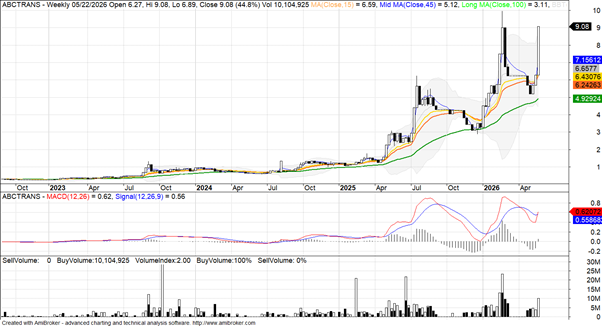
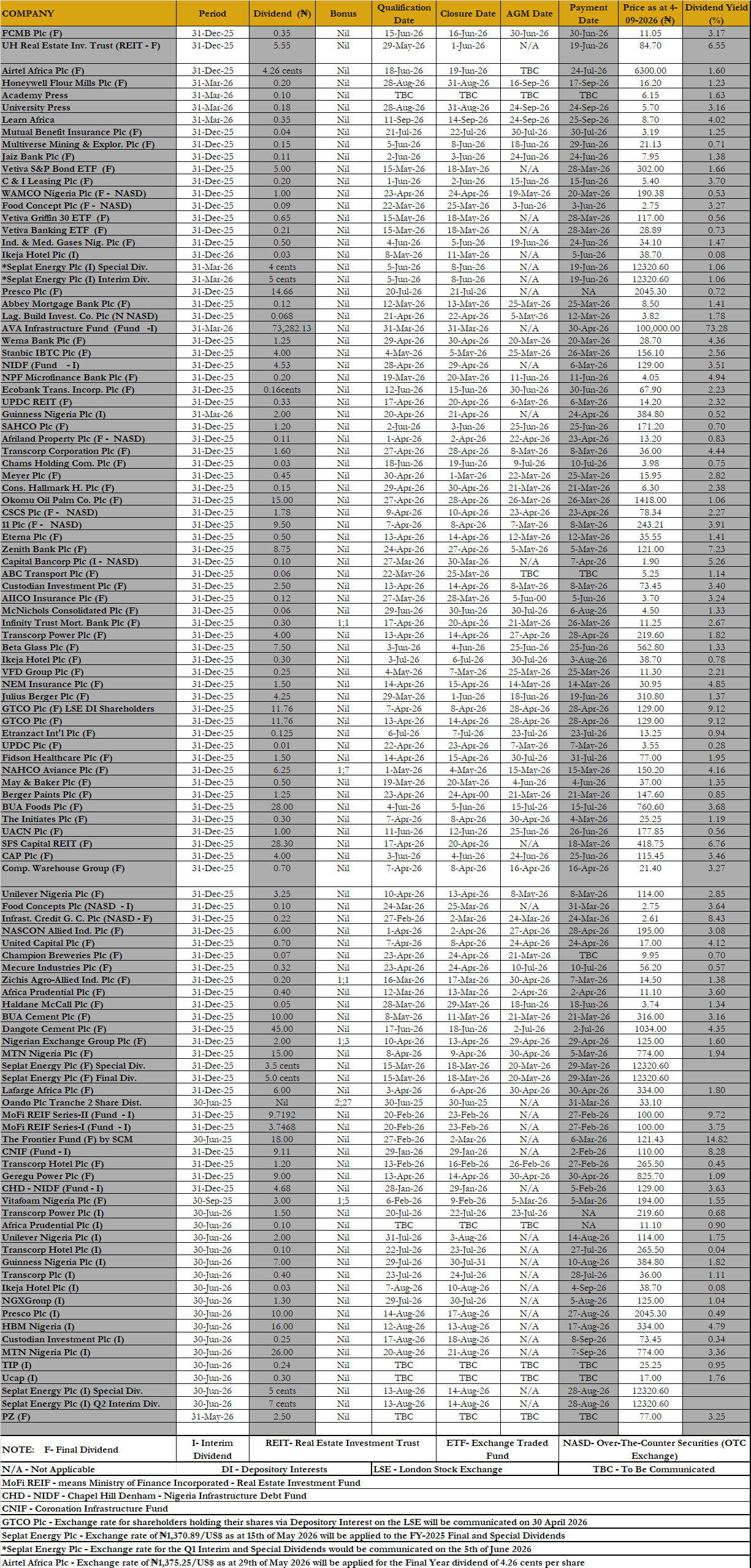
Leading the gainers’ chart was Associated Bus Company Plc, which rose from ₦6.27 to ₦9.08, gaining ₦2.81 or 44.82%. Academy Press Plc advanced from ₦7.05 to ₦9.15, up ₦2.10 or 29.79%, while University Press Plc appreciated from ₦5.00 to ₦6.40, adding ₦1.40 or 28.00%. International Energy Insurance Plc climbed from ₦2.79 to ₦3.41, gaining ₦0.62 or 22.22%, while Learn Africa Plc increased from ₦10.85 to ₦12.90, up ₦2.05 or 18.89%.
Sovereign Trust Plc
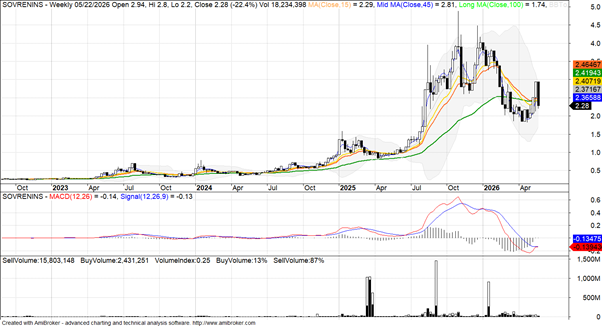
On the losers’ table, Sovereign Trust Insurance Plc declined from ₦2.94 to ₦2.28, shedding ₦0.66 or 22.45%. Trans-Nationwide Express Plc fell from ₦7.06 to ₦5.72, losing ₦1.34 or 18.98%, while CAP Plc dropped from ₦233.70 to ₦199.00, down ₦34.70 or 14.85%. Berger Paints Plc weakened from ₦168.95 to ₦147.60, losing ₦21.35 or 12.64%, while RT Briscoe Plc slipped from ₦15.83 to ₦14.06, down ₦1.77 or 11.18%.
NGX Weekly market performance Comparison
The Nigerian equities market closed weaker in the week ended May 22, 2026, compared to the strong bullish performance recorded in the previous week, as profit-taking and cautious sentiment slowed market momentum.
The NGX All-Share Index (ASI) declined by 0.25% to close at 249,712.37 points, against a 2.27% gain recorded in the previous week when the market settled at 250,330.92 points. Market capitalisation also dipped by 0.23% to ₦160.08 trillion from ₦160.44 trillion recorded in previous week.
Trading activity weakened significantly, with total turnover falling to 3.875 billion shares worth ₦161.76 billion traded in 334,745 deals, compared to 7.772 billion shares valued at ₦374.04 billion exchanged in 402,945 deals in the previous week, reflecting lower investor participation. The Financial Services sector remained the most active, accounting for 62.19% of total volume with 2.41 billion shares worth ₦69.71 billion traded. Sterling Financial Holdings, Fidelity Bank, and Access Holdings emerged as the most traded stocks, jointly accounting for 1.09 billion shares valued at ₦19.53 billion.
In terms of market breadth or internals, Thirty-eight (38) equities appreciated in price during the week, lower than seventy-four (74) equities in the previous week. Fifty-five (55) equities depreciated in price, higher than twenty-four (24) equities in the previous week.
Overall, the previous week recorded stronger momentum, higher liquidity, and broader buying interest, driven mainly by banking and industrial stocks, while the current week reflected market consolidation as investors took profits after the recent rally.
Technical Analysis View
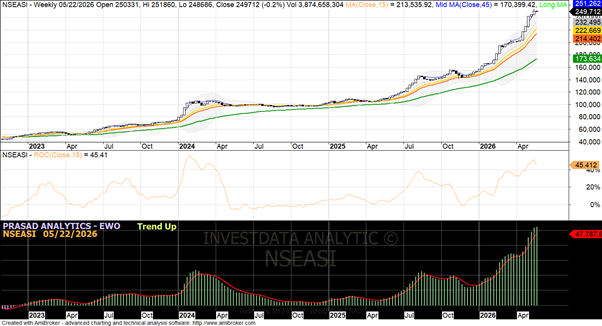
The NGX All-Share Index (ASI) spent the week in a tight consolidation phase following recent gains, oscillating between profit-taking pressure and selective bargain hunting. The index traded within a short range, briefly testing the 251,600 points zone before retreating toward the 249,000–250,000 band, reflecting indecision in market direction.
The market is still holding above its short-term support around 248,000 points, which continues to serve as a key demand zone. However, repeated rejections near the 251,000–252,000 region suggest that this area has become a near-term resistance, where selling pressure consistently emerges.
Momentum indicators point to a cooling phase after the previous strong bullish run, with reduced volume and mixed breadth confirming weakening conviction among traders. The alternating gain-and-loss pattern during the week further supports a sideways-to-range-bound structure rather than a sustained trend. Sector-wise, strength in banking and select mid-cap stocks provided intermittent support, but heavyweight profit-taking in industrials and financial services limited upside traction.
Market Outlook
In the near term, the market is likely to remain in a consolidation phase as investors continue to lock in profits while selectively re-entering undervalued names and strong fundamentally stocks. A clear breakout above the 251,600–252,000 resistance zone would be required to reignite bullish momentum and potentially extend the broader uptrend.
On the downside, sustained weakness below the 249,000-support level could open the door for a deeper pullback toward the 247,000–248,000 range, where fresh accumulation may emerge. Overall, sentiment remains cautiously positive, but the market is expected to trade sideways in the short term, with stock-specific opportunities likely to dominate rather than broad market rallies.
Trending in the Economy: Nigeria’s inflation in April 2026 edged up to 15.69% from 15.38% in March, according to the National Bureau of Statistics. The Consumer Price Index rose to 138.3 points, while month-on-month inflation slowed sharply to 2.13% from 4.18%. Food inflation printed at 16.06%, with core inflation at 15.86%, indicating that while prices are still climbing, short-term pressure is beginning to ease.
In response to the inflation trend, the Central Bank of Nigeria retained its benchmark interest rate at 26.5% to support price stability and anchor expectations. CBN Governor Olayemi Cardoso noted that the decision reflects a cautious stance amid persistent risks, including higher fuel and food costs linked to global tensions. The hold aligns with market forecasts and follows a 50-basis-point cut in February, with the apex bank projecting a gradual easing of inflation as ongoing reforms take effect.
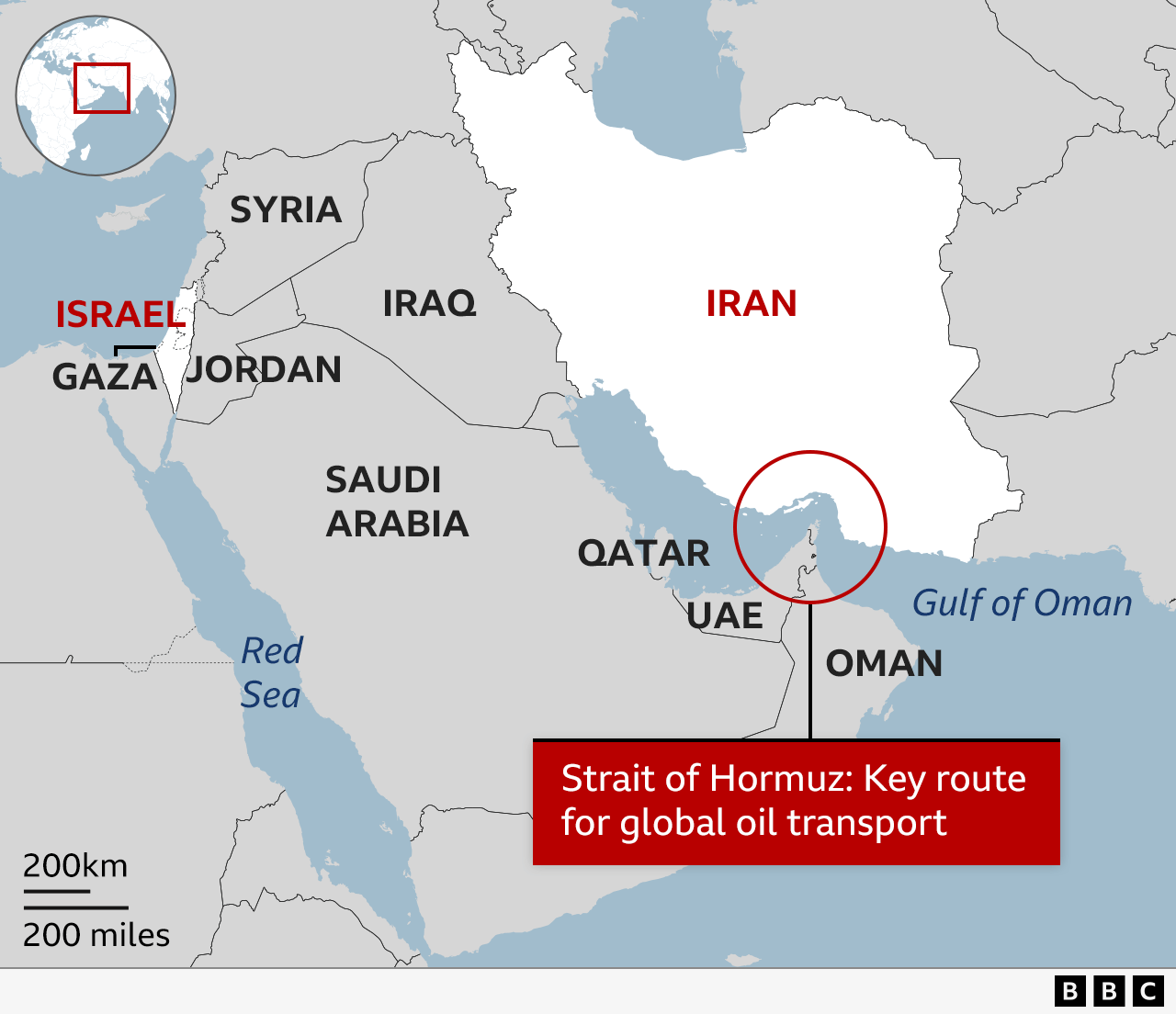
Global Market and Oil: Global financial markets ended the week on a firmer note on Friday as investors balanced optimism around possible diplomatic progress in the U.S.-Israeli conflict with Iran against ongoing concerns about inflation, energy supply risks, and monetary policy direction.
Stock markets across major regions advanced, while U.S. Treasury yields eased slightly as markets reassessed the outlook for growth and interest rates. Sentiment was broadly supported by expectations that diplomatic efforts could reduce geopolitical tensions, even though uncertainty around the outcome of negotiations remained high.
In the geopolitical space, U.S. Secretary of State Marco Rubio said Washington had made some progress toward a potential agreement with Iran, although he stressed that more work was still required to reach a deal. On the other hand, Iran’s foreign ministry spokesperson maintained that differences between both sides remain deep and significant, highlighting the fragility of the talks. Adding to diplomatic efforts, Pakistan’s military chief arrived in Tehran on Friday to support mediation aimed at easing tensions and encouraging dialogue between the parties involved.
Despite these developments, energy markets remained sensitive to the risk of disruption. Oil prices moved higher as traders continued to price in uncertainty surrounding the conflict and its potential impact on global supply chains.
On Wall Street, the tone remained positive. The Dow Jones Industrial Average recorded a historic milestone by closing at a new record high, rising 294.04 points, or 0.58%, to finish at 50,579.70. The S&P 500 advanced 27.75 points, or 0.37%, to 7,473.47, extending its winning streak to eight consecutive weeks, one of its strongest runs in recent months. The Nasdaq Composite also gained, adding 50.87 points, or 0.19%, to close at 26,343.97.
The rally in U.S. equities continued to be driven in large part by sustained enthusiasm for artificial intelligence-related stocks, which have supported broader market momentum even as macroeconomic and geopolitical risks persist. Investor appetite for growth-oriented technology names helped offset caution stemming from inflation concerns and geopolitical instability.
Across global markets, the MSCI world equities index rose 5.66 points, or 0.51%, to 1,112.55, reflecting broad-based gains across regions. In Europe, the STOXX 600 index climbed 0.73%, reaching its strongest level in more than a month and posting its best weekly performance in seven weeks. Technology stocks led gains across the European bourse, reinforcing the global theme of continued interest in high-growth sectors.
Market analysts noted an evolving relationship between bond yields and equity performance, with a growing inverse correlation becoming more visible as investors shift focus from earnings-driven momentum back to macroeconomic fundamentals. Anthony Saglimbene, chief market strategist at Ameriprise, observed that macro conditions are beginning to exert greater influence on market direction following the conclusion of earnings season, suggesting that interest rates, inflation, and geopolitical developments may play a larger role in shaping sentiment in the near term.
In the bond market, the yield on the benchmark U.S. 10-year Treasury note declined by 2.6 basis points to 4.558%, compared with 4.584% at the close of trading on Thursday. Earlier in the week, yields had surged to multi-month highs, with the 10-year briefly touching its highest level since January 2025. The pullback reflected renewed demand for safer assets as investors reassessed growth and inflation risks.
Inflation concerns remain central to market positioning. Investors are increasingly wary that potential energy supply disruptions stemming from geopolitical tensions could filter into broader consumer price pressures. Such developments could complicate central bank policy decisions and raise the possibility of a tighter monetary stance if inflation proves persistent. In Turkey, financial markets staged a strong recovery after earlier volatility. The benchmark BIST 100 index surged 4.9% in Istanbul, rebounding from a sharp 6% decline on Thursday. That prior drop had triggered a temporary trading suspension following political developments involving a court decision that effectively impacted the country’s main opposition leadership. The rebound reflected bargain buying and attempts to stabilize sentiment after the earlier shock.
In the United States, economic data added another layer of concern. A consumer sentiment survey revealed that confidence fell to a record low in May, driven largely by surging gasoline prices and worsening affordability conditions. The reading underscored ongoing pressure on households, particularly as inflation in essential goods continues to strain disposable income.
Energy markets remained firm amid these macroeconomic and geopolitical crosscurrents. U.S. crude oil rose by $0.25 to settle at $96.60 per barrel, while Brent crude gained $0.96 to close at $103.54 per barrel. The gains reflected both supply-side concerns and expectations that global demand remains resilient despite higher prices.
Currency markets, the U.S. dollar held near six-week highs as traders weighed geopolitical developments alongside expectations for the Federal Reserve’s policy path. The dollar index rose slightly by 0.04% to 99.24, reflecting steady demand for the greenback in a risk-sensitive environment. The euro edged down 0.06% to $1.1611, while the Japanese yen weakened by 0.11% to 159.13 against the dollar.
In Japan, fresh economic data showed that core inflation slowed to a four-year low in April. The reading added complexity to the Bank of Japan’s policy outlook, as it continues to balance weak price momentum with broader structural and global economic pressures. Precious metals also reacted to shifting sentiment across markets. Spot gold declined by 0.78% to $4,506.47 per ounce as investors trimmed safe-haven positions amid mixed risk signals from equities, currencies, and commodities.
Overall, the trading session reflected a market environment shaped by competing forces: optimism around diplomatic progress and strong equity momentum on one side, and persistent concerns about inflation, energy shocks, and policy tightening on the other. While risk assets generally performed well, underlying volatility signals suggest that investors remain highly sensitive to developments in geopolitics and macroeconomic data heading into the new trading week.