
Year-To-Date Return Stretches To 60.90%
The Nigerian equities market maintained its impressive upward trajectory in May 2026, extending its winning streak to six consecutive months, despite a challenging macroeconomic environment characterized by elevated interest rates, persistent inflationary pressures and intermittent profit-taking. Although the pace of growth moderated compared to the explosive gains recorded in April, the market remained resilient as investors continued to position in fundamentally strong stocks across key sectors of the economy.
NGXASI Monthly Index Action
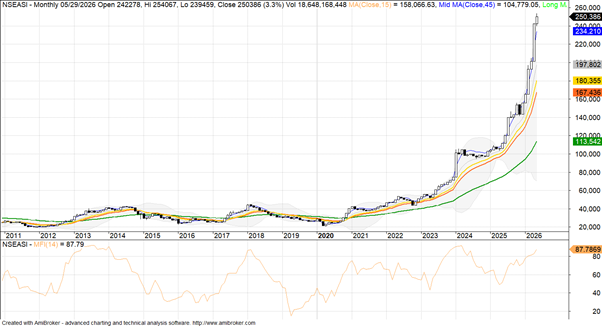
Trading for the month started on a positive note, with renewed buying interest pushing the benchmark NGX All-Share Index (ASI) to a new all-time high of 254,067.00 before pulling back on profit taking. Throughout the month, investors navigated a mix of profit-taking sessions, bargain hunting, portfolio rebalancing activities and holiday-induced liquidity constraints. Despite these headwinds, the market closed May firmly in positive territory, demonstrating the strength of investor confidence and the continued attractiveness of equities as a hedge against inflation.
The market remains firmly bullish despite the slowdown in momentum. The successful breakout and sustained close above the psychological 250,000-point mark signal continued strength in the broader uptrend. Market breadth remained relatively healthy throughout the month, while institutional participation continued to provide support during periods of profit-taking.
At the close of trading in May, the NGX All-Share Index had gained 3.35%, rising from 242,277.80 points at the beginning of the month to settle at 250,385.47 points. Market capitalization increased to ₦160.51 trillion, reflecting significant wealth creation for investors. The performance pushed the market’s year-to-date return to an impressive 60.90%, while second-quarter performance stood at 24.39% heading into June.
Although May’s gain was positive, it represented the slowest monthly advance recorded so far in 2026. This compared with the remarkable 20.36% surge recorded in April and reflected a gradual moderation in bullish momentum as investors locked in profits after months of strong gains. Nevertheless, the ability of the market to remain positive despite profit-taking activities underscores the underlying strength of the current bull cycle.
A major influence on market sentiment during the month was the evolving macroeconomic landscape. Nigeria’s inflation rate eased to 22.97% in April 2026 from 24.23% in March, providing some relief after months of elevated price pressures. The decline reinforced expectations that inflation may have peaked, although the rate remains significantly above the Central Bank of Nigeria’s preferred range. For many investors, the inflation environment continued to justify increased exposure to equities, particularly stocks with strong earnings growth and dividend-paying capacity capable of preserving real returns.
The monetary policy environment also remained a focal point for investors. During the month, the Central Bank of Nigeria maintained the Monetary Policy Rate (MPR) at 27.50%, while retaining the Cash Reserve Ratio at 50% for Deposit Money Banks and 16% for Merchant Banks. The Liquidity Ratio was also left unchanged at 30%. The decision reflected the apex bank’s commitment to maintaining price stability and supporting exchange-rate management.
Ordinarily, elevated interest rates create competition for equities as investors migrate to fixed-income instruments offering attractive yields. However, the strong earnings growth reported by several listed companies, coupled with robust dividend payments and expectations of continued corporate profitability, helped sustain investor appetite for equities. As a result, the stock market continued to attract both institutional and retail participation throughout the month.
Market activity remained robust despite a slowdown toward the end of May due to the Eid-el-Kabir holidays. More than 18 billion shares exchanged hands during the month, with banking and financial services stocks accounting for a significant portion of turnover. Investor interest remained concentrated in large-cap banking stocks, industrial counters and selected mid-cap growth stocks that continued to attract speculative and value-driven buying.
Sector performance revealed a broad-based rally across most segments of the market. The Industrial Goods sector emerged as the strongest performer, with the NGX Industrial Index advancing 8.60%. The sector’s performance was largely driven by a 21.65% appreciation in Dangote Cement, while BUA Cement added 0.48%. Strong gains were also recorded by several medium-sized industrial companies, including Berger Paints, which soared by 80.55%, Meyer which gained 28.75%, CAP which advanced 23.35%, Austin Laz which rose 16.81%, and Cutix which appreciated 1.31%.
The Insurance sector also delivered an impressive performance, with the NGX Insurance Index gaining 6.45% during the month. Investor interest was widespread across the sector as Sovereign Trust Insurance appreciated 32.21%, Consolidated Hallmark gained 20.19%, Prestige Assurance rose 12.23%, Sunu Assurances advanced 10.00%, Linkage Assurance appreciated 9.88%, Mutual Benefits climbed 8.93% and NEM Insurance added 7.69%. Other insurers including Coronation Insurance, Lasaco Assurance, Regency Alliance Insurance, Cornerstone Insurance and AIICO Insurance also recorded gains, highlighting the broad-based nature of the sector’s rally.
The banking sector maintained its role as one of the market’s major drivers. The NGX Banking Index rose 3.37%, supported by strong earnings expectations and sustained institutional accumulation. Ecobank emerged as the sector’s top performer with a gain of 20.84%, while First HoldCo appreciated 8.28%, Fidelity Bank gained 6.00%, FCMB advanced 4.93%, UBA rose 4.09%, Stanbic IBTC appreciated 2.64%, GTCO gained 1.48% and Zenith Bank added 0.46%.
Consumer goods stocks also contributed positively to market performance. The NGX Consumer Goods Index rose 1.06%, driven by strong performances in Vitafoam, which gained 25.24%, McNichols which advanced 29.46%, Unilever which rose 13.45%, Nigerian Breweries which appreciated 6.23%, International Breweries which gained 4.55%, NASCON which added 4.76%, Dangote Sugar which rose 2.08%, Nestlé which appreciated 0.81% and Champion Breweries which recorded a modest gain of 0.38%.
In contrast, the Oil and Gas sector was the only major segment of the market to close the month in negative territory. The NGX Oil and Gas Index declined 1.93%, making May its first negative month of the year after several months of strong performance. Although stocks such as Japaul Gold gained 26.26%, Oando appreciated 10.87% and Eterna advanced 5.03%, these gains were insufficient to offset declines in heavyweights such as Aradel, which lost 4.46%, and Seplat, which shed 0.08%.
International Energy Insurance Plc Chart
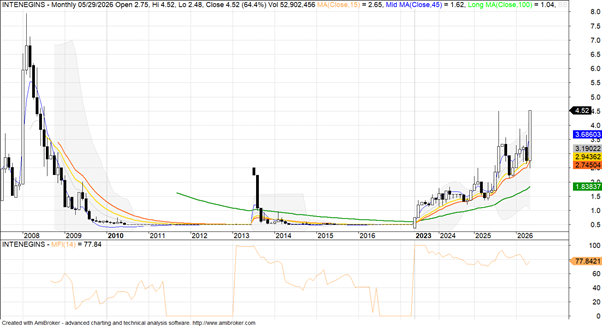
The month also witnessed impressive performances among several individual stocks. Berger emerged as the best-performing equity in May, appreciating by 80.55% to close at ₦147.60. INTENEGINS followed closely with a gain of 71.86% to ₦4.52, while FTNCOCOA advanced 62.73% to ₦8.95. ABCTRANS appreciated 61.76% to close at ₦8.25, while LEARNAFRCA gained 51.79% to end the month at ₦12.75. These stocks attracted significant investor attention as momentum trading and speculative interest remained active across selected low- and mid-cap counters.
Nahco Plc
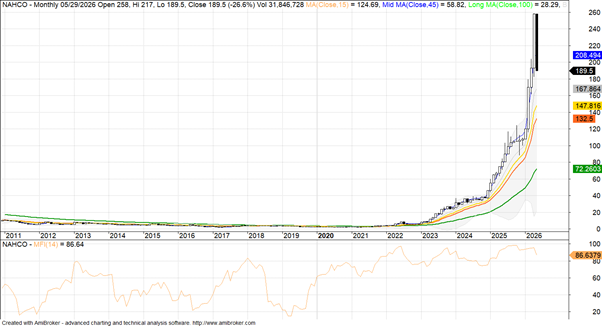
On the downside, NAHCO emerged as the worst-performing stock during the month, declining by 26.51% to close at ₦189.50 following sustained profit-taking. FTGINSURE fell 16.67% to ₦1.00, while NCR and GUINNESS each declined 9.99% to close at ₦161.20 and ₦402.60 respectively. SFSREIT also lost 9.09% to end the month at ₦418.75.
Market For June Outlook
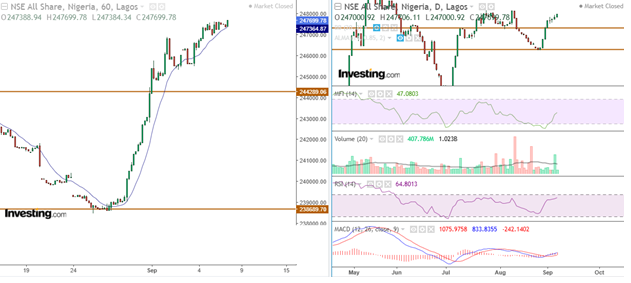
The NGX All-Share Index continues to trade above its key moving averages, maintaining a strong bullish structure. While the market may experience intermittent pullbacks due to profit-taking after the impressive year-to-date gain of 60.90%, underlying sentiment remains constructive. The ability of the market to absorb selling pressure and maintain higher support levels suggests that investors continue to view pullbacks as buying opportunities.
Looking ahead to June, market participants will closely monitor inflation data, exchange-rate movements, corporate actions, liquidity conditions and developments surrounding the implementation of the T+1 settlement cycle. Investors will also pay close attention to future monetary policy signals from the Central Bank, particularly as inflation gradually moderates.
The banking sector is expected to remain a major driver of market activity, supported by strong earnings expectations and sustained institutional demand. Industrial stocks may continue to attract interest following their strong performance in May, while selective opportunities are likely to emerge in consumer goods and insurance counters.
Overall, the Nigerian stock market entered June with strong momentum, resilient investor confidence and improving macroeconomic signals. While gains may become more selective compared to earlier months, the market’s ability to maintain record highs and deliver a 60.90% year-to-date return highlights the strength of the ongoing bull market and reinforces equities as one of the most attractive asset classes in Nigeria’s current investment landscape.
Global Market and Oil: Global financial markets delivered a strong performance in May 2026, supported by resilient corporate earnings, expectations of policy easing by major central banks, and easing concerns over a prolonged disruption to global energy supplies. Despite heightened volatility driven by the Iran conflict and disruptions in the Gulf region, investors maintained a strong appetite for risk assets, pushing major equity benchmarks higher.
In the United States, the S&P 500 gained approximately 6.3% during the month, recording one of its strongest monthly performances in recent years. The technology-heavy Nasdaq Composite outperformed with a gain of about 9.6%, while the Dow Jones Industrial Average advanced roughly 4.2%. The rally was largely driven by continued enthusiasm around artificial intelligence, strong earnings from large-cap technology companies, and expectations that inflation pressures would gradually moderate. More than 85% of S&P 500 companies that reported first-quarter earnings exceeded analysts’ estimates, reinforcing confidence in corporate profitability despite a still-challenging macroeconomic environment.
European equities also closed higher. Germany’s DAX Index rose by about 5.1%, France’s CAC 40 gained 3.8%, while the pan-European STOXX Europe 600 advanced 4.4% during the month. Investor sentiment improved as fears of a wider regional economic slowdown eased, although concerns regarding energy security remained a key market theme due to Europe’s sensitivity to fluctuations in crude oil and natural gas prices.
Asian markets produced mixed results. Japan’s Nikkei 225 climbed approximately 4.7%, benefiting from foreign investor inflows and continued corporate governance reforms. China’s Shanghai Composite ended the month broadly flat, weighed down by slower manufacturing activity and weak property sector sentiment. Hong Kong’s Hang Seng Index declined around 2.1%, reflecting concerns over China’s economic recovery, while India’s Nifty 50 added about 2.5% despite intermittent volatility linked to inflation concerns and global oil price movements.
The MSCI World Index advanced approximately 5.8% in May, reflecting broad participation across developed markets. Sector performance showed Technology leading gains, followed by Industrials, Energy, Financials, and Communication Services. Defensive sectors such as Utilities, Consumer Staples, and Real Estate lagged as investors rotated into growth-oriented assets.
Oil Market Experiences Extreme Volatility
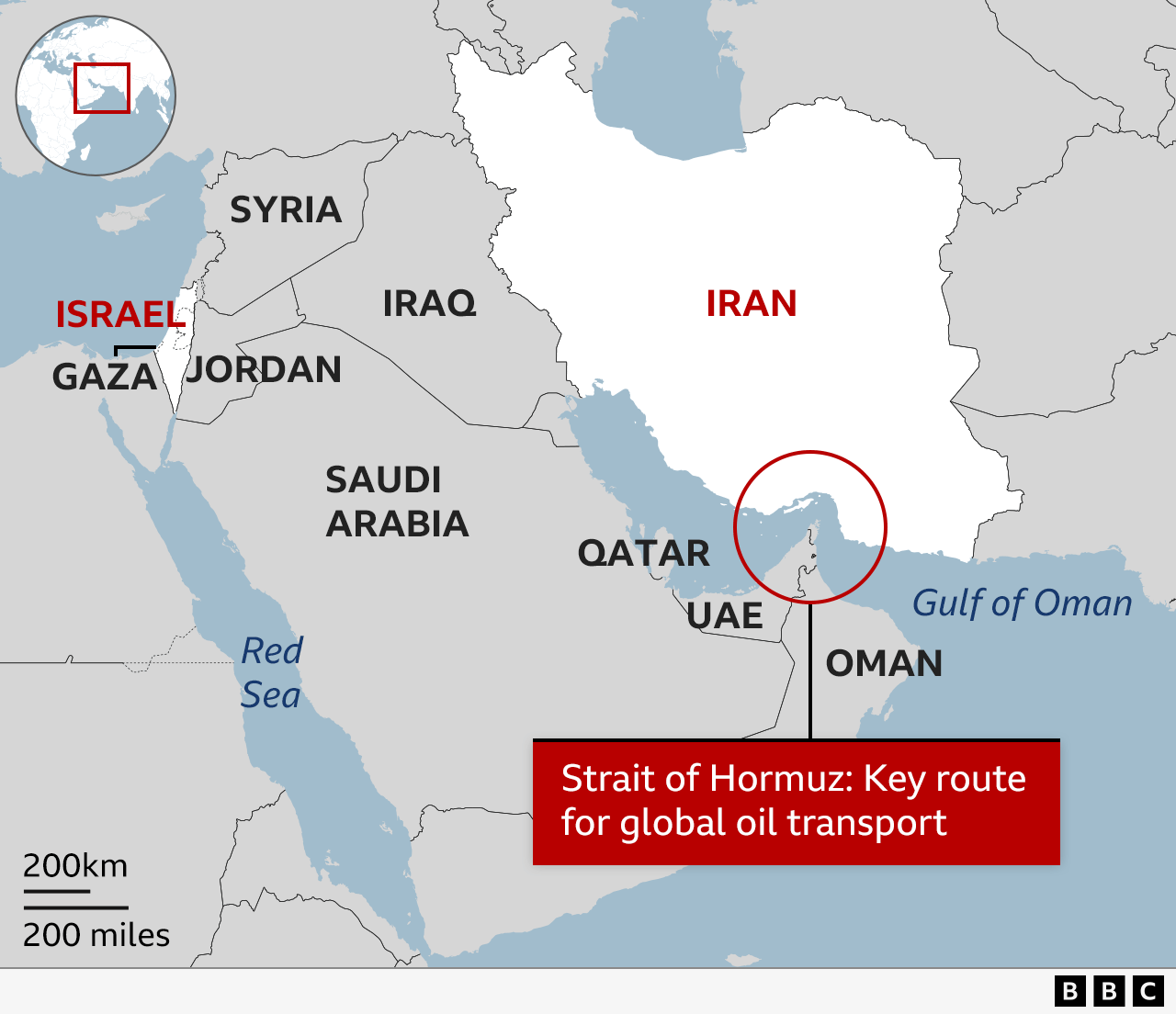
Crude oil remained the most volatile major asset class throughout May. The market was dominated by developments surrounding the Iran conflict, disruptions to shipping routes through the Strait of Hormuz, and concerns over global energy security.
Brent crude started the month near $121 per barrel and surged to an intramonth high of approximately $128 per barrel as traders reacted to reports of supply disruptions affecting Gulf exports. West Texas Intermediate (WTI) crude similarly climbed above $109 per barrel during the height of supply concerns.
At the peak of the disruption, nearly 14 million barrels per day of oil production and exports were affected either directly or indirectly by transportation constraints in the Gulf region. The Strait of Hormuz, through which roughly 20% of global oil consumption passes daily, remained at the centre of investor attention.
However, sentiment improved significantly during the second half of May following reports of diplomatic engagement and ceasefire discussions involving key stakeholders in the region. As fears of a prolonged supply shock diminished, Brent crude retreated sharply from its highs and ended the month near $100 per barrel, while WTI settled around $95 per barrel.
Although oil prices corrected from their peaks, they remained substantially above their levels at the beginning of the year, reflecting the persistent geopolitical risk premium embedded in energy markets.
Global Oil Supply and Demand Dynamics
According to estimates from the International Energy Agency (IEA), global oil demand growth slowed considerably during May as higher energy costs weighed on consumption. The agency projected a decline in global oil demand of approximately 420,000 barrels per day for 2026 compared to previous forecasts.
World oil demand is now expected to average around 103 million barrels per day in 2026, while global supply is projected near 104 million barrels per day. However, supply disruptions in the Middle East temporarily reduced available exports and tightened inventories.
Commercial oil inventories across OECD countries declined by an estimated 85 million barrels during the first five months of the year as governments and refiners drew down stocks to offset supply shortages. Strategic petroleum reserves in several major economies were also utilized to stabilize energy markets.
Market Outlook for June 2026
Looking ahead, investor attention will focus on inflation reports, monetary policy decisions from major central banks, corporate earnings revisions, and geopolitical developments in the Middle East.
For equities, the combination of strong earnings growth, declining bond yields, and continued investment in artificial intelligence remains supportive. However, elevated valuations and geopolitical uncertainty could trigger periods of profit-taking.
In the energy market, Brent crude is expected to trade within a broad range of $90–$110 per barrel, while WTI may fluctuate between $85–$100 per barrel depending on the pace of diplomatic progress and the restoration of normal energy flows through the Gulf region.
May 2026 ultimately proved to be a month of resilience for global financial markets. While geopolitical tensions generated significant volatility, strong corporate fundamentals, improving investor sentiment, and expectations of future monetary easing enabled global equities to post one of their strongest monthly performances of the year, even as crude oil remained highly sensitive to developments in the Middle East.