
Market Update For July 22, 2026
The Nigerian equities market ended Wednesday’s trading session on a weaker note as investors moved to secure profits from recent gains, bringing the benchmark index’s three-session winning streak to an end. The sell-off was concentrated mainly in consumer goods and selected large-cap stocks, which exerted significant downward pressure on the broader market. However, the decline was moderated by sustained buying interest in banking stocks, suggesting that investors were not abandoning the market but were instead repositioning portfolios in response to recent price gains.
Investor sentiment around the financial services sector remained relatively strong during the session, with the market taking interest in the latest share acquisition of First HolfdCo shares by Olufemi Otedola. The disclosure that Otedola acquired an additional 706.13 million shares of the foremost financial powerhouse generated significant activity around the stock, contributing to the financial services sector’s dominance of market activities. The development further strengthened attention on First HoldCo and reinforced the growing interest in major banking counters.
The strong performance of First HoldCo in terms of trading activity was one of the major highlights of the session. The stock accounted for more than half of the total volume traded on the exchange and more than two-thirds of total market value. Such a high concentration of turnover in one stock points to heightened investor participation and suggests that the counter remains a major focus for market participants following recent corporate developments.
The broader market, however, experienced a clear bout of profit-taking. Several stocks that had attracted strong buying interest in previous sessions came under pressure as investors sought to lock in gains. The consumer goods sector was particularly affected, with BUAFOODS and NESTLE each declining by 10.00%. The sharp losses in these heavyweight counters had a notable impact on the benchmark index due to their significant market capitalisation.
MECURE also recorded a substantial decline of 9.94%, while UACN fell by 7.75%. Other stocks that closed lower included TIP, which declined by 2.80%, GUINNESS, down 2.35%, and STANBIC, which shed 2.34%. NAHCO and TRANSCORP also recorded losses of 1.22% and 0.36%, respectively. The broad losses among these stocks offset gains recorded elsewhere in the market and ultimately pushed the benchmark index into negative territory.
Despite the decline in the overall market, the session did not present a picture of widespread investor panic. Instead, the positive market breadth indicated that buying interest remained present across several counters. The fact that the number of gainers exceeded the number of losers suggests that the market’s negative performance was heavily influenced by the price movement of large-cap stocks rather than a broad-based decline across the exchange.
This divergence between the benchmark index and market breadth is an important feature of Wednesday’s trading session. While the ASI declined, several stocks continued to attract buying interest, reflecting selective accumulation by investors. This could point to a rotation strategy in which investors are taking profits from stocks that have appreciated significantly while redirecting funds into counters with stronger valuations, positive corporate developments or further upside potential.
The banking sector remained at the centre of this rotation. The strong trading activity recorded in First HoldCo, combined with continued investor interest in other financial stocks, provided some support for the market. Banking stocks have remained a key component of Nigerian equities trading, and continued interest in the sector could help sustain market liquidity and provide a cushion against weakness in other sectors.
The session also highlighted the increasing importance of corporate developments in shaping investor sentiment. The latest share acquisition involving First HoldCo has attracted attention because of its potential implications for ownership structure and investor confidence in the company. As investors assess the broader significance of the transaction, trading activity around the stock could remain elevated in the near term.
Market liquidity also improved considerably during the session. Total volume traded increased by more than one-third, indicating stronger participation compared with the previous trading day. The rise in turnover came despite the decline in the benchmark index, reinforcing the view that investors remained active and that the session represented a redistribution of capital rather than a wholesale withdrawal from equities.
The concentration of trading in First HoldCo was particularly significant. The stock recorded 736.04 million shares in volume, worth ₦80.81 billion. This represented 58.76% of the entire market volume and 68.38% of the total value traded. ACCESSCORP and GTCO also featured prominently in terms of volume contribution, while MTNN and GTCO remained among the leading stocks by traded value.
The high level of activity in the financial services sector indicates that investors continue to see opportunities in the banking space despite the broader market correction. Strong liquidity in these counters could remain a major driver of the market’s performance in the coming sessions, particularly if investors continue to rotate away from stocks that have experienced sharp recent gains.
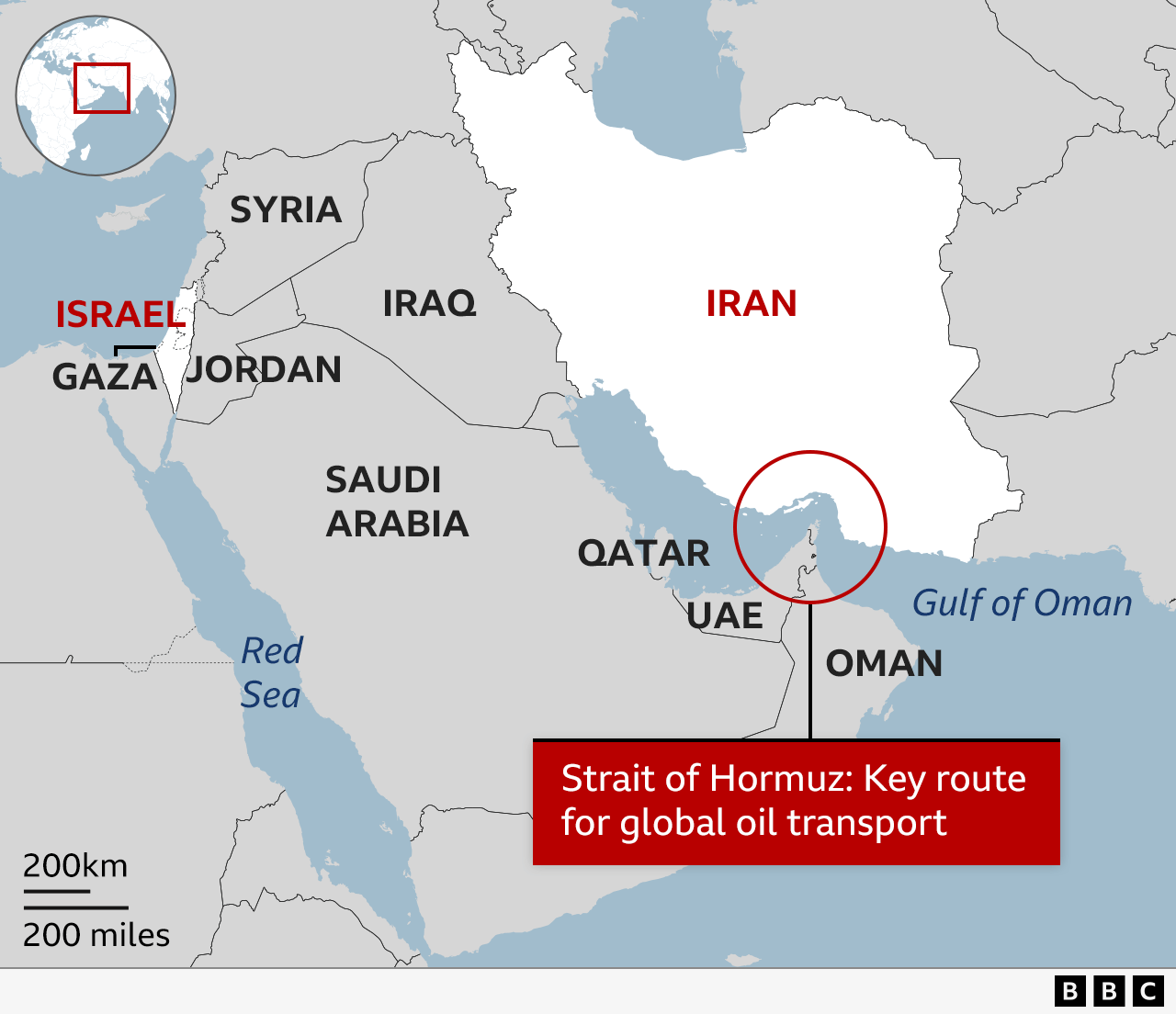
Outside the equities market, developments in the global oil market provided another important factor for investors to monitor. Oil prices rose sharply on Wednesday, reaching their highest level in nearly six weeks. Brent crude briefly moved above $95 per barrel before settling lower, while U.S. West Texas Intermediate also recorded a strong gain.
The rise in oil prices was linked to increasing concerns about disruptions to crude supplies and shipping routes in the Middle East. Escalating hostilities between the United States and Iran, alongside threats to shipping by Iran-backed Houthi militants in Yemen, heightened fears that continued conflict could affect the movement of oil through key regional routes.
Brent crude futures rose $2.23, or 2.45%, to $93.24 per barrel by 1323 GMT after reaching an intraday high of $95.47. West Texas Intermediate gained $2.18, or 2.18%, to $86.18 per barrel. Both benchmarks reached their highest levels since June 11, underscoring the growing risk premium being priced into the global oil market.
The widening of the Brent three-month timespread also provided evidence of tighter near-term supply expectations. The spread expanded to $10.89 per barrel, its widest level since May 22. The move deeper into backwardation indicates that investors are placing a higher premium on immediate crude supplies amid growing concerns about potential disruptions.
For Nigeria, developments in the crude oil market remain particularly relevant. As one of Africa’s largest oil producers, higher international oil prices can improve export earnings and provide additional support for government revenue and foreign exchange inflows. If sustained, stronger oil prices could also contribute positively to external reserves and help strengthen the country’s balance of payments position.
However, the potential benefits of higher oil prices must be weighed against the risks associated with escalating geopolitical tensions. A prolonged conflict in the Middle East could push global energy prices significantly higher, increasing inflationary pressures and potentially affecting interest rate expectations across major economies. This could create additional volatility in emerging markets, including Nigeria.
The domestic market will therefore continue to balance local corporate developments with global macroeconomic risks. While higher crude prices may offer support to Nigeria’s external position, rising global risk aversion could limit foreign investor appetite for emerging-market assets. Domestic investors are also likely to remain sensitive to changes in monetary policy, inflation expectations, corporate earnings and liquidity conditions.
Technical Analysis and Outlook
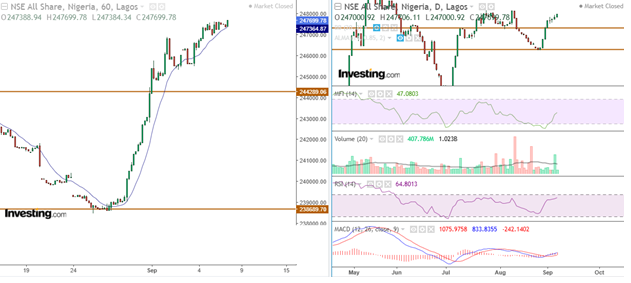
From a technical standpoint, Wednesday’s decline can be interpreted as a moderate pullback following a strong short-term advance. The market had recorded gains in the previous three sessions, creating room for profit-taking as investors sought to secure returns from recent positions. The decline, therefore, does not yet provide sufficient evidence of a reversal of the broader bullish structure.
The positive market breadth is an encouraging technical signal. Despite the decline in the ASI, more stocks advanced than declined, showing that the weakness was not evenly distributed across the market. This suggests that selling pressure was concentrated in key heavyweight counters, particularly in the consumer goods segment.
The ASI remains above the psychological 245,000-point region, which could serve as an important near-term support level. A sustained hold above this area would strengthen the case for consolidation before another attempt at higher levels. If buying interest returns to large-cap stocks and market breadth remains positive, the index could regain upward momentum.
However, investors should remain cautious of further profit-taking. The market’s strong year-to-date performance means that some stocks may continue to experience valuation-driven selling as investors rebalance their portfolios. A sustained increase in selling pressure, especially in heavyweight stocks, could place additional pressure on the benchmark.
The outlook for the market is therefore cautiously bullish with a near-term consolidation bias. The underlying trend remains positive, supported by strong year-to-date gains and continued participation across key sectors. However, investors may continue to adopt a more selective approach, favouring stocks with strong fundamentals, attractive valuations and positive corporate catalysts.
Banking stocks could remain a major source of liquidity and investor interest, particularly if activity in First HoldCo and other financial counters remains elevated. At the same time, the performance of consumer goods stocks will be important to watch, given their significant influence on the index. A stabilisation in these heavyweight counters could provide room for the ASI to recover, while continued declines could extend the market’s short-term correction.
Investors should also keep an eye on global oil prices and geopolitical developments. Sustained strength in crude prices could support Nigeria’s macroeconomic outlook, but an escalation in international tensions could trigger broader risk-off sentiment. The domestic market may therefore remain sensitive to developments in both the local corporate environment and global financial markets.
Overall, Wednesday’s session reflects a market undergoing healthy profit-taking rather than a fundamental breakdown in sentiment. The combination of positive breadth, strong trading activity and continued interest in banking stocks suggests that investors remain engaged. However, the market’s ability to sustain its bullish momentum will depend on whether buyers can absorb further profit-taking and restore upward pressure on the benchmark index.
The NGX All-Share Index (ASI) declined 0.50% to close at 245,418.37 points, down from 246,183.96 points in the previous session, while market capitalisation fell by approximately ₦800.70 billion. The market’s year-to-date (YTD) return moderated to 57.71%. Total volume traded increased by 34.34% to 1.25 billion shares, while traded value rose to ₦118.18 billion across 47,458 deals. Market breadth remained positive, with 37 gainers against 28 losers, indicating that advancing stocks outnumbered decliners despite the decline in the benchmark index. In terms of market movers, FIRSTHOLDCO dominated trading activity with 736.04 million shares valued at ₦80.81 billion, accounting for 58.76% of total market volume and 68.38% of total traded value. ACCESSCORP and GTCO contributed 6.35% and 2.72% of total volume, respectively, while MTNN and GTCO were among the leading stocks by traded value. On the top gainers chart, CADBURY, TRANSEXPR and UNILEVER recorded the strongest advances during the session. On the losers’ side, BUAFOODS and NESTLE led the decline, each shedding 10.00%, followed by MECURE (-9.94%), UACN (-7.75%), TIP (-2.80%), GUINNESS (-2.35%), STANBIC (-2.34%), NAHCO (-1.22%) and TRANSCORP (-0.36%). Meanwhile, THOMASWY, ACADEMY and HBMNG traded below their respective 52-week highs at ₦4.09, ₦12.80 and ₦352.00, respectively.