
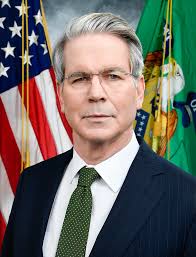
The markets are mispricing four key factors as US Treasury Secretary Scott Bessent vows to use economic tactics on Iran “that have never been seen”, affirms the CEO of one of the world’s largest independent financial advisory organisations.
Nigel Green of deVere Group’s comments come as Bessent told Newsmax the US would combine sweeping economic isolation with an indefinite naval blockade of the Strait of Hormuz, a stance echoed by Defence Secretary Pete Hegseth, who said the US Navy can sustain the blockade indefinitely.
The USS George Washington strike group has already departed Vietnam to relieve the USS Abraham Lincoln, which has spent more than 250 days deployed in the region, well beyond its original schedule.
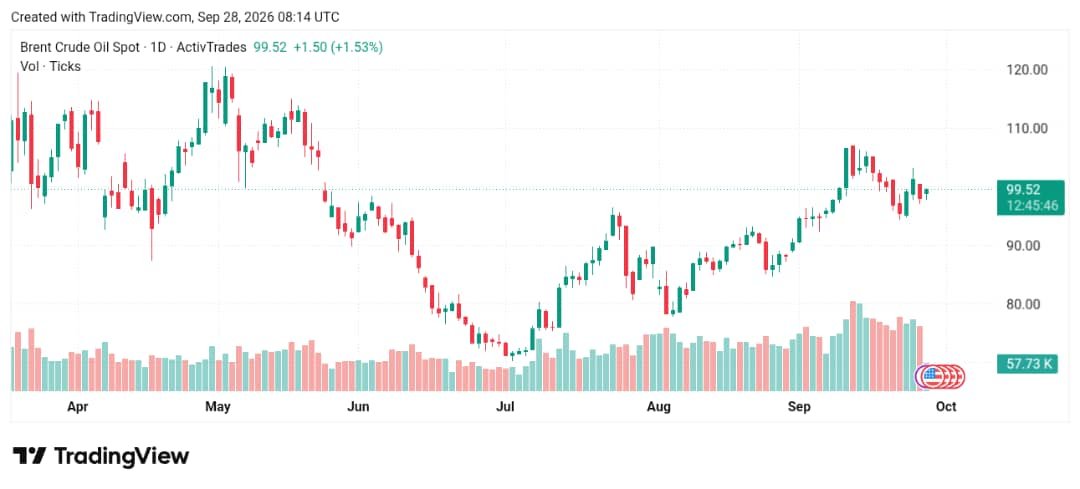
Brent crude has traded above 89 dollars a barrel this week, having spiked past 98 dollars in recent sessions, while war risk insurance premiums on vessels transiting Hormuz have jumped from 1 to 3% of hull value to as much as 7.5 to 10% in a matter of weeks.
Daily transits through the strait, once numbering well over 100, have fallen into the low teens.
He says: “Bessent didn’t use the phrase never seen before by accident. I believe this is a signal, not a soundbite.
“Markets are still treating this as a flare up that cools once the headlines move on. It’ll perhaps not. This is a regime change in how sanctions and naval power are being combined, and four parts of the market have not caught up.
“Start with rates. Every central banker spent the last two years insisting sticky inflation was behind them. Energy costs feeding back into CPI puts that claim under real pressure again.
“The Fed is already sitting at 3.50 to 3.75% with traders now pricing hike risk into September rather than the cuts everyone expected in spring. That repricing has further to run.”
Then there is the currency split nobody is positioned for. Sanctions enforcement runs through the dollar, so the dollar strengthens on isolation. Gold strengthens on the same headlines because it is the hedge against both inflation and escalation.
Seeing both move together is unusual, and portfolios built for one or the other are exposed either way.
“The refiners buying discounted Iranian crude are the most exposed and the least discussed. China and India take the bulk of it, much of it moved through ship to ship transfers and flag of convenience tankers built specifically to dodge sanctions enforcement.
“If economic isolation like the world has never seen reaches those intermediaries, refining margins across Asia take a direct hit, not a theoretical one.”
The CEO suggests that investors watch insurance and freight before they watch oil. Premiums on Hormuz transits have already multiplied several times over in weeks, and that always moves before the crude price does.
“Underwriters are pricing blockade risk as real right now, today, while a lot of equity desks are still modelling it as a spike that fades. The insurers are rarely the ones who get this wrong.
“I’ve watched three of these escalations up close, 2012, 2019, and the sanctions campaign against Russia in 2022. Each one was bigger and lasted longer than consensus expected going in.
“This one arrives with a sitting carrier group replaced mid deployment and a Treasury Secretary using language his own department has never used about Iran. Investors treating that as rhetoric could be making the same mistake three times over.”
He concludes: “The four blind spots – rates, currencies, refiners, and freight – will likely not stay blind spots much longer.”