

French and Spanish politics is dragging the euro lower and investors holding the single currency could be facing a long, painful winter, warns Nigel Green, Chief Executive Officer of deVere Group, one of the world’s largest independent financial advisory organisations.
The comments from Green come as the euro fell to $1.1161 on Monday, its weakest level since May 2025, after four straight weekly losses driven by a rout in French government debt.
According to him, “Markets have decided France is the eurozone’s weak link and they’re making the euro pay for it. I don’t think we’ve seen the bottom yet, because nothing in French politics is going to calm down between now and the election.
“For investors holding euros, this could drag on for months.”
The selling has been building since the summer. Yields on 10 year French government bonds have climbed 1.2 percentage points since the end of June to 4.9%, and the gap over German debt is the widest in more than a decade.
Public debt is around 119% of GDP, and Paris has failed to get its deficit back within 5% of output.
“France has carried big debts for years and markets have lived with it,” explains the deVere CEO.
“What’s changed is nobody believes a word of the budget anymore, because everyone can see there’s a presidential election in April 2027 and whoever wins may well tear it up.
“You can’t blame bond investors for wanting to be paid more to sit through that.”
Spain is now in the frame too, after Prime Minister Pedro Sánchez had his flagship housing bill rejected last week, and has called a snap election.
“Spain was the bright spot people pointed to when they wanted to feel good about Europe,” he says.
“If Sánchez ends up going to the country early, you lose that, and suddenly you’ve got political noise in two of the four biggest economies in the bloc at once.
“Currency traders don’t need much more of an excuse.”
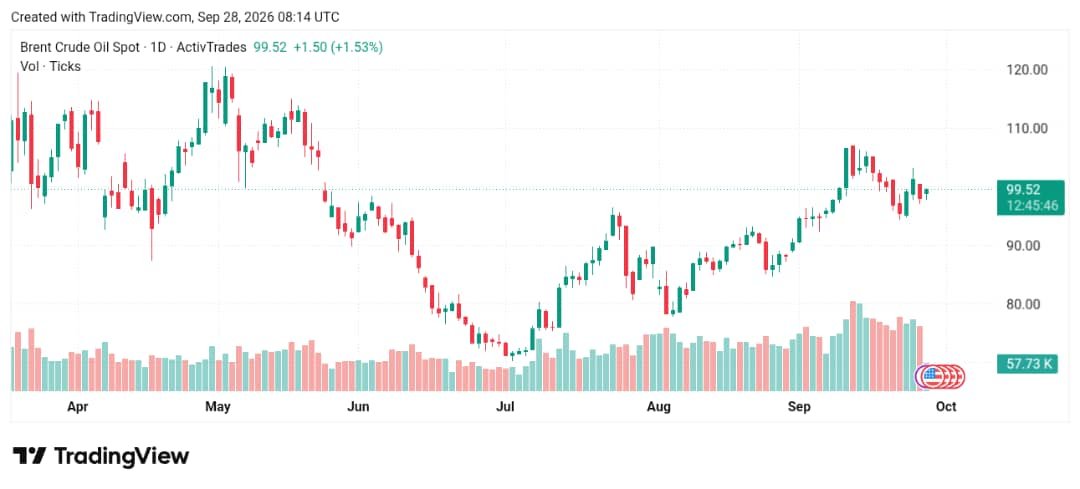
Energy is making everything harder. Eurozone inflation jumped to 3.8% in September, its highest in three years, with energy prices up 18.8% on the year after crude rallied more than 30% in three months.
The European Central Bank raised rates by a quarter point on 10 September.
The deVere CEO says: “I wouldn’t want to be sitting at the ECB right now. They’ve raised rates to deal with inflation, but every time they do it, France’s interest bill gets bigger, and sooner or later someone is going to ask them to step in and support French bonds.
“Once that conversation starts, you’ll hear a lot of grumbling from the northern countries, and the euro won’t like it one bit.
“Europe buys its oil in dollars, so when the euro falls the energy bill goes up, and it feeds straight back into inflation. It’s a horrible combination when growth is already this weak.”
The dollar, meanwhile, climbed even after last week’s soft US jobs figures cooled expectations of another Federal Reserve hike.
“What struck me was the dollar going up on jobs numbers that were frankly disappointing,” says Nigel Green.
“A few months ago, data like that would have knocked it lower. It shows you how worried people are about Europe when they’ll take the dollar even on a bad day for the US economy.”
He believes comparisons with the eurozone debt crisis are overdone.
“I’d push back on anyone comparing this to 2012. The eurozone has far more firepower to deal with a crisis today than it did back then.
“My worry is more a long, slow grind lower for the euro while France muddles its way to the election, because that can do real damage to people’s wealth without ever looking like a crisis.”
He concludes: “Honestly, I struggle to see what turns this around before April.
“Until the French vote is out of the way, I expect investors to keep treating the euro with a great deal of suspicion.”