
The US $40 trillion debt spiral is now mathematically self-feeding and investors around the world are underpricing its huge far-reaching consequences, warns Nigel Green, chief executive of deVere Group, one of the world’s largest independent financial advisory organisations.
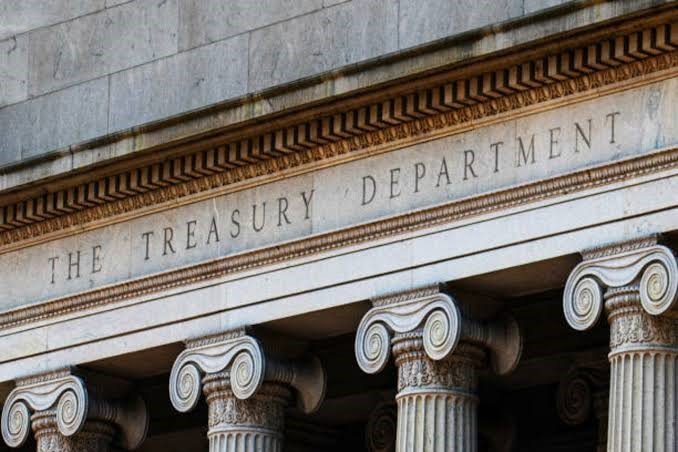
His warning comes as the US national debt broke through $40 trillion this month, after adding $1 trillion in just five months, the fastest pace on record, according to Treasury data.
The debt is now growing by roughly $91,000 a second, close to $8 billion a day, and the burden already works out at $295,000 for every US household, up more than $21,000 in the past year alone.
Annual interest costs have climbed past $1.2 trillion, overtaking the entire US defence budget for the first time and nearly tripling since 2020.
The milestone landed as the 30-year Treasury yield touched its highest level since 2007, with 10-year auctions clearing at levels not seen in almost two decades, driven by persistent inflation pressure, stalled ceasefire talks tied to the Strait of Hormuz, uncertainty around new Federal Reserve leadership, and a surge in corporate borrowing to fund AI infrastructure competing for the same pool of buyers.
The Congressional Budget Office already expects the trajectory to worsen on autopilot. Debt held by the public sits near the size of the entire US economy today and is projected to reach 120% of GDP by 2036, with the annual deficit climbing past $3 trillion within a decade and $24 trillion added to the pile over that period alone.
Nigel Green says: “None of this now requires a recession, a war or a policy mistake to happen. It’s what current law already produces.
“This is arithmetic, not sentiment. Interest is compounding faster than the economy generating the revenue to pay it, so every dollar borrowed to cover last year’s interest bill creates a larger interest bill this year, regardless of who sits in the White House or what the Federal Reserve decides next.”
For US investors, the transmission is direct and already visible. The average 30-year mortgage rate sits at 6.66%, more than double the 2.65% low struck in January 2021, and every move higher in the 10-year Treasury yield, the benchmark it tracks, tightens what buyers can afford and discourages refinancing.
Corporations now pay that yield plus a credit spread on every new bond, a cost landing hardest on capital-intensive sectors such as the data centre buildout financing the AI boom, and higher yields compress the value markets place on future earnings, the same mechanic behind the sharpest swings in growth and semiconductor stocks this year.
The government’s own average interest rate on its debt has climbed to 3.44%, up from 3.40% a year ago, a small-looking shift that adds tens of billions in cost once applied across $40 trillion.
The exposure runs well beyond US borders. Foreign investors hold roughly $9.4 trillion of US government debt, close to a quarter of the total, led by Japan at over $1.1 trillion, the United Kingdom near $950 billion, and China at $659 billion, a figure well below its 2013 peak of $1.3 trillion as Beijing continues to diversify its reserves.
A sustained rise in US yields tends to pull global capital toward dollar assets, strengthening the dollar and tightening financial conditions well outside America, raising borrowing costs for European corporate issuers and emerging-market governments priced off the same benchmark curve.
The bond selloff is not confined to the US. Japan’s 10-year yield has climbed to 2.95%, its highest since 1996, as the Bank of Japan moves toward a rate rise as early as September, unwinding a carry trade that has funnelled Japanese capital into US and European debt for years.
UK 10-year gilts have held above 5% for the longest stretch in almost two decades, and German bund yields sit at their highest since 2011.
AI infrastructure companies alone issued roughly $1.5 trillion in corporate bonds this year, pulling investor capital away from government debt and forcing sovereigns everywhere to offer higher yields to attract the same pool of buyers.
Equity markets are already pricing the strain. The Nasdaq Composite fell 1.33% and the S&P 500 0.69% in a single session this month as the 30-year Treasury yield hit its 2007 high, with tech the worst-performing of the S&P’s 11 sectors.
Semiconductor and storage names bore the brunt, while healthcare and consumer staples outperformed as investors rotated into defensive positioning.
The pattern is consistent with the mechanics of higher discount rates: the further out a company’s earnings sit, the harder its valuation gets hit when long-dated yields move.
Currency markets are sending an unusual signal. Textbook logic says higher yields should attract capital and strengthen the dollar, yet the US Dollar Index has fallen 2.51% over the past month even as Treasury yields climbed to multi-decade highs, a divergence that points to investors pricing credit and fiscal risk into the currency itself rather than treating it as an automatic safe haven.
This shift coincided with the Treasury’s own move to expand bond buyback operations in an attempt to manage borrowing costs, a policy response markets appear to be reading as confirmation of the problem rather than a fix for it.
He warns: “Portfolios built for low, stable yields are now carrying risk most investors have not repriced.
“Duration exposure that looked harmless two years ago could very well be one of the most dangerous things quietly embedded in a balanced portfolio, in the US and internationally, and markets have treated $40 trillion as background noise for far too long.
“This is a debt spiral that is now dangerously feeding itself, and the only real question left is how many investors understand that before the market forces everyone to.”