
Market Update For September 11, 2026
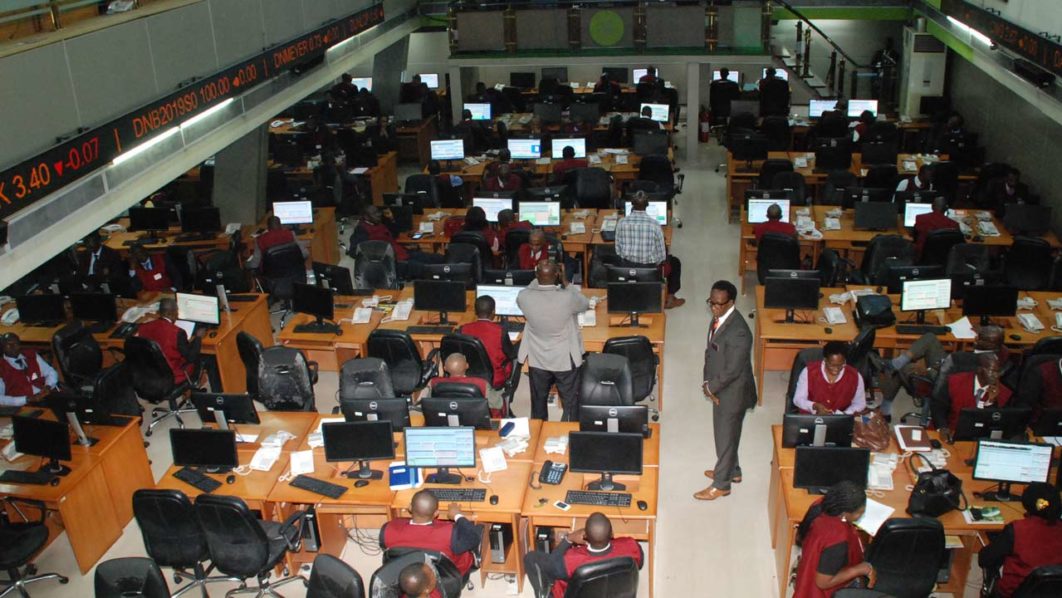
The Nigerian equities market extended its recovery on Friday as renewed buying interest in selected stocks pushed the benchmark index higher for a second consecutive session. The positive close reflected improved sentiment across parts of the market, particularly in banking and industrial counters, although the decline in trading activity showed that investors remained cautious.
The session came against the backdrop of a market that has experienced bouts of profit-taking in recent weeks following its strong year-to-date performance. Investors appear to be adopting a more selective approach, rotating funds into stocks with stronger liquidity, earnings prospects and near-term catalysts rather than committing broadly across the market.
Financial stocks remained central to the session’s performance, with WEMABANK, ACCESSCORP, UBA and ZENITHBANK among the notable gainers. The banking sector continues to attract attention as investors assess the earnings outlook of lenders, capital positions and the broader impact of monetary conditions on profitability.
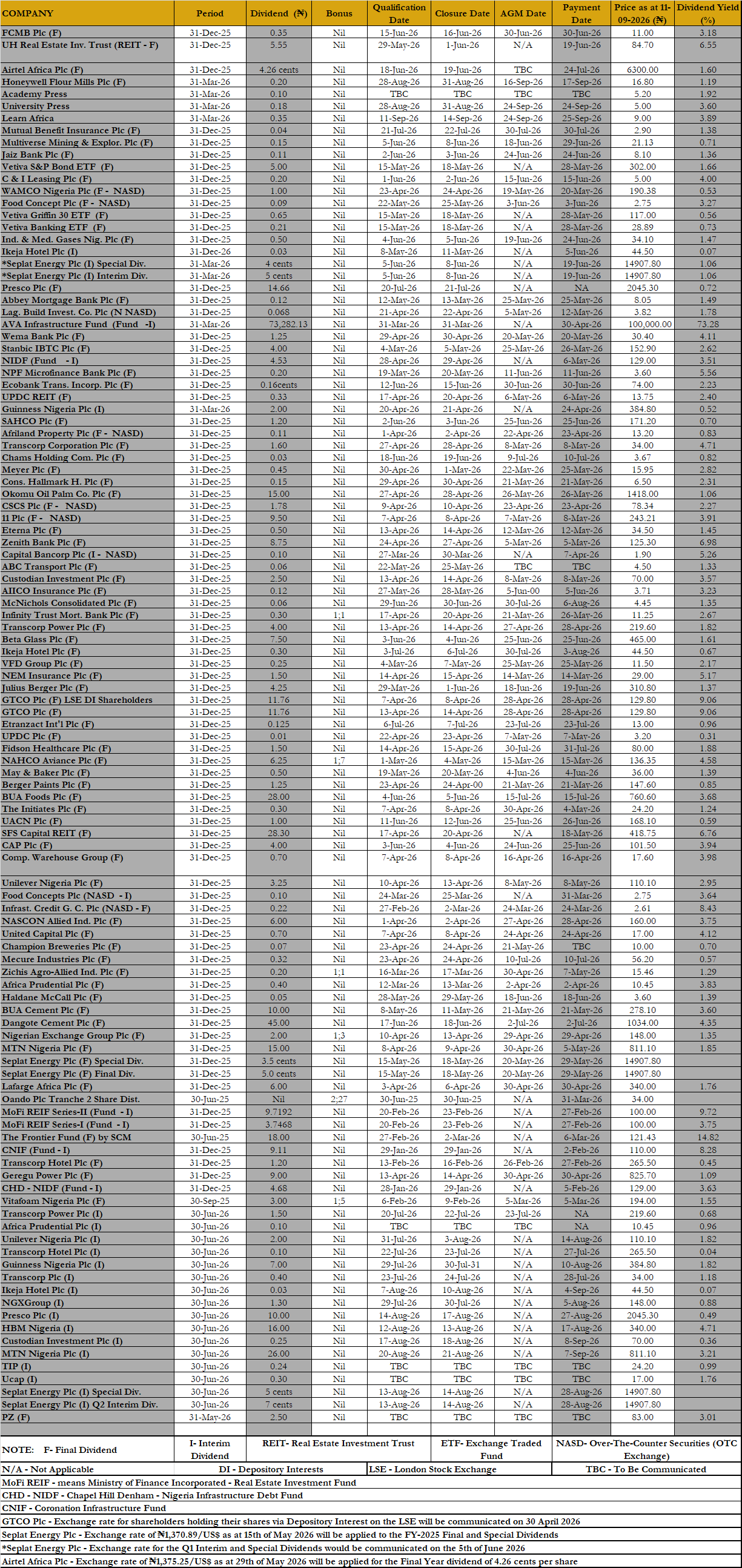
NGXGROUP was another major contributor to the market’s positive tone, advancing strongly during the session. Its performance, alongside gains in DANGSUGAR, NB and ARADEL, helped cushion losses recorded across several other counters.
However, the market’s performance was not uniformly positive. Selling pressure remained visible in some stocks, with ELLAHLAKES and JOHNHOLT suffering double-digit declines. AUSTINLAZ and LINKASSURE also recorded significant losses, highlighting the continued divergence between individual stocks even as the broader index moved higher.
The sharp movement in some counters also shows the importance of stock selection in the current market environment. With the ASI already delivering substantial gains year-to-date, investors are increasingly likely to focus on earnings expectations, valuation, corporate actions and sector-specific catalysts when making fresh investment decisions.
Trading activity, meanwhile, weakened substantially during the session. The lower volume and value of transactions suggest that the latest advance was driven by selective buying rather than a broad-based surge in market participation. This remains an important consideration for the market’s short-term outlook because a sustained rally is usually stronger when supported by rising liquidity.
STERLINGNG remained the most actively traded stock by volume, accounting for a significant portion of total shares exchanged. The activity reflects continued interest in financial counters, particularly lower-priced banking stocks that often attract substantial retail participation.
ARADEL dominated trading by value, underscoring the continued importance of energy-related counters in the Nigerian market. The company’s high transaction value also comes as investors continue to monitor the impact of elevated crude oil prices on Nigeria’s external balances, government revenue and corporate earnings.
The broader macroeconomic environment remains an important driver of market sentiment. Investors are closely watching interest rates, inflation, foreign-exchange liquidity, government revenue and crude oil prices as they determine the sustainability of corporate earnings and the attractiveness of equities relative to fixed-income instruments.
The recent improvement in the market also comes as investors assess the implications of stronger oil prices for Nigeria. With crude prices trading around the $100 per barrel level, the country’s external position could benefit from stronger export earnings if elevated prices are sustained. Improved oil revenue could also provide some support for government finances and foreign-exchange availability.
At the same time, higher crude prices present a mixed picture for the wider economy. While they support Nigeria’s export earnings, elevated global energy prices can contribute to inflationary pressures and complicate the policy environment. Investors will therefore need to balance the potential benefits of stronger oil revenue against the possible impact of higher energy costs on global inflation and interest-rate expectations.
Oil Market
The international oil market remained volatile on Friday, with crude prices pulling back after a sharp rally in the previous session. Despite the decline, both major benchmarks remained on track for weekly gains of more than 8%, reflecting persistent concerns over possible supply disruptions arising from tensions around Middle East shipping routes.
Brent crude futures fell $3.28, or 3.05%, to $104.35 per barrel, while West Texas Intermediate declined $3.41, or 3.33%, to $99.07 per barrel. Both benchmarks had earlier climbed to their highest levels since mid-May before retreating.
The reversal followed reports that foreign ministers in the Middle East were working towards a temporary arrangement with Iran to manage shipping through the Strait of Hormuz. Any agreement that reduces the threat to shipping could ease some of the supply concerns that have pushed crude prices sharply higher.
However, the market remains sensitive to developments in the region. Brent and WTI had surged by more than 6% on Thursday following an escalation in attacks on shipping routes, reinforcing concerns that disruptions could persist and further tighten already constrained supplies.
The oil price movement remains particularly significant for Nigeria because of the country’s dependence on crude exports for foreign-exchange earnings and government revenue. A sustained period of crude prices above $100 per barrel could strengthen external earnings and potentially provide additional support for the naira and fiscal position, provided production levels remain stable.
For investors on the NGX, higher crude prices could also support sentiment towards energy companies and other businesses linked to the oil and gas value chain. However, the benefits will depend on production volumes, operating costs, regulatory conditions and the ability of companies to convert higher commodity prices into stronger earnings.
Technical Analysis and Outlook
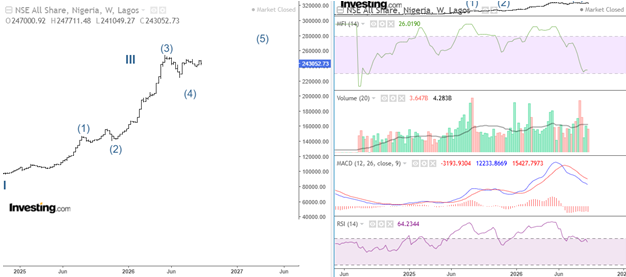
From a technical perspective, Friday’s advance keeps the NGX All-Share Index in a recovery phase after recent selling pressure. The index has managed to remain above the 240,000-point region, which continues to serve as an important short-term support level.
The next major hurdle is the 245,000-point area. A sustained break above this level could strengthen the bullish momentum and encourage further buying towards the 250,000-point resistance zone. A move beyond 250,000 points would improve the market’s technical structure and could signal a broader recovery towards previous highs.
However, the market needs stronger volume to validate the latest price movement. The decline in turnover during Friday’s session suggests that investors have not yet returned to the market with full conviction. If the ASI rises while volume remains weak, the recovery could remain vulnerable to profit-taking around resistance.
The 240,000-point region therefore remains critical. Holding above this level would preserve the current recovery structure, while a decisive break below it could trigger renewed selling pressure and push the index towards lower support levels.
Market breadth provides some encouragement. The higher number of advancing stocks compared with decliners suggests that buying interest was relatively widespread, even though the strongest gains were concentrated in selected counters. Continued positive breadth in subsequent sessions would strengthen the argument for a sustained recovery.
The banking sector is also likely to remain a key market driver as investors continue to assess earnings, capitalisation requirements and the impact of interest rates on net interest margins. Large-cap banks have significant influence on the index, meaning sustained gains in the sector could provide further support for the broader market.
Energy stocks could equally remain important given the current oil-price environment. If crude prices remain elevated, investors may continue to monitor companies such as ARADEL for potential earnings and cash-flow benefits, while also watching developments in global supply and shipping conditions.
Overall, the near-term outlook for the NGX remains cautiously bullish. The index has regained some ground, market breadth is positive and buying interest has returned to several important counters. However, the market needs improved liquidity, stronger participation and a sustained break above immediate resistance to confirm that the current rebound can develop into a more durable upward trend.
Investors are likely to remain selective in the coming sessions, with attention focused on stocks offering a combination of attractive valuations, earnings visibility, liquidity and identifiable corporate catalysts. With the market already up significantly year-to-date, further gains could increasingly depend on fundamental support rather than momentum alone.
The NGX All-Share Index gained 674.61 points, or 0.28%, to close at 243,052.74 points, compared with 242,378.13 points in the previous session, while market capitalisation increased by ₦437.40 billion to ₦157.59 trillion. The market’s year-to-date performance improved to 56.19%. Trading activity stood at 552.87 million shares worth ₦25.78 billion exchanged in 45,614 deals. Market breadth remained positive, with 33 gainers against 24 decliners and 90 stocks unchanged. Major market movers included NGXGROUP (+8.03%), WEMABANK (+6.48%), ACCESSCORP (+3.57%), TIP (+2.98%), DANGSUGAR (+2.00%), UBA (+1.94%), NB (+0.88%), ZENITHBANK (+0.64%) and ARADEL (+0.07%). UPDCREIT (+10.00%) led the gainers at ₦13.75, followed by OMATEK (+9.60%) at ₦1.37, CONHALLPLC (+8.89%) at ₦6.49, ETRANZACT (+8.79%) at ₦13.00 and NGXGROUP (+8.03%) at ₦148.00. On the losing side, ELLAHLAKES fell 10.00% to ₦8.55, JOHNHOLT declined 10.00% to ₦9.00, AUSTINLAZ dropped 9.55% to ₦1.99, LINKASSURE shed 8.14% to ₦1.58, while UPDC lost 5.88% to close at ₦3.20.