
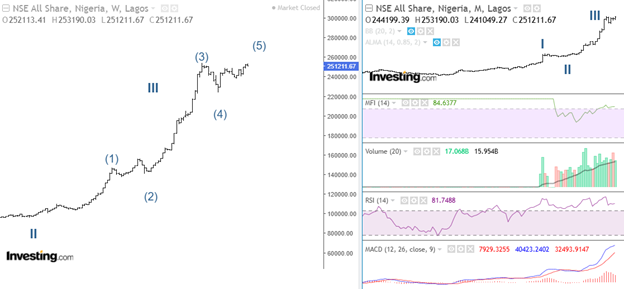
NGX ASI: Nigeria’s All-Share Index
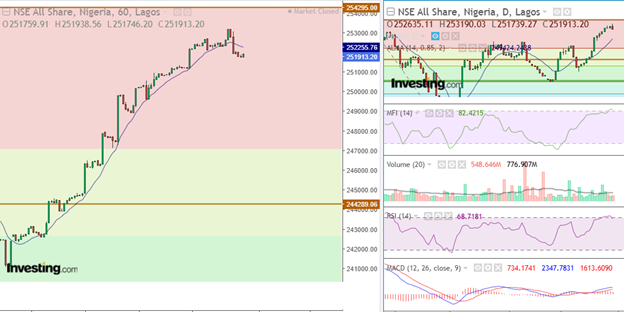
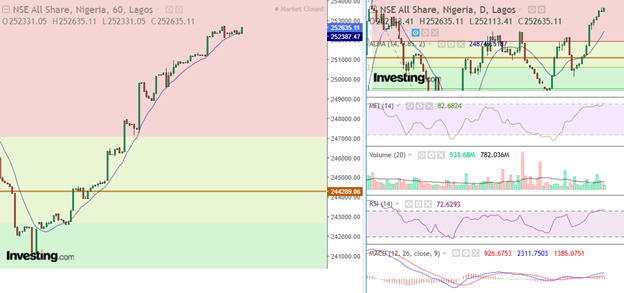
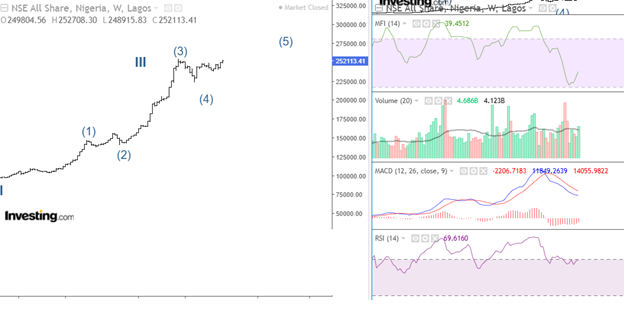
The Nigerian Exchange All-Share Index (NGX ASI) gained 4.11% and closed at 251,211.67 basis points. During intra-month trading, the index pulled back sharply and regained momentum. Currently, it remains within its corrective phase, attempting to break out.
In line with this performance, the index volume closed strongly above its moving average with 17 billion shares traded within the period. Its liquidity and momentum also remained strong. Investors should watch MACD’s divergence performance to confirm the index’s recovery strength in October.
NGXBNK: Banking Sector Index
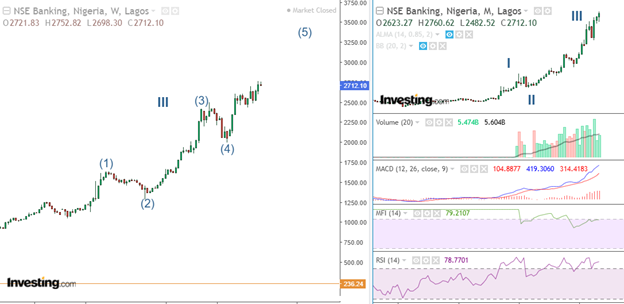
The banking sector index gained 6.57% and closed at 2,712.10 bps for September. The index started the month with strong bearishness, yet sustained momentum above its moving average. In line with this performance, the index initiated a strong recovery phase that surpassed its major resistance level at 2,700 bps.
On the monthly chart, the index remains within Wave III of the grand cycle, trading at Wave 5. Following this sentiment, the index’s volume, momentum, and liquidity remained strong. This performance portrayed renewed interest in the sector.
NGXCSMG: Consumer Goods Sector Index
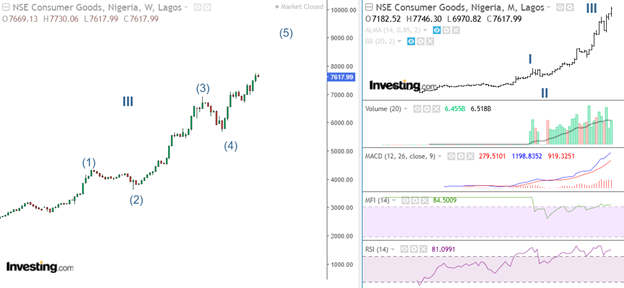
The consumer goods index rose 8.82% to close at 7,617.99 bps. It started the month with a brief pullback, signalling profit-taking. In line with this performance, the index surpassed its major resistance level at 7,360.62 bps to fully recover.
The NGXCSMG remains within Wave III of the grand cycle, trading in its fifth wave on the monthly chart. Thus, its indicators displayed strong volume, momentum, and liquidity, aligning with the improved market conditions.
NGXIND: Industrial Sector Index
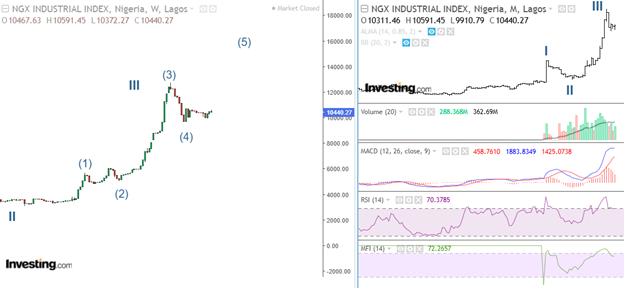
The industrial index gained 0.59% and closed at 10,440.27 bps. The index experienced low bullish momentum because it did not make any significant change in points. Despite this sentiment, the index commenced its recovery phase within the 1.0 Fibonacci level. This performance contributed to the index’s positive momentum.
Currently, the index remains in Wave III of the grade cycle, trading in the fourth wave. Thus, investors should watch for potential breakouts as the index recovery phase remains strong. The indicators on the monthly chart showcased strong volume, momentum, and liquidity.
NGXOGSE: Oil and Gas Sector Index
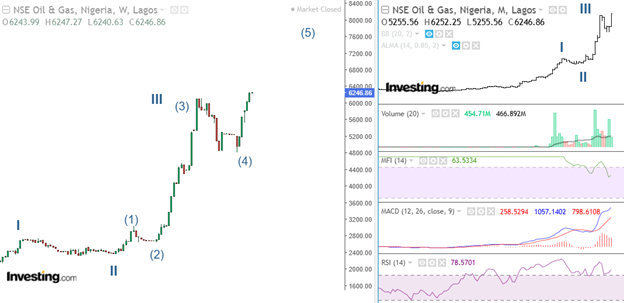
The oil and gas index gained 20.47% and closed at 6,246.86 bps. The index began with strong bullish momentum, following the emergence of the Dangote Refinery IPO. It sustained this strong momentum and broke its major resistance level at 6,103.97 bps. This performance helped the market to fully recover. In line with this performance, the index’s momentum and liquidity regained their strength with strong bullish volume.
NGXINS: Insurance Sector Index
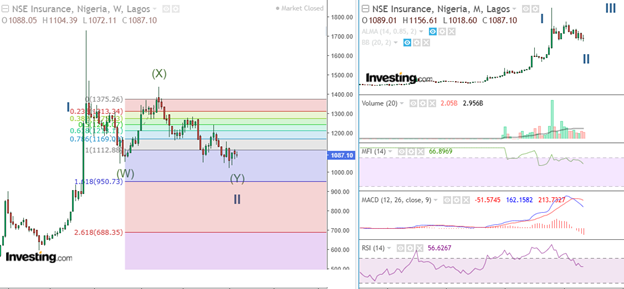
The insurance index experienced a subdued gain of 0.07% and closed at 1,087.10 bps. The index attempts to complete its deep corrective phase within the 1.618 Fibonacci level. During the month, the index sustained its bearish momentum to complete its corrective Wave Y. This performance created a new 52-week low. In line with this performance, the index initiated its recovery phase.
On the monthly chart, the index closed with a doji candlestick pattern, suggesting a potential trend reversal is on the horizon. Thus, investors should watch for continued bullish momentum, which should form an evening star candlestick pattern on the monthly chart.
Despite the strong bearish sentiment, the index’s liquidity and momentum remained strong due to sustained investor interest. Currently, the index trades within Wave II of the grand cycle; thus, continued bullish momentum should confirm a strong impulsive Wave III. This sentiment sustains the sector’s potential for medium and long-term investment.
Market Analyst Insight
The market used September to recover as investors renewed their interest. Investors should expect a continuous bullish rally, following the successful recapitalization in the banking and insurance sector, and also the growth of NGX popularity globally. Currently, investors are positioning in low-cap and high-cap stocks with strong fundamentals amid upcoming Q3 results.