
Akintunde Oyedokun
Research Analyst
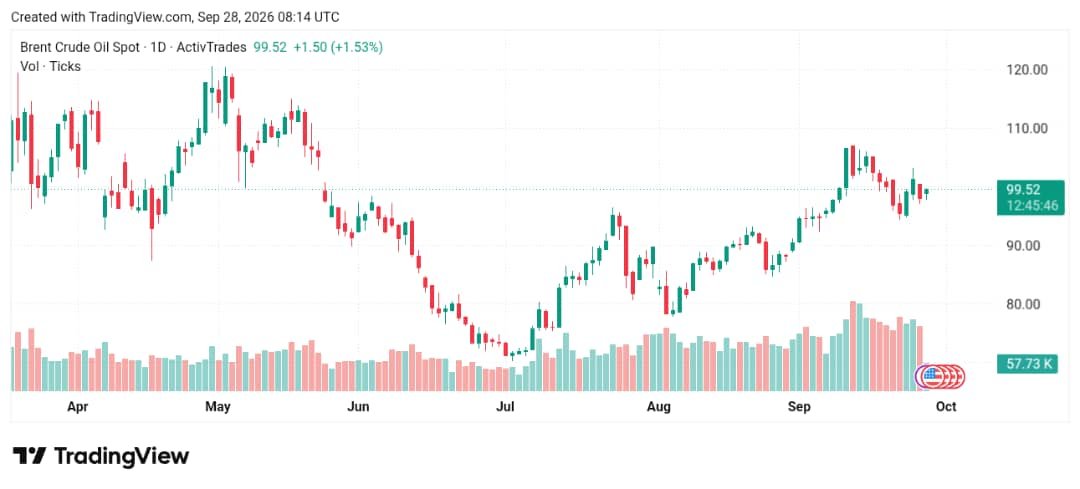
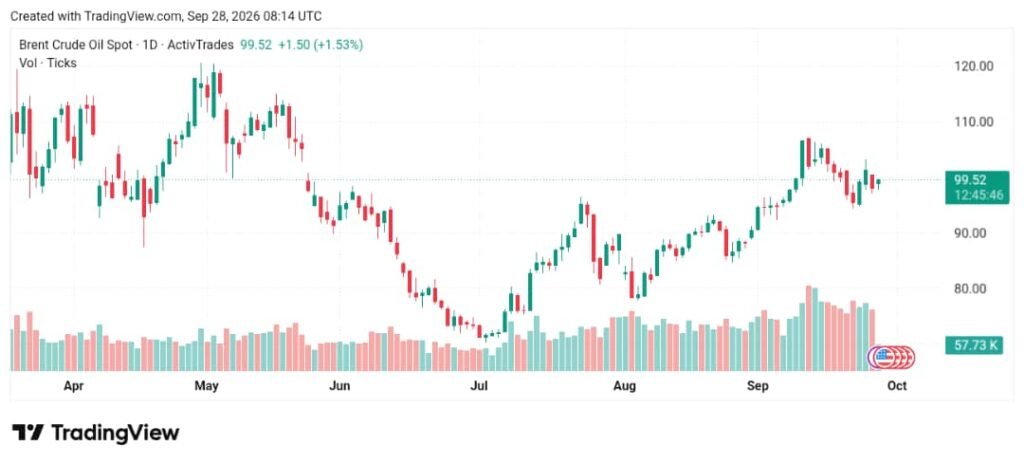
Oil prices rose on Friday amid escalating US-Iran tensions and fresh security threats around the Strait of Hormuz. Brent crude gained 2% to $117.14 per barrel, while WTI advanced 1.9% to $103.94. For October, Brent was set to rise 13% and WTI 15%, marking their fourth consecutive monthly gains. Renewed attacks on shipping and Saudi energy facilities heightened concerns over global supply disruptions.
German Inflation Falls to 2.8% as Economy Beats Growth Forecast
Germany’s inflation eased to 2.8% in October from 3.3% in September, below the 3.1% forecast, as energy price pressures moderated. Meanwhile, GDP grew by 0.2% in Q3, beating expectations of 0.1%, supported by increased government spending on infrastructure and defence. However, weak private investment and persistent energy costs remain concerns.
China’s Factory Activity Contracts In October
China’s manufacturing PMI fell to 49.3 in October from 50.1 in September, its third contraction in four months, as weak domestic demand and softer exports weighed on activity. The services and construction PMI also declined to 49.7, prompting calls for additional government stimulus to support economic growth.
Uganda’s Inflation Hits Three-Year High of 5.8%
Uganda’s inflation rose to 5.8% in October from 4.6% in September, its highest since June 2023, driven by surging food prices and a weakening shilling. Food inflation jumped to 10.7% from 4.5%, prompting the central bank to raise its benchmark rate by 225 basis points to 12% to contain inflation and stabilise the currency.
Nigeria’s Trade Surplus Doubles To $16.1bn in H1 2026
Nigeria’s trade surplus rose to $10.1bn in Q2 2026 from $6bn in Q1, as merchandise trade increased 19% to $30bn, driven by stronger oil exports and rising domestic refining output. Oil imports fell 29% to $1.2bn.
For H1 2026, the surplus reached $16.1bn, nearly double the $8.2bn recorded a year earlier, supported by higher exports and lower imports.