
Nigel Green, Chief Executive Officer of deVere Group, one of the world’s largest independent financial advisory organisations, on Wednesday predicted that global markets face days of turmoil after Donald Trump lost Congress, followed by what he calls prospects of an S&P 500 surge.
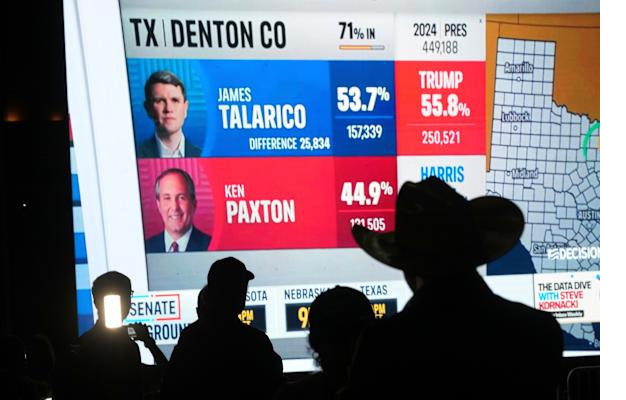
The bullish prediction from Green comes as Democrats swept both chambers, flipping six Republican-held Senate seats including Texas, South Carolina and Iowa.
For him, “nobody on Wall Street was positioned for a wave this big, so there’ll be some rough sessions ahead, and AI stocks will take the worst of it.
“Once the shock’s absorbed, investors are left with a Congress and a White House that can block each other but can’t do much else.
“Equities usually do well in that situation. We think the S&P 500 is likely to surge and be well ahead by this time next year,” he added, noting that S&P 500 futures had already recovered from a fall of as much as 1.4% to trade 0.4% lower by early morning, with Nasdaq 100 futures clawing back most of a 2.4% drop.
“Dip buyers were in within hours,” Nigel Green explains. “Much of the money that bolted overnight is already finding its way back.”
The S&P 500 has risen in the 12 months after every one of the 19 midterm elections since 1950, gaining around 15% on average.
“Companies hate guessing what Washington will do next,” he noted.
“With both sides boxed in, the guessing stops, and boards start signing off on spending they’ve been sitting on.”
Treasurys rallied as results came in, pushing the 10-year yield down six basis points to around 4.9%.
“Democrats won’t pass another round of unfunded tax cuts, and bond investors know it,” the deVere CEO says.
“The deficit outlook looks less alarming as a result, and we believe yields will likely keep easing into 2027.
“There’ll be wobbles when the debt ceiling comes up again. Even so, falling yields make stocks look cheaper, and they’re a big part of why we expect the S&P 500 to climb.”
The dollar slid broadly against major currencies while gold climbed.
“Higher yields and the promise of fresh stimulus were holding the dollar up, and both have gone,” says Nigel Green.
“We expect further weakness. Historically gold, Bitcoin and emerging markets have all benefited when the greenback softens.”
Japan’s Nikkei 225 plunged more than 4% as AI jitters swept through Asian markets.
“Asia’s heavy with chip and AI hardware stocks, so it was always going to feel this first,” he says. “Over the coming months, lower US rates and a weaker dollar should draw money back into emerging markets.”
AI-linked shares led the overnight decline on fears Democrats will slow the data centre buildout, with 56% of voters saying data centres were a crucial or major factor in how they voted.
“Power bills became a voting issue, and AI infrastructure is going to pay for it,” the deVere CEO comments.
“This Congress will want the industry to carry far more of the cost of new grid capacity. Defence spending is heading for much tougher scrutiny, and investment banks have lost the deregulation push they were relying on.”
Healthcare looks set to benefit, with Democrats expected to restore enhanced Affordable Care Act subsidies and revisit Republican Medicaid changes.
“Hospitals and insurers are the clearest winners,” he says. “If Washington goes after household costs, retailers and consumer staples gain as well. Cheaper mortgages help homebuilders, and utilities expanding the grid are where the investment will flow.”
Energy has been the best-performing S&P 500 sector this year, up more than 53%, although oil prices fell sharply this week.
“Expensive fuel made energy the star of 2026 and helped cost Republicans Congress,” Nigel Green says. “Lawmakers won’t be going easy on the sector.”
He concludes: “Once the dust from election night settles, markets are left with a government that can’t spring big surprises, bond yields heading lower and a weaker dollar boosting what US companies earn abroad.
“Those three together are why we expect the S&P 500 to finish next year comfortably higher, with healthcare, consumer staples and grid builders doing much of the lifting while AI infrastructure lags behind.”