
NGX ASI: Nigeria’s All-Share Index
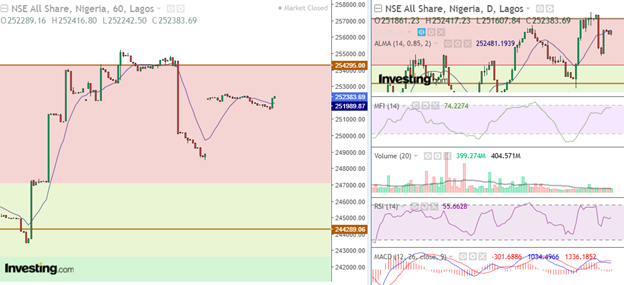
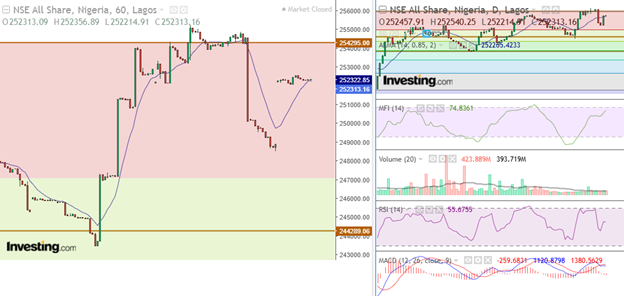
The NGX ASI rose 1.56% to close at 252,749.80 bps for the week ended November 13, 2026. The index started the week strongly bullish, following strong performances by blue-chip stocks. In line with this sentiment, the index consolidated, offering investment opportunities. This performance also portrayed the composite index’s resilience and sustainability.
The All-Share index closed on moderate bullish volume as MACD signaled a bearish divergence. In line with this performance, the index’s liquidity improved, supported by strong RSI momentum. Thus, investors should watch for a breakout to determine the overall market trajectory.
NGXBNK: Banking Sector Index
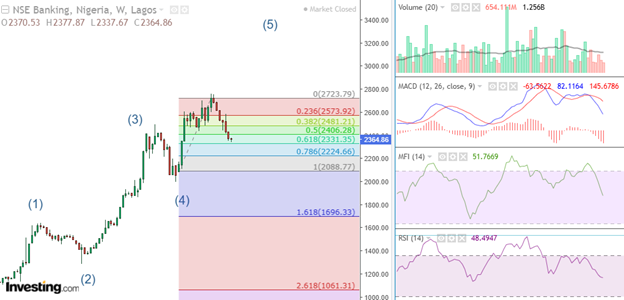
The banking sector index shed 0.21% to close at 2,364.86 bps on the weekly chart. The index retraced to the 0.618 Fibonacci level, which should prepare investors for market recovery. During the week, the index experienced continuous bearish momentum and closed bullish, minimizing the bearish pressure on the weekly chart.
In line with this performance, the index’s liquidity and relative strength remained solid despite strong bearish momentum and volume. Investors should watch for improved bullish momentum next week
Top gainers: ETI (+6.93%), FIDELITY (+2.78%), IBTC (+1.54%), ACCESSCORP (+0.37%)
Top losers: FIRSTHOLD (-2.73%), ZENITH ( -1.28%), FCMB (-0.91%), GTCO (-0.50%)
NGXCSMG: Consumer Goods Sector Index
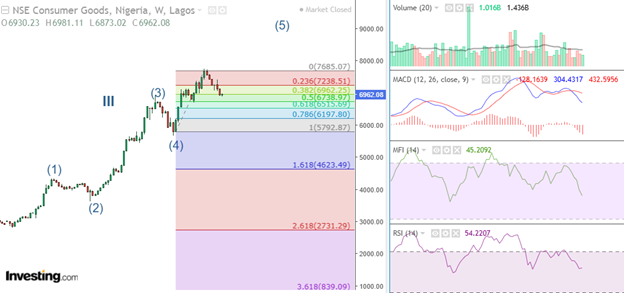
The consumer goods index rose 0.46% to close at 6,962.08 bps. The index met support within the 0.5% Fibonacci level, closing the week moderately bullish. During the week, blue-chip companies supported the index’s recovery phase after meeting support at 6,861.60 bps.
In line with this performance, the index’s relative strength and volume remained solid. However, its liquidity declined as MACD’s bearish momentum strengthened. Given this sentiment, investors should watch for a bearish divergence signal and improved liquidity next week.
Top gainers: HONYFLOUR (+13.73%), NEIMETH (+9.92%)
Top losers: NAHCO (-9.99%). ETRANZA (-8.85%), REDSTAR (-8.76%)
NGXIND: Industrial Sector Index
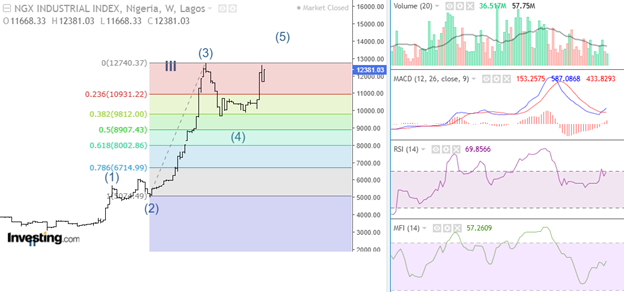
The industrial index gained 6.11% to close at 12,381.03 bps on the weekly chart. This performance strengthened the index’s recovery phase. The NGXIND started the week with strong bullish momentum, following its support at 11,612.15 bps. In line with this performance, the index’s liquidity, volume, relative strength, and bullish momentum improved in the weekly chart. Investors should watch for a breakout to determine the index’s outlook.
Top gainers: DANGCEM (+9.61%), CUTIX (+5.73%), HBMNG (+3.17%)
Top loser: BERGER (-0.34%)
NGXOGSE: Oil and Gas Sector Index
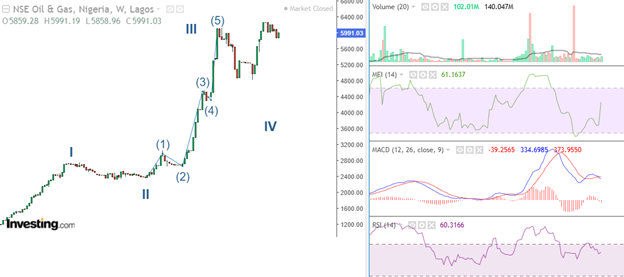
The oil and gas index rose 2.25% to close at 5,991.03 bps. During the week, the index attempted a recovery while trading within its support zone. This performance improved its volume, relative strength, and liquidity. However, MACD initiated its bearish signal, alerting investors to potential bearish momentum.
Top gainer: SEPLAT (2.76%)
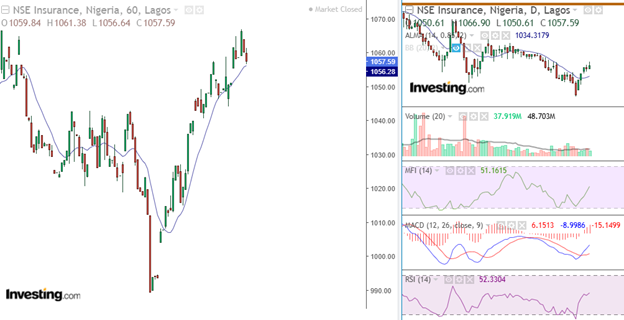
NGXINS: Insurance Sector Index
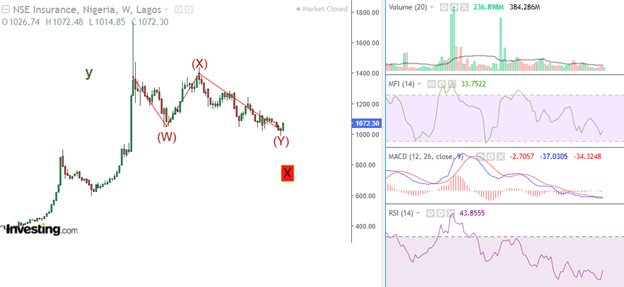
The insurance index gained 4.44% and closed at 1,072.30 bps. During the week, the index experienced continuous bullish momentum, strengthening its recovery phase. This performance suggests renewed investor interest in the sector. However, the index’s liquidity and relative strength remained low, though improved.
Notably, MACD sustained its bearish divergence signal, aligning with the market sentiment and moderate bullish volume. Thus, investors should watch for continued bullish momentum and improved liquidity.
Top gainers: MANSARD (+16.10%), VERITASKAP (+14.74%), LASACO (+12.43%), SOVRENI (+12.31%), SUNUASSUR (+7.41%)
Top losers: MBENEFI (-1.68%), NEM (-1.58%), PRESTIG (-0.71%)
Market Analyst Insight
This week’s performance suggests that bullish momentum is gradually strengthening in selected counters, although the sustainability of these advances will depend on continued buying pressure, improving trading volume and the ability of prices to break above established resistance levels. Stocks that have recorded significant gains may experience profit-taking and short-term consolidation, while those under pressure require evidence of stabilisation and renewed demand before a convincing recovery can emerge.