
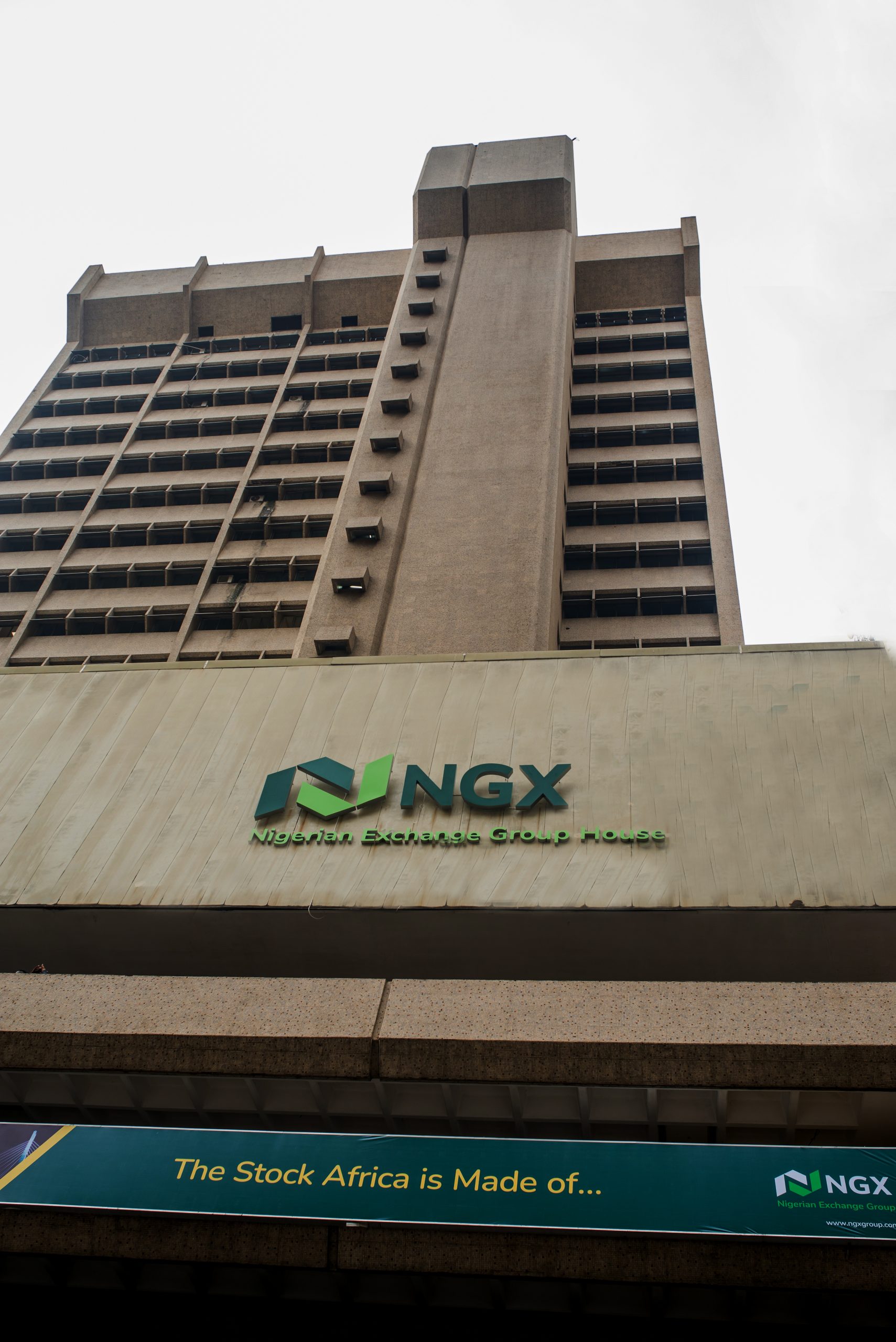
Market Update For September 16, 2026
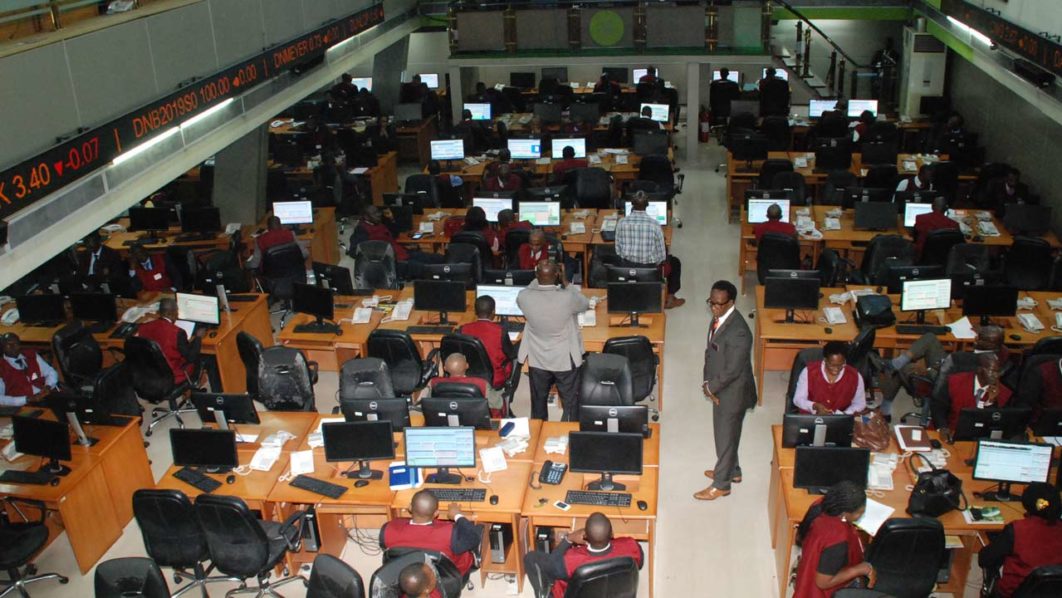
The Nigerian equities market extended its recovery on Wednesday, September 16, 2026, as renewed buying interest across selected large-cap and mid-cap stocks pushed the market further into positive territory.
The session marked another advance for the domestic bourse as investors continued to position in selected counters despite mixed performances across sectors. Buying interest was particularly visible in banking, consumer and industrial stocks, with some heavyweight equities providing support for the broader market.
The positive sentiment was helped by gains in several influential stocks. NB attracted strong demand, while NGXGROUP and TRANSCORP also recorded notable advances. Within the banking space, UBA and ACCESSCORP gained, while MTNN, DANGSUGAR, ZENITHBANK and FIDELITYBK also closed higher.
The performance indicates that investors are still willing to deploy funds into equities despite the market’s recent volatility. However, the relatively moderate increase in the benchmark index suggests that the recovery remains measured rather than broad-based, with investors continuing to favour specific stocks and sectors.
The market’s recent movement also comes against the backdrop of strong year-to-date gains. With the NGX having delivered substantial returns in 2026, some investors may be taking a more cautious approach, particularly in stocks that have recorded significant price appreciation. This has contributed to a market environment where individual corporate developments and earnings expectations continue to play a major role in determining price direction.
Trading activity provided another positive signal during the session. The increase in volume suggests that participation strengthened compared with the previous trading day. Higher activity can provide additional support for the market when accompanied by sustained buying interest, although investors will need to watch whether the improvement continues in subsequent sessions.
STERLINGNG remained the most actively traded stock by volume, accounting for more than one-fifth of the total shares traded. GTCO, meanwhile, dominated trading by value, highlighting the continued importance of banking stocks to overall market liquidity.
The banking sector remains particularly important to the direction of the NGX because of the large market capitalisation and liquidity of its listed companies. Continued demand for the sector could therefore provide support for the All-Share Index, while any broad-based profit-taking could put pressure on the benchmark.
Beyond equities, investors are also monitoring developments in the domestic macroeconomic environment. Interest rates, inflation, foreign exchange conditions and corporate earnings remain central to investment decisions. The relatively high interest-rate environment continues to provide competition for equities, particularly for investors seeking income and capital preservation.
Against this backdrop, companies with strong balance sheets, earnings visibility and sustainable cash flows may continue to attract attention. At the same time, the wide price movements recorded among several lower-priced stocks demonstrate the level of volatility still present across parts of the market.
Technical Analysis
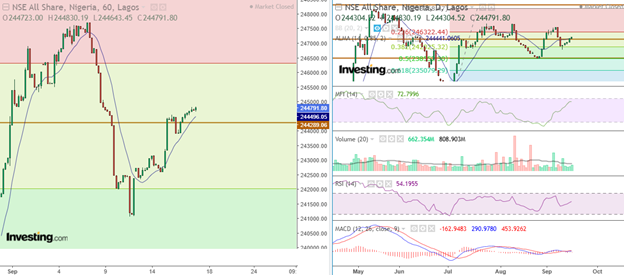
Technically, the NGX ASI continues to trade within a short-term recovery structure after the weakness recorded in previous sessions. Wednesday’s advance keeps the index on a positive footing and brings it closer to the 245,000-point psychological threshold.
The 245,000 area is an important level for the market in the near term. A sustained break above this zone, particularly if supported by stronger trading volume, could signal renewed upward momentum. However, failure to establish a firm position above the level could result in a period of consolidation as investors reassess valuations and await fresh catalysts.
The improvement in market volume is noteworthy because it occurred alongside the index gain. This combination suggests that participation increased as prices moved higher. Nevertheless, the relatively small percentage increase in the ASI indicates that buying pressure is still being applied selectively.
Market breadth also provides useful insight into the underlying tone of the session. Although gainers outnumbered decliners, the difference was not wide enough to indicate that the entire market moved strongly in the same direction. The continued performance of heavyweight stocks will therefore remain critical to sustaining the index’s upward movement.
Individual stocks also showed significant divergence. While several counters posted gains close to double digits, others recorded losses of similar magnitude. Such dispersion suggests that investors are rotating between stocks rather than applying a uniform approach across the market.
The behaviour of volume around key technical levels will therefore be important in the coming sessions. Stronger volume accompanying further gains would provide additional confirmation of buying interest, while rising volume during a decline could indicate renewed selling pressure.
Outlook
The near-term outlook for the equities market remains closely tied to the ability of buyers to maintain momentum around current levels. If demand for large-cap stocks continues, the benchmark could remain supported as investors position around corporate fundamentals and market opportunities.
However, the market may continue to experience periods of profit-taking following the substantial gains recorded this year. Investors who entered earlier at lower prices may use periods of strength to lock in returns, creating temporary pressure on individual counters.
Sector rotation is also likely to remain a feature of trading. Banking stocks could continue to influence the index because of their weighting and liquidity, while consumer and industrial companies may attract attention based on earnings performance, corporate announcements and valuation.
The market’s breadth will be another important indicator. A sustained recovery supported by a wider number of advancing stocks would indicate stronger participation, while gains concentrated in only a few heavyweight counters could leave the broader market vulnerable to reversals.
Investors are also expected to continue monitoring developments in monetary policy and the fixed-income market. Changes in yields and liquidity conditions can influence the allocation of funds between equities and fixed-income instruments.
Corporate earnings will remain another major catalyst. Companies demonstrating stronger revenue growth, improved margins, effective cost management and sustainable dividend capacity could receive increased investor attention. Conversely, stocks facing weaker earnings expectations or stretched valuations may remain vulnerable to profit-taking.
Oil Market
Developments in the international crude oil market added another layer to the investment environment on Wednesday, as oil prices fell sharply following signs that some concerns about Middle East supply disruptions were easing.
Brent crude declined by 3.3% to $105.12 per barrel, while U.S. West Texas Intermediate fell 3.9% to $101.72. The decline came after oil prices had risen by more than $3 in the previous session on concerns over disruptions to Saudi crude exports.
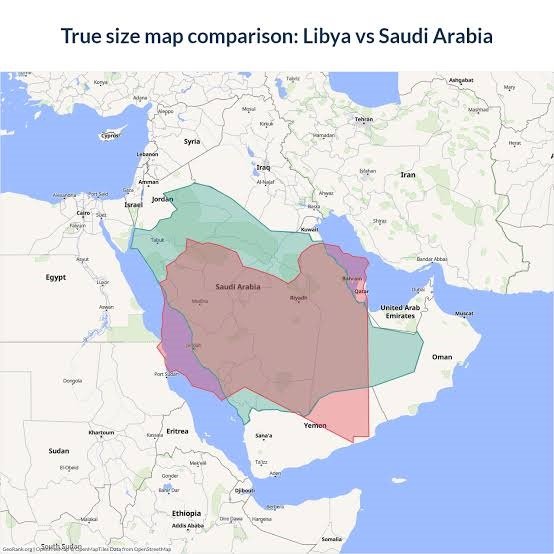
Reports that Saudi Arabia was offering additional crude cargoes to Asian refiners through ship-to-ship transfers off Oman’s Sohar port helped ease some of the supply concerns. The development suggested that alternative routes could help cushion the impact of disruptions affecting the region’s normal export infrastructure.
A smaller-than-expected drawdown in U.S. crude inventories also added pressure to prices, reinforcing the downward move during the session.
For Nigeria, developments in the oil market remain particularly important because crude exports continue to influence foreign exchange earnings, government revenue and the country’s external position. Changes in international oil prices can therefore have implications beyond the energy sector, affecting fiscal conditions, currency liquidity and investor sentiment.
Higher oil prices can improve export earnings and provide additional support for government finances, while sharp declines or prolonged supply uncertainty can increase pressure on fiscal and external balances. However, the impact on Nigeria also depends on domestic crude production, export volumes, refining activity and broader global demand conditions.
The current decline in crude prices therefore remains an important development for domestic investors to monitor, particularly as global energy markets continue to respond to geopolitical developments and changing expectations around supply.
Overall, the equities market enters the next session with buying interest improving but with the benchmark approaching an important technical zone. Sustaining the recovery will require continued participation from heavyweight stocks as well as broader support across other sectors.
The NGX All-Share Index gained 0.20% to close at 244,791.79 points from 244,304.51 points, while market capitalisation increased by approximately ₦315.94 billion. The market’s year-to-date performance stood at 57.31%, with total volume rising 27.23% to 662.43 million shares valued at ₦37.45 billion across 63,271 deals. Market breadth remained positive, with 34 equities advancing against 27 decliners. STERLINGNG led traded volume with 142.04 million shares, representing 21.44% of total volume, while GTCO recorded the highest traded value at ₦5.27 billion, accounting for 14.07%. AIICO and FIDELITYBK contributed 11.12% and 6.54% of total volume, respectively, while ZENITHBANK and NGXGROUP followed GTCO in traded value. NB (+5.20%), NGXGROUP (+4.47%), TRANSCORP (+4.09%), UBA (+1.70%) and ACCESSCORP (+1.39%) were among the key market movers. Top gainers: MBENEFIT +10.00%, SOVRENINS +9.69%, CHAMPION +9.50%, LIVESTOCK +9.42% and UPDCREIT +8.47%. Top losers: IMG -9.93%, JOHNHOLT -9.88%, LIVINGTRUST -9.84%, ROYALEX -9.00% and ELLAHLAKES -8.79%. AVACAP and CAVERTON also closed below their 52-week lows at ₦4.55 and ₦3.65, respectively.