

Akintunde Oyedokun
Research Analyst
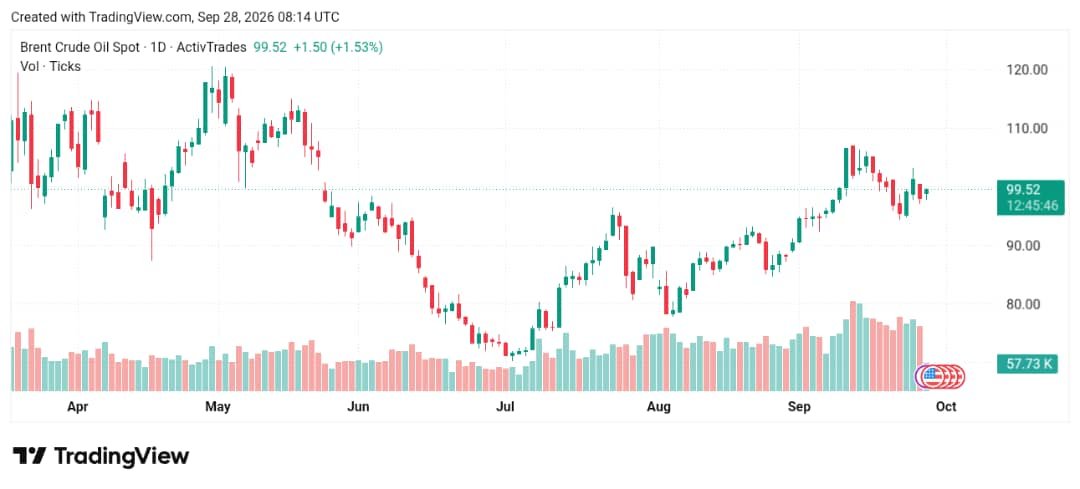
Oil prices jumped over 5%, with Brent at a one-month high, as stalled U.S.-Iran talks raised fears of prolonged supply disruptions.
Brent climbed to $117.34, while WTI rose to $105.19, supported by a larger-than-expected U.S. crude inventory draw.
Geopolitical tension, including pressure from Donald Trump, continues to drive the rally.
Bank of Canada Holds Rates, Signals Possible Hikes if Oil-Driven Inflation Persists
The Bank of Canada kept its interest rate unchanged, noting future moves would be gradual if conditions hold. It warned that persistently high oil prices could trigger consecutive hikes.
Inflation is projected to rise to about 3% in April from 2.4% in March, averaging 2.3% in 2026, while growth is forecast at 1.2% (up from 1.1%). The bank assumes oil will ease to $75 per barrel by mid-2027.
Germany Inflation Edges Up To 2.9% As Energy Costs Surge, Core Pressures Ease
Germany’s inflation rose to 2.9% in April from 2.8%, driven by a 10.1% jump in energy prices, below the 3.1% forecast.
Core inflation slowed to 2.3%, indicating limited broader price pressure, though risks remain if energy costs stay elevated.
Services inflation eased to 2.8% from 3.2%, helping contain overall price growth.
Analysts warn prolonged supply disruptions could eventually push core and food inflation higher.
Namibia Holds Rate At 6.5% Amid Rising War-Driven Risks
Namibia’s central bank left its policy rate at 6.50% for a third time, citing weaker growth and rising inflation risks from the Middle East conflict.
Inflation fell to 2.1% in March but is expected to rise. Fuel levies were cut by 50% to ease energy costs.
The bank now projects 3.7% average inflation this year and has lowered growth forecasts due to weaker mining output. Policy remains aligned with South Africa’s 6.75% rate.
Nigeria’s Economy Contracts For First Time In 16 Months As PMI Falls To 49.4
Nigeria’s economy contracted in April 2026 as the PMI dropped to 49.4, ending 16 months of growth, according to the CBN.
Weak demand drove the decline, with output at 49.7, new orders at 48.4, and employment at 49.6.
Industry and services weakened, while agriculture remained in expansion at 50.2.
Prices also rose as businesses passed on higher costs.
This is a slowdown from March’s 53.2 PMI, signaling fading economic momentum.