
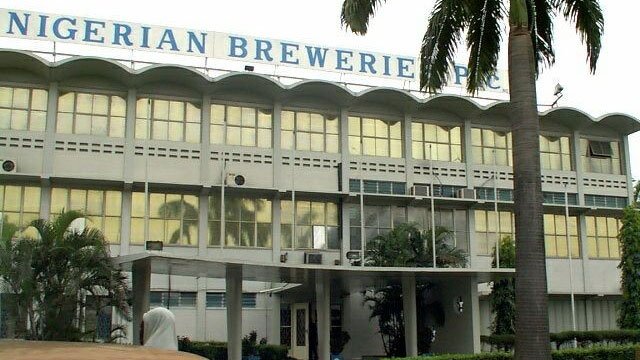
Directors of Nigerian Breweries Plc, at the weekend announced a Profit After Tax of N55.95 billion for the three-month period ended March 31, 2026, representing a 25.6% increase over the N44.55 billion recorded in the corresponding period of 2025, faster than the 8% revenue growth.
According to the unaudited result presented to the Nigerian Exchange Limited, revenue for the three months rose from N383.64 billion to N413.02 billion in Q1 2026, Cost of Sales rose from N216.05 billion in 2025 to N233.16 billion in the period under review. Selling, Distribution, and Administration expenses grew by 14.2% from N81.78 billion in 2025 to N93.41 billion in 2026, driven by increased brand and sales activities.
A statement by the company quoted its Managing Director, Thibaut Boidin as expressing confidence in NB’s financial position, stating that the balance sheet remained strong, just as liquidity continues to improve.
In his words, “the improved cash position supported the recent settlement of outstanding borrowings, thereby strengthening the Company’s financial position.”
The company, he assured, remains focused on execution excellence, revenue optimization, cost control, and efficient cash management to sustain momentum and deliver long-term value to stakeholders.
The company, he said, would continue to intensify its focus on risk management by reviewing downside scenarios and implementing mitigation measures across key exposures to protect performance and preserve financial flexibility amidst the Middle East crisis.
Also commenting on the performance, Secretary/Legal Director, Uaboi Agbebaku, said NB delivered a strong performance in the quarter, sustaining the 2025 recovery trajectory despite a fragile and volatile operating environment, exacerbated by the crisis in the Middle East.
He explained that the 8% revenue growth was largely driven by strong revenue management, the performance of premium brands led by Heineken Lager, and the execution of growth initiatives.
Agbebaku also attributed the rise in Q1 profit to disciplined cost management and reduced finance expenses, stressing that the 55% decrease in net finance expenses contributed significantly to the 26% growth in the net profit.