
Nigeria’s All-Shares Performance for 20th May 2026
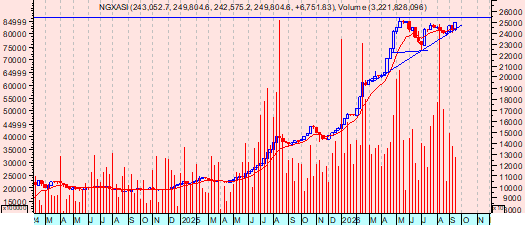
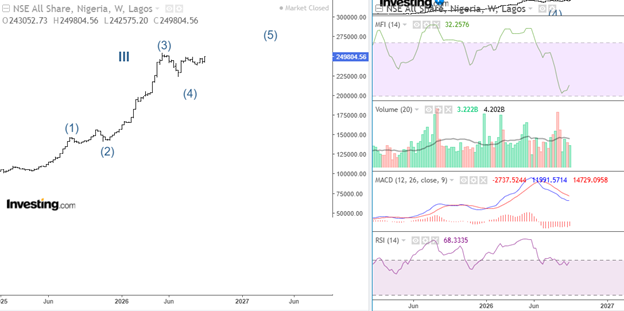
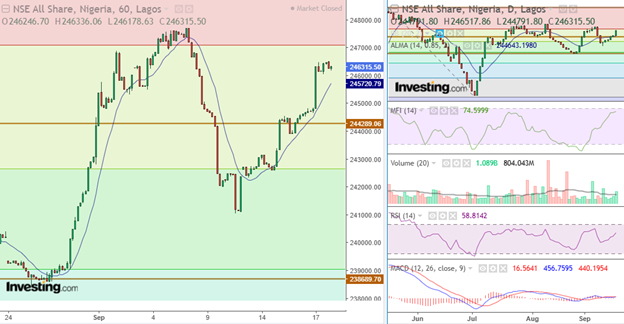
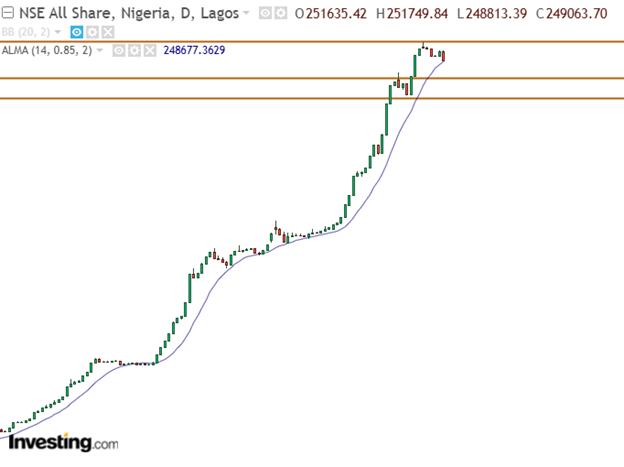
After an attempt to recover, Nigeria’s composite All-Share Index (NGXASI) lost 1.02% at 249,063.70 basis points within its distribution phase. This was due to massive profit-taking during the intraday market. This report will, therefore, reveal where investment opportunities lie.
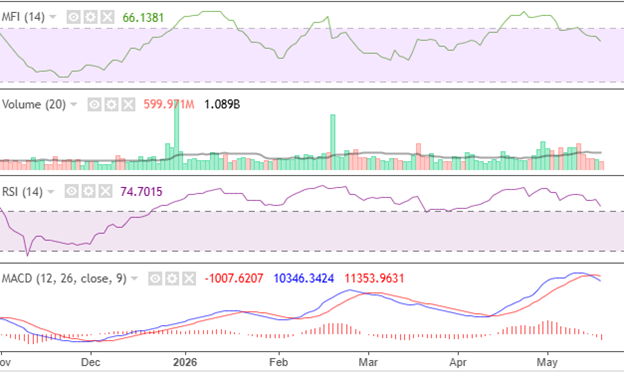
The indicators for the NGXASI declined, aligning with the overall market sentiment. As if that was not bad enough, market liquidity and momentum weakened while MACD’s bearish momentum strengthened. Consequently, investors are repositioning in fundamentally strong but undervalued companies. Which sector suffered the strongest pullback?
Sectoral Index Performance
NGXBNK: Banking Sector Index
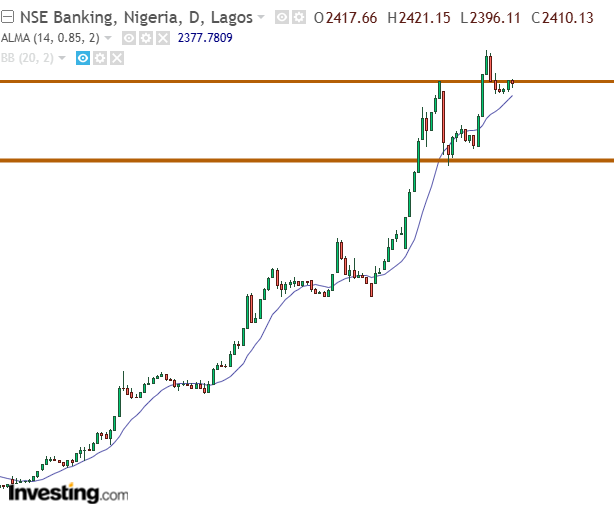
After the intraday market, the banking sector index struggled to surpass its resistance level (2,413.91 bps). The index shed 0.31%, closing at 2,410.13 bps above its moving average. This indicates continuous profit-taking as the index remains in its distribution phase. Notable contributors to this decline included FIRSTHOLD (-4.04%), FCMB (-3.36%), GTCO (-0.48%), and ACCESSCORP (-0.39%)
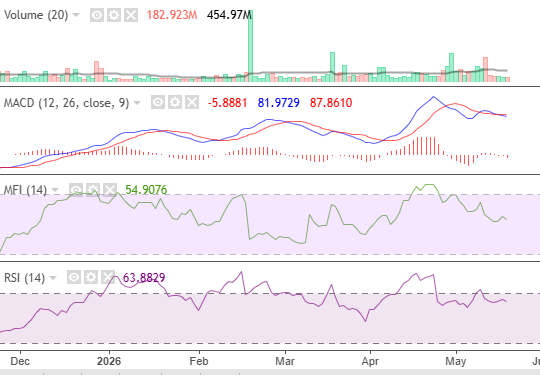
The indicators on the daily chart aligned with the NGXBNK bearish sentiment. Although the bearish volume was low, money flow indicated a decline in market liquidity, just as profit-taking was prevalent during the intraday market. In line with this performance, the momentum for MACD’s bearish signal and RSI declined.
NGXCSMG: Consumer Goods Sector Index
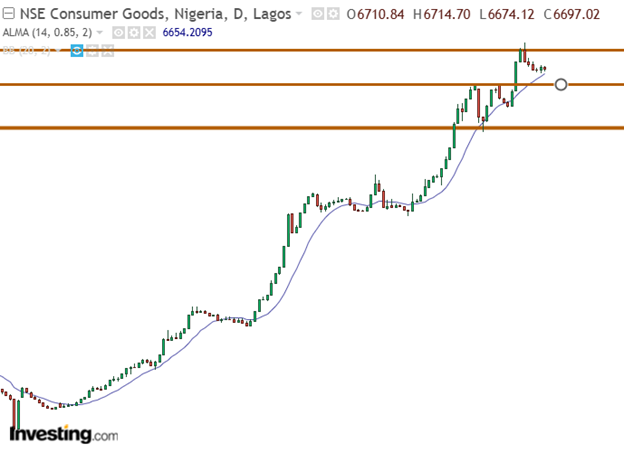
The consumer goods index lost 0.21% after a brief attempt to recover. The index closed at 6,697.02 bps, slightly above its moving average. Given this performance, the NGXCSMG still remains within its distribution phase. Notable contributors included ETRANZA (-7.03%), UCAP (-1.06%), and NB (-0.48%),
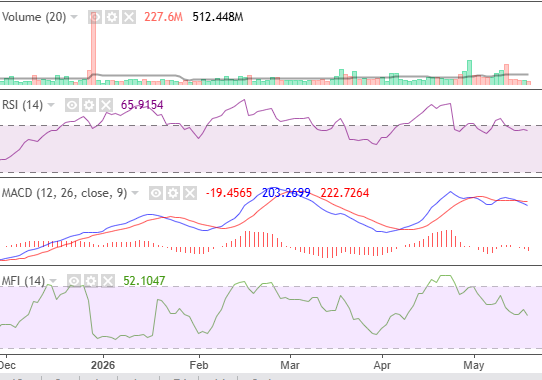
On the daily chart, the indicators aligned with NGXCSMG’s sentiment. Market liquidity and momentum declined, indicating profit-taking within the distribution phase. MACD’s bearish signal gained momentum, aligning with the index’s overall sentiment.
NGXIND: Industrial Sector Index
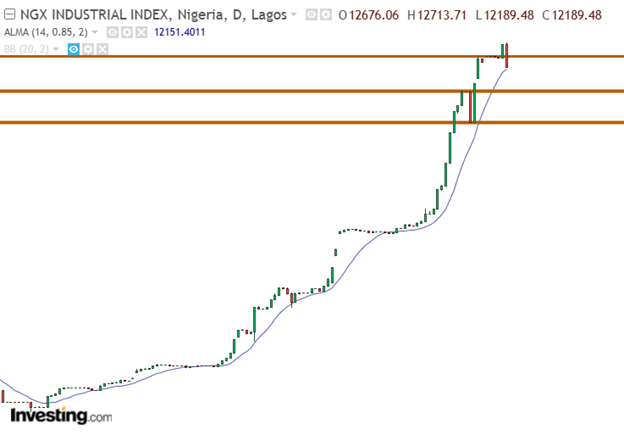
After a brief breakout, the industrial sector declined by 3.84%, closing at 12,189.48 bps. The performance creates another resistance level at 12,704.90 bps with the moving average as a potential support level. Notable contributors included BUACEMENT (-10%) and CAP (-9.99%).
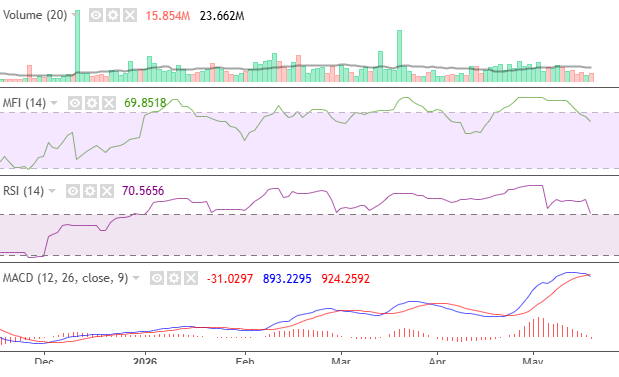
The indicators on the daily chart declined after a strong bearish sentiment. MACD commenced its bearish signal with strong momentum. In line with this performance, MFI and RSI declined, closing above their thresholds.
NGXOGSE: Oil and Gas Sector Index
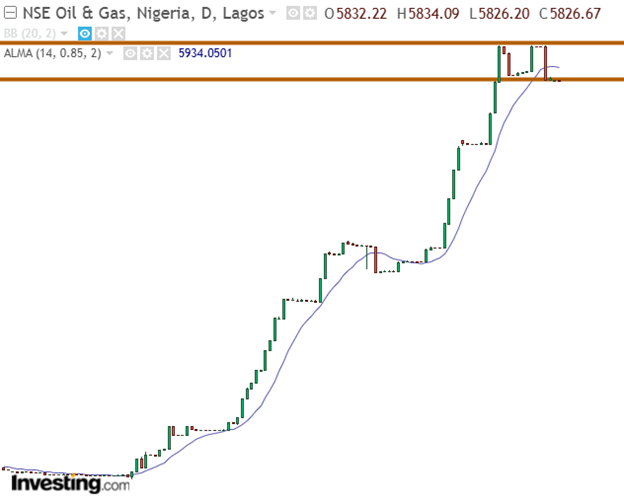
In the oil and gas sector, the market sentiment was mixed as the index remains within its support and resistance zone. During the intraday market, the index shed 0.03%, closing at 5,826.67 basis points. Given this performance, the index remains in its distribution phase below the moving average
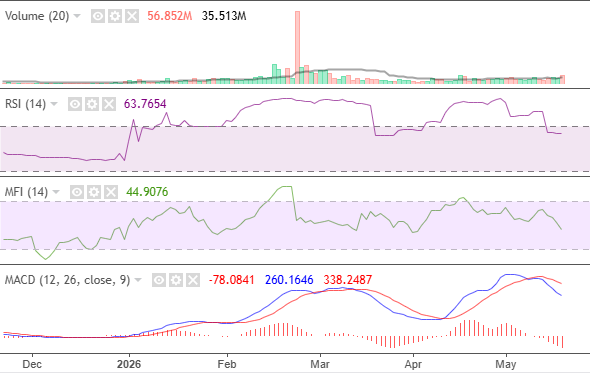
The bearish volume closed strongly above its moving average with 56.9 million shares sold against 35.5 million average shares. In line with this performance, money flow indicated a massive decline in the index’s liquidity, closing below its threshold (50). Also, MACD’s bearish momentum strengthened, while RSI remained neutral below its overbought region. Thus, these indicators’ performance revealed that investors are repositioning in other sectors.
NGXINS: Insurance Sector Index
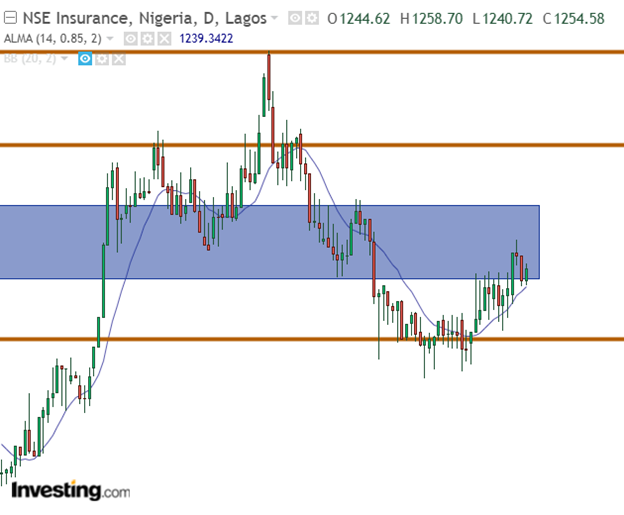
In the insurance sector index, investors’ confidence continues to increase. While other sectors experienced massive pullbacks, the index gained 0.08%, closing at 1,254.58 bps. This performance confirms the strength of the index support level (1,254.58 bps). Notable contributors included PRESTIGE (+3.33%), NEM (+3.33%), INTENEG (+1.97%), SOVRENI (+1.67%), and AIICO (+0.64%).
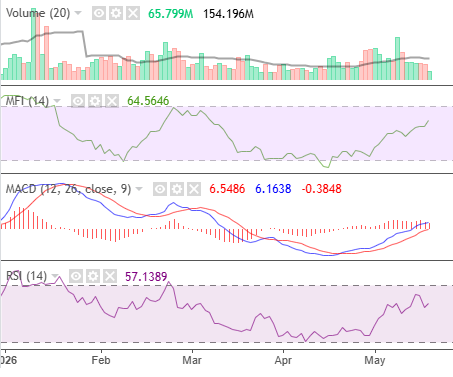
Despite the low bullish volume, the index’s liquidity and momentum maintained their upward trajectory. This performance revealed that the index still offers investment for investors to buy into value. The index closed above its moving average, indicating a sustained market strength.
Final Thought
Amid profit-taking and portfolio rebalancing, the insurance sector shows resilience. While the consumer goods sector benefits from bargain hunting. At the moment, investors are expanding their portfolios, while high-value companies decline.