
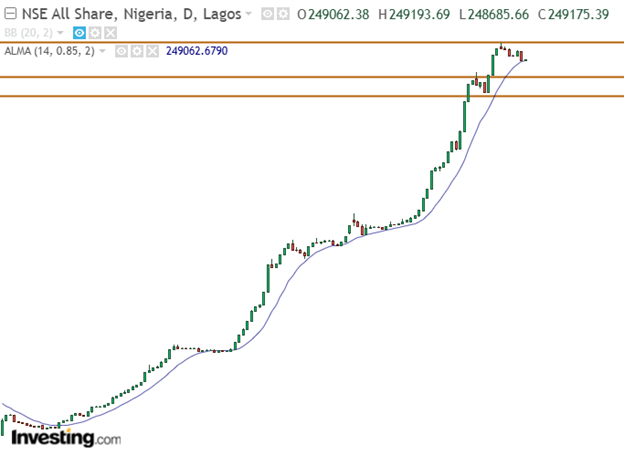
Nigeria’s All-Share Performance for May 21st, 2026
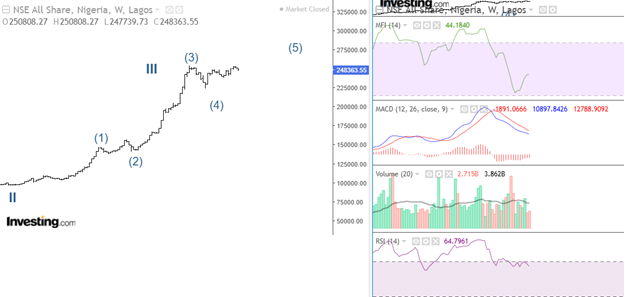
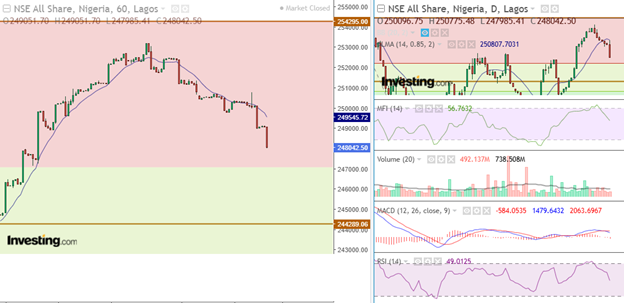
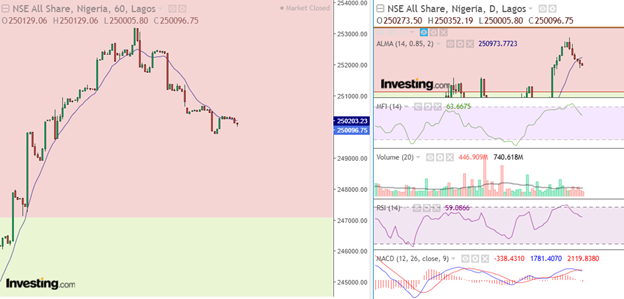
The Nigerian Exchange’s All-Share Index (NGXASI) gained a miserly 0.04% on Thursday, closing at 249,175.39 basis points. The index used the moving average as its support level, while maintaining its strength. Overall, this performance indicates that the index is within its distribution phase. In line with this performance, this report will evaluate the market’s liquidity strength using the Money Flow Index (MFI).
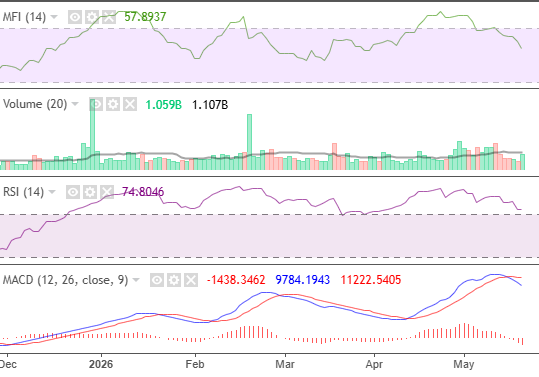
Although the NGXASI closed bullish on the daily chart, money flow maintained its downward momentum. Also, MACD’s bearish momentum increased. This performance shows that bargain hunting dominated the intraday market. Thus, which sector amassed more liquidity based on MFI readings?
Key Sectoral Index Performance
NGXBNK: Banking Sector Index
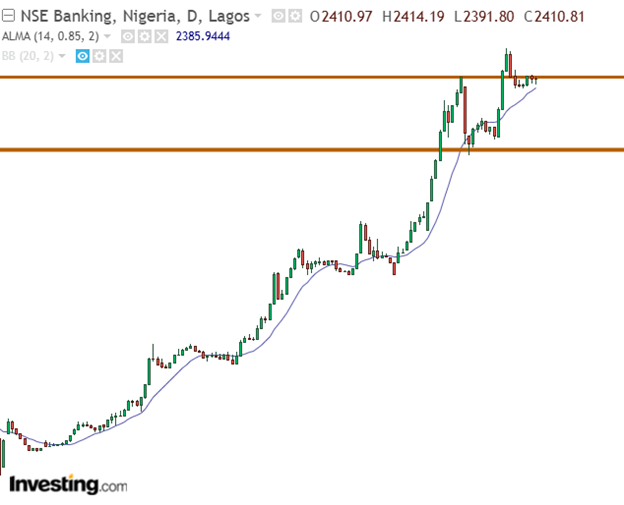
The banking index experienced a subdued gain of 0.03%, closing at 2,410.81 bps, reflecting the continuous dominance of the bears. Also, it validates the strength of the index’s resistance level at 2,413.91 bps. Notable contributors included ETI (-5.80%), FIDELITY (-2.13%), FIRSTHOLD (-2.14%), ZENITH (-0.76%), and GTCO (0.10%).
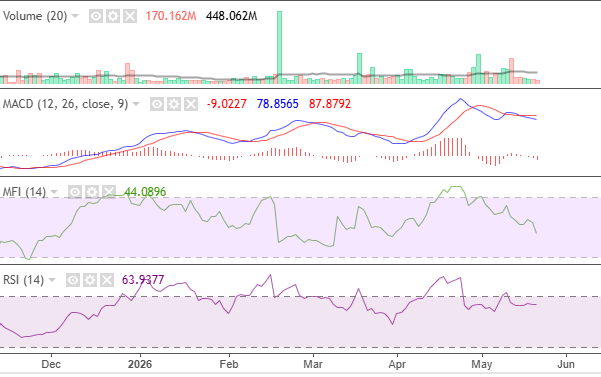
The indicator on the daily chart reflected the strength of the bears. Money flow created lower highs and lower lows to close at 44.09 which was below its threshold. This action signifies that market liquidity is low. In line with this performance, MACD’s bearish momentum increased, while RSI remained solid in its neutral zone.
NGXCSMG: Consumer Goods Sector Index
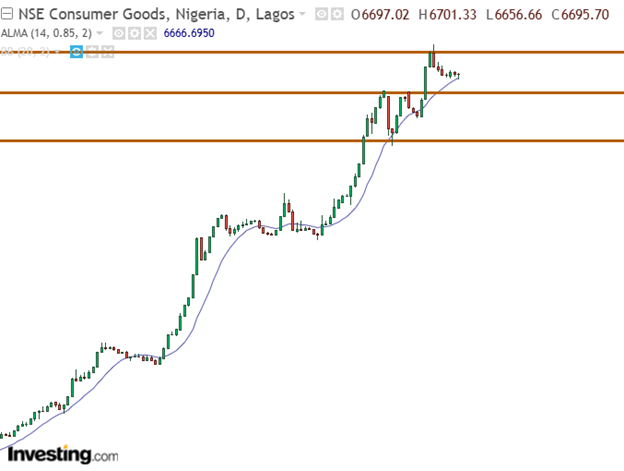
The NGXCSMG shed 0.02%, closing at 6,695.70 bps above its moving average. The index used the moving average as its support to maintain its strength. Given this performance, market participants are taking profits and relocating funds to booming sectors. Notable contributors included BERGER (-10%), NEIMETH (-6.78%), NPFMCRF (-6.50%), HONYFLOUR (-3.23%), and PZ (-3.13%).
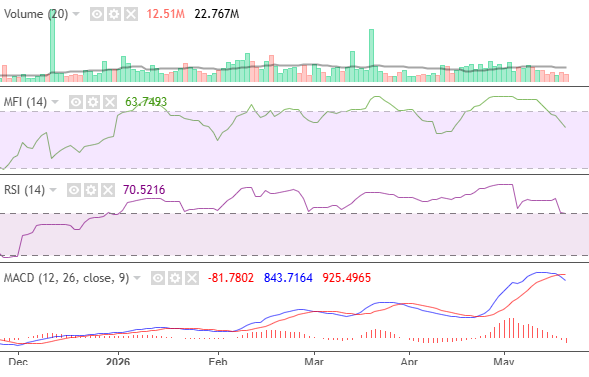
The decline in this sector is evident in its indicators’ performance. Money flow stood out amongst the indicators with a reading of 40.68, which is below its threshold (50). This performance signifies weak market liquidity. Also, MACD’s bearish signal gained momentum, while RSI remained solid in its neutral zone.
NGXIND: Industrial Sector Index
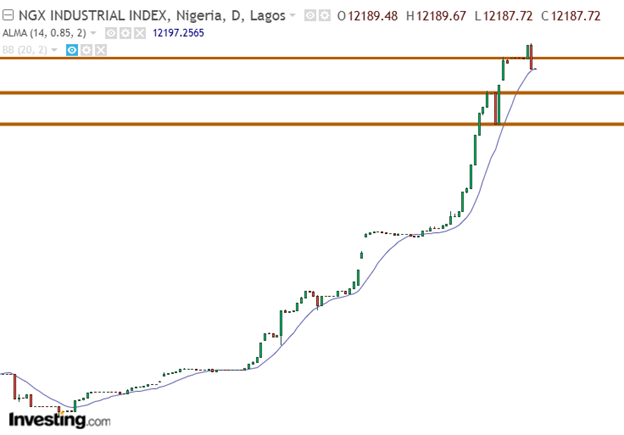
After a bearish engulfing candlestick formation, the industrial index closed with a bearish indecisive candlestick, using its moving average as the support level. Given this performance, the index shed 0.01%, closing at 12,187.72 bps. Notable contributors included BERGER (-10%) and DNMEYER (-4.41%).
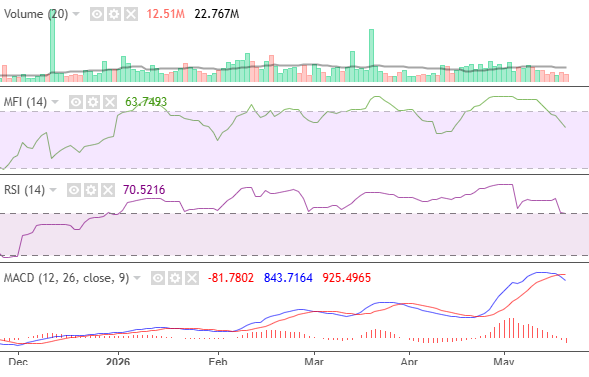
The NGXIND indicators aligned with the market sentiment as the bearish momentum enhances its strength. Notable performers were MACD and money flow. Money flow maintained its downward trajectory, while MACD’s bearish momentum was enhanced, aligning with the overall market sentiment.
NGXOGSE: Oil and Gas Sector Index
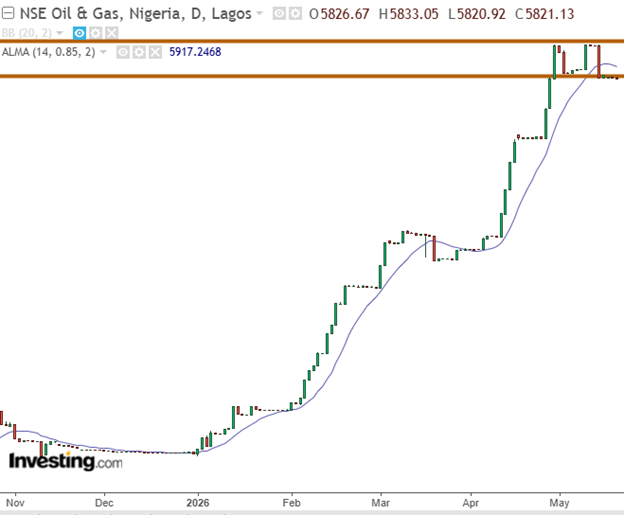
The bears continued to dominate in the oil sector, following which the index shed 0.10%, closing at 5,821.13 bps within its distribution phase. At this basis point, the NGXOGSE broke its support level at 5,841.86 bps.
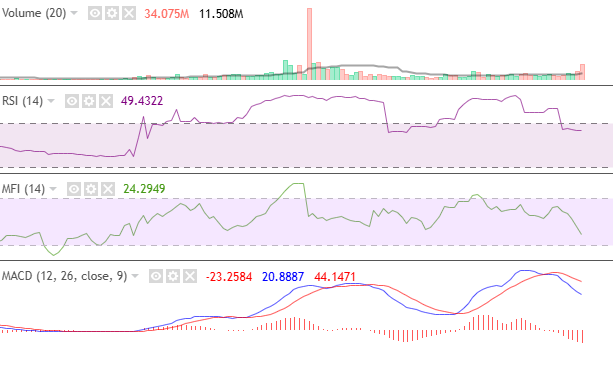
Due to the heavily bearish sentiment during the intraday market, the bearish volume closed strongly above its moving average. In line with this performance, money flow declined massively, while MACD’s bearish signal enhanced its momentum. Also, RSI declined indicating a weak market.
NGXINS: Insurance Sector Index
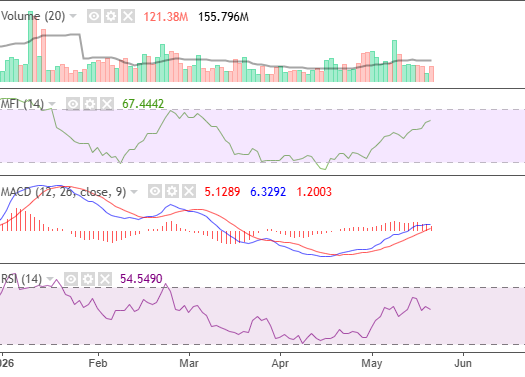
The insurance sector lost 0.55%, closing at 1,247.71 bps above its moving average. This performance also validated the strength of the index’s support level at 1,246.81 bps. Despite the bearish sentiment during intraday trading, the support level sustained the overall index strength. Notable contributors included SOVRENI (-9.47%), AIICO (-2.13%), LINKASS (-1.10%), CORNERS (-0.83%), and MANSARD (-0.35%).
Despite a relatively strong bearish volume, money flow maintained its upward trajectory, moving from 64.56 to 67.44. This performance reflects the sustained investors’ interest in this sector. MACD’s bullish momentum and RSI remained solid as the market remains above its moving average
Final Thought
Bargain hunting and profit-taking continue to prevail on the Nigerian bourse. Following the bearish dominance, money flow helped investors determine which sector offers better investment opportunities. Amongst these key sectors, the insurance sector sustained its bullish momentum with high market liquidity.