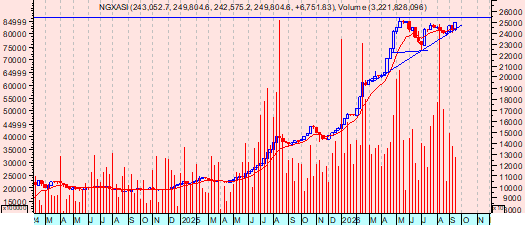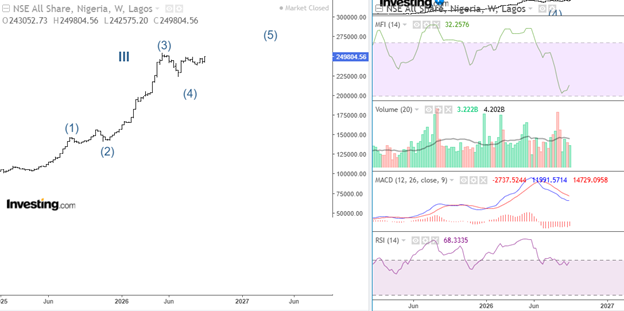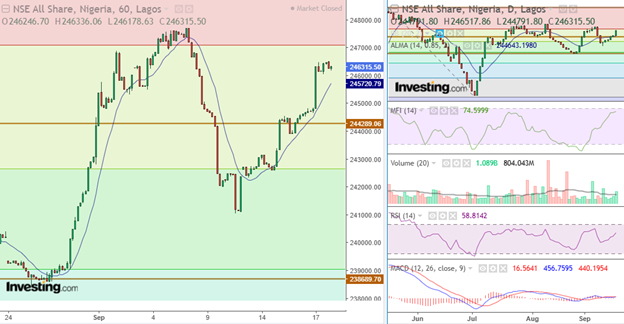

This report will use Elliott wave theory, Fibonacci retracement, and extension to offer a holistic view of the market’s performance for the week ended Friday, May 22, 2026. The Elliot wave helps investors determine whether the market is impulsive or corrective, while the Fibonacci tools provide potential support and resistance levels.
Nigeria’s All-Share Weekly Performance: May 18 – 22, 2026
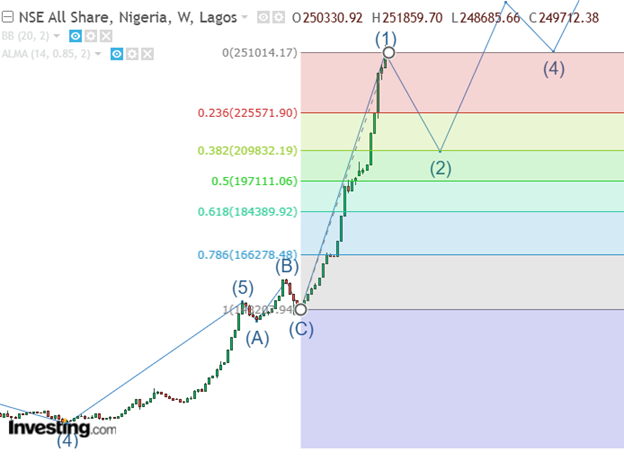
The NGX All-Share Index shed 0.25% at the end of trading for the week, closing at 249,712.38 basis points. The strong distribution phase during the intra-week market influenced this performance. By the Elliot wave theory, Nigeria’s composite All-Share index is in its first wave, which is usually impulsive. Depending on the strength of the pullback, the corrective wave 2 is expected to be supported at 209,832.19 basis points.
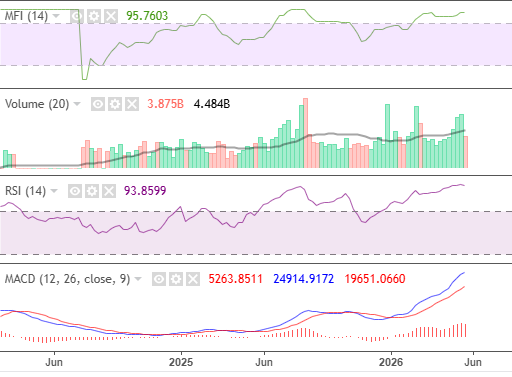
Despite this bearish sentiment, market liquidity and momentum held steady on the weekly chart. However, MACD’s bullish momentum divergence indicated a potential market reversal. Since the market remains above its moving average, it’s still strong and healthy.
Sectoral Index Performance With The Elliott Wave Theory
NGXBNK: Banking Sector Index
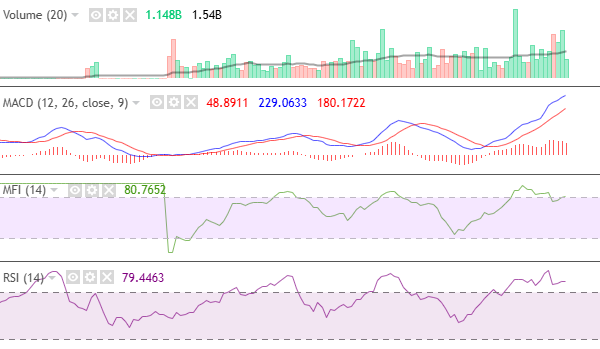
The NGXBNK gained 1.11%, closing at 2,416.78 bps above its moving average. Applying Elliott wave theory on the weekly chart, the banking sector index is also in its first wave. When this first ends, the market is expected to pull back to 2,021 bps or 2169.96 bps, according to the Fibonacci retracement.
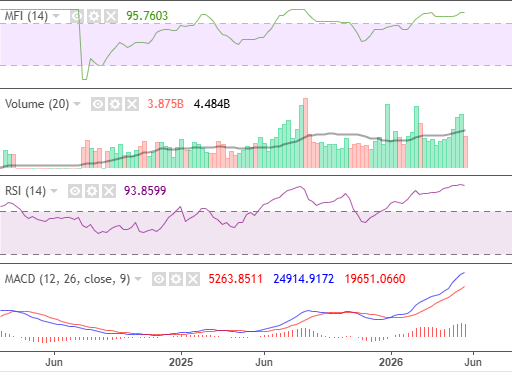
During the intra-week market, the index experienced massive profit-taking, which affected liquidity. Given this performance, the index closed with low bullish volume on the weekly chart. While RSI and MFI held above their thresholds, MACD’s bullish momentum suggested divergence. Thus, investors should expect a continuous pullback.
NGXCSMG: Consumer Goods Sector Index
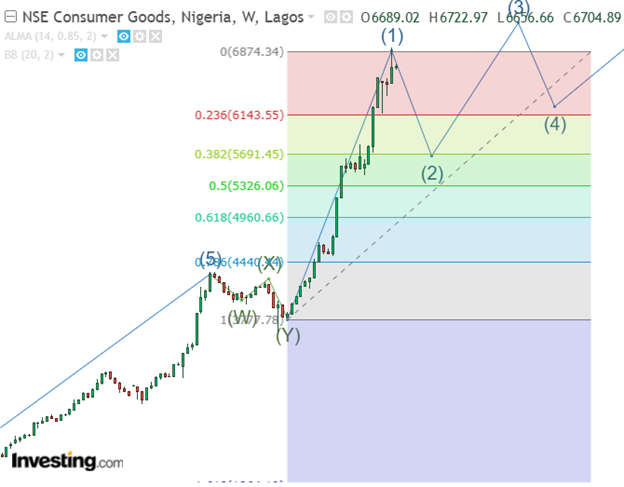
On the weekly chart, the consumer goods index is in its first wave, according to the Elliot wave theory. When the market starts experiencing a pullback, 6,143.55 bps or 5,691.45 bps is expected to be the next strong support level. The index gained 0.24%, closing at 6,704.89 bps above its moving average.
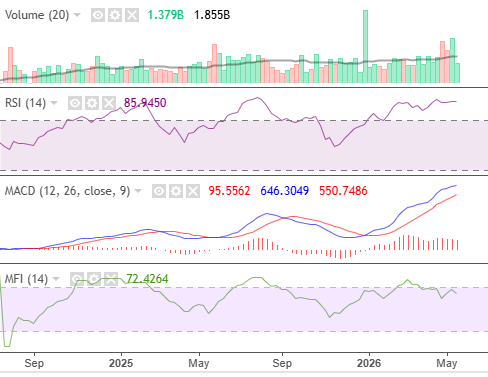
Given the intra-week consolidating performance, the bullish volume on the weekly chart closed low. In line with this performance, MACD’s bullish volume indicated divergence, while RSI and MFI sustained their momentum and liquidity.
NGXIND: Industrial Sector Index
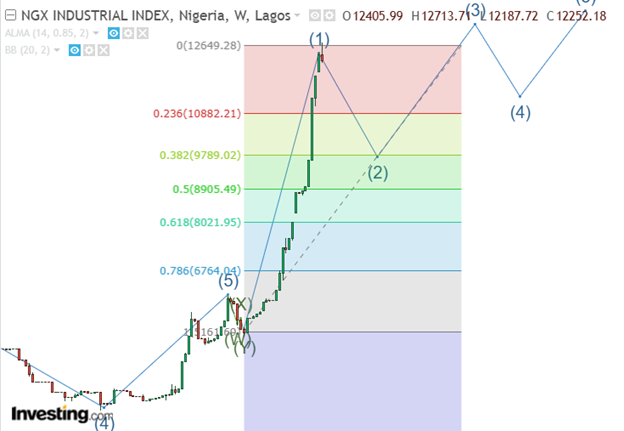
Although the industrial Sector index commenced the week with a bullish sentiment, it met resistance at 12,713.71 bps. The index lost 1.24%, closing at 12,252.18 bps below its moving average. Applying the Elliot wave theory, the index is in its first wave. Thus, when the market retraces, 10,882.21 bps and 9789.02 bps should be the support levels.
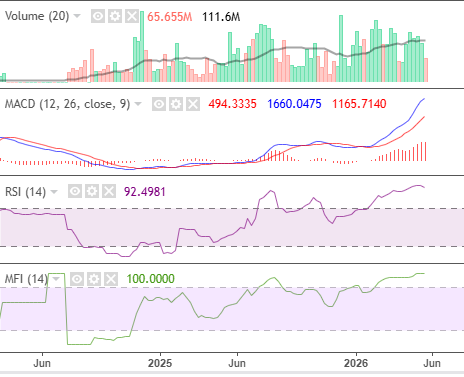
The NGXIND’s indicators on the weekly chart began to decline, reflecting bearish sentiment. MACD’s bullish momentum indicated divergence, as the index’s RSI slightly declines. These are signs of a potential market reversal. On the other hand, money flow maintained its high-liquidity signal.
NGXOGSE: Oil and Gas Sector Index
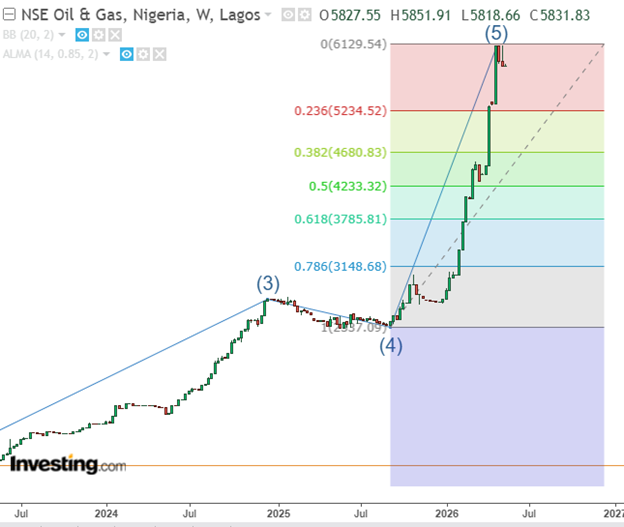
On the weekly chart, the oil sector index gained 0.07%, indicating a recovery attempt. Closing at 5,831.83 bps, the index remains within its distribution zone. Applying the Elliott wave theory, the NGXOGSE is in its fifth wave, which is usually followed by a corrective A, B, and C or W, X, and Y. Using the Fibonacci retracement, this corrective wave should be supported at 4,680.83 bps
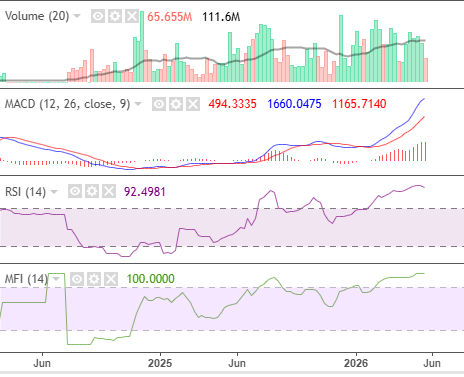
While the bullish volume closed strongly above its moving average, the index’s liquidity and momentum declined. Money flow tilted downward, and MACD’s bullish moment indicated divergence. On the other hand, RSI sustained its strength as the index closed above its moving average.
NGXINS: Insurance Sector Index
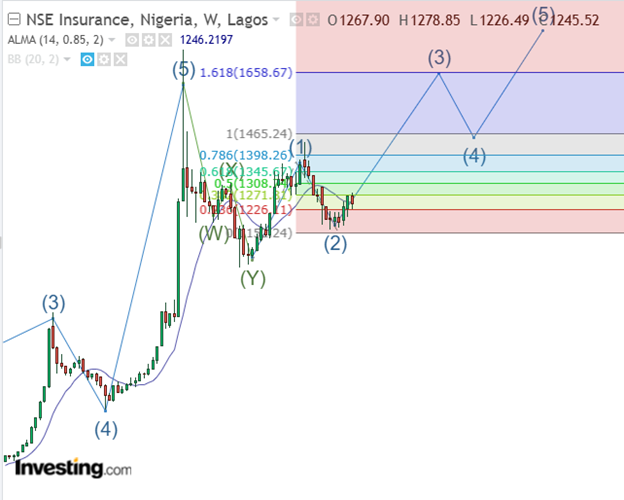
The NGXINS lost 1.77%, closing at 1,245.52 bps. The sector crossed its moving average last week, commencing its first recovery phase. Despite this week’s choppy market, the insurance sector sustained its strength above its moving average. Applying the Elliot wave theory, the index commenced its third wave, which is usually the longest. When the Fibonacci extension is used, the trend is expected to reach 1,658.67 bps. Thus, the index offers a good investment opportunity.
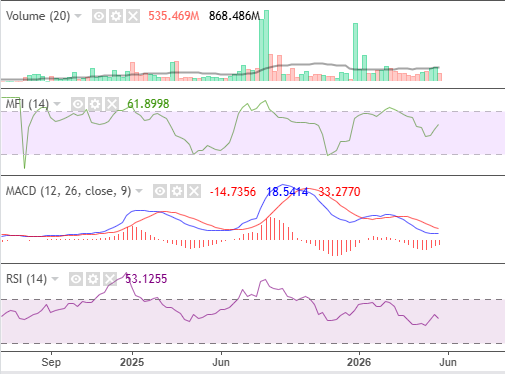
The insurance index indicators offer favorable investment opportunities. The low bearish volume means profit-taking prevailed in the market, as liquidity enhanced its momentum. Also, the bearish momentum indicated divergence, while RSI sustained a solid position within its neutral zone
Final Thought
The overall market is in its corrective phase, which is normal after a strong markup phase. Depending on the depth of this corrective phase, investors are expected to be risk-averse and maintain proper money management.