
Market Update For July 1, 2026
Trading commenced on the Nigerian Exchange (NGX) for the month of July and the second half of the year on a weak note amid widespread profit-taking across the banking, industrial, oil and gas, and consumer goods sectors. Wednesday’s session extended the market’s recent correction, with investors locking in gains after the impressive rally recorded in the first half of the year. Others, however, adopted a cautious approach ahead of the release of second-quarter and half-year corporate earnings, with the usual interim dividend announcements, and key macroeconomic data, all of which are expected to shape investment decisions in the coming weeks.
Midweek’s bearish sentiment reflected a shift in market psychology from aggressive accumulation to portfolio rebalancing, with investors rotating out of stocks that have posted significant year-to-date gains. Although bargain hunting emerged in selected counters, it was insufficient to offset the broad-based selling pressure that dominated the session.
Beyond the domestic market, global investors also monitored developments in the international oil market, where crude prices extended their recent decline amid improving geopolitical sentiment. Brent crude fell 1.30% to $72.00 per barrel, while U.S. West Texas Intermediate (WTI) crude declined 0.78% to $68.96 per barrel, marking its lowest level since late February.
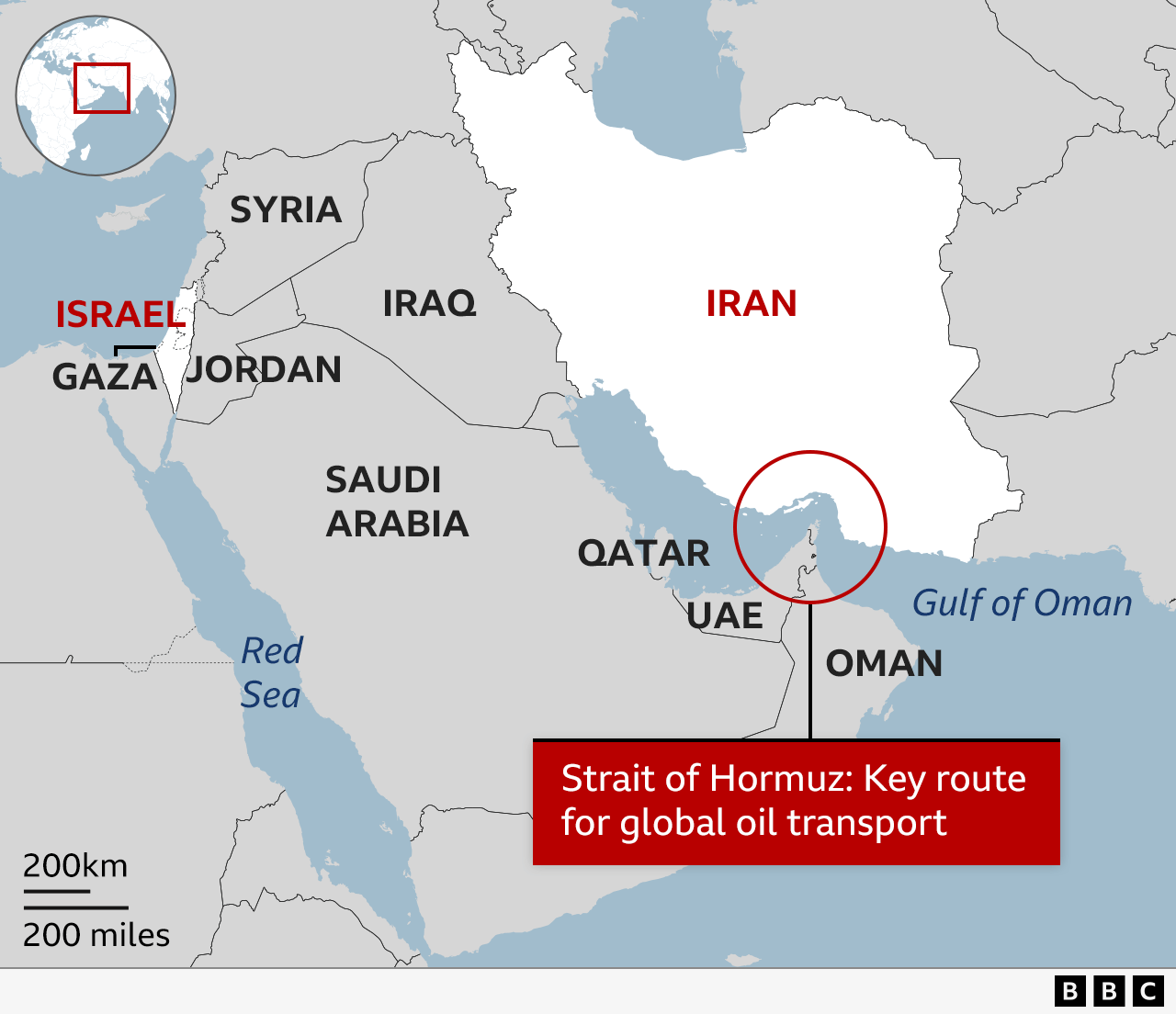
The decline followed encouraging comments from U.S. President Donald Trump, who said discussions with Iran in Qatar were progressing positively. Market participants interpreted the negotiations as a step toward reducing tensions in the Middle East and lowering the risk of supply disruptions through the Strait of Hormuz, one of the world’s most strategic oil shipping routes.
The latest decline also comes after Brent recorded its largest quarterly fall since the 2008 global financial crisis, while WTI posted its biggest quarterly decline since the COVID-19 pandemic in 2020. The easing of geopolitical risks has prompted several analysts to revise down their 2026 oil price forecasts, suggesting that the risk premium built into crude prices during the Middle East conflict is gradually fading.
For Nigeria, softer oil prices remain a critical development as crude oil accounts for the bulk of government revenue, foreign exchange earnings and external reserves. A prolonged decline in prices could influence fiscal performance, exchange rate stability and investor sentiment across financial markets, particularly energy-related stocks listed on the NGX.
Technical Analysis & Market Outlook
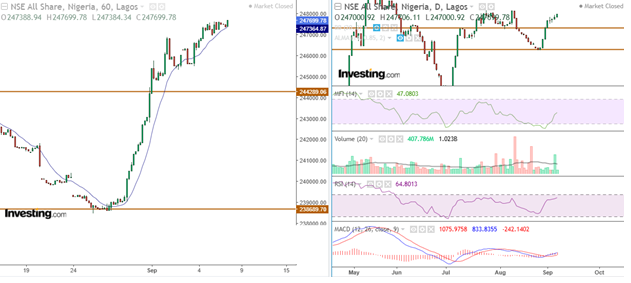
From a technical perspective, the Nigerian equities market remains in a short-term corrective phase after failing to sustain its recent breakout above the 229,000-point psychological level. The sharp decline confirms renewed profit-taking by short-term investors, while the reduced trading volume indicates that many institutional investors are adopting a wait-and-see approach ahead of the earnings season.
Despite the weakness, the broader trend remains constructive, with the market still delivering an impressive 45.03% year-to-date return, suggesting that the current pullback is largely a healthy correction within a longer-term uptrend rather than a reversal.
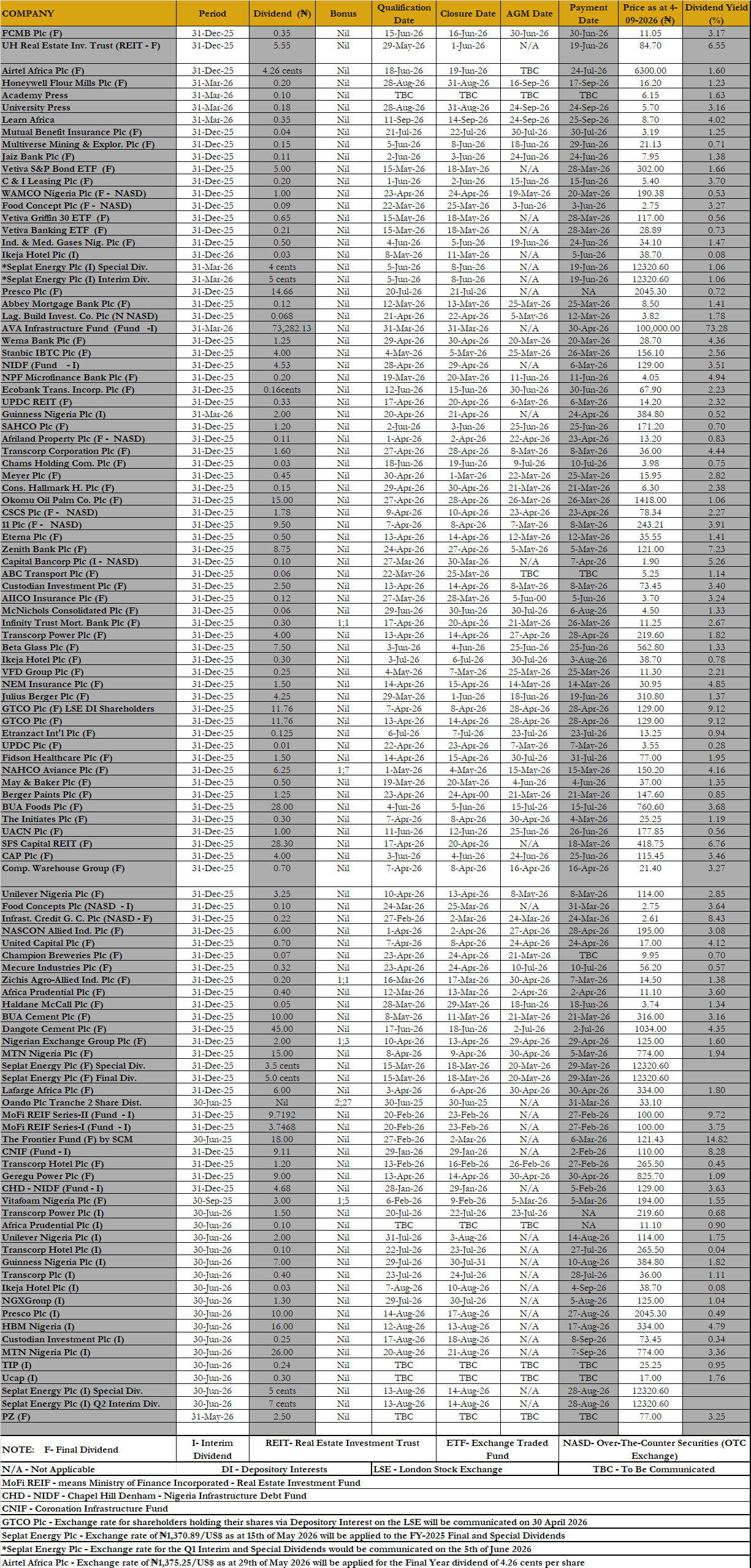
The decline has also pushed several fundamentally strong stocks closer to attractive valuation levels, which could encourage renewed bargain hunting in the coming sessions. Investors are expected to focus on companies with resilient earnings prospects, strong cash flows and a history of consistent dividend payments as positioning for interim dividends gathers momentum.
Market direction in the near term will be influenced by second-quarter corporate earnings, inflation data, interest rate expectations, exchange rate movements, liquidity in the fixed-income market and developments in the global oil market. Should corporate earnings exceed expectations, bargain hunters are likely to return aggressively, supporting a recovery from current levels.
Market Performance
The NGX All-Share Index (ASI) declined by 1.63%, closing at 225,690.07 points, down from 229,419.18 points recorded in the previous session. The decline erased approximately ₦2.39 trillion from investors’ wealth, while the market’s year-to-date return moderated to 45.03%.
The market’s negative performance was driven by heavy profit-taking in large-cap and mid-cap stocks across major sectors, highlighting investors’ decision to lock in gains following months of sustained price appreciation.
Market breadth closed firmly in negative territory, with 33 stocks recording losses compared to 19 gainers, confirming that selling pressure remained widespread across the market.
The session’s best-performing stocks were AUSTINLAZ (+10.00%), VITAFOAM (+9.98%), ACADEMY (+9.97%), THOMASWY (+9.95%) and ABBEYBDS (+9.91%), as investors selectively accumulated value stocks despite the overall bearish sentiment.
On the flip side, ARADEL (-10.00%) led the losers’ chart after hitting the daily price limit, followed by NASCON (-9.98%), DANGCEM (-7.48%), TRANSCORP (-6.99%) and CHAMS (-4.65%).
Other notable decliners included ZENITHBANK (-4.50%), FCMB (-4.35%), UCAP (-4.35%), TIP (-3.52%), GTCO (-2.40%), WEMABANK (-1.15%), UBA (-1.04%) and FIDELITYBK (-0.27%), alongside more than 20 other equities that closed lower.
Trading activity slowed considerably as total volume traded declined by 49.51% to 488.07 million shares from the previous session. Investors exchanged shares worth ₦13.93 billion in 46,869 deals, reflecting weaker participation amid cautious market sentiment.
On the activity chart, STERLINGNG dominated with 124.62 million shares, representing 25.53% of the total market volume. UPDC followed with 8.21% of traded volume, while ACCESSCORP accounted for 7.55%, reflecting sustained investor interest in the banking and real estate sectors.
In value terms, ZENITHBANK led the market with transactions worth ₦2.14 billion, contributing 15.33% of total turnover. ARADEL ranked second, while MTNN occupied the third position, underscoring continued institutional participation in large-cap stocks despite the prevailing market weakness.
Overall, the first trading session of July reflected continued portfolio rebalancing after the market’s exceptional first-half performance. While profit-taking is expected to persist in the near term, improving valuations, resilient corporate fundamentals and expectations of strong second-quarter earnings could encourage renewed buying interest, particularly in fundamentally sound and dividend-paying stocks. As the earnings season gathers momentum, investors are expected to remain selective, favouring quality companies capable of delivering sustainable growth and attractive shareholder returns.