
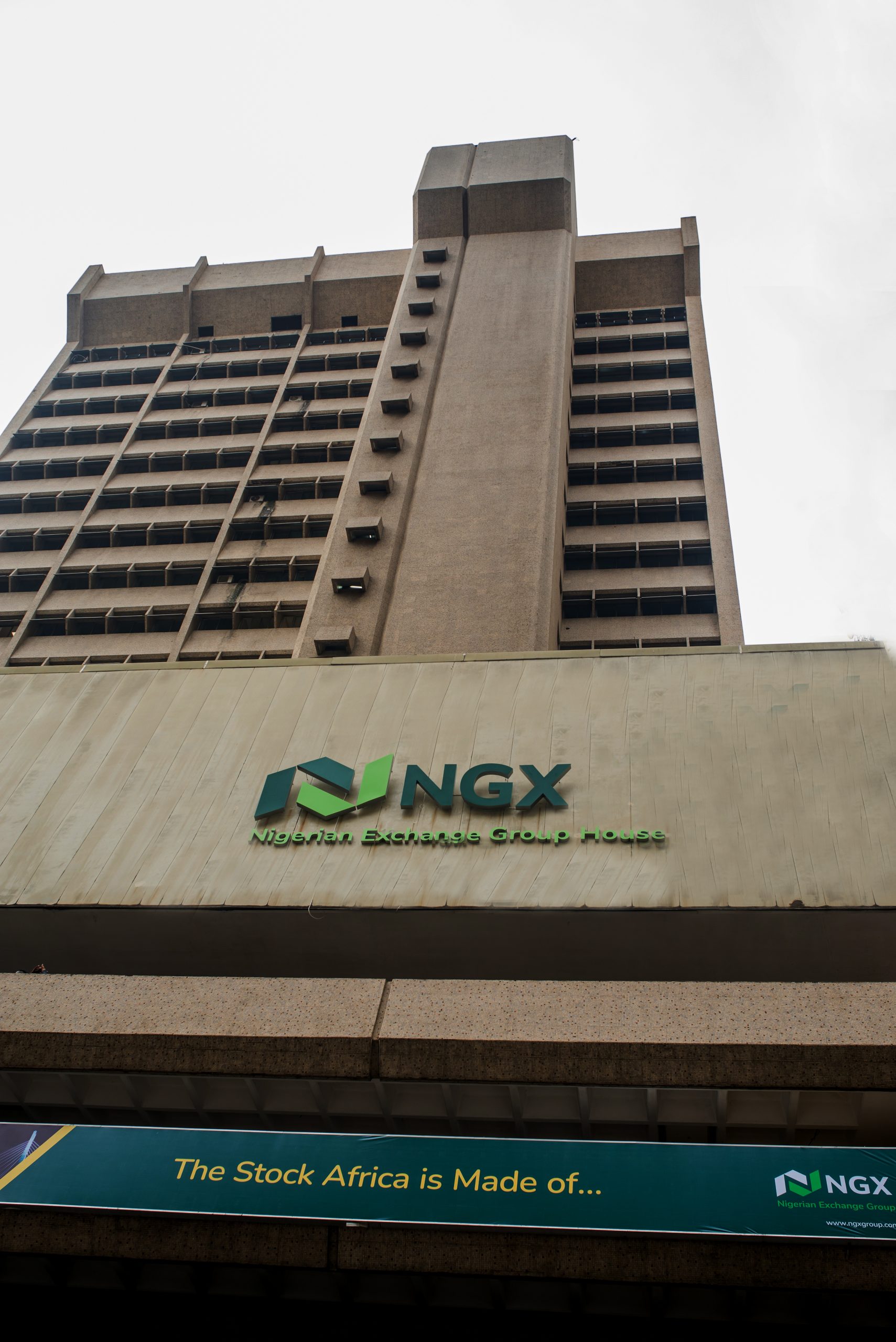
Market Note For Month Ended June 30, 2026
Akintunde Oyedokun
The Nigerian Exchange (NGX) closed the month of June on a weaker note as sustained profit-taking interrupted the market’s strong rally recorded earlier in the year. Investors rebalanced portfolios ahead of the second-quarter and half-year earnings releases, while bargain hunting remained concentrated on fundamentally sound stocks.
The NGX All-Share Index (ASI) settled at 229,419.18 points, after declining by 8.4% for the month, its worst monthly performance since October 2022, when the market lost 10.6%. Despite this correction, the market retained a robust 47.43% year-to-date return, while its dollar-denominated return stood at 59%, outperforming the S&P 500’s 9% gain over the same period.
Trading was volatile throughout June. The market opened on a bearish note before bargain hunting briefly supported prices in the second week. However, renewed selling pressure triggered six consecutive losing sessions, with profit-taking spreading across most sectors. Financial Services remained the most active segment, led by Access Holdings, Sterling Financial Holdings, FCMB Group, Fidelity Bank, Jaiz Bank, Ikeja Hotel, Aradel, and Linkage Assurance.
Macroeconomic developments also shaped investor sentiment. Nigeria’s headline inflation rose slightly to 15.93% in May from 15.69% in April, although monthly inflation slowed to 1.75%. Food inflation eased to 16.96%, while core inflation moderated to 16.82%. Meanwhile, the Federation Accounts Allocation Committee shared ₦2.30 trillion from May revenue among the three tiers of government.
Sector performance was broadly negative. Industrial Goods lost 17%, Oil and Gas fell 15%, Insurance declined 13%, Banking dropped 12%, while Power and Utilities also shed 12%. Telecommunications was the only bright spot, supported by the strong performance of Airtel Africa.
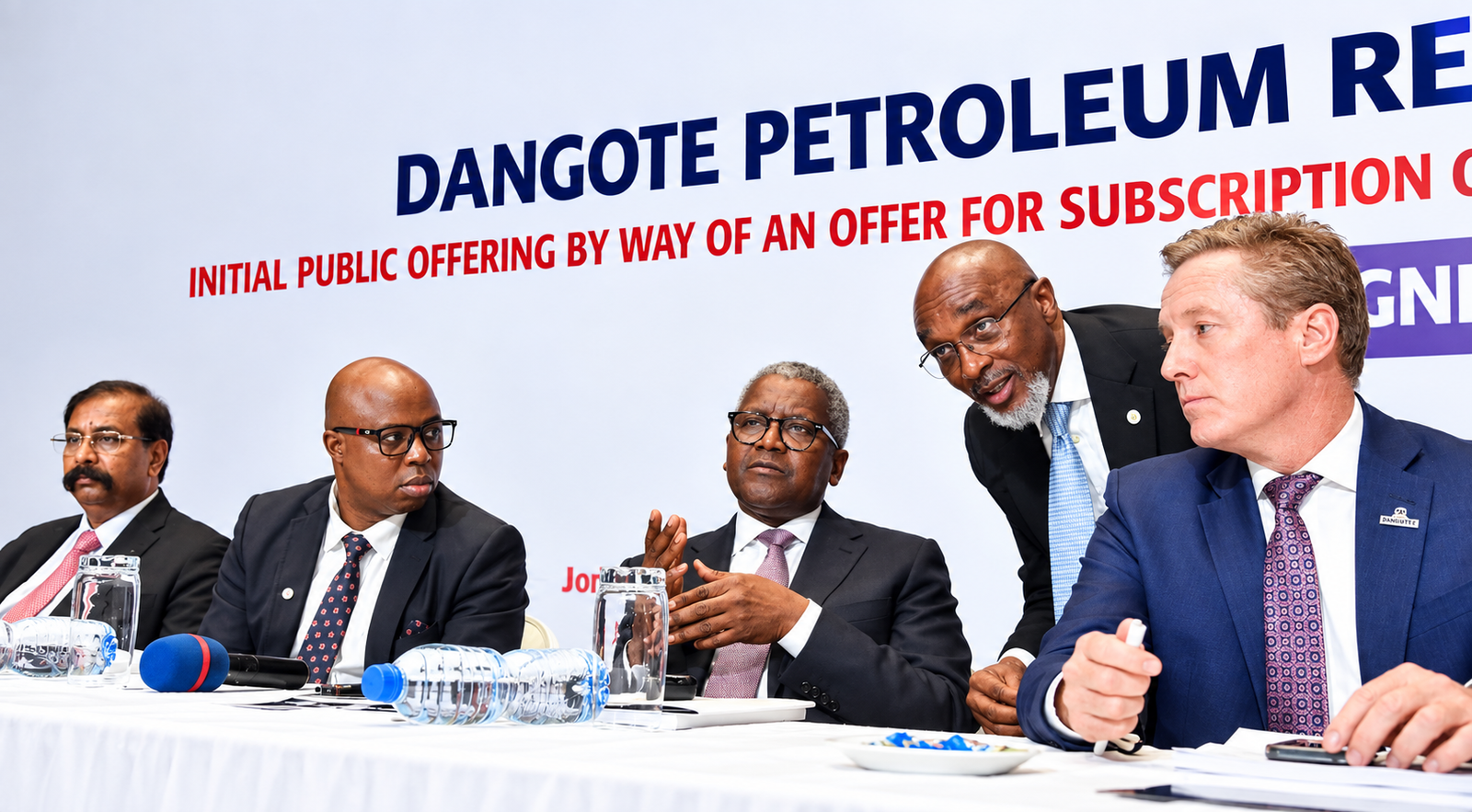
Market participants attributed the pullback to widespread profit-taking after the strong rally, liquidity positioning ahead of the Dangote Petroleum Refinery Initial Public Offering, recent regulations by the Central Bank of Nigeria, and downward adjustments to growth expectations for some listed companies. Even despite June’s decline, the market gained 14% in Q2 2026, following the 29% return in Q1, with April standing out as the strongest month of the quarter.
Among the top gainers, AIRTELAFRI appreciated 31.15% to ₦4,790, INFINITY rose 20.32% to ₦11.25, INTENEGINS gained 16.50% to ₦5.79, CORNERSTONE Insurance advanced 11.11% to ₦6.00, while ENAMELWARE added 10.00% to ₦4.70. On the downside, TRANSEXPR lost 37.82%, RT Briscoe fell 33.22%, Learn Africa declined 29.41%, ZCHI dropped 28.82%, Academy Press shed 26.78%, and Aradel Holdings retreated 26.70%.
Technical Analysis and Outlook
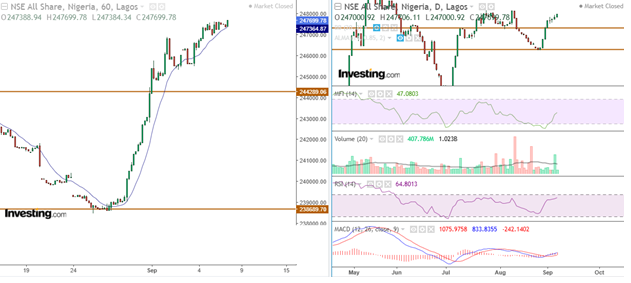
Technically, June’s decline represents a healthy correction rather than a reversal of the broader bullish trend that has defined the market this year. The 8.4% pullback followed exceptional gains of 29% in Q1 and 14% in Q2, allowing many overbought stocks to retrace to more attractive valuation levels. Although selling pressure remained dominant, institutional participation stayed relatively strong, indicating that investors were rotating into fundamentally sound counters rather than exiting the market entirely.
The NGX successfully recovered above the 229,000-point level at month-end after briefly breaking below it, making the 225,000-229,000 zone an important support area. A sustained rebound above the 230,000-point psychological level could strengthen buying momentum and pave the way for another attempt at previous highs. However, failure to hold above support may expose the market to further short-term weakness.
Looking ahead, the commencement of second-quarter and half-year earnings releases is expected to be the key catalyst for market direction going forward. Strong corporate results, attractive interim dividends and continued institutional accumulation could trigger renewed buying interest, particularly in banking, telecom, consumer goods and selected industrial stocks. Investors will also monitor inflation, interest rate decisions, exchange-rate stability and global crude oil prices for further market cues.
Overall, while intermittent profit-taking may persist in the near term, the medium- to long-term outlook for Nigerian equities remains constructive, supported by improving corporate fundamentals, resilient liquidity and a strong 47.43% year-to-date return.
Global Market and Oil: Global financial markets ended the second quarter on a bullish note as equities posted their strongest quarterly performance in six years, while crude oil prices suffered their steepest quarterly decline since the height of the COVID-19 pandemic in 2020. Investors weighed resilient corporate earnings, optimism surrounding artificial intelligence, expectations of higher U.S. interest rates and easing geopolitical tensions in the Middle East.
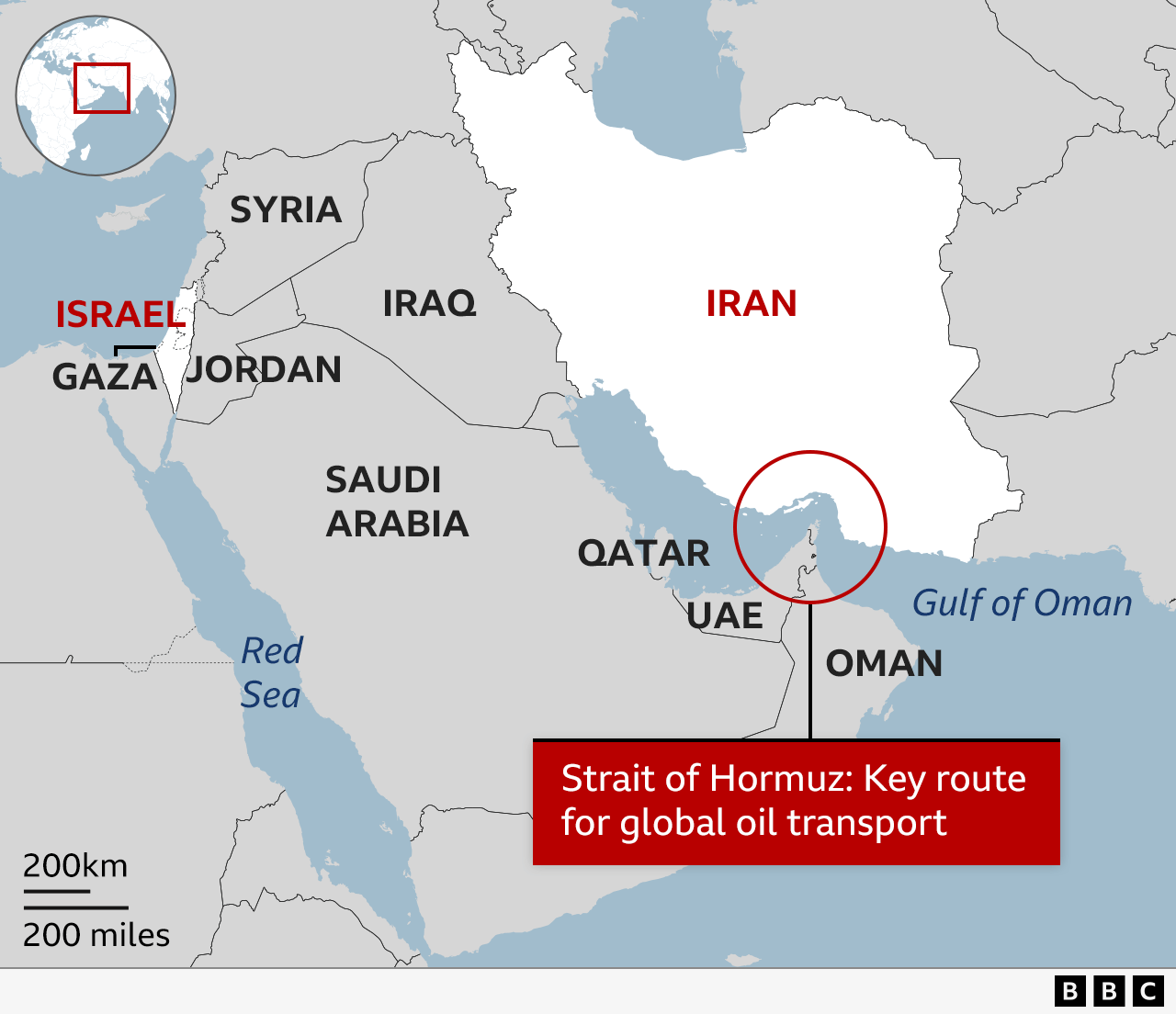
The easing of hostilities between the United States and Iran, following a fragile ceasefire, significantly reduced fears of supply disruptions in the Gulf. As shipping gradually resumed through the Strait of Hormuz, concerns over oil availability eased, triggering heavy selling across the energy market. Brent crude prices fell almost 40% during the second quarter, marking their biggest quarterly decline since 2020.
Brent crude futures for August settled 0.3% lower at $72.92 per barrel on Tuesday, extending losses for a third consecutive month. The benchmark declined more than 20% in June alone and finished the quarter down 38%. U.S. West Texas Intermediate (WTI) crude also recorded a steep 31% quarterly decline. Despite the sharp pullback, both Brent and WTI remain close to 20% higher year-to-date, reflecting gains accumulated earlier in the year.
Analysts attributed the selloff to improving shipping activity in the Gulf and expectations of stronger oil supply. UBS analyst Giovanni Staunovo noted that more vessels previously stranded by the conflict had resumed operations, creating a temporary increase in available supply. Morgan Stanley also projected a global oil market surplus of 4.8 million barrels per day by 2027, reinforcing expectations that supply could outpace demand over the medium term.
The decline in crude prices came as the Strait of Hormuz, one of the world’s most strategic oil transit routes, gradually reopened after weeks of uncertainty. The reopening eased concerns over potential supply disruptions that had previously driven oil prices sharply higher.
Despite weakness in energy markets, global equities maintained strong momentum throughout the quarter, largely driven by continued investor enthusiasm for artificial intelligence-related companies. South Korea’s KOSPI emerged as one of the world’s best-performing major indices with a 68% quarterly gain, while Taiwan’s benchmark index advanced 45%. In the United States, the technology-heavy Nasdaq Composite rallied more than 21%, supported by sustained buying in semiconductor and AI-related stocks.
The MSCI All-World Index gained 14.5% during the quarter, reaching a record high earlier in the period and delivering its best quarterly return since 2020. Emerging market equities climbed 23%, reflecting improved investor appetite for risk assets, while Europe’s STOXX 600 rose 10%, despite lagging Asian and U.S. markets due to its relatively lower exposure to AI-driven technology companies.
Wall Street ended Tuesday’s session firmly in positive territory. The Dow Jones Industrial Average climbed 136.46 points, or 0.26%, to a record closing high of 52,319.20. The S&P 500 advanced 58.93 points, or 0.79%, to 7,499.36, while the Nasdaq Composite jumped 393.58 points, or 1.52%, to 26,213.72.
Elsewhere, the MSCI All-World Index rose 8.32 points, or 0.75%, to 1,120.37. Europe’s STOXX 600 gained 0.88%, while the FTSEurofirst 300 added 23.73 points, or 0.93%. Emerging market stocks advanced 16.86 points, or 0.99%, to 1,723.79, and Japan’s Nikkei 225 closed 594.21 points, or 0.86%, higher at 70,062.32.
Currency markets were equally active during the quarter. The U.S. dollar recorded its fourth consecutive quarterly gain, rising 1.3% against a basket of major currencies as investors increasingly priced in the possibility of another Federal Reserve interest rate hike before year-end. The greenback drew support from resilient economic growth, stubborn inflation and the Fed’s latest projections, which showed nine of 19 policymakers expect an additional rate increase in 2026.
Interestingly, emerging market currencies also appreciated 1.3% against the dollar over the quarter, reflecting stronger capital inflows into developing economies despite the dollar’s broad strength.
The dollar’s appreciation weighed heavily on precious metals. Gold plunged 14% during the quarter, its largest quarterly decline since 2013, as higher U.S. yields and a stronger greenback reduced the appeal of the non-yielding asset.
Meanwhile, the Japanese yen weakened to Y162.57 per dollar, its lowest level in 40 years, prompting renewed warnings from Japanese Finance Minister Satsuki Katayama over possible intervention in the foreign exchange market if excessive volatility persists.
Overall, the second quarter highlighted the resilience of global equity markets despite geopolitical uncertainty. Strong corporate earnings, AI-driven technology gains and robust U.S. economic performance outweighed concerns over higher interest rates. At the same time, easing tensions in the Middle East removed much of the geopolitical risk premium embedded in crude oil prices, leading to one of the sharpest quarterly declines in recent years. Investors will now turn their attention to central bank policy decisions, inflation trends, global economic growth and developments in the oil market to determine the direction of financial markets in the third quarter.