
Market Update For July 10, 2026
The Nigerian Exchange (NGX) ended the week on cautiously on Friday, July 10, 2026, as investors locked in profits following five consecutive sessions of sustained gains that pushed the market to fresh historic highs. The profit-taking phase, which was largely concentrated in banking, consumer goods and select highly capitalised stocks, interrupted the recent bullish momentum but did little to weaken the broader market structure, as buying interest remained visible across several sectors.
The session reflected a classic rotation of funds rather than a wholesale exit from equities. Investors who had benefited from the week’s impressive rally took advantage of elevated prices to realise gains, while bargain hunters continued to accumulate fundamentally attractive stocks trading below their intrinsic value. This pattern has become increasingly evident in recent weeks as institutional investors continue to reposition portfolios ahead of the release of second-quarter corporate earnings and possible interim dividend declarations.
Although the benchmark index closed marginally lower, the market’s internal strength remained impressive. The positive market breadth showed that buying activity remained widespread across the Exchange, suggesting that the weakness recorded by the benchmark was largely driven by declines in a handful of heavyweight stocks whose market capitalisation exerts significant influence on the NGX All-Share Index.
The day’s performance further confirmed that investor confidence in the Nigerian equity market remains intact despite intermittent bouts of profit-taking. The sustained inflow of funds into selective sectors continues to reflect confidence in improving corporate fundamentals, easing macroeconomic pressures and expectations that listed companies will post stronger earnings in the current financial year.
Banking stocks remained at the centre of market activity, accounting for a significant portion of both volume and value traded. Investors also maintained interest in selected oil and gas, industrial, insurance and consumer goods counters, while portfolio managers continued to rotate funds from stocks that have recorded significant gains into fundamentally sound equities offering attractive valuation and dividend potential.
The cautious trading sentiment was also influenced by investors’ desire to preserve capital after the market delivered one of its strongest weekly performances in recent months. Rather than signalling the beginning of a bearish reversal, Friday’s decline appeared to represent a healthy pause that allows prices to consolidate before the next leg of the ongoing rally.
Market turnover slowed considerably as trading activities moderated from the previous session. Investors exchanged 441.22 million shares valued at ₦19.36 billion in 48,877 deals, representing a 73.36% decline in volume compared to Thursday’s. The sharp decline in volume indicates that many investors preferred to remain on the sidelines after the recent rally, while institutional investors executed selective transactions in fundamentally strong counters.
The banking sector once again dominated market activity. AccessCorp emerged as the most actively traded stock by volume with 40.17 million shares, representing 9.11% of total market volume. Sterling Financial Holdings followed with 30.26 million shares or 6.86%, while Fidelity Bank traded 26.29 million shares, accounting for 5.96% of total volume. Other actively traded banking names also featured prominently, reaffirming the sector’s position as the primary driver of market liquidity.
On the value chart, Zenith Bank maintained its dominance after recording transactions worth approximately ₦2.47 billion, representing 12.77% of the day’s total traded value. GTCO ranked next, followed by Aradel Holdings, highlighting sustained institutional interest in fundamentally strong large-cap companies despite the day’s profit-taking.
The pattern of trading suggests that investors are becoming increasingly selective, preferring fundamentally sound companies with strong earnings visibility, healthy balance sheets and attractive dividend prospects. This selective accumulation has continued to underpin market resilience despite periodic corrections in the benchmark index.
Foreign and domestic institutional investors also appear to be maintaining confidence in Nigerian equities as improving macroeconomic indicators continue to support investment sentiment. The moderation in inflation expectations, relative stability in the foreign exchange market, improving liquidity conditions and stronger corporate earnings outlook continue to reinforce expectations that equities may outperform other domestic asset classes over the medium term.
The external environment also remained supportive for Nigerian financial markets. International crude oil prices extended their rally on Friday following renewed geopolitical tensions in the Middle East. Brent crude rose 0.38% to around $76.59 per barrel, while U.S. West Texas Intermediate (WTI) crude gained 0.24% to approximately $72.25 per barrel. Both benchmarks remained on course for weekly gains of roughly 6% and 5%, respectively.
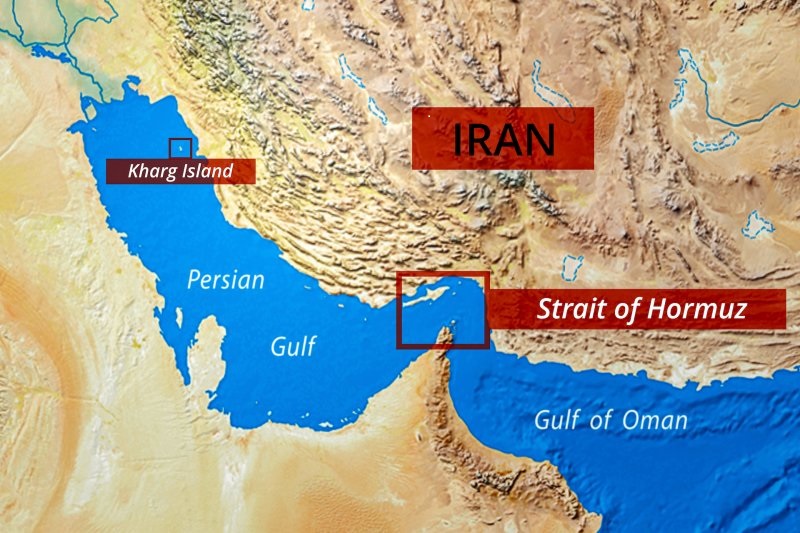
Oil prices continued to draw support from renewed military exchanges between the United States and Iran, which disrupted shipping activities through the Strait of Hormuz—a strategic route through which nearly one-fifth of global oil supplies normally pass. The disruption has significantly increased concerns about possible supply shortages, thereby sustaining a sizeable geopolitical risk premium in crude prices.
Although reports indicating that Qatari negotiators had engaged Iranian officials in renewed diplomatic efforts helped moderate some of the gains, uncertainty surrounding the conflict continued to keep energy markets on edge. Additional reports of explosions in southern Iran, including areas close to the Bushehr nuclear facility, further heightened market concerns over regional stability.
For Nigeria, higher crude oil prices remain broadly supportive of economic fundamentals. Stronger oil prices improve government revenue, support foreign exchange inflows, enhance external reserves and strengthen fiscal sustainability. The development also provides a positive backdrop for Nigeria’s upstream oil companies listed on the NGX, many of which have continued to attract significant investor interest amid elevated energy prices.
Technical Analysis and Outlook
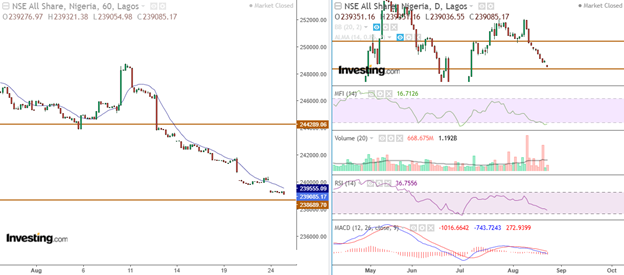
Technically, Friday’s decline does not alter the prevailing bullish structure of the Nigerian equities market. Instead, it reflects a healthy correction following an extended rally that saw the benchmark index record five consecutive sessions of gains and establish fresh all-time highs.
The positive market breadth remains one of the strongest indicators supporting the market’s resilience. With gainers exceeding losers despite the benchmark’s decline, underlying demand for equities remains healthy, suggesting that institutional investors are still deploying funds into carefully selected stocks.
The pullback was primarily caused by profit-taking in large-cap banking and consumer goods stocks whose weightings significantly influence the All-Share Index. However, the broader participation of advancing stocks suggests that the ongoing bull market remains fundamentally intact.
Momentum indicators continue to favour the bulls, although short-term oscillators point to the possibility of further intermittent profit-taking as investors digest recent gains. Such pullbacks are generally viewed as healthy because they create fresh entry opportunities for long-term investors while preventing excessive market overheating.
Going forward, investors are expected to focus on second-quarter earnings releases, interim dividend announcements, corporate actions, monetary policy developments, fixed-income yield movements, foreign exchange stability and developments in the international oil market. Sustained institutional participation, improved corporate earnings expectations and favourable macroeconomic indicators are expected to provide support for the market in the coming weeks.
Investors are therefore advised to remain selective, focusing on fundamentally strong companies with consistent earnings growth, attractive dividend yields and sound corporate governance, while taking advantage of short-term price corrections to accumulate quality stocks for medium- to long-term returns.
The NGX All-Share Index (ASI) closed 0.07% lower at 243,798.76 points, compared with 243,958.73 points in the previous session. Consequently, market capitalisation declined by approximately ₦102.65 billion, while the market’s year-to-date return eased slightly to 56.67%. Market breadth remained positive at 31 gainers against 28 losers, highlighting the underlying strength of market sentiment despite the index’s decline. Top gainers were NIDF (+10.00%), Academy Press (+9.95%), Red Star Express (+9.93%), RT Briscoe (+9.92%), Honeywell Flour Mills (+9.91%), Meyer (+9.88%), Presco (+9.80%), Veritas Kapital (+9.76%), Union Dicon Salt (+9.66%) and Champion Breweries (+9.57%). Top losers included Thomas Wyatt Nigeria (-10.00%), Guinness Nigeria (-9.99%), Ikeja Hotel (-9.96%), Zichis (-9.94%), Stanbic IBTC Holdings (-6.63%), Fidelity Bank (-2.56%), Sterling Financial Holdings (-1.30%), Nigerian Breweries (-1.16%), Fidson Healthcare (-1.14%), GTCO (-0.71%), First HoldCo (-0.50%) and AccessCorp (-0.20%). These losses in high-capitalisation stocks outweighed the widespread gains recorded across the broader market, leading to the benchmark index’s marginal decline while preserving the market’s overall bullish outlook.