
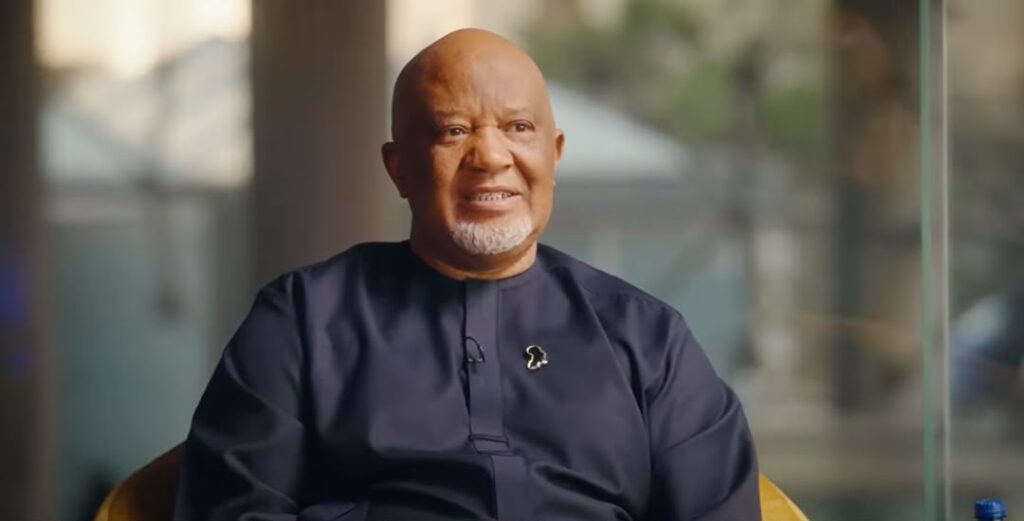
Caption: Jonas, MTN Group Chairman, during the interview.
Pan-African corporate leaders have stressed the urgent need to end market fragmentation across the continent to ensure it becomes truly competitive globally by dismantling artificial trade barriers, enhance Gross Domestic Product (GDP)..
MTN Group Chairman Mcebisi Jonas and the Board Chairman of MTN Ghana, Dr. Ishmael Yamson, spoke during the MTN’s The Y’ello Chair vodcast Episode 8, on Sunday, August 2, 2026, , where he shared his perspectives on governance, regional integration, corporate citizenship, and Africa’s long term economic growth. He warned on the danger of African operating as a cluster of small, isolated markets which he says guarantees the continent’s perpetual economic vulnerability.
On his part, Dr. Yamson expressed deep frustration over the persistent regulatory silos choking cross-border enterprise, noted that treating sovereign markets as independent pockets cripples African businesses before they even achieve global scale.
According to Yamson, African leaders must understand that working together will make the market bigger, stressing that African nations are dangerously underestimating the power of collective market weight.
“If we continue to deal with small companies, they’re not going to make any impact anywhere,” he stressed.
He further lamented that while non-African multinationals are often welcomed with open arms, home-grown African conglomerates routinely face bureaucratic resistance across regional borders.
While calling for an urgent mind-shift among political leaders, he cautioned that by 2050, Africa will have a population of between 1.4 and 1.6 billion people “equal to the population of China and India. If that population is not harmonised, if that population doesn’t see itself as one continent and act as such, then we will not get the benefit of a China.”
The economic case for immediate integration, he stressed further, is overwhelming.
According to the African Union Secretariat, the African Continental Free Trade Area (AfCFTA) represents a market of 1.4 billion people with a combined gross domestic product (GDP) of roughly $3.4 trillion, while intra-African trade stubbornly hovers between just 15% and 21% of the continent’s total trade volume – paling in comparison to intra-Asian trade at nearly 60% and intra-European trade at over 68%.
Reflecting on these disparities, both leaders challenged governments to accelerate the harmonisation of regulatory, tax, and border policies to unlock genuine scale.
With over 60% of Africa’s population currently under the age of 30, Jonas and Yamson advocated that the continent’s leaders can no longer afford to let historical borders stifle future opportunities, reiterating that a unified market is the single most critical precondition for lasting prosperity.