

Market Update For June 29, 2026
The Nigerian Exchange (NGX) commenced the final trading days of June on a bearish note as sustained profit-taking in blue-chip and fundamentally sound stocks overshadowed bargain hunting, extending the market’s recent corrective trend. Investors remained cautious after the impressive rally recorded in previous weeks, opting to lock in gains across key sectors of the market amid continued portfolio rebalancing ahead of the half-year earnings season.
The broad-based decline reflected the weakening market sentiment, with selloffs cutting across the banking, consumer goods, industrial, insurance and oil and gas sectors. Although buying interest persisted in a few low- and mid-priced stocks, it was insufficient to offset the heavy losses recorded in market heavyweights, resulting in another negative outing for domestic equities.
The renewed wave of profit-taking came despite the country’s improving macroeconomic indicators and expectations that listed companies with strong fundamentals will deliver resilient half-year scorecards. Investors appear to be adopting a more selective approach, rotating funds into defensive counters while taking profits in stocks that have posted significant capital appreciation since the beginning of the year.
The banking sector, which has been one of the strongest performers in recent months, witnessed renewed selling pressure as investors reduced exposure to some of the tier-one lenders. Consumer goods stocks also came under intense pressure following losses in major counters, while selected industrial and insurance stocks extended their recent decline.
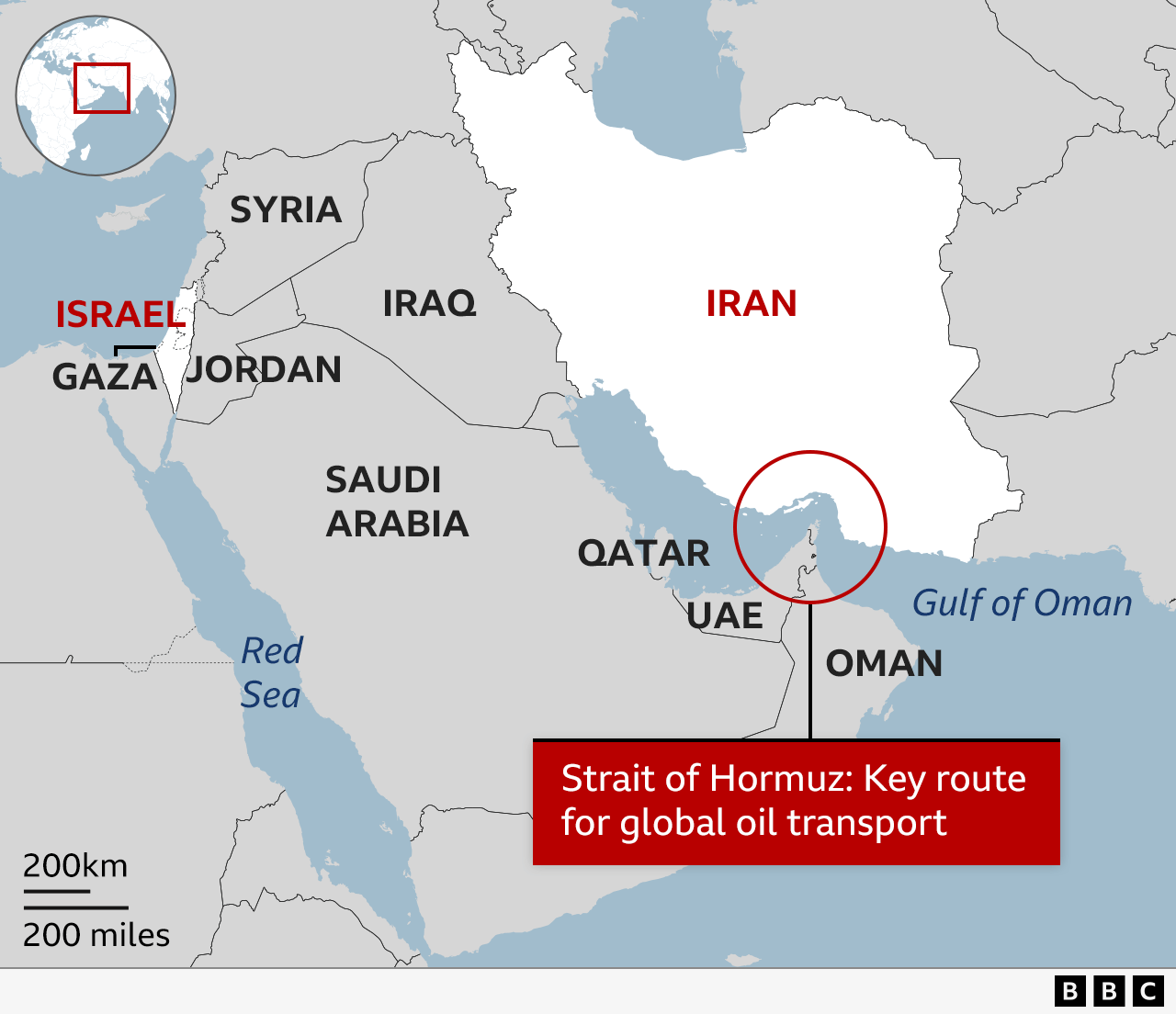
Market participants also monitored developments in the global commodities market, particularly crude oil prices, given their significance to Nigeria’s fiscal position, foreign exchange earnings and overall market sentiment. Oil prices recovered during Monday’s trading session after renewed geopolitical tensions in the Middle East highlighted the fragile nature of the ceasefire between the United States and Iran.
Brent crude futures advanced 1.1% to trade at $72.76 per barrel, while the U.S. West Texas Intermediate (WTI) crude gained 1.44% to $70.23 per barrel. The rebound followed renewed attacks involving both countries, although expectations of continued negotiations over the Strait of Hormuz helped prevent a sharper rise in prices.
The market remains sensitive to developments around the Strait of Hormuz, through which a significant portion of global crude exports passes. Although crude shipments have improved in recent days, easing immediate supply concerns, analysts believe geopolitical uncertainty continues to support a risk premium in oil prices. Any disruption to supply from the region could quickly reverse last week’s decline in crude prices.
For Nigeria, firmer crude prices remain supportive of government revenue, external reserves and foreign exchange inflows. Higher oil prices also improve the earnings outlook for upstream oil producers and strengthen investor confidence in energy-related equities listed on the Nigerian Exchange. Nevertheless, market participants are expected to remain cautious as volatility in global energy markets persists.
Domestically, investors are increasingly shifting their attention toward the commencement of the second-quarter and half-year corporate earnings season. Historically, the earnings reporting period has served as a major catalyst for renewed buying interest, particularly in companies with strong balance sheets, resilient earnings growth and attractive dividend prospects. Consequently, many institutional investors are using the current market weakness as an opportunity to rebalance portfolios while awaiting fresh corporate numbers.
The impressive increase in market turnover during Monday’s session suggests that institutional investors remained active despite the negative market close. Rather than signalling panic selling, the surge in transaction volume indicates continued portfolio rotation as investors reposition into sectors and companies expected to outperform in the second half of the year.
Technical Analysis and Market Outlook
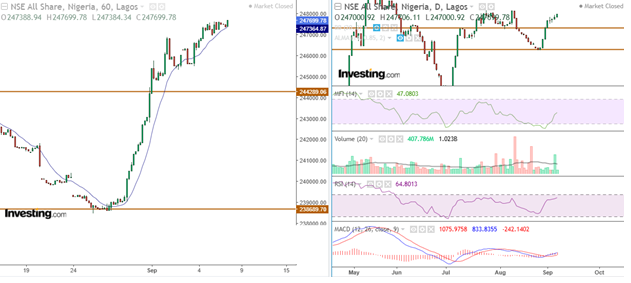
Technically, the Nigerian equities market remains in a short-term corrective phase following its extended bullish rally that delivered one of the strongest year-to-date performances among African equity markets. Monday’s decline saw the NGX All-Share Index break below the important 230,000-point psychological support level, confirming that profit-taking remains the dominant short-term trend.
However, market internals suggest the broader uptrend has not been completely undermined. The substantial increase in trading volume points to healthy portfolio rebalancing rather than wholesale market liquidation. This indicates that institutional investors continue to participate actively in the market while rotating funds into fundamentally attractive stocks.
Going forward, the 225,000-point level is expected to serve as the immediate support zone. A successful defence of this level could encourage fresh bargain hunting and trigger a technical rebound. Conversely, a sustained break below this support may expose the market to further short-term weakness before buyers return.
On the upside, a recovery above the 230,000-point mark would strengthen investor confidence and improve the market’s technical outlook. The expected release of second-quarter earnings, sustained stability in oil prices and continued moderation in inflation expectations could provide fresh catalysts for renewed buying interest. Investors are therefore advised to focus on fundamentally sound companies with strong earnings prospects, consistent dividend history and attractive valuations while taking advantage of periods of market weakness to build long-term positions.
The NGX All-Share Index (ASI) declined by 1.57% to close at 228,401.92 points, compared with 232,049.02 points in the previous trading session. The decline reduced the market’s year-to-date return to 46.78%, while investors lost approximately ₦2.34 trillion as market capitalisation declined accordingly. Market breadth remained firmly negative with 47 decliners against 13 gainers, highlighting the widespread nature of the selloff across major sectors. UPDC topped the gainers’ chart, while Learn Africa emerged as the biggest loser. Among the session’s major market movers were MTNN (-10.00%), Unilever (-10.00%), Cadbury (-9.82%), Wema Bank (-7.41%), Dangote Sugar (-4.93%), NGX Group (-4.17%), FCMB (-3.52%), TIP (-3.45%), NEM Insurance (-3.10%), First HoldCo (-2.48%), Lafarge Africa (-2.33%), United Capital (-2.01%), Zenith Bank (-1.26%), Oando (-1.24%), UBA (-0.88%), GTCO (-0.70%), Access Holdings (-0.22%), alongside 30 other declining stocks, reflecting broad-based weakness across the market. Trading activity strengthened remarkably as total volume surged 171.60% to 1.06 billion shares valued at ₦44.57 billion in 62,482 deals. Ikeja Hotel dominated the activity chart with 305.54 million shares, representing 28.94% of total volume, while also recording the highest traded value of ₦13.21 billion, accounting for 29.65% of total market turnover. Access Holdings contributed 27.47% of total traded volume, followed by SterlingNG (3.16%), while Access Holdings and Presco ranked behind Ikeja Hotel in traded value, underscoring sustained institutional participation despite the market’s negative close.