
Trading on the Nigerian Exchange was mixed. The All-Share Index lost 3.59%% week- on-week, closing at 235,941.27 points, while market capitalisation eased to ₦151.327 trillion. All sector indices ended in the red except the NGX Sovereign Bond Index, which closed flat.
The NGX-30 index, for example, lost 3.64%. It was, however, not the worst hit, as the banking Index tumbling 10.49% down, much more than the Insurance Index’s 7.22% decline and the Pension Index’s 4.86%. The Consumer Goods and Oil & Gas Indexes faired better than all, losing just 1.61% and 1.06% respectively.
Year-to-date, the All-Share Index’s gain dropped to 51.62%, NGX 30 index, 50.81%; Banking Index, 35.77%; while the Pension Index’s gain stood at 59.77%; and the Consumer Goods Index, 18.14%; while the Insurance Index now has a miserly return of 1.75%. However, the Oil and Gas Index is in a world of its own with YTD gain at 111.13%.
During the week also, according to data from the Nigerian Exchange Limited, investors exchanged 3.075 billion shares worth ₦254.614 billion in 287,157 deals, compared to 4.964 billion shares valued at ₦207.521 billion in 235,966 deals in the previous week. Financial Services stocks continue to dominate activities, accounting for 2.074 billion shares worth ₦64.490 billion, representing 67.44% of total volume and 25.33% of value. Services and Consumer Goods followed with 175.743 million shares valued at ₦2.759 billion; and 133.375 million shares worth ₦12.680 billion.
The most active stocks for the week were Access Holdings, Sterling Financial Holdings and Jaiz Bank, which together accounted for 819.234 million shares that together changed hands for ₦12.247 billion, representing 26.64% of total volume and 4.81% of value.
Trading on Monday, indeed, foretold what was to come, after opening on a negative note, thereby extending the previous session’s loss position on profit-taking in heavyweight stocks. This dragged the NGX All-Share Index down by 0.63% to 243,204.73 points, just as market capitalisation lost ₦983.88 billion, cutting year-to-date return to 56.29%. Losses were suffered by stocks like Oando, NAHCO, First HoldCo, Aradel, Transcorp, AccessCorp, Zenith Bank and GTCO, enough to weigh heavily on market sentiment. Monday’s breadth closed negative with 48 losers against just 17 gainers. Trading volume stood at 744.90 million shares worth ₦36.40 billion in 80,873 deals, with Sterling Financial Holdings leading by volume, while Aradel topped the value table at ₦11.20 billion.
On Tuesday, the NGX extended its decline for a third straight session when the ASI fell 0.50% to 241,984.80 points, with investors losing ₦782.44 billion of their combined worth, while YTD return moderated to 55.50%. Pressure came from declines in the likes of Vitafoam, GTCO, UBA, Dangote Sugar, Zenith Bank and Oando. Market breadth remained negative with 37 losers and 20 gainers. A total of 535.53 million shares worth ₦36.84 billion were exchanged in the process, led by Sterling Financial Holdings in volume and UACN in value.
At the midweek’s session, the weak outing was extended as the benchmark NGX All-Share index slipped another 0.49% to 240,802.72 points, wiping off ₦758.16 billion from investors and reducing YTD return to 54.74%. Key laggards included Geregu, Okomu Oil, Transcorp, First HoldCo, AccessCorp, Zenith Bank and UBA. Market breadth stayed weak with 51 losers against 13 gainers. Trading activity improved to 662.96 million shares worth ₦39.98 billion, with AccessCorp leading volume and MTN Nigeria topping value.
The situation remained the same on Thursday as selling pressure intensified, dragging the market further down by 1.41% to 237,404.92 points, and in the process erasing a princely ₦2.18 trillion in market value and crashing YTD return to 52.56%. Major decliners on that day included Cadbury, Dangote Sugar, Dangote Cement, NGX Group, Zenith Bank, AccessCorp, UBA and GTCO. Market breadth remained negative at 40 losers, versus 13 gainers. Turnover rose to 691.64 million shares worth ₦116.85 billion, led by First HoldCo in volume and Dangote Cement in value.
The index closed lower still on the last trading day of the week, as the NGX extended its losing streak to six consecutive sessions after the ASI dropped 0.62% to 235,941.27 points, while chopping off ₦938.75 billion and pulling YTD return to 51.62%. The loss was powered by declines in the share prices of NAHCO, GTCO, First HoldCo, Zenith Bank, WAPCO, UBA and AccessCorp. Market breadth on Friday closed at 31 losers, compared to 21 gainers, with Deap Capital among the top advancers. Transaction volume fell to 440.36 million shares worth ₦24.68 billion, with AccessCorp leading by volume and MTN Nigeria topping the value chart.
Cornerstone Insurance PLC
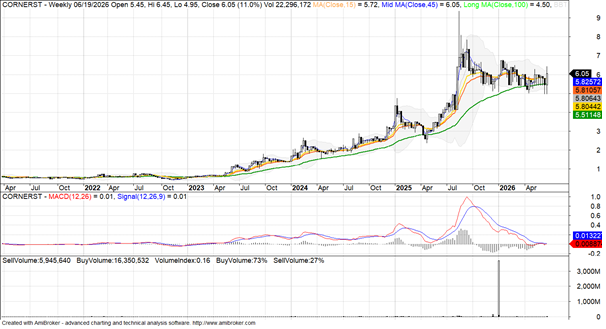
On the gainers’ chart, Cornerstone Insurance led with an 11.01% appreciation, after its share price rose from ₦5.45 to ₦6.05, followed by Academy Press, which advanced by 8.72% from ₦7.45 to ₦8.10. Conoil chalked 8.25%, moving from ₦194.00 to ₦210.00, while Neimeth International Pharmaceuticals appreciated by 4.68% from ₦8.55 to ₦8.95. Ikeja Hotel Plc completed the top five gainers, climbing 3.36% from ₦43.15 to ₦44.60.
IEI Plc
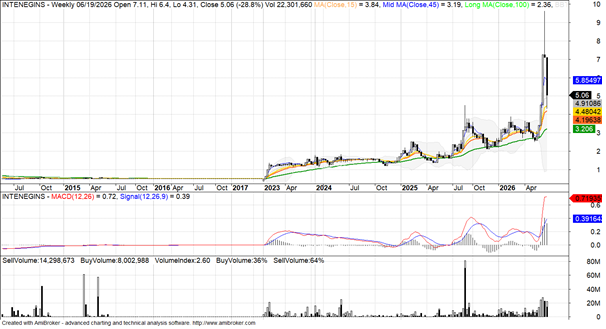
On the losers’ table, International Energy Insurance Plc recorded the steepest decline, shedding 28.83%, closing at ₦5.06 from ₦7.11; First HoldCo Plc lost 20.29%, dropping from ₦69.00 to ₦55.00; while John Holt Plc declined by 17.65% from ₦13.60 to ₦11.20. Nigerian Aviation Handling Company Plc fell 17.27% from ₦179.50 to ₦148.50, and Zichis Agro Allied Industries Plc depreciated by 16.13%, closing at ₦26.00 from ₦31.00.
Comparative Analysis: Last Week vs Prior Week (NGX)
The Nigerian equities’ market showed a clear shift in sentiment when we compare both weeks, as it moved from a mild recovery phase in the preceding week to a sustained corrective phase last week. Prior week was largely driven by a gradual bullish momentum, with the NGX All-Share Index edging higher to close at 244,738.74 points. Investor confidence was supported by steady demand in key large-cap stocks such as FIRSTHOLDCO, MTNN, ACCESSCORP, GTCO, and ZENITHBANK. Although there was a slight pullback toward the end of the week, overall sentiment remained positive, with stronger buying activity and a higher level of market stability.
In the just concluded week, however, the market reversed sharply into a consistent downtrend, as the ASI fell 3.59% week-on-week to 235,941.27 points. Unlike previous week’s balanced performance, selling pressure dominated all sessions, particularly in banking and industrial names like GTCO, ZENITHBANK, UBA, ACCESSCORP, and DANGOTE-related stocks. Market breadth also weakened significantly, with losers consistently outpacing gainers, reflecting broad risk-off sentiment. In summary, trading on the NGX in the preceding week reflected cautious optimism and selective buying, while last week was defined by profit-taking, weakening momentum, and sustained bearish pressure across the market.
Technical Analysis View
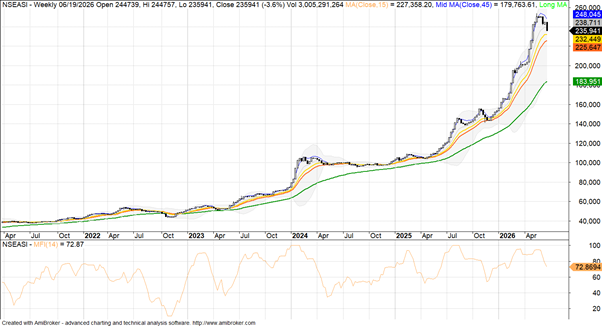
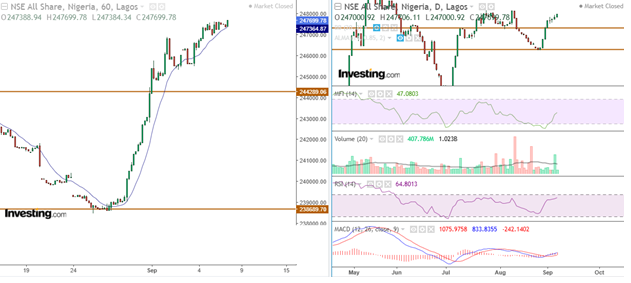
The ASI remains firmly in a bearish phase, characterized by persistent lower highs and lower lows, confirming sustained distribution pressure. The breakdown below the 240,000 psychological level signals weakening momentum and increased seller dominance. The index now trades closer to a near-term support zone around 235,000 points, which is critical in determining the next directional move. A sustained breach below this level could trigger further downside, while any rebound is likely to encounter resistance around the 240,000–243,000 band, where recent selling pressure intensified.
Market Outlook
Near-term sentiment remains cautious as investors continue to lock in gains after earlier market gains this year. While oversold conditions may encourage selective bargain hunting in fundamentally strong stocks—especially in banking and industrial names—the broader trend remains fragile. A meaningful recovery will depend on renewed demand in bellwether stocks such as Access Holdings Plc, GTCO Plc, Zenith Bank Plc and Dangote Cement Plc. Until then, the market is likely to remain range-bound with a bearish bias between 235,000 and 240,000 points.
Trending in the Economy: Nigeria’s inflation in May 2026 edged up to 15.93%, slightly higher than April’s 15.69%, according to the National Bureau of Statistics. On a month-on-month basis, however, price growth slowed to 1.75%. Food inflation also softened to 16.96%, while core inflation came in at 16.82%. The pressure on prices during the period was largely driven by everyday food items such as maize, onions, tomatoes, yam, and cassava flour. Even with the yearly uptick, the data points to a slower pace of inflation compared to the previous year. I
n a separate development, the country’s Federation Accounts Allocation Committee (FAAC) shared a total of N2.3 trillion for the month of May 2026 among the federal, state, and local governments. The disbursement came from gross revenue of N3.395 trillion after deductions. The Federal Government received N818.68bn, states got N759.14bn, while local governments received N534.28bn. Oil-producing states shared N188.13bn as derivation. The higher statutory inflows helped offset a decline in VAT earnings.
Global Market and Oil: Global financial markets ended Thursday on a positive note as investors reacted to the easing geopolitical tensions in the Middle East, a strong rally in semiconductor stocks, and renewed expectations of tighter U.S. monetary policy. While oil prices recovered from sharp intraday losses, the U.S. dollar strengthened to a one-year high, reflecting growing confidence that the Federal Reserve may raise interest rates later this year.
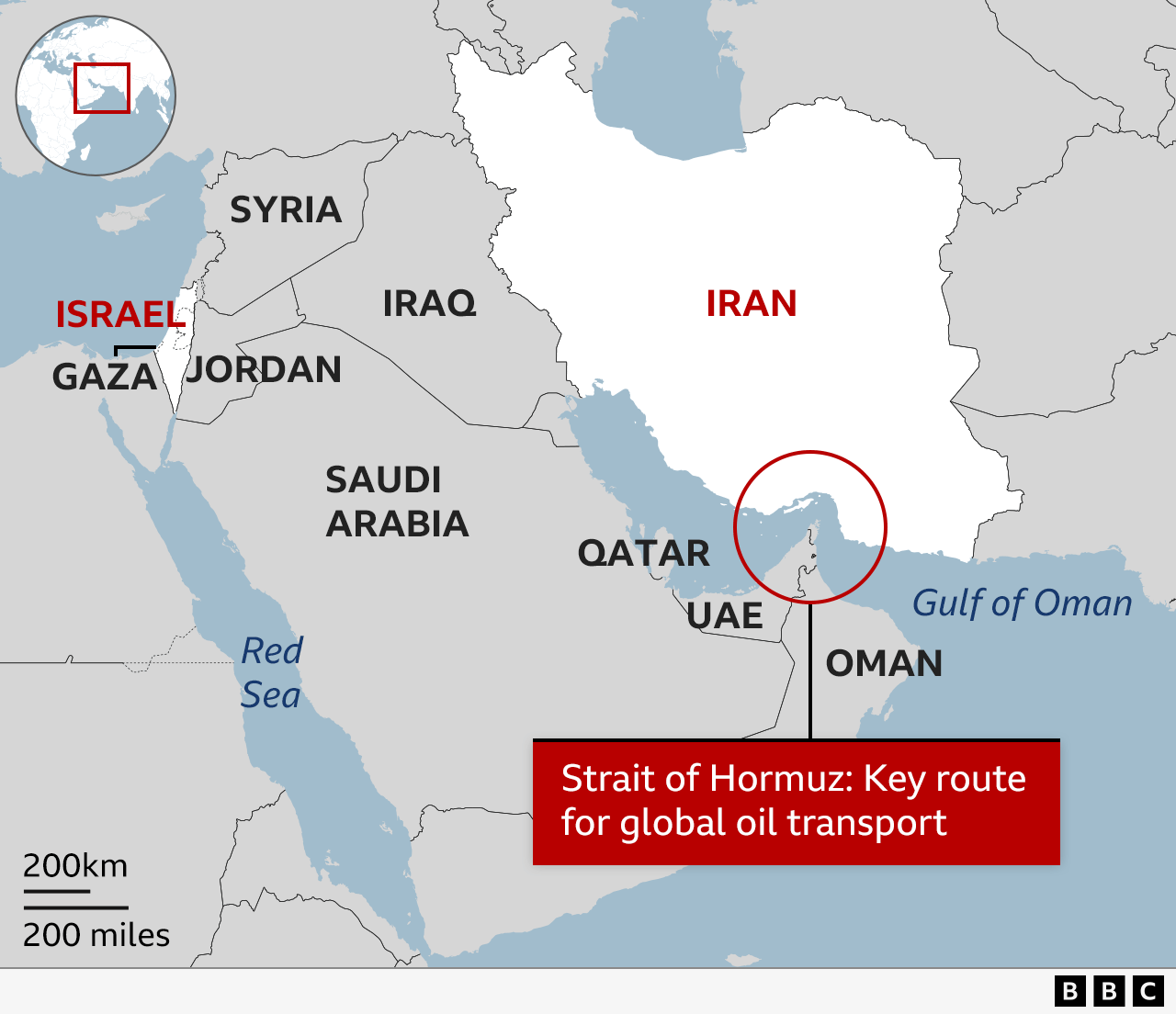
Market sentiment improved following the implementation of an interim agreement between the United States and Iran aimed at ending months of conflict in the Middle East. The development helped calm concerns over energy supply disruptions, particularly as oil tankers resumed movement through the Strait of Hormuz, a critical route for global crude exports. The reopening of shipping lanes signaled a gradual normalization of oil flows that had been restricted during the conflict.
Despite the optimism, concerns about the durability of the ceasefire remain. U.S. Vice President JD Vance cautioned Israel against launching further attacks on Iran-backed Hezbollah forces in Lebanon, highlighting the fragile nature of the agreement and the possibility of renewed tensions in the region.
Oil prices experienced significant volatility during the session. Brent crude futures initially dropped to an intraday low of $76.54 per barrel before recovering to settle 30 cents, or 0.38%, higher at $79.85 per barrel. U.S. West Texas Intermediate (WTI) crude ended the day 19 cents, or 0.25%, lower at $76.60 per barrel. The decline in crude prices reflected expectations of improved supply conditions as Middle East tensions eased. Analysts noted that Europe remains more vulnerable than the United States to inflationary pressures resulting from higher energy costs.
The decline in oil prices and the geopolitical developments provided support for equities, particularly technology and semiconductor stocks. Wall Street recorded strong gains, led by the technology-heavy Nasdaq Composite, which advanced 496.28 points, or 1.91%, to close at 26,517.93 points. The broad-based S&P 500 gained 80.48 points, or 1.08%, to finish at 7,500.58 points, while the Dow Jones Industrial Average rose 72.15 points, or 0.14%, to close at 51,564.70 points. Semiconductor stocks were among the biggest beneficiaries of the improved market mood. The Philadelphia Semiconductor Index surged 6.4%, driven by strong gains in major chipmakers. Intel shares jumped 10.6% after U.S. President Donald Trump announced that Apple had agreed to work with Intel on the design and manufacturing of semiconductor chips within the United States. The announcement boosted confidence in the domestic semiconductor industry and added momentum to the technology sector rally.
According to Peter Cardillo, Chief Market Economist at Spartan Capital Securities in New York, investor optimism was fueled by both the U.S-Iran agreement and the sharp retreat in oil prices. He noted that markets were encouraged by expectations that a more comprehensive agreement could emerge within the next 60 days, potentially easing supply concerns in the global oil market and supporting economic stability.
The positive performance on Thursday also strengthened weekly gains for U.S. equities. With markets scheduled to close on Friday in observance of the Juneteenth holiday, the Nasdaq posted a weekly gain of 2.43%, outperforming the S&P 500, which rose 0.93%, and the Dow Jones Industrial Average, which advanced 0.71%.
Global equities also benefited from the improved risk sentiment. MSCI’s World Index, which tracks stocks across major developed and emerging markets, rose 6.48 points, or 0.58%, to close at 1,127.60 points. In contrast, European equities underperformed, with the pan-European STOXX 600 Index declining 0.34% as investors weighed the potential inflationary impact of energy prices on the region’s economy.
In the foreign exchange market, the U.S. dollar strengthened significantly following the Federal Reserve’s latest policy decision. The U.S. central bank maintained its benchmark interest rate within a range of 3.50% to 3.75%, but policymakers adopted a more hawkish tone, increasing expectations that rates could rise further in the coming months. Data from LSEG showed that the futures market is now pricing in a 68% probability of a rate hike by September.
The dollar index, which measures the U.S. currency against a basket of major currencies including the euro, Japanese yen, and British pound, rose 0.45% to 100.80, its highest level since May 2025. This followed an 0.85% surge in the previous session, marking the dollar’s strongest single-day gain in more than three months.
The Japanese yen came under heavy pressure, weakening to 161.45 per dollar, its lowest level since July 2024. The decline erased gains achieved after Japanese authorities intervened in the foreign exchange market on April 30. Analysts noted that a move above the 2024 peak of 161.99 could push the yen to its weakest level since 1986.
The British pound also weakened after the Bank of England left interest rates unchanged. Sterling fell 0.62% to $1.3206 against the dollar as investors adjusted expectations for future monetary policy actions.
Meanwhile, the U.S. Treasury market saw modest gains as yields eased from the previous day’s highs. The two-year Treasury yield, which is highly sensitive to interest rate expectations, declined by 1 basis point to 4.153% after reaching 4.207% on Wednesday. The benchmark 10-year Treasury yield fell 3 basis points to 4.437%, reflecting increased demand for government bonds.
In the commodities market, gold prices recorded a sharp decline as the stronger dollar and expectations of higher interest rates reduced the appeal of the precious metal. U.S. gold futures tumbled 3.1% to settle at $4,245.90 per ounce.
Overall, global markets were driven by a combination of easing geopolitical tensions, lower oil prices, strong gains in semiconductor stocks, and expectations of tighter U.S. monetary policy. While investors welcomed the progress in U.S.-Iran relations and the recovery in energy supply flows, attention will remain focused on the durability of the ceasefire, future Federal Reserve decisions, and developments in global energy markets in the weeks ahead.