
Market Update For October 30, 2026
The Nigerian equities market extended its positive momentum on Friday, October 30, 2026, recording a second consecutive session of gains as renewed buying interest in selected stocks supported the benchmark index. However, the relatively modest advance, against the backdrop of persistent selling pressure across several equities, highlighted the cautious undertone in the market as investors continued to reposition their portfolios ahead of the new trading month.
The session reflected a market characterised by selective accumulation, profit-taking and uneven participation across sectors. While demand for selected consumer goods, banking and industrial stocks provided support for the overall market, losses in several other counters limited the strength of the recovery. The divergence between the positive movement in the All-Share Index and negative market breadth suggests that the latest advance was driven more by price appreciation in selected stocks than by a broad improvement in investor sentiment.
The performance also points to a gradual shift in trading behaviour following the market’s impressive rally this year. With equities delivering substantial capital gains, some investors appear increasingly inclined to secure profits, particularly in stocks that have recorded significant price appreciation. At the same time, bargain hunters continue to explore opportunities in fundamentally sound companies with attractive valuations, sustainable earnings and favourable dividend prospects.
Buying interest was noticeable in selected consumer goods stocks, including HONYFLOUR, MAYBAKER, ETERNA and PZ, while financial counters such as FIDELITYBK and WEMABANK also attracted demand. MTNN and CUSTODIAN equally recorded positive price movements, providing additional support to the market’s performance. These gains helped sustain the benchmark’s upward movement despite weakness across several other stocks.
Nevertheless, the market’s inability to record positive breadth indicates that investor confidence remains uneven. The number of declining equities exceeded advancing stocks, suggesting that the broader market is yet to experience a meaningful improvement in buying pressure. This development could become increasingly important in the coming sessions, particularly if selling interest spreads to some of the heavyweight stocks currently supporting the index.
From an investment standpoint, the current market environment reinforces the importance of stock selection and disciplined portfolio management. Rather than pursuing stocks solely on the strength of recent price movements, investors are likely to place greater emphasis on earnings performance, balance sheet quality, cash flow generation, dividend sustainability and the ability of companies to navigate changing macroeconomic conditions.
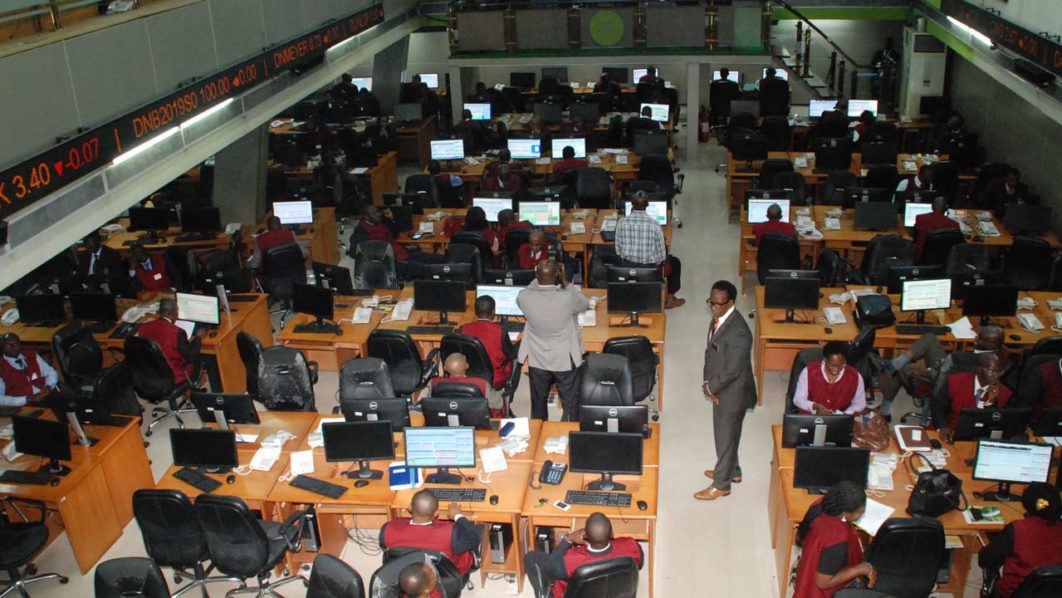
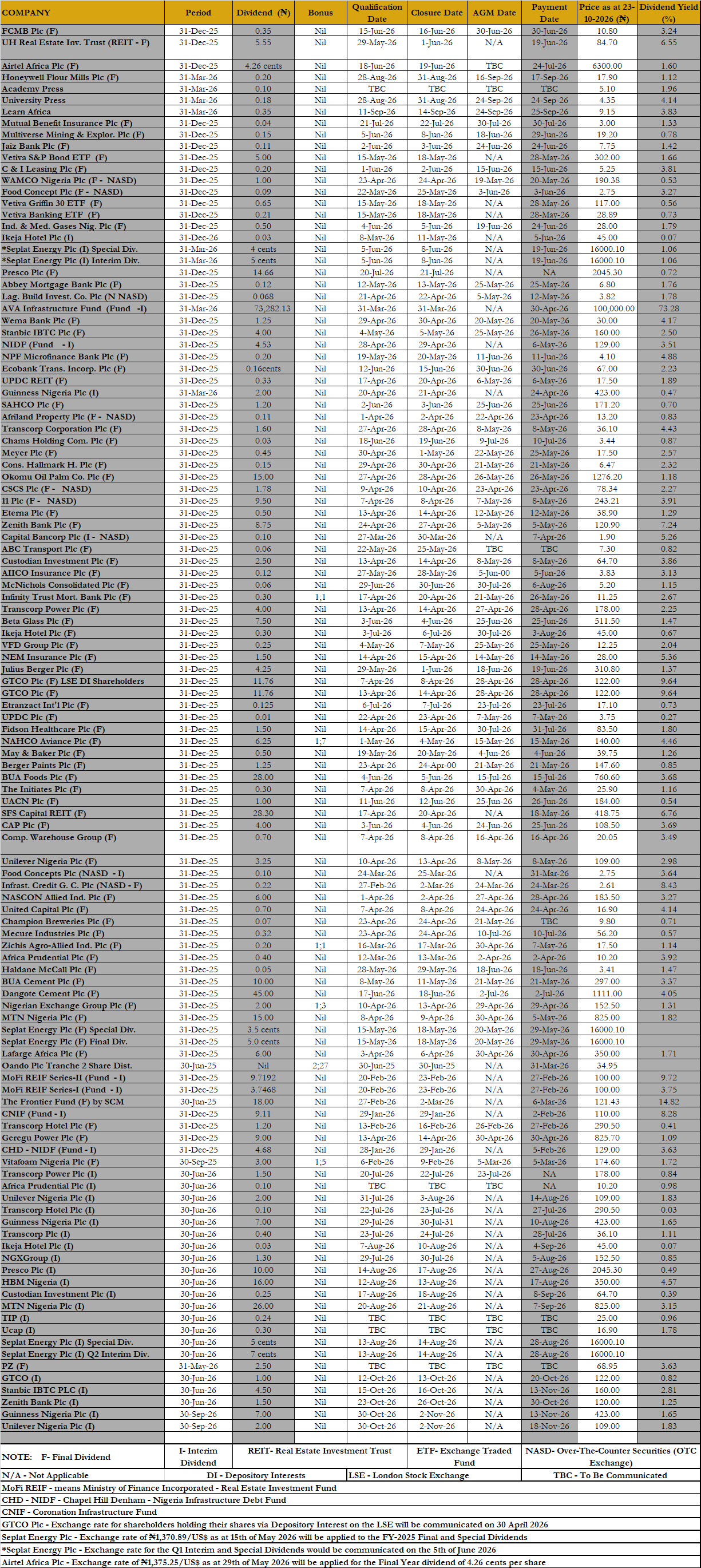
Trading activity strengthened during the session, reflecting increased participation in the equities market despite the mixed performance across individual stocks. A total of 831.55 million shares valued at ₦68.83 billion exchanged hands in 37,744 deals, with FIRSTHOLDCO accounting for the largest share of traded volume.
The concentration of trading activity in FIRSTHOLDCO highlights the significant influence of large-volume transactions on overall market turnover. GTCO and STANBIC also featured prominently in value transactions, reflecting continued institutional and investor interest in selected banking stocks.
However, the distribution of market activity remains an important consideration when assessing the quality of the current recovery. High trading volume does not necessarily translate into broad-based bullish sentiment, particularly when transactions are concentrated in a limited number of equities. The relationship between trading volume, price direction and market breadth will therefore remain important in determining whether the current upward movement can develop into a more sustained rally.
Improved participation across different sectors would provide stronger confirmation of the market’s bullish direction. Conversely, continued concentration in a few heavily traded stocks could leave the benchmark vulnerable to fluctuations in those counters, especially if institutional investors begin to reduce their positions.
The banking sector remains particularly important in this regard, given its significant contribution to market capitalisation, liquidity and overall trading activity. Investors will continue to monitor earnings releases, recapitalisation developments, dividend expectations and the implications of monetary policy decisions for banks’ profitability and valuation.
Technical Analysis and Market Outlook
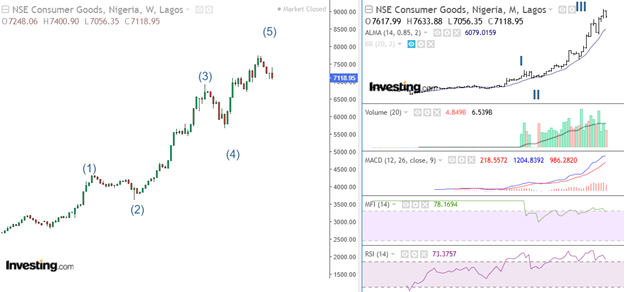
From a technical perspective, the NGX All-Share Index maintained its short-term recovery, extending the gains recorded in the previous session. Its ability to close above the 254,000-point psychological threshold suggests that buyers retain some control of the market, although the limited advance indicates that bullish momentum is yet to gather sufficient strength for a decisive upward breakout.
The current market structure reflects a period of consolidation following the strong appreciation recorded earlier in the year. Such consolidation is not necessarily a sign of an impending reversal, as it may allow the market to absorb profit-taking, establish fresh support levels and create room for another upward movement. However, the sustainability of this pattern will depend on the strength of demand and the extent to which buying interest broadens beyond a handful of influential stocks.
The 255,000-point psychological level represents an immediate resistance area to watch. A decisive break above this threshold, supported by stronger trading activity and improved market breadth, could reinforce bullish sentiment and encourage further accumulation. Such a development may create room for the index to extend its upward movement towards higher resistance levels.
On the downside, the 254,000-point region remains an important near-term support level. Sustained trading above this area would help preserve the current recovery structure. However, a decisive breakdown could expose the market to additional selling pressure, particularly if investors intensify profit-taking in stocks that have recorded substantial gains.
Market breadth will also remain a critical technical indicator. The current imbalance between advancing and declining equities suggests that the broader market is not yet fully aligned with the benchmark’s positive movement. An improvement in the number of advancing stocks would provide stronger confirmation of renewed bullish participation, while persistent negative breadth could signal weakening underlying momentum.
For the next trading session, the outlook remains cautiously positive, although investors should expect continued stock-specific movements and intermittent profit-taking. Demand for fundamentally strong companies, attractive dividend-paying stocks and equities trading below their intrinsic values could provide support. Nevertheless, investors are expected to remain selective as they assess corporate earnings, valuation levels, liquidity conditions and the direction of interest rates.
The domestic macroeconomic environment will also influence investment decisions. Inflation trends, monetary policy expectations, foreign exchange stability and government borrowing requirements remain important factors shaping the relative attractiveness of equities and fixed-income securities. Any improvement in macroeconomic stability could strengthen confidence in the equities market, while renewed pressure on interest rates or inflation could encourage some investors to favour alternative investment instruments.
Overall, the market’s medium-term direction remains supported by its strong year-to-date performance and continued interest in selected fundamentally sound stocks. However, the immediate outlook will depend on whether buying interest can expand across the market and sustain the benchmark above its current support region.
Oil Market
Developments in the international oil market provided another important dimension to the global investment environment on Friday, as crude oil prices advanced amid renewed concerns over potential supply disruptions in the Middle East.
Brent crude futures for December delivery rose by $2.26, representing a 2% increase, to $117.14 per barrel as of 1236 GMT. The more actively traded January contract gained $2.30 to settle at $113.10, while US West Texas Intermediate crude futures advanced by $1.94, or 1.9%, to $103.94 per barrel.
The gains placed both major benchmarks on course for their fourth consecutive monthly advances. Brent was heading towards a monthly increase of approximately 13%, while WTI was poised to record a 15% gain, reflecting sustained concerns about global supply conditions and geopolitical developments.
Market sentiment was increasingly influenced by the possibility of further escalation in tensions between the United States and Iran following the US midterm elections. Some market participants have expressed concerns that Washington could resume military action against Tehran, potentially increasing the risk of disruptions to crude oil production, exports and shipping activities across the region.
These concerns were reinforced by an incident involving a tanker in the Strait of Hormuz. According to the United Kingdom Maritime Trade Operations, the vessel was struck by explosive devices attached to a small boat. The identity of those responsible for the attack had not been established at the time of reporting.
The Strait of Hormuz remains one of the world’s most important energy transportation routes, serving as a major passage for crude oil and petroleum products exported from the Gulf region. Any significant disruption to shipping through the corridor could affect global supply availability, increase freight and insurance costs and trigger additional volatility in international energy markets.
For Nigeria, sustained increases in crude oil prices could provide support for foreign exchange earnings, government revenue and the country’s external position. Higher export receipts could also improve fiscal conditions and strengthen the government’s capacity to meet its financial obligations. However, the extent of these benefits will depend on domestic crude oil production, export volumes, operational efficiency and the management of petroleum revenues.
There are also potential domestic inflationary implications. Although higher oil prices may improve export earnings, they can increase transportation, production and energy-related costs across the global economy. For Nigerian businesses and consumers, the overall impact will depend on domestic fuel pricing, exchange rate movements and the transmission of international energy prices into local production costs.
Consequently, investors will continue to monitor developments in the Middle East and their implications for crude oil prices, global inflation expectations and monetary policy decisions. These factors could influence capital flows, emerging-market sentiment and the performance of equities across different regions.
The NGX All-Share Index advanced by 216.47 points, representing a 0.09% gain, to close at 254,299.49 points from 254,083.02 points recorded in the previous session. Market capitalisation increased by ₦140.55 billion to ₦165.11 trillion, while the year-to-date return improved to 63.42%. Trading activity stood at 831.55 million shares valued at ₦68.83 billion in 37,744 deals, with FIRSTHOLDCO dominating transactions by volume and GTCO and STANBIC featuring prominently in traded value. Market breadth remained negative, with 26 gainers against 35 losers, while 85 equities closed unchanged, reflecting persistent selling pressure despite the benchmark’s positive performance. MAYBAKER and HONYFLOUR topped the gainers’ chart, appreciating by 10.00% each to close at ₦41.80 and ₦22.55 respectively. LIVESTOCK followed with a 9.92% gain to ₦13.30, while ETERNA advanced by 9.90% to ₦42.75 and MULTITREX rose by 9.09% to ₦0.72. On the losing side, CAVERTON declined by 10.00% to ₦3.60, followed by LIVINGTRUST, which shed 9.94% to ₦2.90. VERITASKAP lost 9.91% to close at ₦1.00, while UPDC and ZICHIS declined by 9.46% each to ₦3.35 and ₦16.66 respectively.