
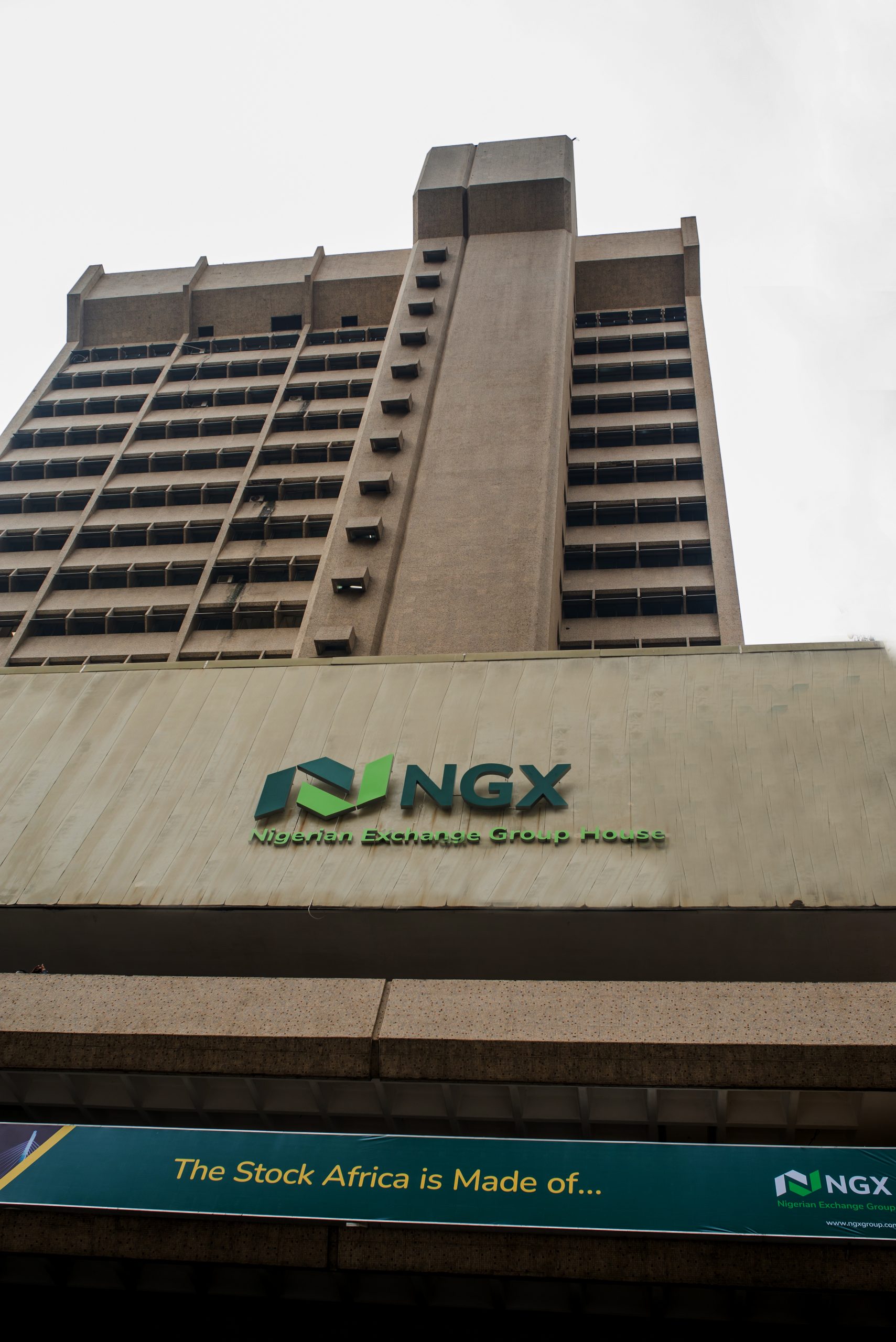
Market Update For October 28, 2026
The Nigerian equities market halted its three-session winning streak on Wednesday, October 28, 2026, on renewed profit-taking in heavyweight stocks which dragged the benchmark Nigerian Exchange’s All-Share index lower despite continued buying interest in selected counters. Selling pressure across the banking, industrial and energy sectors weighed on the overall performance, reflecting investors’ growing inclination to secure profits following recent market gains.
The session highlighted the mixed sentiment shaping the Nigerian Exchange (NGX), as losses in major stocks outweighed advances elsewhere. Although the benchmark declined, activity in selected equities suggested that investors continued to reposition their portfolios in search of attractive opportunities.
The pullback also underscored the influence of heavyweight stocks on the market’s direction. With the NGX having delivered substantial gains year to date, some investors appear increasingly cautious about extending their exposure at elevated price levels, while others continue to identify opportunities in stocks with favourable prospects.
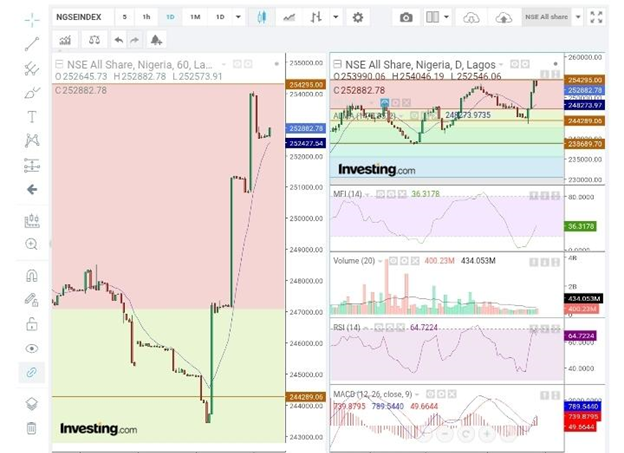
The NGXASI lost 0.44%, after shedding 1,107.28 basis points to close at 252,882.78bps, compared with 253,990.06bps recorded in the previous session. The decline interrupted the market’s three-session advance and reflected renewed selling pressure in key counters.
Similarly, market capitalisation fell by ₦718.95 billion to ₦164.19 trillion, while the year-to-date return moderated to 62.51%. Despite Wednesday’s decline, the market maintained a strong positive performance for the year, suggesting that the latest pullback has not erased the substantial gains recorded over previous months.
The downturn was driven by losses across prominent stocks in the financial services, industrial and energy segments. The weakness in these counters highlighted the impact of profit-taking on the benchmark, particularly where large-cap stocks carry significant influence over overall market performance.
In the banking sector, selling pressure affected selected major lenders, reflecting a more cautious approach among investors following recent price movements. The financial services segment remains an important driver of the NGX because of its large representation in market capitalisation and trading activity.
Industrial stocks also contributed to the negative sentiment, while weakness in selected energy-related counters added to the pressure. These movements suggest that investors were adjusting positions across different sectors rather than responding to a single market-wide catalyst.
Nevertheless, the decline was not uniform across the exchange. Several stocks recorded notable advances, indicating that buying interest persisted in selected counters despite the weaker benchmark performance. This divergence reflects a market increasingly characterised by stock selection, where individual company prospects and valuation considerations influence investment decisions.
Profit-taking remained a key feature of Wednesday’s session as investors reassessed positions following the recent rally. When equity prices rise over consecutive sessions, some market participants may choose to realise gains, particularly where they believe prices have advanced faster than underlying fundamentals.
Such activity can temporarily interrupt an upward trend without necessarily signalling a sustained reversal. However, continued selling in heavyweight stocks may place additional pressure on the benchmark if fresh demand fails to emerge.
The market’s strong year-to-date return provides important context for the current movement. Investors who entered positions earlier in the year may be inclined to secure gains, while new participants may be more selective about entry prices and the potential for further appreciation.
This dynamic could result in increased volatility as buyers and sellers reassess valuations. Stocks with stronger earnings prospects, sustainable dividend policies and reasonable valuations may continue to attract attention, while counters perceived as expensive or vulnerable to weaker earnings expectations could face additional pressure.
The immediate challenge for the market is to absorb selling pressure without losing the momentum established during the preceding sessions. A return of demand in heavyweight stocks would help stabilise the index, while continued profit-taking could extend the period of consolidation.
Trading activity remained substantial, although the supplied market reports contained discrepancies in turnover figures. One report recorded 404.11 million shares valued at ₦27.91 billion across 39,012 deals, while another reported 400.23 million shares worth ₦27.49 billion in 38,967 deals.
UBA recorded the highest trading volume, with 38.48 million shares traded, representing approximately 9.52% of the reported total. ACCESSCORP and ZENITHBANK followed, accounting for 7.61% and 7.57% of trading volume, respectively.
The concentration of trading activity in these financial services stocks underscores the importance of the banking sector to market liquidity. These counters often attract considerable attention because of their market size, trading availability and sensitivity to earnings expectations, interest rates and dividend prospects.
DANGCEM led trading by value, with transactions worth ₦4.86 billion, accounting for 17.41% of the reported total. ZENITHBANK and GTCO also featured among the most actively traded stocks by transaction value.
The activity in DANGCEM suggests that investors committed substantial funds to the stock during the session. However, transaction value captures both buying and selling, meaning that high turnover alone does not establish the prevailing direction of investor sentiment.
Similarly, strong trading volume in UBA, ACCESSCORP and ZENITHBANK indicates active participation but does not guarantee further price appreciation. Investors will need to monitor the relationship between turnover and price movements to determine whether demand is sufficiently strong to support a sustained recovery.
REGALINS also fell below its reported 52-week low, declining to ₦0.68 from ₦0.70. A break below a previous low can indicate persistent selling pressure, although further price and volume data would be required to assess the significance of the movement.
Oil Market
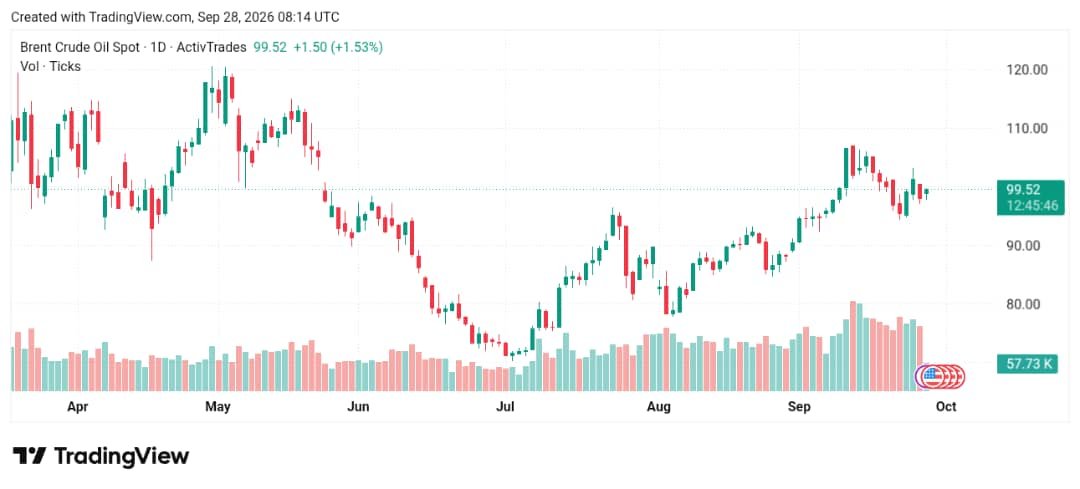
Brent crude futures rose by $1.81, or 1.6%, to $115.69 per barrel, while US West Texas Intermediate gained $2.52, or 2.5%, to $102.42 per barrel. The increases followed continued fighting in Yemen and an attack on a Saudi Arabian refinery, renewing concerns about possible disruptions to regional oil supplies.
The latest advance pushed Brent into overbought territory for the fourth time in five sessions, highlighting the intensity of recent price movements. Continued hostilities and risks to energy infrastructure could keep oil prices volatile as traders assess the potential impact on global supply.
For Nigeria, higher crude prices could support export earnings and government revenue, provided domestic production remains favourable. Increased oil receipts may strengthen the country’s external position and provide additional fiscal resources, although the benefits will depend on production volumes, operational costs and revenue management.
The implications for listed companies are more varied. Energy-related stocks may benefit from improved revenue expectations, depending on their exposure to crude prices and their operating structures. Conversely, higher oil prices can increase transportation, manufacturing and distribution costs for businesses that rely heavily on fuel and energy inputs.
Consequently, rising crude prices do not automatically translate into broad-based gains on the NGX. Their influence on investor sentiment will depend on how developments in the energy market interact with domestic economic conditions, corporate earnings and expectations for future profitability.
Investors will therefore need to consider both the potential benefits of higher oil prices for Nigeria’s external earnings and the risks associated with increased operating costs and geopolitical uncertainty.
Technical Analysis
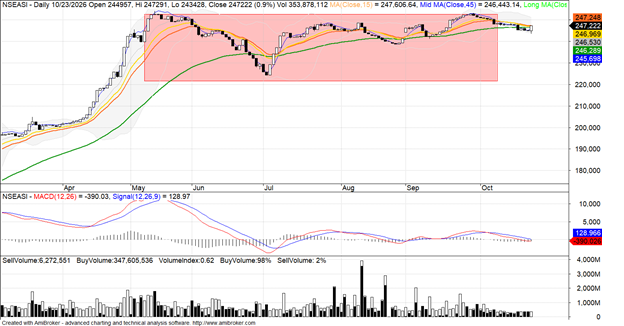
The ASI’s 0.44% decline marked a pause in the market’s three-session advance, suggesting that selling pressure has resurfaced following the recent gains. The retreat from Tuesday’s closing level of 253,990.06 points indicates that the market struggled to sustain its upward momentum during the session.
From a short-term technical perspective, the next direction will depend on whether buyers return to support the index or sellers maintain control. A recovery above the previous close would indicate improving momentum, particularly if accompanied by stronger trading activity and wider participation across major stocks.
Conversely, further declines could extend the consolidation phase and encourage additional profit-taking. The performance of heavyweight banking, industrial and energy stocks will remain important, as sustained weakness in these counters could continue to weigh on the benchmark.
Market breadth will also be a useful indicator. A recovery supported by a larger number of advancing stocks would provide stronger evidence of broad-based demand than an index rebound driven by only a few heavyweight equities.
Trading volume will provide further insight into the strength of any recovery. A sustained price advance accompanied by healthy turnover could signal renewed participation, while a rebound on relatively weak activity may require further confirmation.
However, a definitive assessment of support, resistance and momentum requires the latest price chart and technical indicators, including moving averages and the Relative Strength Index. Wednesday’s figures confirm a daily pullback but are insufficient to establish a major trend reversal.
The market’s substantial year-to-date return also provides important context. Although the latest session was negative, the index remained significantly higher than its level at the beginning of the year. The immediate question is whether the recent rally can regain momentum or whether investors will continue to reduce exposure to stocks that have appreciated considerably.
Market Outlook
The near-term outlook remains cautiously mixed as investors balance the potential for further gains against the risk of continued profit-taking. Renewed demand for heavyweight equities, particularly in the banking, industrial and energy sectors, will be important in determining the market’s next direction.
Corporate earnings and valuation considerations are likely to influence investment decisions. Companies demonstrating resilient earnings, sound balance sheets and sustainable dividend prospects may continue to attract interest, particularly where share prices offer reasonable value relative to their fundamentals.
Investors will also monitor domestic monetary conditions, inflation trends and broader economic developments. Changes in interest rates and fixed-income yields can influence the relative attractiveness of equities, particularly for investors comparing potential capital gains and dividend income with returns from government securities.
Global developments will remain relevant. Sustained increases in crude prices could improve sentiment towards selected energy stocks and strengthen expectations for Nigeria’s external earnings. However, persistent geopolitical tensions may increase uncertainty and contribute to volatility across financial markets.
In this environment, investors should distinguish between temporary price corrections and changes in the underlying fundamentals of individual companies. A decline in a share price does not automatically make the stock attractive, just as a strong advance does not guarantee further appreciation.
The immediate technical signals to monitor include the index’s ability to recover above its previous close, the breadth of market participation and the performance of heavyweight stocks. A sustained recovery across these measures would strengthen the outlook, while continued weakness could prolong consolidation.
Overall, Wednesday’s session represents a setback to the market’s recent rally, but it does not independently confirm a lasting reversal. Subsequent sessions should provide clearer evidence of whether investors are preparing for another upward move or adopting a more cautious stance following the market’s substantial year-to-date gains.
The NGX All-Share Index (ASI) declined by 0.44%, shedding 1,107.28 points to close at 252,882.78, while market capitalisation fell by ₦718.95 billion to ₦164.19 trillion, moderating the year-to-date return to 62.51%. Trading activity was reported at 400.23 million shares valued at ₦27.49 billion across 38,967 deals, although an alternative report recorded 404.11 million shares worth ₦27.91 billion in 39,012 deals. Market breadth figures were inconsistent, with one report recording 30 gainers against 25 losers, while another showed 26 advancers, 36 decliners and 84 unchanged stocks. Market performance was weighed down by profit-taking in FIRSTHOLDCO, HONYFLOUR, GTCO, OANDO, BUACEMENT, ZENITHBANK and NGXGROUP. UBA led trading by volume with 38.48 million shares, while DANGCEM recorded the highest transaction value at ₦4.86 billion. The top gainers were SOVRENINS (+10.00% to ₦1.98), UPDCREIT (+9.61% to ₦21.10), AUSTINLAZ (+9.21% to ₦2.61), UBA (+6.83% to ₦43.00) and CMFC (+5.71% to ₦3.33), while the top losers were FIRSTHOLDCO (-10.00% to ₦139.50), TRIPPLEG (-5.51% to ₦2.40), FTGINSURE (-4.76% to ₦1.60), ROYALEX (-4.76% to ₦1.00) and ETRANZACT (-4.76% to ₦16.00).