
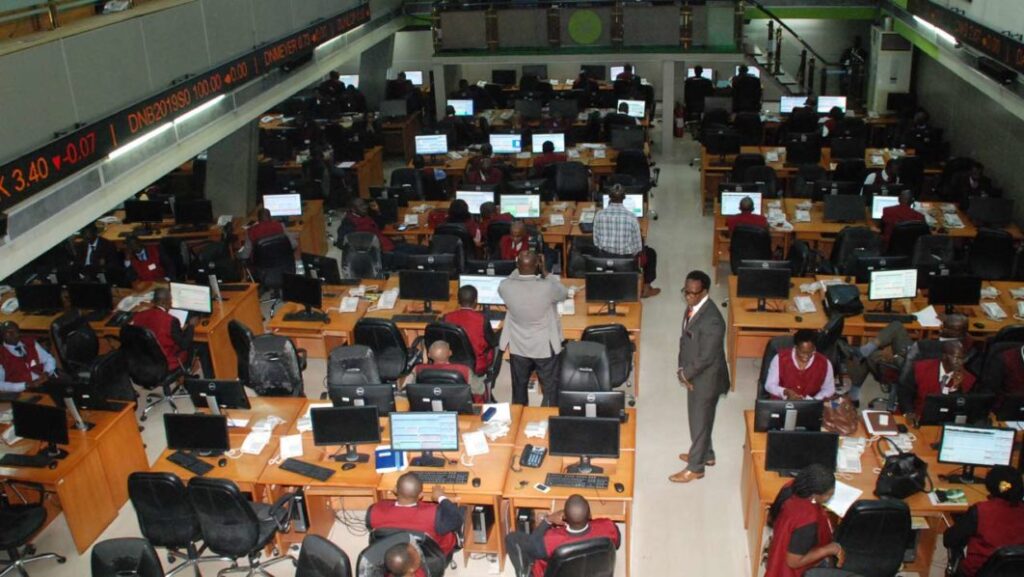
Market Update For October 29, 2026
The Nigerian equities market regained positive momentum on Thursday, October 29, 2026, as renewed demand for heavyweight stocks lifted the benchmark index and reversed part of the previous session’s losses. The recovery was supported by gains in selected industrial, financial services and energy stocks, although persistent selling pressure in other equities highlighted the market’s uneven performance.
The rebound reflected improved buying interest in large-cap stocks, with DANGCEM, ETI, ACCESSCORP and OANDO among the notable contributors to the positive close. However, the decline in FIRSTHOLDCO and weakness across several other stocks suggested that investors remained cautious, balancing opportunities for further capital appreciation against the risk of profit-taking after the market’s substantial gains this year.
The benchmark NGX All-Share Index (ASI) advanced by 1,200.24 points, representing a 0.47% gain, to close at 254,083.02 points from 252,882.78 points recorded in the previous trading session. The advance restored some of the market’s lost ground and reinforced the influence of heavyweight stocks in determining the direction of the broader market.
The positive performance also lifted the market’s year-to-date return to 63.28%, reflecting the significant appreciation recorded across the Nigerian equities market since the beginning of the year. Despite intermittent corrections and stock-specific selling pressure, the market has continued to attract buying interest, supported by investors seeking capital gains and opportunities to reposition their portfolios.
Market capitalisation increased by ₦779.31 billion to ₦164.97 trillion, indicating that Thursday’s recovery translated into a substantial increase in the aggregate value of listed equities. The improvement in market value was largely consistent with the gains recorded in selected large-cap stocks, which carry considerable influence over the benchmark index.
Nevertheless, the market’s performance should be viewed within the context of its broader trading pattern. While the ASI advanced, the relatively narrow margin between advancing and declining stocks suggested that the recovery was not sufficiently broad-based to establish a decisive shift in investor sentiment. Consequently, the sustainability of the rebound will depend on whether buying interest extends beyond a limited group of heavyweight equities in subsequent sessions.
Buying interest was evident across selected industrial, financial services and energy stocks, helping to underpin the market’s positive close. DANGCEM emerged as one of the most influential gainers among the heavyweight equities, advancing by 5.82% and reaching a new 52-week high of ₦1,420.00.
The cement manufacturer’s performance was particularly significant given its influence on the industrial sector and its contribution to the overall direction of the market. The new high suggests that demand for the stock remained strong during the session, although its ability to sustain the advance will depend on continued investor interest and expectations surrounding the company’s earnings and operating environment.
ETI also supported the market’s recovery, gaining 2.90%. The advance added to the positive performance of selected financial services stocks and helped reinforce the improvement in the benchmark index. ACCESSCORP rose by 1.90%, while NGXGROUP appreciated by 1.85%, reflecting additional buying interest within the financial services and capital market segments.
Elsewhere, TIP advanced by 1.96%, OANDO gained 1.85%, and PZ appreciated by 1.55%. The gains across these stocks indicated that the recovery was not limited entirely to one sector, although the extent of participation varied among individual equities.
The performance of these stocks highlights the importance of selective buying in the current market environment. Investors appear willing to maintain exposure to equities with perceived growth potential, but the uneven price movements suggest that market participants remain sensitive to valuation, earnings expectations and the prospect of further corrections.
For the broader market, sustained gains in heavyweight stocks could continue to support the ASI. However, a more convincing recovery would require stronger participation from other listed companies, particularly where valuations and earnings prospects support additional upside.
Market breadth closed positively on Thursday, with 30 stocks advancing against 27 decliners. This represented an improvement from the previous session, when 26 stocks gained while 36 recorded losses.
The shift in breadth suggests that buying interest improved modestly, with advancing stocks narrowly outnumbering declining equities. However, the relatively small difference between the two groups indicates that the recovery remained fragile, as selling pressure continued to affect a considerable number of listed companies.
Positive market breadth is generally an encouraging signal because it indicates that price appreciation is spreading across more stocks rather than being driven solely by a few large-cap companies. In Thursday’s session, however, the margin was too narrow to confirm a broad-based improvement in market sentiment.
The continued weakness in selected equities also suggests that investors are differentiating between stocks according to their individual prospects. While some companies attracted renewed demand, others remained exposed to profit-taking and persistent selling pressure.
This divergence is important for investors assessing the market’s direction. A rising benchmark index can conceal weakness in individual stocks, particularly when gains in a few heavyweight companies outweigh losses elsewhere. As a result, market breadth should remain a key indicator to watch alongside the ASI.
A sustained improvement in the number of advancing stocks would strengthen the case for a more durable recovery. Conversely, a reversal in breadth, particularly if accompanied by a decline in the benchmark index, could signal that sellers are regaining control.
Trading activity was concentrated in selected equities, with FIRSTHOLDCO, GTCO, UBA and DANGCEM featuring prominently in the available market reports. However, the supplied turnover figures differ materially and require reconciliation before a definitive assessment of the session’s overall liquidity can be made.
One report recorded 654.28 million shares traded, valued at ₦57.36 billion, representing a 61.90% increase in volume. Within that dataset, FIRSTHOLDCO accounted for 343.80 million shares, representing 52.55% of total volume, while its transaction value stood at ₦34.78 billion, equivalent to 60.63% of the reported market value.
A separate report placed total trading volume at 339.16 million shares, valued at ₦25.65 billion across 35,773 deals. Under this account, GTCO recorded the highest trading volume, while DANGCEM led in value traded.
The difference between the two datasets is substantial, particularly in reported volume and transaction value. The figures should therefore be checked against the official Nigerian Exchange daily market report before publication. Until that verification is completed, neither set should be treated as a definitive representation of Thursday’s aggregate trading activity.
Nevertheless, the available figures indicate that several equities attracted significant trading interest. FIRSTHOLDCO’s reported dominance in one dataset is particularly noteworthy because the stock also recorded a sharp price decline. Such a combination may indicate heavy selling activity, although turnover figures alone cannot establish the identity of the participants or the precise reasons behind the transactions.
GTCO and UBA also featured prominently in the reported volume statistics, while DANGCEM and GTCO were identified among the leading stocks by value traded in the available reports. This concentration of activity highlights the importance of large and actively traded equities in shaping market liquidity.
From an investment perspective, the relationship between price movement and trading activity remains important. Rising prices accompanied by strong turnover may indicate sustained demand, while declining prices on substantial volume may suggest increased selling pressure. However, these signals should be interpreted alongside company fundamentals, valuation and broader market conditions.
For the next session, investors should monitor whether buying interest becomes more evenly distributed across listed stocks. Stronger participation combined with verified increases in turnover would provide a firmer basis for concluding that the market’s recovery is gaining strength.
Despite the benchmark index’s advance, several equities remained under pressure, illustrating the divergence between the broader market and individual stock performance.
The reported weakness in FIRSTHOLDCO was particularly notable, given the stock’s position among the most actively traded equities in one of the available datasets. Its sharp decline suggests that selling pressure remained significant, even as the overall market moved higher.
LIVESTOCK, TANTALIZER and CILEASING also recorded substantial losses, while REGALINS continued to face downward pressure. The weakness in these stocks contributed to the number of decliners and limited the improvement in market breadth.
The session also produced notable movements relative to the 52-week trading ranges of selected equities. DANGCEM reached a new high of ₦1,420.00, while REGALINS and ELLAHLAKES traded below their respective 52-week lows at ₦0.63 and ₦7.00. CHAMPION also touched a new 52-week low of ₦9.00.
Such movements provide useful information about the prevailing direction of individual stocks, although a new high or low does not, on its own, determine the next price movement. Investors should consider the underlying reasons for the move, including earnings performance, company announcements, valuation and trading liquidity.
Stocks reaching new highs may continue to attract momentum-driven buying, but they can also become vulnerable to profit-taking if investors begin to lock in gains. Similarly, equities trading near or below their 52-week lows may attract bargain hunters, but declining prices can persist where underlying fundamentals or investor sentiment remain weak.
The contrast between DANGCEM’s new high and the weakness recorded by selected other equities reinforces the need for stock-specific analysis. Investors should avoid assuming that the positive movement in the ASI automatically translates into attractive opportunities across the entire market.
Technical Analysis
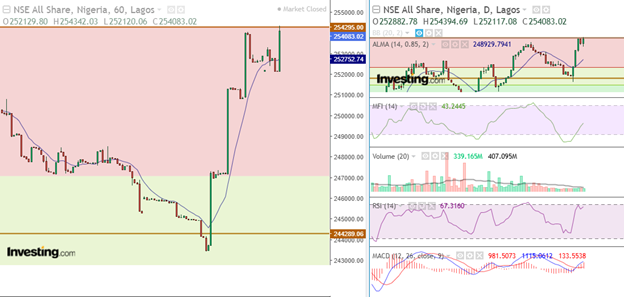
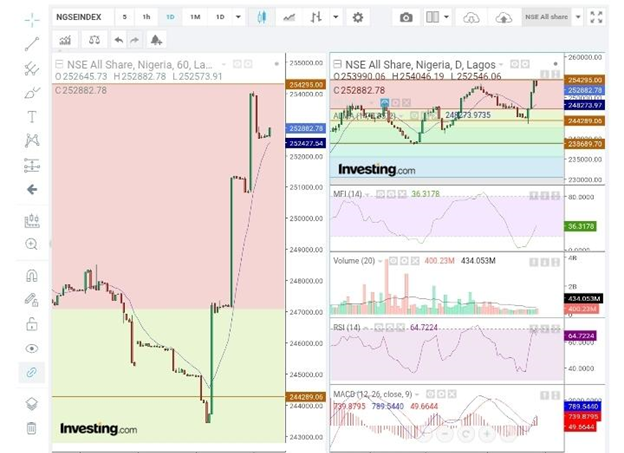
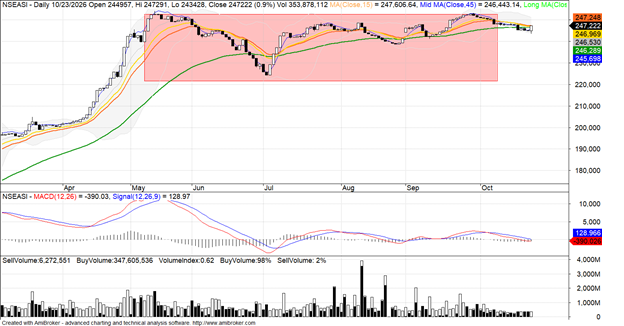
From a technical perspective, Thursday’s advance represents a positive short-term development, as the ASI recovered by 0.47% to close at 254,083.02 points. The improvement indicates that buying interest returned after the previous session’s weakness, helping the benchmark index regain upward momentum.
However, the market remains at a level where further confirmation is needed before a stronger bullish trend can be established. The immediate focus is whether the ASI can sustain its advance and move decisively above the 255,000-point psychological threshold.
A sustained break above 255,000 points could strengthen positive sentiment and create room for further appreciation, particularly if the move is supported by stronger market breadth and improved trading activity. Such a development would suggest that buyers are willing to absorb selling pressure at higher price levels.
Conversely, failure to maintain the current upward momentum could result in consolidation around the prevailing levels. The 250,000-point region remains an important psychological support reference to monitor. A sustained decline towards or below this level could increase the risk of further selling pressure and weaken the short-term technical outlook.
The relationship between the index’s movement and market breadth will be particularly important. If the ASI rises while the number of declining stocks increases, the recovery could remain concentrated in a few heavyweight companies. Such a pattern would make the market more vulnerable to reversals if those stocks begin to lose momentum.
On the other hand, a sustained increase in advancing stocks, supported by gains across several sectors, would provide stronger confirmation of improving market sentiment. This would indicate that the recovery is broadening rather than relying exclusively on a handful of influential equities.
Trading turnover is another important consideration. Stronger buying interest accompanied by rising turnover would support the view that the market is attracting fresh demand. However, where the index advances on limited participation, the rally could struggle to maintain momentum.
Given the conflicting turnover figures available for Thursday’s session, a definitive assessment of volume confirmation should be deferred until the official data have been verified. For now, the index’s positive close and improving breadth offer encouraging signals, but neither is sufficient on its own to establish a sustained bullish reversal.
Oil Market
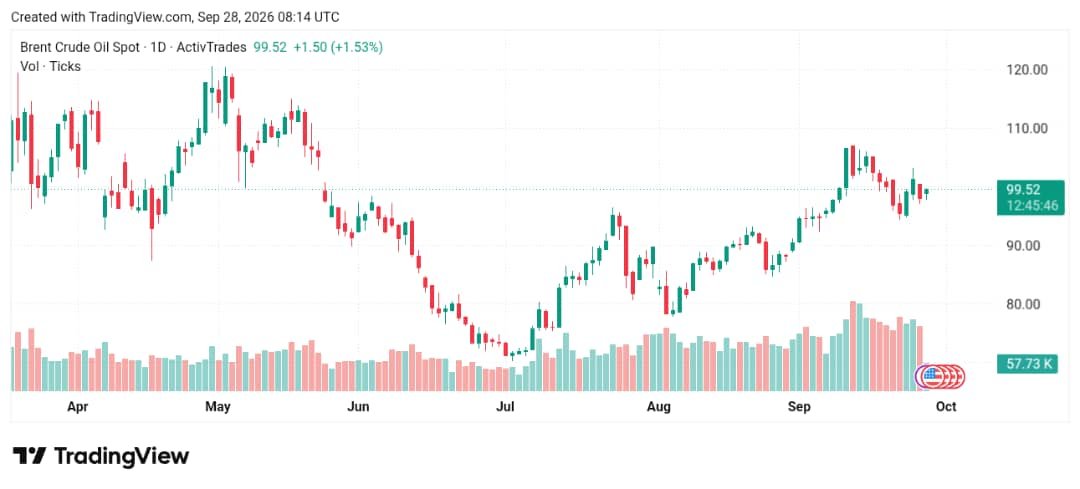
Brent crude futures fell by $1.55, or 1.34%, to $113.77 per barrel, while US West Texas Intermediate declined by $2.00, or 1.95%, to $100.78. The declines followed gains in the previous session, when Brent rose by 1.3% and WTI advanced by 3%.
The retreat in prices reflected a reassessment of geopolitical risks as diplomatic efforts sought to revive peace negotiations. However, the outlook for oil remains sensitive to developments in the region, and renewed escalation could quickly alter market expectations.
For Nigeria, movements in crude oil prices have implications for government revenue, foreign exchange supply and broader economic expectations. Higher oil prices can support public revenue and external balances, although their overall effect depends on production levels, domestic fuel costs and other economic conditions.
Lower oil prices may ease some cost pressures but could also weaken revenue expectations if the decline is sustained. The effect on listed companies will vary according to their exposure to energy prices, foreign exchange movements, production costs and domestic demand.
Investors should therefore consider international oil movements alongside domestic economic indicators and company-specific developments rather than treating changes in crude prices as a uniform signal for the entire equities market.
More broadly, expectations regarding interest rates, inflation, corporate earnings and foreign exchange conditions may influence portfolio allocation decisions. Where investors anticipate improved corporate profitability and more favourable financing conditions, equities may continue to attract demand. Conversely, uncertainty over costs, earnings and valuations could encourage profit-taking in stocks that have recorded substantial price appreciation.
Outlook
The near-term outlook for the Nigerian equities market remains cautiously positive following Thursday’s rebound. The advance in the ASI, increase in market capitalisation and improvement in market breadth indicate that buying interest returned to selected equities after the previous session’s weakness.
However, the relatively narrow margin between gainers and losers suggests that investor confidence remains uneven. The next phase of the market’s performance will depend on whether buying interest broadens across sectors and whether the benchmark index can sustain its upward movement.
Large-cap stocks are likely to remain important drivers of the ASI, given their influence on market capitalisation and index performance. Continued strength in DANGCEM and other heavyweight equities could provide additional support, although investors should remain alert to the possibility of profit-taking after strong price advances.
The performance of financial services stocks will also warrant attention, particularly as investors assess the relative attractiveness of banking and other financial equities. Meanwhile, individual stocks experiencing persistent selling pressure may continue to diverge from the broader market trend.
From a technical standpoint, the 255,000-point region represents the immediate level to watch, while 250,000 points remains an important downside reference. A sustained break above the former, supported by stronger market breadth and verified turnover data, would strengthen the case for further gains. Failure to maintain the rebound could instead leave the market vulnerable to consolidation.
Investors should maintain a disciplined approach, focusing on company fundamentals, earnings prospects, valuations and liquidity rather than relying exclusively on short-term price movements. The distinction between broad market performance and individual stock performance remains particularly important in a market where heavyweight equities can influence the benchmark disproportionately.
Overall, Thursday’s recovery provides an encouraging signal, but the strength of the next upward move will depend on sustained demand, broader market participation and the ability of the ASI to hold above key support levels. Until these conditions become clearer, a selective and cautious approach remains appropriate.
At the close of trading on Thursday, October 29, 2026, the NGX All-Share Index gained 1,200.24 points, or 0.47%, to settle at 254,083.02 points, while market capitalisation rose by ₦779.31 billion to ₦164.97 trillion. The market’s year-to-date return increased to 63.28%. Trading activity figures remained inconsistent across the available reports, with one recording 654.28 million shares valued at ₦57.36 billion and another reporting 339.16 million shares worth ₦25.65 billion across 35,773 deals, making verification against official NGX statistics necessary. Market breadth closed positive, with 30 gainers against 27 losers. Key market movers included DANGCEM (+5.82%), ETI (+2.90%), TIP (+1.96%), ACCESSCORP (+1.90%), NGXGROUP (+1.85%), OANDO (+1.85%) and PZ (+1.55%), while DANGCEM reached a new 52-week high of ₦1,420.00. Among the top gainers, ETRANZACT advanced by 10.00% to ₦17.60, SOVRENINS rose 9.60% to ₦2.17, FTGINSURE gained 9.38% to ₦1.75, MCNICHOLS added 9.18% to ₦5.35, and ZICHIS appreciated by 8.24% to ₦18.40. On the losers’ chart, FIRSTHOLDCO fell 10.00% to ₦125.55, LIVESTOCK declined 9.70% to ₦12.10, TANTALIZER shed 8.40% to ₦3.60, CILEASING lost 7.41% to ₦5.00, and REGALINS dropped 7.35% to ₦0.63.