
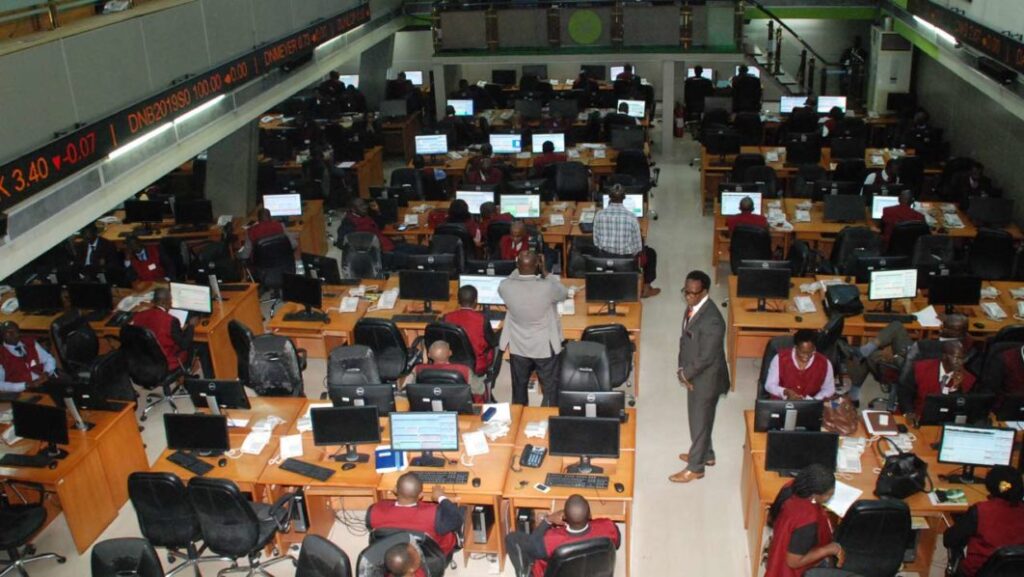
Market Update For August 17, 2026
The Nigerian equities market started the third trading week of August on a negative note on Monday, August 17, 2026, as renewed selling pressure in selected large-cap stocks extended the market’s recent decline.
Investor sentiment remained cautious throughout the session, with profit-taking concentrated in several heavyweight counters. The losses in NEM, NGXGROUP, PZ, TIP and STANBIC were particularly significant, while WEMABANK, UACN, ACCESSCORP, UBA, ZENITHBANK and NB also closed lower. The performance of these major stocks had a noticeable impact on the benchmark index and outweighed gains recorded across some smaller and mid-cap counters.
The session marked another period of consolidation for the domestic market following its strong performance earlier in the year. With the NGX still posting a substantial year-to-date return, investors appear increasingly willing to secure gains, particularly in stocks that have experienced significant price appreciation. This has created additional volatility and widened the gap between individual stock performances.
Market breadth further reflected the cautious mood, as decliners significantly outnumbered gainers. Although a number of stocks recorded strong advances, the broader market remained under selling pressure, suggesting that investors were generally more inclined to reduce exposure than accumulate positions.
The weakness was not entirely uniform, however. LEGENDINT emerged as the strongest performer of the day, gaining 10.00%, while TRANSEXPR, AVACAP, THOMASWY and DANGSUGAR also posted notable gains. These advances indicate that buying interest remains present in selected counters, particularly among stocks attracting renewed speculative or value-driven demand.
Trading activity remained relatively strong despite the weaker market direction. A total of 1.33 billion shares changed hands in 45,494 deals, with the transactions valued at ₦22.93 billion. LASACO dominated activity by volume, accounting for 730.69 million shares, representing more than half of total market volume. The heavy activity in LASACO significantly influenced the overall volume figure and highlighted the concentration of trading interest in selected counters.
MTNN led the market by transaction value, recording ₦7.30 billion in trades. FIRSTHOLDCO and ZENITHBANK also featured prominently among the most actively traded stocks by value, reflecting continued investor interest in major listed companies despite the broader market weakness.
The combination of high trading activity and a declining index suggests that sellers remained dominant, with investors actively repositioning portfolios rather than exiting the market completely. This could result in increased stock-specific opportunities as the market continues to search for direction.
The ongoing correction also comes against the backdrop of strong gains recorded by the Nigerian market in 2026. The elevated YTD return provides room for profit-taking, particularly among investors who entered positions at lower levels. As a result, the market may continue to experience periods of consolidation before a clearer directional trend emerges.
Technical Analysis, Outlook
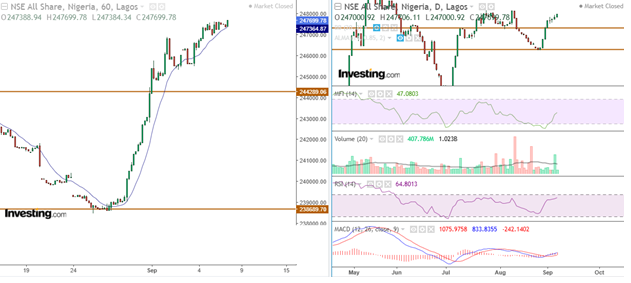
From a technical perspective, the NGX All-Share Index remains in a short-term corrective phase. The index is currently hovering around the 242,000–243,000-point region, which has become an important support area following the recent decline.
A sustained break below the 242,000-point level could increase selling pressure and expose the index to additional downside in the short term. On the other hand, a recovery above the 245,000-point region would improve market sentiment and could encourage renewed buying interest.
The negative breadth remains an important concern because it indicates that the weakness extends beyond a few heavyweight stocks. For a sustainable recovery, investors would need to see broader participation from both large-cap and mid-cap counters.
In the near term, the market is likely to remain volatile as investors balance profit-taking with bargain hunting. Stocks with strong earnings prospects, attractive valuations and positive corporate developments could continue to attract interest even if the broader index remains weak.
The market may therefore remain highly selective, with investors focusing on company-specific fundamentals rather than taking broad positions across the market. A return of institutional buying, particularly in major banking and consumer stocks, could provide support for the index, while continued selling in large-cap counters could prolong the correction.
Oil Market
The international oil market provided a mixed backdrop for Nigerian assets on Monday, with crude prices moving higher as geopolitical tensions surrounding Iran continued to raise concerns about potential disruptions to global supply.
Brent crude rose 43 cents, or 0.5%, to $88.95 a barrel, after reaching an intraday high of $89.68. West Texas Intermediate crude also gained 25 cents, or 0.3%, to $82.65 a barrel. Both benchmarks had recorded gains of more than 5% in the previous week following attacks on tankers operated by Abu Dhabi National Oil Company and an incident involving Saudi Aramco infrastructure.
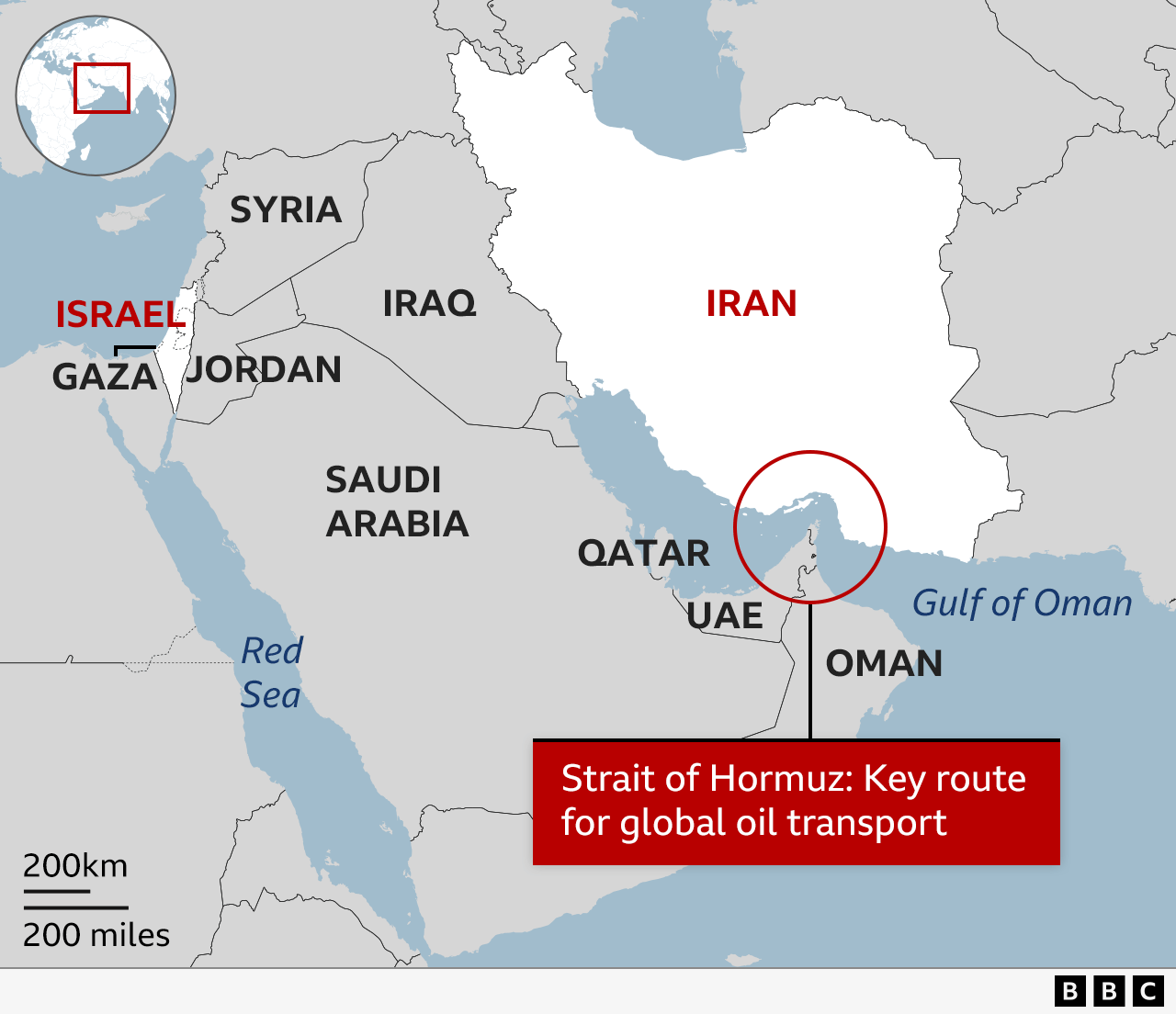
The market remains particularly sensitive to developments around the Strait of Hormuz, one of the world’s most important energy shipping routes. Any sustained disruption to crude flows through the waterway could significantly tighten global supply and push prices higher.
For now, however, the absence of a major and prolonged supply outage has limited the upside in oil prices. Traders are effectively weighing two opposing scenarios: a deeper escalation that disrupts crude shipments and sends prices higher, or a diplomatic breakthrough that reduces geopolitical risk and triggers a sharp decline in prices.
For Nigeria, higher oil prices could provide a positive boost to export earnings, foreign exchange liquidity and government revenues, particularly if elevated prices are sustained. The benefit would depend, however, on actual crude production, export volumes and the stability of global oil flows.
At the same time, a prolonged oil price surge could have wider implications for global inflation and interest-rate expectations. Higher energy costs could make inflation more persistent in major economies, potentially delaying monetary easing and keeping global financial conditions tighter. Such an environment could create additional volatility for emerging-market equities, including the NGX.
The domestic market therefore faces a combination of local and external factors. While stronger oil prices could support Nigeria’s macroeconomic position, higher global inflation and tighter financial conditions could offset some of the benefits. Investors are likely to continue monitoring developments in the oil market alongside corporate earnings, monetary policy and foreign exchange conditions.
Market Summary: The NGX All-Share Index (ASI) closed at 242,454.65 points, down 0.07% from the previous session. Market capitalisation declined by approximately ₦106.24 billion, while the market’s YTD performance moderated to 55.81%. Total trading volume stood at 1.33 billion shares, while traded value reached ₦22.93 billion across 45,494 deals. Market breadth remained negative, with 19 gainers against 36 losers. Market movers were led by LASACO, which recorded the highest volume at 730.69 million shares, while MTNN led by value with ₦7.30 billion. Top gainers were LEGENDINT (+10.00% to ₦4.40), TRANSEXPR (+9.86% to ₦3.12), AVACAP (+9.72% to ₦7.90), THOMASWY (+9.09% to ₦3.00) and DANGSUGAR (+8.60% to ₦70.10). Top losers were TANTALIZER (-10.00% to ₦3.69), RTBRISCOE (-9.91% to ₦10.45), FTGINSURE (-9.89% to ₦2.37), MCNICHOLS (-9.62% to ₦4.70) and UPL (-9.35% to ₦4.85).