
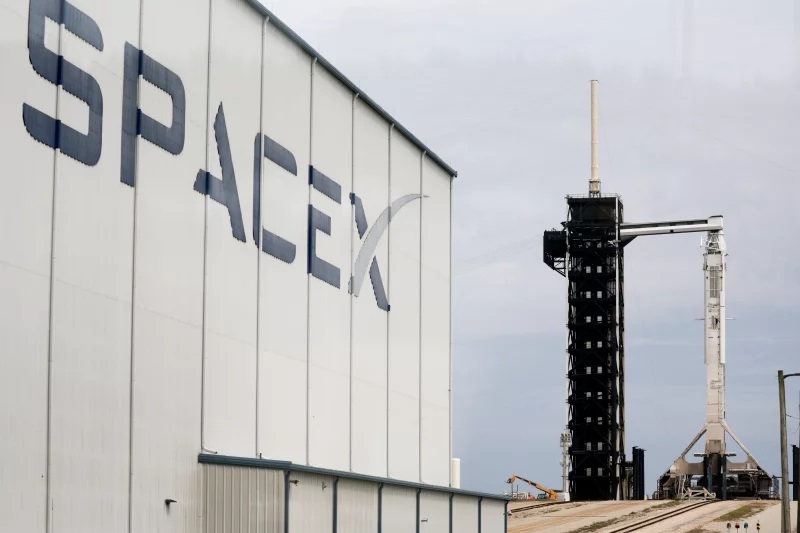
SpaceX is currently targeting a valuation of at least $1.8 trillion as its initial public offering (IPO), with formal marketings starting next week, but Nigel Green, CEO of global financial advisory giant deVere Group, believes investors are about to face one of the biggest tests of appetite for AI and tech assets in modern market history.
SpaceX, a company that generated almost $19 billion in revenue last year, driven largely by the rapid expansion of Starlink, which now serves more than 10 million customers globally, is reportedly seeking as much as $75 billion, potentially making it the largest IPO ever.
But then, there are legitimate questions, he says, as to whether there is enough demand this summer.
For him, therefore, “markets are about to discover whether investor appetite for AI and tech is as deep as many assume.
“SpaceX alone is seeking one of the largest valuations ever attached to a newly public company.
“Add the expected listings of OpenAI and Anthropic into the equation and investors could be asked to absorb trillions of dollars of fresh equity value within a relatively short period.
“Even highly enthusiastic markets have limits,” he added.
Notwithstanding, however, Green admitted: “Nobody can dispute what SpaceX has achieved.
“It’s transformed commercial space launch economics, built a communications network with global reach and established itself as one of the most strategically important private companies in the world.
“Supporters see exposure to satellite connectivity, AI infrastructure, defence technology, launch services and future commercial opportunities in space all wrapped into one investment.”
But he warns that investors should remain disciplined as excitement intensifies.
“A great company and a great stock are not always the same thing.
“Markets are being asked to place an extraordinary valuation on a business that continues to invest aggressively and burn significant amounts of cash in pursuit of future growth.
“At close to $1.8 trillion, investors are effectively pricing in years of success before much of that profitability has arrived,” the deVere CEO added, stressing that history provides important context.
“Many of the world’s largest IPOs generated enormous excitement before delivering disappointing returns during their first year on public markets.
“Investors become captivated by the story, expectations move higher and reality eventually has to catch up.
“SpaceX may prove different. Elon Musk has repeatedly delivered outcomes many believed were impossible. But valuation risk remains valuation risk.”
Nigel Green also points to another issue investors should not ignore.
“Public shareholders need to recognise that Elon Musk maintains overwhelming influence over the company.
“Ownership and control are two very different things. Investors may own shares, but strategic decision-making remains highly concentrated.”
He argues that the implications extend far beyond SpaceX itself.
“For years, a relatively small group of companies has dominated market returns, index performance and investor attention.
“The Magnificent Seven have absorbed vast amounts of capital and have become increasingly influential within global equity markets.
“SpaceX, OpenAI and Anthropic have the potential to begin changing that dynamic.”
Nigel Green says institutional investors may soon face difficult allocation decisions.
“Capital is finite. Large pension funds, sovereign wealth funds, ETFs and asset managers cannot endlessly increase exposure to every opportunity that emerges.
“If several mega-IPOs arrive within months of each other, money will need to come from somewhere.
“Some of the capital that has flowed consistently into Nvidia, Microsoft, Amazon, Meta, Alphabet, Apple and Tesla could increasingly be redirected toward a new generation of AI and space leaders.”
He believes the arrival of multiple blockbuster listings could mark an important moment in the current market cycle.
“Periods characterised by huge IPO activity often coincide with peaks in investor optimism.
“Every cycle eventually reaches a stage where demand appears almost unlimited.
“The critical question facing markets this summer is whether demand genuinely is unlimited or whether supply finally begins catching up.”
Nigel Green concludes: “SpaceX could become one of the defining public companies of the next decade.
“The opportunities are immense, but the risks are immense too.
“Space exploration, AI infrastructure and global connectivity are among the most powerful investment themes in the world today and SpaceX sits at the centre of all three.
“But investors should remain clear-eyed.
“The challenge is no longer whether SpaceX is an exceptional company.
“The challenge is determining how much of that future success is already reflected in a valuation approaching $1.8 trillion.”