
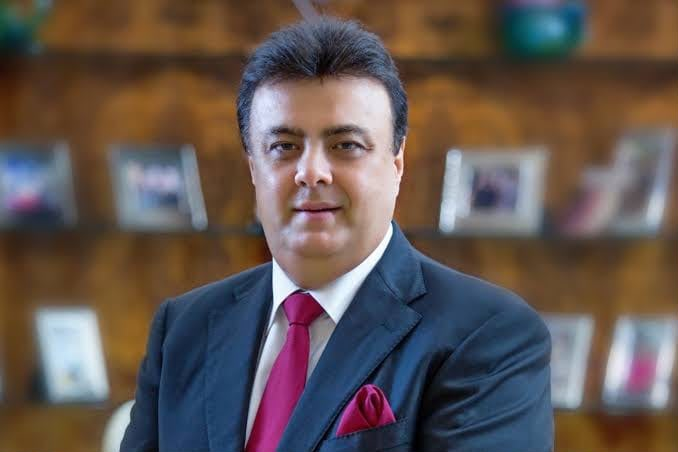
Pix Caption: Chairman, Stallion Group, Sunil Vaswani
Justice Daniel Osiagor of the Federal High, sitting in Ikoyi, Lagos on Friday, October 16, 2026, affirmed the right of the United Bank for Africa Plc to enforce the mortgage security, the liability of the guarantors of a 2014 loan deal gone awry, as well as to validly appoint Romeo Ese as Receiver/Manager, among other issues submitted for determination.
According to court filings, the loan documents allowed multiple subsidiaries within the Stallion Group conglomerate to utilize the facilities.
However, following the breakdown of negotiations between the principal parties, UBA had in October 2023 dragged Stallion Group and its directors before the Federal High Court seeking to enforce its securities over properties pledged by the group after the facilities fell into default.
Ruling in Suit No. FHC/L/CS/2074/2023 filed by United Bank for Africa (UBA) Plc seeking to recover a ₦156.03 billion debt against Stallion Group and others in the suit, the Court observed that the Defendants did not dispute the existence of their indebtedness to the bank, but challenged the amount claimed. It further held that the reconciliation of accounts between the parties did not extinguish or negate the underlying indebtedness.
In a major affirmation of UBA’s enforcement rights, the Court upheld the appointment of the Receiver/Manager to take over substantial industrial, commercial, and financial assets including land, physical and corporate properties belonging to Stallion Nigeria Limited and its affiliates across major economic hubs like Lagos, Port Harcourt, and Kano, and seek appropriate protective orders.
The assets include: Plots 353, 370, and 371 within the Trans Amadi Industrial Layout, Port Harcourt, Rivers State; KM 17, Lagos-Badagry Expressway, Lagos; and 54, Challawa Industrial Estate, Kano. Others include monies, funds and corporate receivables; all monetary assets, deposits, and accounts held across all commercial banks in Nigeria. The court explicitly restrained the conglomerate from diverting any outstanding receivables, contracts, or payments due to them from federal ministries and government agencies (such as funds related to military vehicle supply contracts).
Other defendants in the suit which originated in 2014 alongside the primary entity, Stallion Nigeria Limited, include key subsidiaries, affiliates, and individuals such as: Stallion Motors, The Honda Place, Von Automobile Nigeria, Popular Farms and Mills, KRBL Food, Havana Nigeria, Qingqi Motorcycle, Stallion Auto Keke, Yokohama Construction, personal assets tied to the personal guarantees of Stallion Group Chairman, Sunil Vaswani, Mahesh Vaswani (Managing Director/CEO), and Barbedos Ventures Limited (Identified specifically as the 12th defendant).
While not denying the indebtedness to UBA Plc, the defendants contested the ₦156.03 billion figure claimed by the bank, insisting that substantial repayments had been made towards defraying the debt and that an ongoing reconciliation and restructuring process ought to halt the recovery. But the trial judge ruled that a disagreement over the exact value of a debt does not invalidate a lender’s legal right to enforce its security. According to him also, account reconciliation process does not extinguish the underlying liability.
Justice Osiagor also dismissed objections raised by the 12th Defendant, Barbedos Ventures Limited, which he said, had failed to establish any proprietary rights over the mortgaged property. Consequently, its consent was not required for the creation of the mortgage, following which its objections were rejected.
The Court restrained the defendants from diverting receivables due to them from government agencies, thereby reinforcing the Bank’s ability to protect its recovery interests.
The judgment also affirmed the liability of the guarantors, strengthening UBA’s legal position in pursuing recovery of the outstanding obligations.
The decision represents a comprehensive victory for UBA, with the court resolving all issues in the bank’s favour while granting all the reliefs sought.
The ruling is particularly significant for the enforcement of creditors’ rights in Nigeria, underscoring the legal validity of properly constituted security arrangements and the authority of duly appointed receivers to enforce creditors’ interests.
It also reinforces the principle that disputes over the precise amount of an outstanding debt do not, by themselves, invalidate the underlying indebtedness or prevent creditors from exercising their lawful recovery rights.