
Market Update For October 21, 2026
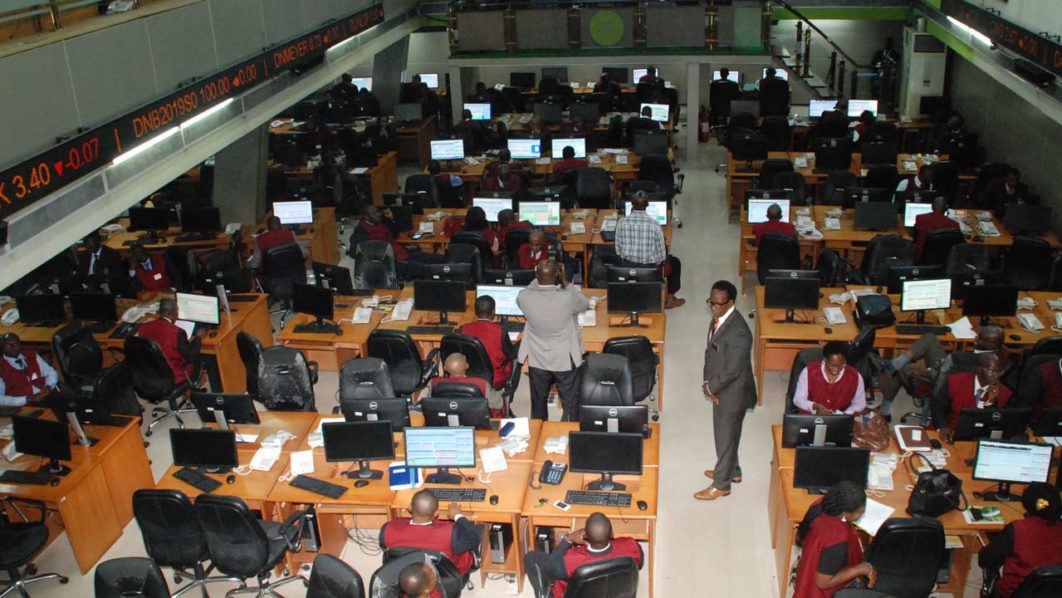
The Nigerian equities market returned to negative territory on Wednesday, October 21, 2026, as renewed profit-taking in major stocks outweighed buying interest, reversing the previous session’s gains. The decline reflected persistent selling pressure across several sectors, particularly banking, consumer goods and other actively traded equities, as investors adjusted their portfolios amid mixed market sentiment.
The downturn came as the market struggled to sustain its recovery, with losses in selected heavyweight stocks exerting pressure on the benchmark index. Although some equities attracted renewed demand and recorded strong price appreciation, the gains were insufficient to offset the broader weakness, leaving the market with a negative close.
The latest performance highlights the growing caution among investors following the substantial gains recorded by the Nigerian equities market earlier in the year. With the benchmark still trading at elevated levels relative to its beginning-of-year position, some investors appear to be taking profits while reassessing the potential for further upside across individual stocks.
Market activity remained relatively strong despite the decline, suggesting that participants continued to reposition their portfolios rather than withdraw entirely from the market. However, the predominance of declining stocks indicated that selling interest remained stronger than demand, limiting the market’s ability to sustain positive momentum.
The session also reinforced the importance of heavyweight stocks in determining the market’s direction. Losses in major banking equities and other actively traded companies contributed to the benchmark’s decline, while selected gainers provided only limited support.
The Nigerian Exchange (NGX) came under renewed pressure as investors sold selected holdings to lock in gains, contributing to the decline in the All-Share Index. The selling pressure extended across several equities, with CWG, NEIMETH, CUSTODIAN, ACCESSCORP, AFRIPRUD, INTBREW and FIRSTHOLDCO among the notable decliners.
The performance of these stocks reflected the uneven nature of investor sentiment, with market participants becoming increasingly selective about where to maintain exposure. While some companies continued to attract buying interest, others faced sustained pressure as investors reassessed their valuations and near-term prospects.
ACCESSCORP recorded a 6.12% decline, while AFRIPRUD and INTBREW each shed 5.00%. FIRSTHOLDCO fell by 4.59%, TIP declined by 4.38%, and INTENEGINS lost 3.33%. CHAMS also dropped by 2.57%, reflecting the weakness across several actively traded equities.
The banking sector remained an important contributor to the market’s negative performance. ZENITHBANK declined by 1.21%, while FCMB shed 0.45%. WEMABANK lost 0.33%, UBA fell by 0.24%, and GTCO recorded a marginal decline of 0.08%.
Although some of these losses were relatively modest, the performance of banking stocks remains significant because of the sector’s influence on the broader equities market. The movement of large-cap banking stocks can materially affect the benchmark index, particularly when several major lenders decline during the same session.
The continued weakness in selected banking stocks also suggests that investors remain cautious about extending their positions without clearer signals of further upside. After periods of substantial price appreciation, profit-taking can become more pronounced as market participants seek to protect gains and reduce exposure to short-term volatility.
However, the latest decline should not automatically be interpreted as a broad reversal of the market’s longer-term direction. Daily price movements can reflect temporary adjustments in investor positioning, and a more sustained change in trend would require confirmation from subsequent sessions, trading patterns and the performance of major market constituents.
For investors, the key consideration is whether the selling pressure remains concentrated in selected stocks or spreads more broadly across the market. A stabilisation in heavyweight equities could help the benchmark recover, while continued weakness across major sectors may prolong the current period of consolidation.
The performance of the banking sector remains particularly important in assessing the near-term outlook for Nigerian equities. Major lenders account for a substantial portion of market activity, and their share-price movements often influence the direction of the benchmark index.
Wednesday’s declines in ZENITHBANK, FCMB, WEMABANK, UBA and GTCO added to the market’s negative tone. Although the losses varied in magnitude, their combined direction reflected a cautious trading environment in which investors were unwilling to maintain indiscriminate exposure to equities.
Banking stocks are often closely watched because of their earnings capacity, dividend prospects, balance-sheet strength and sensitivity to monetary policy. Changes in interest rates, liquidity conditions, regulatory requirements and the broader operating environment can influence investor expectations for the sector.
Consequently, the performance of major banks in subsequent sessions could provide useful signals about the market’s direction. A recovery in banking equities, particularly if accompanied by stronger trading volume, could help restore confidence and support a rebound in the benchmark.
Conversely, continued weakness in the sector could limit the market’s ability to recover, even if selected stocks in other sectors record gains. Investors will therefore need to monitor the relationship between banking-sector performance, market breadth and overall trading activity when assessing whether the current decline represents a temporary pullback or a more persistent period of weakness
Market breadth remained negative on Wednesday, indicating that declining stocks outnumbered advancing equities. The imbalance reflected widespread selling pressure and suggested that the weakness was not limited to a small number of companies.
Although several stocks recorded strong gains, the advances were insufficient to offset losses elsewhere. This divergence between individual stock performance and the broader market indicates that investors continued to favour selected opportunities rather than increase exposure across the board.
Market breadth is an important indicator because it provides insight into the level of participation behind a market movement. A rising index accompanied by a broad increase in advancing stocks generally offers stronger confirmation of an upward trend than an advance driven by only a few heavyweight equities.
Similarly, a declining index accompanied by widespread losses suggests that selling pressure is becoming more broadly distributed. If this pattern persists, investor confidence may weaken further, particularly among participants who rely on improving market momentum to support short-term trading decisions.
The performance of the market’s leading gainers nevertheless shows that buying opportunities remained available. Stocks such as LIVINGTRUST, ABCTRANS, MEYER and LIVESTOCK recorded substantial advances, demonstrating that demand persisted in selected parts of the market.
The challenge for the broader market is to translate these isolated gains into more widespread participation. A sustained recovery would be more convincing if advancing stocks began to outnumber decliners consistently, supported by stronger demand for major equities.
Until such an improvement emerges, the market may continue to experience divergent performances, with some stocks attracting renewed interest while others remain under pressure from profit-taking.
Trading activity remained relatively firm during the session, indicating continued participation by investors despite the market’s negative performance. Approximately 354.03 million shares valued at ₦23.53 billion were traded in 32,514 deals.
ZENITHBANK led trading by both volume and value, with 48.21 million shares exchanged, representing approximately 13.61% of the reported total volume. The stock recorded a traded value of approximately ₦5.90 billion, accounting for 25.00% of the session’s reported market value.
ACCESSCORP and FIDELITYBK were also among the leading contributors to trading volume, accounting for approximately 11.57% and 5.77%, respectively, according to the supplied figures. ARADEL and MTNN followed ZENITHBANK among the leading stocks by traded value.
The concentration of trading activity in these equities highlights their importance to investor positioning and market liquidity. Banking stocks continued to attract significant attention, while activity in ARADEL and MTNN reflected participation in other major listed companies.
However, strong turnover during a declining session requires careful interpretation. Higher trading volume can reflect accumulation by investors seeking to buy at lower prices, but it can also result from increased selling by participants seeking to exit positions. Trading value alone does not establish which side is dominant.
In Wednesday’s session, the combination of relatively strong turnover and a falling benchmark suggested that market activity was not sufficient to counterbalance selling pressure. The negative breadth further indicated that the decline affected a meaningful portion of listed equities.
The direction of turnover in subsequent sessions will therefore be important. Rising prices accompanied by sustained activity could indicate improving demand, while continued high turnover alongside widespread declines may signal further portfolio adjustments.
Investors should also distinguish between liquidity and price performance. A stock may record substantial trading volume without appreciating if selling interest remains strong. Conversely, a stock with relatively modest turnover may experience a sharp price movement when the available supply of shares is limited.
For the wider market, a more sustainable recovery would require not only active trading but also a stronger balance between buyers and sellers.
Technical Analysis
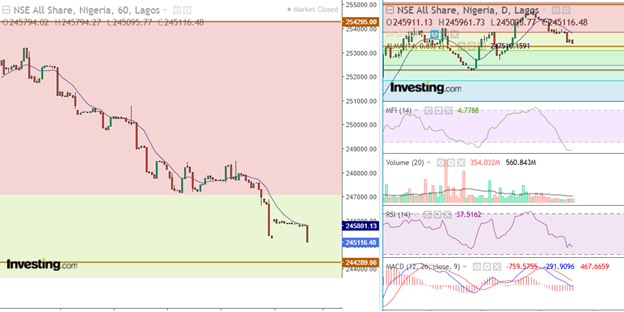
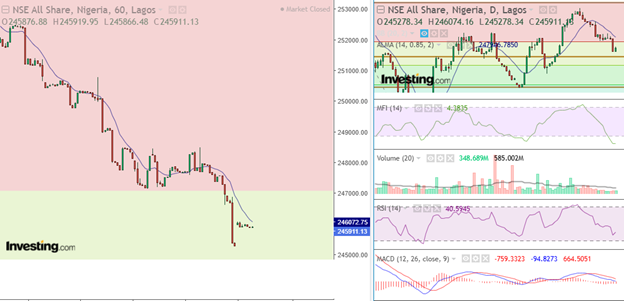
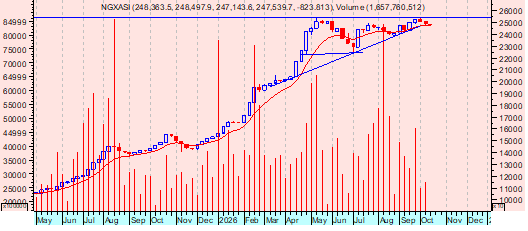
From a technical perspective, the ASI’s decline to 245,116.49 points indicates that selling pressure returned after Tuesday’s recovery. The benchmark’s inability to sustain its previous advance suggests that bullish momentum remains fragile, with profit-taking continuing to influence short-term price movements.
The market’s position below the 250,000-point psychological threshold remains an important consideration for investors monitoring the broader trend. Although this level does not independently determine market direction, it provides a reference point for assessing whether buying interest is strong enough to support a renewed advance.
A sustained recovery towards and above 250,000 points would require stronger participation from heavyweight stocks, improved market breadth and a more consistent pattern of positive daily closes. Such a move would offer a stronger indication of renewed demand than a single-session rebound.
Conversely, if the index continues to decline while market breadth remains negative, the likelihood of further consolidation would increase. A sustained sequence of lower closes could indicate that sellers remain in control, particularly if losses are accompanied by elevated trading activity.
Nevertheless, the supplied data are insufficient to establish precise technical support levels or confirm specific chart patterns. A more detailed assessment would require recent price history, moving averages, momentum indicators and the index’s previous swing highs and lows.
Volume behaviour will also be important. A market decline accompanied by falling turnover may suggest that selling pressure is gradually weakening, while a decline accompanied by expanding turnover could indicate stronger selling conviction. These signals should be assessed alongside price action rather than in isolation.
The performance of individual sectors will provide additional context. If banking stocks stabilise while selected gainers maintain their advances, the benchmark may find support from improved investor participation. However, persistent weakness across the banking sector and other large-cap stocks could continue to weigh on the index.
Overall, the technical picture points to a market that remains vulnerable to short-term volatility. A stronger recovery would require confirmation through improved breadth, sustained buying interest and a consistent upward movement in the benchmark.
Market Outlook
The immediate outlook for the Nigerian equities market remains cautious as investors balance profit-taking against opportunities in fundamentally sound companies. Following the latest decline, market participants are likely to pay closer attention to valuations, earnings expectations and the sustainability of recent share-price gains.
Companies with resilient earnings, healthy balance sheets and sustainable dividend prospects may continue to attract interest, particularly where current valuations offer a reasonable margin of safety. However, the strength of a company’s fundamentals does not guarantee an immediate price recovery, especially when broader market sentiment remains weak.
Investors may also distinguish between stocks experiencing temporary corrections and those facing more persistent company-specific challenges. Such an approach requires examining corporate results, cash-flow generation, debt obligations, profitability and the outlook for future earnings rather than relying solely on recent price movements.
The performance of the banking sector will remain a key consideration, given its importance to the benchmark index and overall market activity. Renewed demand for major lenders could support a recovery, while continued weakness in these stocks may prolong the market’s downward pressure.
Market breadth will be equally important. A sustained increase in advancing stocks would suggest that buying interest is becoming more widespread, providing a stronger foundation for recovery. If gains remain concentrated in a handful of equities, the broader market may struggle to maintain upward momentum.
Investors should also remain mindful of the difference between short-term market movements and longer-term investment prospects. A single-session decline does not necessarily invalidate a company’s underlying investment case, just as a sharp daily gain does not automatically make a stock attractive.
In the near term, a selective approach focused on company fundamentals, reasonable valuations and risk management may be more appropriate than aggressive positioning based on expectations of an immediate market rebound.
Oil Market
In the international energy market, crude oil prices traded around previous-session levels on Wednesday as investors weighed developments surrounding Russia-Ukraine peace talks against declining US oil inventories and continuing geopolitical tensions in the Middle East.
Brent crude futures rose by $0.27, or 0.2%, to $109.04 per barrel by 10:50 a.m. Eastern Time, while US West Texas Intermediate crude fell by $0.11, or 0.1%, to $97.72 per barrel.
Both benchmarks had gained as much as $2 earlier in the session before retreating from their highs. Brent remained close to its recent five-month high, while WTI traded near levels last recorded several months earlier.
The market’s mixed performance reflected competing forces affecting global oil supply expectations. Concerns about attacks on vessels in the Strait of Hormuz continued to support prices by raising the possibility of disruptions to shipping and energy supplies.
The Strait of Hormuz is an important route for international oil shipments, making security developments in the area particularly significant for global energy markets. Any sustained disruption could affect supply availability, transportation costs and market expectations, potentially adding further upward pressure to crude prices.
At the same time, investors were assessing developments surrounding diplomatic efforts to end the Russia-Ukraine conflict. The Kremlin indicated that Russian President Vladimir Putin had agreed to resume US-mediated peace talks as soon as the following month after meeting US envoy Steve Witkoff.
The possibility of renewed negotiations introduced uncertainty into the oil market. Progress towards a settlement could ease some geopolitical concerns, although the effect on prices would depend on the wider implications for energy supply, sanctions and global demand.
Declining US oil inventories also provided support to prices by suggesting a tightening in available supplies. However, the extent and sustainability of this support would depend on subsequent inventory data, production trends and demand conditions.
For Nigeria, elevated international oil prices could improve government revenue and foreign exchange inflows, provided domestic production and export volumes remain stable. Stronger oil receipts may help support fiscal conditions and external balances, particularly given the importance of petroleum exports to the Nigerian economy.
However, higher global prices do not automatically translate into proportionate gains for the domestic economy. Production constraints, operational disruptions, export volumes, fiscal arrangements and fluctuations in global demand can all influence the actual benefits received.
Elevated energy prices may also increase costs for businesses and households, particularly where higher fuel and transportation expenses feed into production and distribution costs. The net economic effect therefore depends on the balance between improved oil revenue and the broader cost implications of expensive energy.
For investors in Nigerian equities, global oil developments remain relevant to the outlook for energy companies, government finances, foreign exchange conditions and overall market sentiment. Nevertheless, company-specific fundamentals and domestic economic conditions will continue to determine how individual listed stocks respond.
Investment Implications for the Nigerian Market
Wednesday’s decline reinforces the need to assess the equities market through both its aggregate performance and the underlying conditions affecting individual companies.
The reduction in the ASI indicates that selling pressure remains influential, while negative market breadth suggests that the weakness extends beyond a limited number of stocks. At the same time, continued turnover and the strong performance of selected gainers show that investors have not abandoned opportunities across the market.
The distinction between market-wide weakness and individual stock prospects is important. A declining benchmark can create opportunities in companies whose earnings outlook remains sound, but investors must establish whether lower prices reflect temporary market pressure or a deterioration in the underlying business.
In the banking sector, attention may remain on earnings quality, capital strength, asset quality, dividend capacity and the effects of the prevailing monetary and regulatory environment. For consumer-related companies, investors may focus on demand conditions, input costs, pricing power and the ability to sustain margins.
Investors should also consider liquidity and portfolio concentration when making decisions. Stocks with high trading activity may offer easier entry and exit, although liquidity does not eliminate the risk of price declines. Concentrated positions in a single sector can also increase exposure to sector-specific developments.
The broader market’s direction will ultimately depend on the interaction between corporate fundamentals, investor expectations, macroeconomic developments and global conditions. A meaningful improvement in market sentiment would require stronger demand, broader participation and greater consistency in price performance.
For now, the market’s latest pullback calls for discipline rather than a blanket shift towards either aggressive buying or indiscriminate selling. Investors may benefit from monitoring company results, comparing valuations and maintaining a clear understanding of the risks associated with individual positions.
Market Summary
The Nigerian Exchange (NGX) closed lower on Wednesday, October 21, 2026, as profit-taking outweighed buying interest, with the All-Share Index (ASI) falling by 794.64 points, or 0.32%, to 245,116.49 points from 245,911.13 points recorded on Tuesday. Market capitalisation declined by ₦515.95 billion to ₦159.15 trillion, while the year-to-date return eased to 57.52%. Trading activity stood at approximately 354.03 million shares valued at ₦23.53 billion across 32,514 deals, reflecting continued investor participation despite the market’s negative performance. ZENITHBANK led trading by volume and value, recording 48.21 million shares worth approximately ₦5.90 billion, equivalent to 13.61% of reported volume and 25.00% of total traded value. ACCESSCORP and FIDELITYBK were among the leading contributors to trading volume, while ARADEL and MTNN featured prominently by traded value. Market breadth was negative, with 20 gainers, 38 losers and 88 unchanged stocks, based on the second set of figures provided. Other notable market movers included CWG, NEIMETH, CUSTODIAN, AFRIPRUD, INTBREW and FIRSTHOLDCO among the declining stocks, alongside gains in selected equities. Top gainers: LIVINGTRUST (+9.90% to ₦3.22), ABCTRANS (+9.77% to ₦7.30), MEYER (+9.72% to ₦17.50), LIVESTOCK (+9.65% to ₦18.75) and CAVERTON (+6.67% to ₦4.80). Top losers: CWG (-9.98% to ₦18.05), UPDCREIT (-9.93% to ₦19.05), AUSTINLAZ (-9.91% to ₦3.18), NEIMETH (-9.52% to ₦7.60) and CUSTODIAN (-7.57% to ₦64.70 each).