

Market Update For June 4, 2026
The Nigerian equities market maintained its downward trajectory on Thursday, June 4, 2026, amid sustained profit-taking activities across major sectors which extended the losing streak to four consecutive trading sessions. The bearish close reflects a combination of portfolio rebalancing, valuation concerns following the market’s remarkable rally, and cautious positioning by investors seeking to preserve gains accumulated over the past several months.
Trading sentiment remained largely negative throughout the session, with sellers dominating activities across the banking, oil and gas, industrial, consumer goods and insurance sectors. The market has continued to experience a wave of profit-taking following its recent record-breaking performance that pushed the benchmark index to historic highs. As a result of this, investors are increasingly adopting a selective approach, taking profits in stocks that have delivered substantial capital appreciation while searching for fresh entry opportunities in fundamentally sound counters.
The ongoing correction comes against a backdrop of improving macroeconomic conditions and resilient corporate earnings, factors that have supported the market’s bull-run since the beginning of the year. However, the pace of the recent rally had left several stocks trading at elevated valuations, prompting investors to temporarily reduce exposure and lock in gains. The introduction of the shorter settlement cycle has further contributed to portfolio adjustments as market participants reassess liquidity positions and trading strategies.
Despite the recent weakness, analysts maintain that the current decline remains largely technical, rather than fundamentally driven. Market participants continue to monitor economic reforms, inflation trends, exchange rate stability and interest rate expectations, all of which remain critical factors influencing investment decisions. The broader investment environment still favours equities relative to inflation-adjusted fixed-income returns, providing a supportive backdrop for long-term market performance.
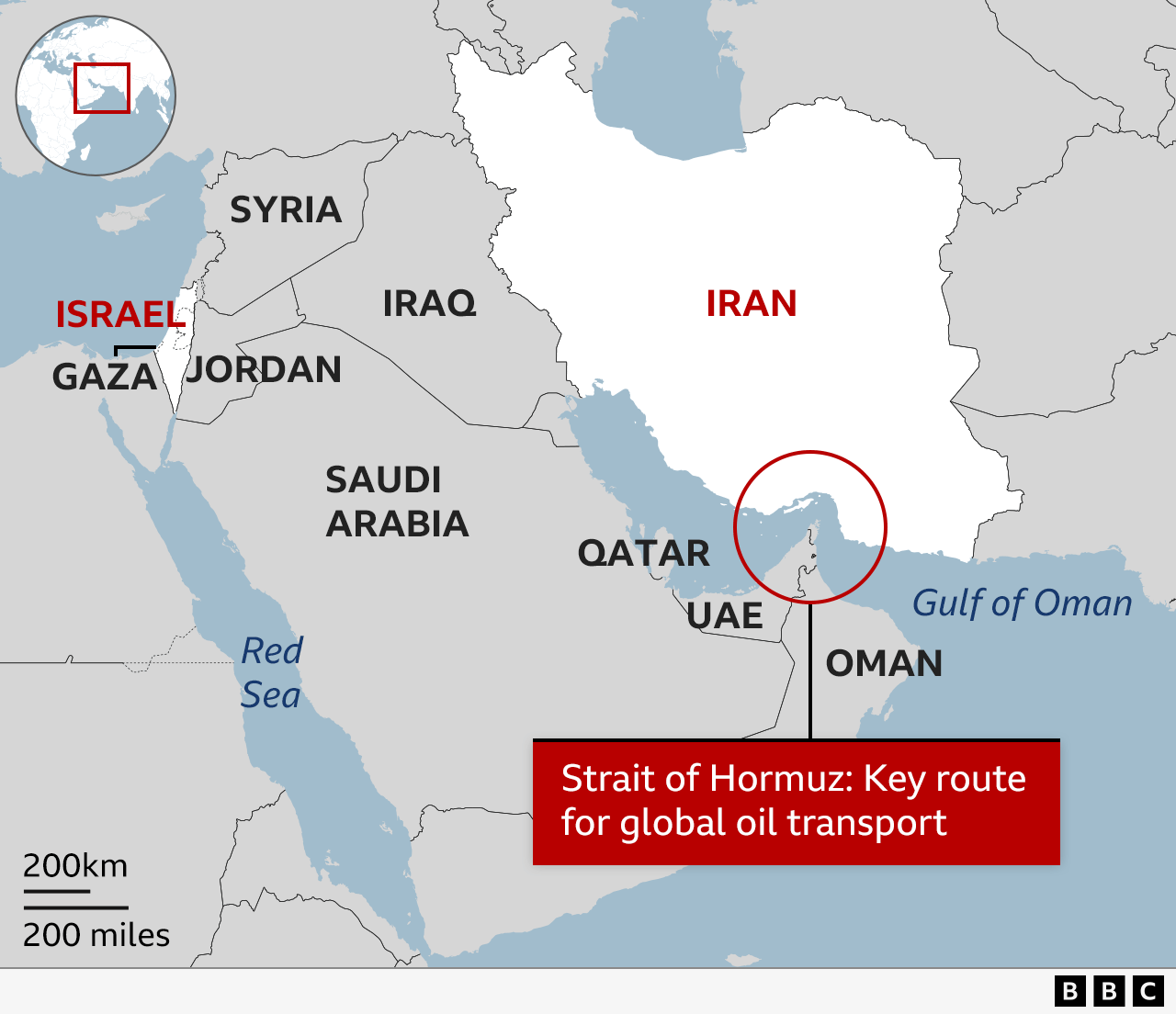
The oil and gas sector remained one of the key areas of focus during the session following developments in the international energy market. Crude oil prices retreated sharply as hopes of easing geopolitical tensions in the Middle East triggered a broad selloff in energy futures. Brent crude fell below the $95 per barrel threshold, while West Texas Intermediate (WTI) crude traded around $93 per barrel after reports emerged that Israel and Lebanon had agreed to implement a ceasefire.
The ceasefire agreement raised expectations that diplomatic negotiations between the United States and Iran could resume, potentially reducing tensions that had threatened global oil supplies in recent weeks. Investors interpreted the development as a positive signal for the reopening of key shipping routes around the Strait of Hormuz, one of the world’s most strategically important energy corridors.
Although shipping traffic within the Strait remains significantly disrupted, market participants are increasingly pricing in the possibility of a gradual normalization of supply conditions. This development triggered profit-taking in energy-linked assets globally and contributed to weakness in selected oil and gas stocks on the Nigerian Exchange. Nevertheless, crude prices remain sufficiently elevated to support earnings expectations for domestic upstream operators and sustain government revenue projections.
The banking sector also witnessed notable selling pressure as investors took profits in several tier-one and tier-two financial institutions. Banking stocks have been among the strongest performers in the market this year, supported by robust earnings growth, expanding interest margins, stronger balance sheets and expectations of attractive dividend distributions. However, the recent rally has encouraged some investors to secure gains ahead of the release of additional corporate and macroeconomic catalysts.
Consumer goods and industrial stocks similarly faced selling pressure as investors rotated funds across sectors. The broad nature of the decline suggests that the current market correction is not confined to a particular industry but reflects a wider effort by investors to rebalance portfolios after an extended period of bullish momentum.
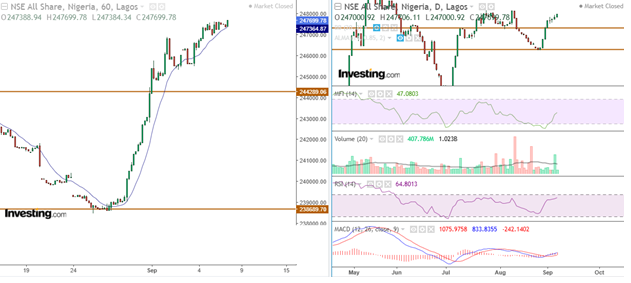
From a technical standpoint, the market remains in a healthy corrective phase despite the recent decline. The benchmark index has now closed lower in four consecutive sessions, indicating that short-term momentum has weakened considerably. However, the correction has occurred within the context of a strong primary uptrend, suggesting that the market is undergoing consolidation rather than entering a prolonged bearish cycle.
Technical indicators show that momentum is gradually easing from previously overbought levels, a development that many analysts consider necessary for the sustainability of the broader bull market. The moderation in momentum could create opportunities for institutional investors and long-term portfolio managers to accumulate quality stocks at more attractive valuations.
Importantly, the market continues to trade above critical support levels and key moving averages, indicating that underlying investor confidence remains intact. The absence of panic selling and the relatively orderly nature of the decline further support the view that the current pullback is driven primarily by profit-taking rather than a deterioration in market fundamentals.
Another significant feature of Thursday’s trading session was the sharp decline in market activity. Lower trading volume suggests that investors are becoming increasingly cautious while awaiting clearer market direction. This reduction in activity often characterizes consolidation phases, during which market participants evaluate new information before making substantial investment decisions.
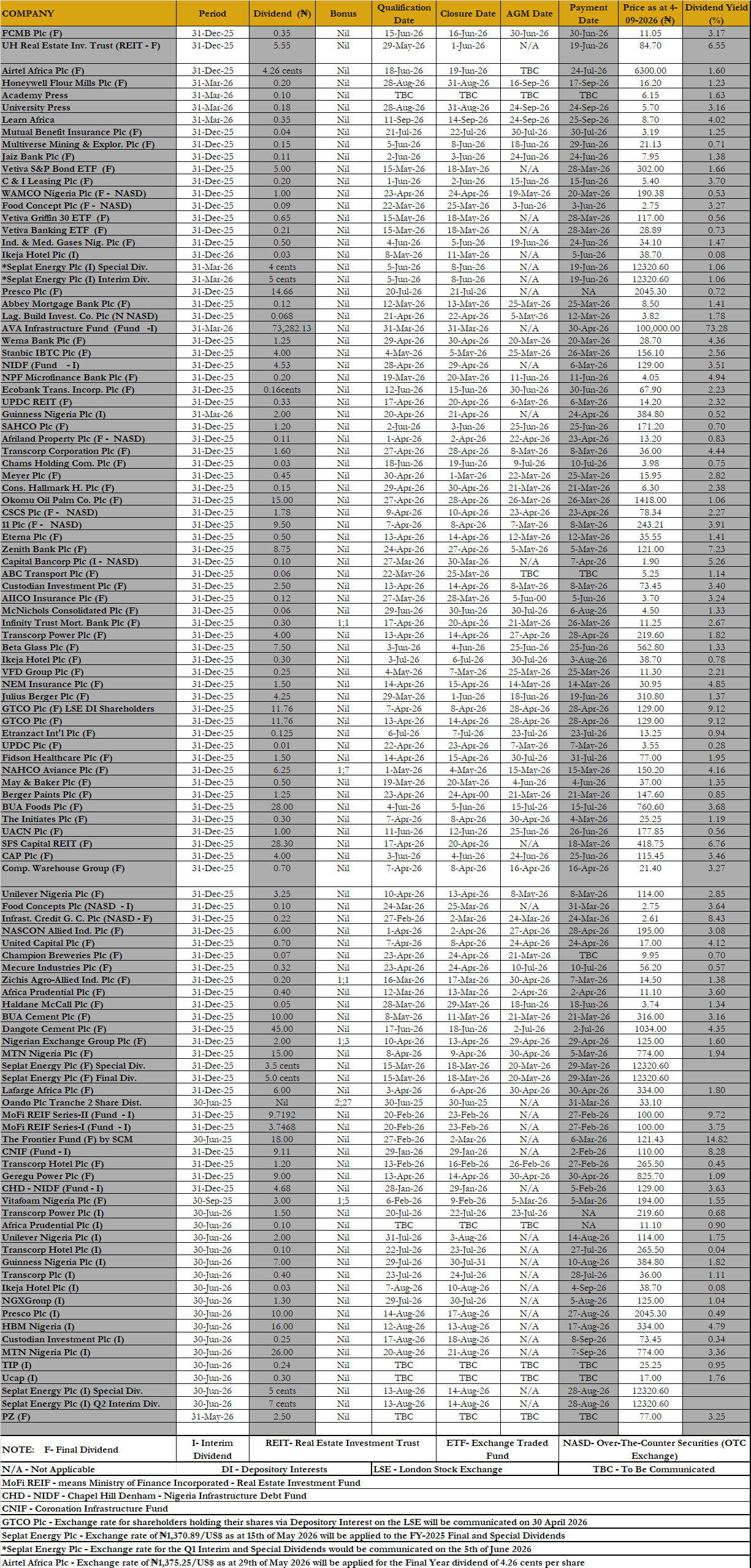
Institutional investors are expected to remain active in the coming weeks, particularly as attention shifts toward earnings sustainability, dividend expectations, sector rotation opportunities and the impact of ongoing economic reforms. Foreign portfolio investors may also continue to monitor developments in exchange rate stability, monetary policy and geopolitical risks before increasing exposure to Nigerian assets.
Looking ahead, the market is likely to experience mixed sentiment as bargain hunting competes with continued profit-taking. While short-term volatility may persist, the medium-to-long-term outlook remains positive, supported by strong corporate fundamentals, improving economic conditions and growing investor confidence in the domestic market. Stocks with resilient earnings profiles, attractive valuations and strong dividend potential are expected to attract renewed demand once the current corrective phase begins to stabilize.
Investors are therefore advised to remain selective, focusing on fundamentally strong companies while taking advantage of opportunities created by market weakness. The ability of the benchmark index to defend major support levels will be crucial in determining whether the current pullback evolves into a deeper correction or serves as a launching pad for the next leg of the market’s upward trend.
The NGX All-Share Index (ASI) declined by 905.30 basis points or 0.37% to close at 242,227.31 points from the previous day’s 243,132.61 points. Consequently, market capitalisation depreciated by N580.65 billion to close lower, while the market’s year-to-date return moderated to 55.66%. Market breadth closed negative at 25 advancers against 30 decliners, reflecting the dominance of bearish sentiment across the trading session. Total volume traded declined by 36.24% to 588.46 million shares worth N27.88 billion exchanged in 57,352 deals, compared to the previous session. ACCESSCORP emerged as the most active stock by volume with 264.59 million shares, representing 44.96% of total market turnover, followed by FCMB with 76.67 million shares or 13.03% and NGXGROUP with 55.14 million shares or 9.37%. In value terms, NGXGROUP led the activity chart with transactions worth N3.89 billion, accounting for 13.95% of total traded value, while ARADEL and ZENITHBANK ranked among the most actively traded stocks by value. The day’s top gainers were INTENEGINS, which appreciated by 10.00% to close at N6.60, LIVESTOCK rising by 10.00% to N16.50, MULTIVERSE gaining 9.98% to N10.14, FTNCOCOA advancing 9.92% to N6.54 and REGALINS appreciating by 9.84% to N0.67. On the flip side, MCNICHOLS led the losers’ chart with a 10.00% decline to N2.43, followed by ETERNA which shed 9.85% to close at N53.10, ARADEL losing 9.51% to N765.00, UACN declining 4.43% to N44.25, TRANSCORP dropping 4.13% to N91.70, FIDELITYBK falling 3.15% to N25.40, STANBIC losing 3.13% to N119.20, WEMABANK declining 3.07% to N20.50, MAYBAKER retreating 2.08% to N16.45 and DANGSUGAR easing 0.92% to N53.90. The performance of these stocks highlights the intensity of profit-taking across the market as investors continue to recalibrate positions while awaiting fresh catalysts capable of driving the next phase of market direction.